
Even the most vigilant homeowners can, at some point, face the unwelcome sight of water stains marring the beauty of their cherished wood tables. It’s a common mishap, often resulting from forgotten coasters beneath sweating glasses, unnoticed spills, or simply the daily wear and tear of a busy household. The tell-tale sign of such an incident is usually a cloudy white ring or spot, signaling moisture trapped beneath the wood’s finish. While a quick wipe with a cloth and furniture polish might seem like the obvious first step, this often only superficially addresses the problem, leaving the stubborn stain intact.
Fortunately, the internet, particularly the vibrant #CleanTok community, has brought to light a plethora of ingenious cleaning hacks that go beyond mere surface treatment. One particular method, gaining widespread popularity, promises to effectively remedy those frustrating water stains rather than just masking them. This guide will delve into this viral solution, explore other time-tested techniques, and equip you with essential strategies to prevent water marks from appearing in the first place, ensuring your wooden furniture remains pristine for years to come.
Mastering the TikTok Viral Ironing Hack for Wood Water Stains
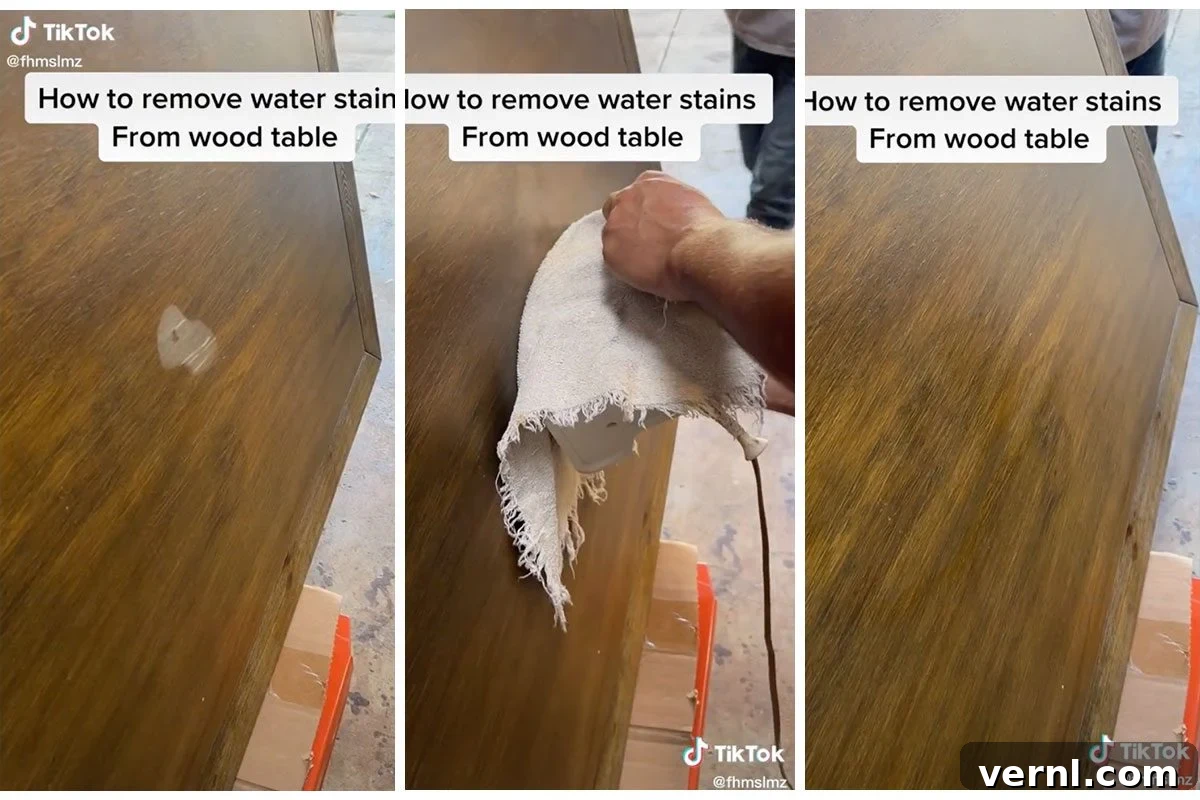
The quest for spotless surfaces led to the discovery of a remarkably effective method for removing water stains from wood, originating from the ever-innovative TikTok community. Creators like @fhmslmz and @creative_explained showcased this brilliant trick as early as June 2022, demonstrating its surprising efficacy. The hack experienced a surge in popularity after creator @cleaningwithgabie reignited interest with her video featuring this simple yet powerful cleaning tip. This method leverages controlled heat and moisture to draw out trapped water from beneath the wood’s finish, making those unsightly white rings vanish.
Instead of reaching for harsh chemical cleaners that might damage your wood, this hack requires only a few common household items. You’ll need a clean, plain cloth (any fabric free of screen prints, dyes, or designs will do), a standard household iron, and a small amount of water. The simplicity of the materials belies the effectiveness of the technique.
Step-by-Step Guide to the Ironing Hack:
- Prepare Your Iron: Begin by ensuring your iron’s water tank is completely empty. This is crucial because you don’t want to introduce more steam than intended directly into the wood. Plug in your iron and set it to its lowest heat setting. Avoid using a high heat setting, as excessive heat can scorch the wood or damage its finish.
- Dampen Your Cloth: Take your clean cloth and dampen it slightly with water. The key here is “damp,” not “saturated.” Wring out any excess water thoroughly. The cloth should feel moist but not dripping, as too much water could exacerbate the stain or create new problems.
- Position and Press: Carefully place the damp cloth directly over the white water stain on your wood table. Once the cloth is in place, gently press the warm iron onto the cloth. Do not hold the iron in one spot for too long; instead, move it in a slow, continuous motion over the affected area for a few seconds.
- Observe and Repeat: Lift the iron and cloth periodically to check the stain’s progress. You should begin to see the cloudy white mark fade as the trapped moisture is drawn out by the combination of gentle heat and the damp cloth. If the stain persists, re-dampen the cloth slightly if it has dried out, and repeat the ironing process. Continue this gentle ironing and checking cycle until the water stain has completely disappeared.
- Final Wipe-Down: Once the stain is gone, remove the cloth and wipe the area with a dry, clean cloth to remove any residual moisture. You can then apply a small amount of furniture polish or wood oil to restore the wood’s luster and provide an extra layer of protection.
Important Safety and Usage Notes:
- Test First: Before applying the iron to a prominent stain, always test this method on an inconspicuous area of your furniture (like the underside or back) to ensure it doesn’t cause any adverse reactions to your specific wood finish.
- Low Heat is Key: Never use a high heat setting, as this can easily scorch the wood or permanently damage its protective finish, turning a minor water stain into a much larger problem.
- Keep Moving: Do not leave the iron stationary on the wood, even with the cloth barrier. Constant, gentle motion is essential to distribute heat evenly and prevent damage.
- Best for White Stains: This method is most effective for white or cloudy water stains, which indicate moisture trapped just beneath the surface finish. Darker stains (black or gray) typically signify deeper penetration of water and may require more intensive restoration techniques.
Beyond the Iron: Proven Techniques for Stubborn Water Marks
While the ironing hack is a fantastic starting point for many white water stains, some marks might be more stubborn or simply require a different approach. The good news is that numerous other methods, ranging from mild solvents to household pastes, can effectively tackle various types of water damage on wood. Understanding the nature of your stain – whether it’s a superficial white cloud or a deeper, darker mark – will guide you in choosing the most appropriate removal technique.
Traditional and Alternative Water Stain Removal Methods:
- Mineral Spirits (for Wax Coatings): If your wood furniture boasts a wax coating, mineral spirits can be a remarkably effective solution. White water stains on such surfaces are often merely wax-deep.
How to: Apply a small amount of mineral spirits to a clean, soft cloth. Gently rub the stained area in the direction of the wood grain. The mineral spirits will dissolve the stained wax without harming the underlying wood finish. Wipe away any residue with a clean cloth, then reapply wax if necessary. This method works by lifting the moisture that has affected the wax layer.
Safety: Use in a well-ventilated area and wear gloves. - Denatured Alcohol (for Deeper White Stains): For white stains that resist milder treatments, denatured alcohol can be effective, as it helps draw out trapped moisture. However, it’s a stronger solvent and requires caution.
How to: First, test the denatured alcohol on an inconspicuous spot on your furniture to ensure it doesn’t damage the finish. If the finish remains intact, sparingly apply denatured alcohol to a clean cloth. Lightly rub the stained area, working in small sections. Stop frequently to check for any adverse effects on the finish. This process should be slow and gentle, allowing the alcohol to gradually pull out the moisture. Once the stain fades, wipe the area clean and apply furniture polish.
Caution: Denatured alcohol can strip finishes if overused or applied too aggressively. Proceed with extreme care. - Baking Soda Paste (Gentle Abrasive): This common kitchen staple offers a mild abrasive and moisture-absorbing solution.
How to: Create a paste by mixing 1 tablespoon of baking soda with 1 tablespoon of water. Apply this paste directly onto the water stain. Using a soft cloth, gently rub the paste into the stain in a circular motion until it begins to disappear. Once the stain is gone, wipe off the paste with a clean, damp cloth and buff the area dry.
Benefit: It’s a non-toxic option that works well for many superficial white stains. - Petroleum Jelly (Slow-Acting Moisture Absorber): For those who prefer a more passive approach, petroleum jelly can work wonders over time.
How to: Dab a generous amount of petroleum jelly onto the water spot, ensuring it completely covers the stain. Leave the petroleum jelly to sit on the stain overnight, or for several hours. The jelly helps to draw the moisture out of the wood very slowly. In the morning, simply wipe away the petroleum jelly with a clean cloth. The stain should be significantly reduced or completely gone. Follow up with a good wood polish. - Mayonnaise (Oil-Based Absorption): Another surprising household item, mayonnaise, can be effective for white water rings, thanks to its oil and vinegar content.
How to: Apply a dollop of mayonnaise directly over the water stain. Let it sit for several hours, or even overnight, allowing the oils and mild acids to work on drawing out the moisture and restoring the finish. Wipe off the mayonnaise with a clean cloth and buff the area until shiny. - Hair Dryer (Gentle Heat Application): Similar in principle to the iron, a hair dryer offers a gentler, less direct heat application.
How to: Set your hair dryer to a low heat setting. Hold the dryer a few inches away from the water stain and move it constantly over the area. As the wood gently warms, the trapped moisture will evaporate. Be patient and keep the dryer moving to avoid overheating any single spot. This method works best for fresh, superficial white stains.
When to Call a Professional:
While DIY methods are highly effective for most white water stains, there are instances where professional intervention is advisable. If your wood furniture has developed deep black or grey stains, it often indicates that water has penetrated beyond the finish and into the wood fibers, potentially causing mold or mildew. For antique or valuable furniture, or if you’ve tried multiple methods without success, consulting a professional furniture restorer is the safest course of action to prevent further damage and ensure proper restoration.
Prevention is Key: Safeguarding Your Wood Furniture
The easiest and most effective way to deal with water marks on wood tables is to prevent them from happening in the first place. Proactive measures can save your beautiful wood furniture from unsightly damage and the effort of stain removal. By incorporating simple habits and protective solutions, you can significantly extend the life and beauty of your wooden pieces.
Essential Tips for Preventing Water Marks:
- Use Coasters Effectively: This is arguably the most fundamental and effective preventative measure.
Implement: Ensure coasters are always easily accessible on your table. Make it a habit to use them yourself, and arrange them for guests before serving any beverages. Education can go a long way; politely reminding guests about coasters helps instill good habits. Consider a variety of coasters made from absorbent materials like cork, felt, or ceramic to provide maximum protection. - Apply a Protective Sealer (Lacquer, Varnish, Polyurethane): A robust finish acts as a barrier, protecting the wood from moisture penetration.
Options:- Varnish: A mixture of resin, drying oil, and solvent, varnish forms a durable, thin, protective layer that often gives furniture a glossy finish. It can typically be applied with a brush.
- Lacquer: Also resin-based, lacquer is known for its high stain resistance and quick drying time. It often requires a low-pressure spray system for even application, which can be rented or purchased at hardware stores.
- Polyurethane: A highly durable synthetic finish, polyurethane provides excellent resistance to water, scratches, and abrasions. It’s available in both oil-based and water-based formulations, offering different levels of sheen and ease of application.
Maintenance: Regularly inspect your furniture’s finish for signs of wear and reapply protective sealers as needed, especially in high-traffic areas.
- Use a Tablecloth or Placemats: Sometimes the simplest solutions are the most effective.
Benefit: Any protective fabric covering placed between your items and the wood surface can act as a reliable barrier against spills, condensation, and heat marks. This is especially useful for daily meals, children’s activities, or during entertaining. Choose materials that complement your decor and offer good absorbency. - Look for Spill-Resistant Wood Finishes and Wood Types: When purchasing new furniture, consider options that naturally resist water or come with enhanced factory finishes.
Wood Types: Certain woods are naturally more resistant to moisture thanks to their inherent oils. Cypress wood is an excellent example, known for its durability and resistance to rot and moisture. Teak and mahogany also possess natural oils that offer some protection against water damage.
Factory Finishes: Many modern furniture pieces come treated with advanced, durable finishes designed to repel liquids and resist stains, providing an extra layer of peace of mind. - Practice Immediate Cleanup: The faster you address a spill, the less likely it is to cause a lasting stain.
Action: Keep a clean, absorbent cloth handy for quick cleanups. Blot spills immediately rather than wiping, as blotting absorbs the liquid without spreading it or pushing it further into the wood grain. For sticky spills, use a slightly damp cloth followed by a dry one.
Fighting difficult stains and spills is a common challenge throughout the home. By understanding the causes of water marks, applying effective removal techniques, and implementing consistent preventative measures, you can ensure your wood furniture remains a beautiful and resilient centerpiece of your living space. A little vigilance and the right knowledge can go a long way in preserving the elegance and integrity of your wooden tables for years to come.