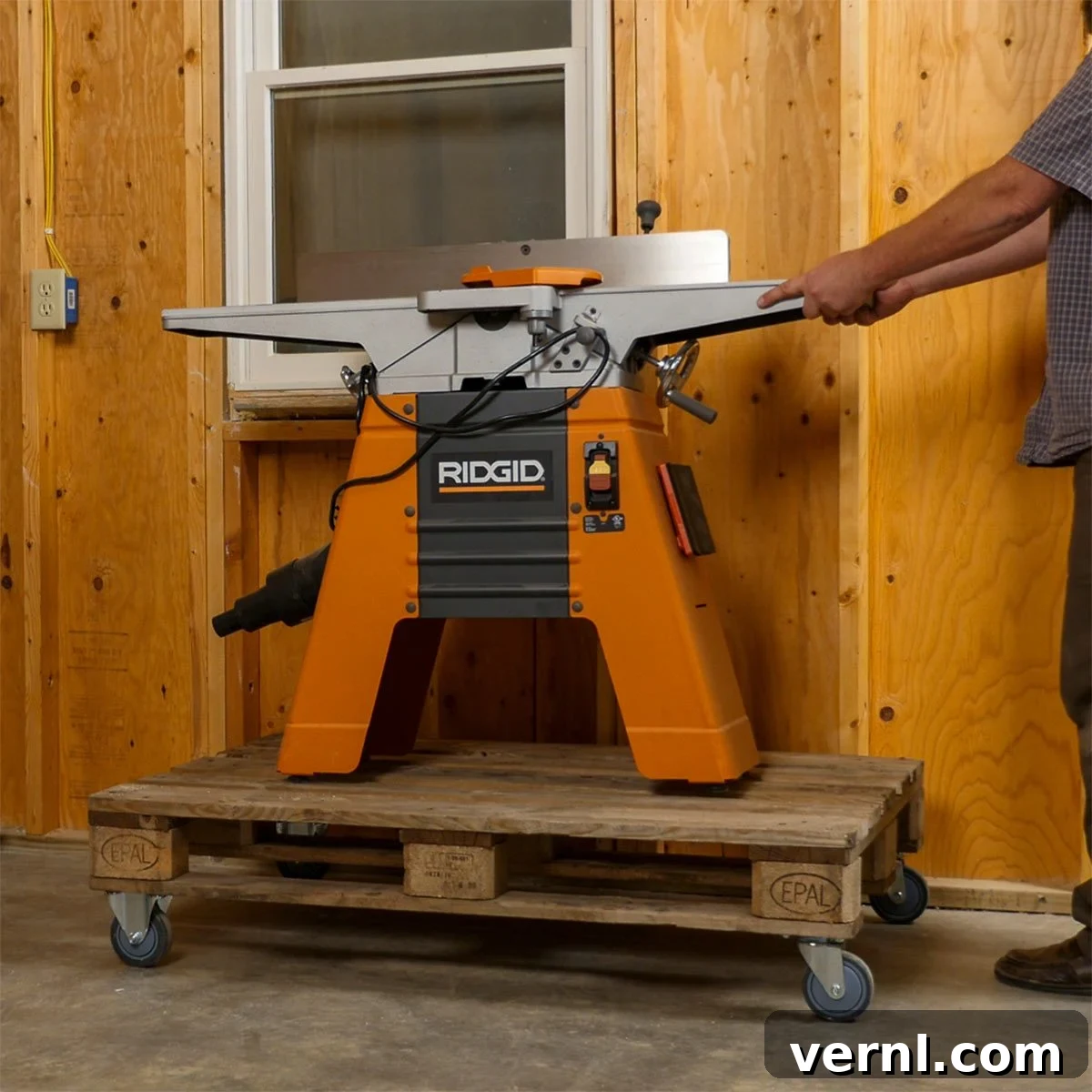
The Ultimate DIY Pallet Dolly: Your Workshop’s New Best Friend for Moving Heavy Loads
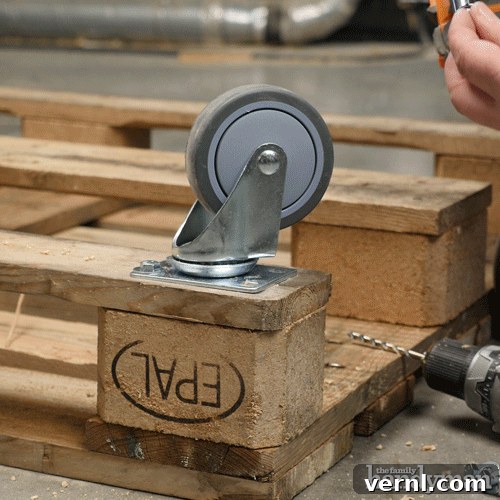
Every seasoned DIY enthusiast, carpenter, or workshop owner knows the struggle: moving heavy, bulky items around. Whether it’s a new delivery of lumber, a hefty piece of machinery, or simply reorganizing your workspace, the task often involves back-breaking effort, multiple trips, and sometimes even a risk of injury. This common predicament often leads to a quest for efficient, affordable, and practical solutions. While commercial pallet jacks are excellent tools, their cost can be prohibitive for many home workshops or small businesses.
This is precisely the situation Keith Jones found himself in. Faced with the daunting task of transporting a substantial truckload of lumber from his vehicle, down a long hallway, and into his shop, he wasn’t exactly looking forward to the solo, armload-by-armload endeavor. It was a classic “work smarter, not harder” moment waiting to happen. And then, serendipity struck in the form of a humble, discarded wooden pallet leaning innocently against a wall. An idea sparked – an ingenious, cost-effective, and remarkably simple solution that would transform his approach to moving heavy goods.
From Unwanted Pallet to Indispensable Workshop Tool
The beauty of Keith’s discovery lies in its simplicity and accessibility. Most workshops or industrial areas have access to old pallets, often free for the taking. These wooden platforms, typically designed for robust transportation and stacking, already possess the fundamental structural integrity needed for a heavy-duty dolly. The missing ingredient, to transform a static pallet into a mobile powerhouse, was surprisingly straightforward: a set of casters.
Keith, like many resourceful DIYers, didn’t own a specialized pallet jack, nor did he feel the need to invest in one for occasional heavy lifting. What he did have, however, was a set of readily available swiveling casters – those small, wheeled mechanisms that enable furniture and equipment to move with ease. This combination of a free, sturdy pallet and some inexpensive casters became the foundation of his brilliant hack.
The Simple Steps to Building Your Own Heavy-Duty Pallet Dolly
Creating this versatile workshop aid is surprisingly simple and requires minimal materials and tools. Here’s a breakdown of the process, ensuring your DIY pallet dolly is robust, stable, and ready for action:
1. Selecting and Preparing Your Pallet
- Choose Wisely: Not all pallets are created equal. Opt for a sturdy, intact wooden pallet free from significant cracks, rot, or major damage. Standard 48×40 inch (120×100 cm) pallets are common and generally well-suited. Inspect all wooden slats and blocks for integrity.
- Clean It Up: Give the pallet a quick clean. Remove any loose splinters, nails, or debris. A light sanding might be beneficial if you plan on using it in a clean environment or want to prevent snagging.
2. Reinforcement for Stability and Load Bearing
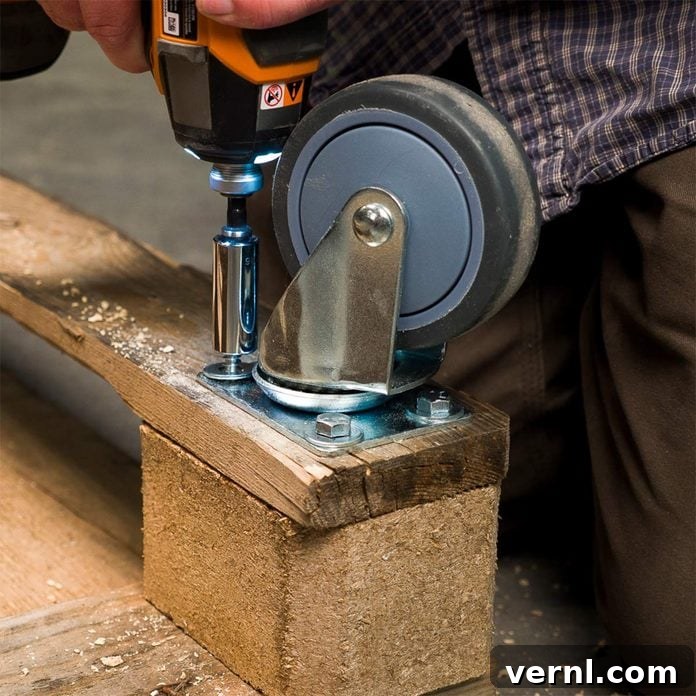
While pallets are designed for heavy loads, distributing that weight evenly across four small casters requires additional support. Keith understood this crucial detail. He added “reinforcement blocking” to his pallet. This step is vital for preventing the pallet from flexing under heavy loads and ensuring the casters remain securely attached.
- Identify Support Points: Look at the underside of your pallet. You’ll typically find a perimeter frame and often some central stringers or blocks. The casters will attach to the four corners.
- Add Blocking: Cut sturdy pieces of dimensional lumber (e.g., 2x4s or 4x4s) to fit snugly within the pallet’s structure at each corner where the casters will be mounted. These blocks should span across multiple existing pallet slats or sit flush against existing stringers to distribute the load effectively. Secure these blocks firmly with strong wood screws, ensuring they won’t shift when weight is applied. This creates a solid, reinforced anchor point for each caster.
3. Installing the Casters
- Caster Choice: For heavy-duty applications like moving lumber or machinery, opt for industrial-grade swiveling casters. Four-inch (10 cm) diameter casters are a good general-purpose size, offering a balance of maneuverability and load capacity. Consider casters with rubber or polyurethane wheels if you’re concerned about marking floors or need quieter operation. Locking casters are an excellent safety feature, allowing you to secure the dolly in place when loading or unloading.
- Placement: Position one caster at each of the four reinforced corners of the pallet. Ensure they are aligned correctly for optimal maneuverability.
- Secure Attachment: Using appropriate screws or bolts (depending on your caster type), securely fasten each caster to the reinforced blocking. Predrilling pilot holes will prevent wood splitting and ensure a tighter fit. Use washers under bolt heads or nuts for added stability if using through-bolts. Double-check that all casters are firmly attached and can swivel freely.
The Maiden Voyage: Effortless Lumber Transport
With his newly constructed pallet dolly ready, Keith put it to the ultimate test: that challenging truckload of lumber. The results were nothing short of miraculous. Instead of a dozen grueling trips, carrying armload after armload, he was able to load the entire stack onto his sturdy, rolling pallet. The journey down the long hallway, once a formidable obstacle, became a smooth, single trip. The four-inch swiveling casters effortlessly navigated the turns and carried the immense weight, proving the simple invention’s worth instantly.
This success story isn’t just about moving lumber; it’s about reclaiming time, saving physical effort, and demonstrating how a clever DIY solution can outperform expensive commercial alternatives for specific needs. Keith’s experience highlights the power of creative problem-solving in the workshop.
Beyond the Lumber: The Multipurpose Heavy-Stuff Mover
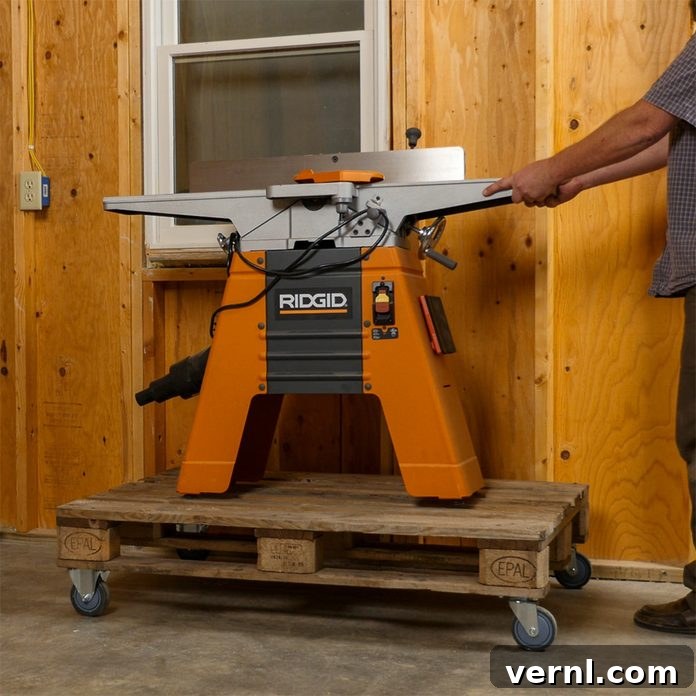
The beauty of Keith’s pallet dolly extends far beyond that initial lumber haul. He wisely kept his creation, recognizing its immense utility. It has since become his “multipurpose heavy-stuff mover,” a testament to its versatility and enduring value in his shop. Once you have one, you’ll find countless applications for it:
- Workshop Machinery: Easily reposition heavy table saws, planers, jointers, sanders, or band saws to free up space or move them closer to your work area.
- Storage Solutions: Create mobile storage for large bins, tool chests, or stacks of raw materials, making them accessible when needed and easily stowed away.
- Gardening Supplies: Transport bags of soil, planters, large pots, or even small trees around your garden or patio with ease.
- Home Renovations: Move drywall sheets, bags of cement, tiles, or large pieces of furniture during renovation projects.
- Moving Furniture: Ideal for shifting heavy dressers, bookshelves, or appliances without scratching floors or straining your back.
- Waste Management: Place large garbage bins or recycling containers on the dolly for easy movement to the curb.
The adaptability of this DIY pallet dolly means it can serve as a constantly evolving solution for nearly any heavy-lifting challenge you encounter, making it an indispensable asset for any practical individual.
Tips for Maximizing Your Pallet Dolly’s Potential
To get the most out of your DIY pallet dolly, consider these additional tips and enhancements:
- Handle or Rope Attachment: For easier pulling and steering, consider attaching a sturdy rope or even a permanent handle to one end of the pallet. This provides better leverage and control, especially with very heavy or awkward loads.
- Surface Protection: If you’re moving delicate items or furniture, place a moving blanket, rug, or sheet of plywood on top of the pallet to protect the item from scratches and distribute the load more evenly.
- Caster Variety: If you frequently move items on different surfaces (e.g., concrete, gravel, grass), you might consider having different sets of casters or larger pneumatic wheels for outdoor use.
- Maintenance: Periodically check the caster attachments for tightness. Lubricate swivel mechanisms and wheel bearings to ensure smooth operation and prolong the life of your dolly.
- Storage: Its flat design means it can be stored upright against a wall or slid under a workbench, taking up minimal space when not in use.
Safety First: Operating Your Pallet Dolly Responsibly
While the pallet dolly is a fantastic tool, safety should always be your top priority. Follow these guidelines to prevent accidents and injuries:
- Know Your Limits: Do not overload the dolly beyond the combined weight capacity of your casters and the pallet’s structural integrity. When in doubt, err on the side of caution.
- Secure the Load: Always ensure the item being moved is stable and securely placed on the pallet. Use straps, ropes, or clamps if necessary to prevent shifting, especially when navigating inclines or uneven surfaces.
- Watch Your Path: Clear your path of any obstacles, debris, or tripping hazards before you start moving. Be aware of doorways, thresholds, and any changes in floor level.
- Push, Don’t Pull: Whenever possible, push the dolly rather than pull it. Pushing offers better control and reduces strain on your back.
- Use Locking Casters: If your dolly has locking casters, engage them when loading, unloading, or when the dolly is parked to prevent unintended movement.
- Proper Footwear: Wear appropriate, sturdy footwear to protect your feet in case of accidental drops or impacts.
Embrace the DIY Spirit: A Simple Solution with Profound Impact
Keith Jones’s improvised pallet dolly is a shining example of how ingenuity, coupled with readily available materials, can solve common problems effectively and economically. It eliminates the need for expensive equipment, reduces physical strain, and dramatically improves efficiency in handling heavy items. This humble invention is more than just a tool; it’s a symbol of smart, sustainable, and budget-friendly problem-solving that empowers individuals to tackle challenging tasks with newfound ease.
So, the next time you find yourself staring down a formidable moving task, consider the ubiquitous pallet and a set of casters. With a little effort, you can transform these simple components into an indispensable ally for your workshop, garage, or home. Embrace the DIY spirit, and discover how a small investment of time and materials can yield massive returns in convenience and productivity. What heavy item will your new pallet dolly move first?