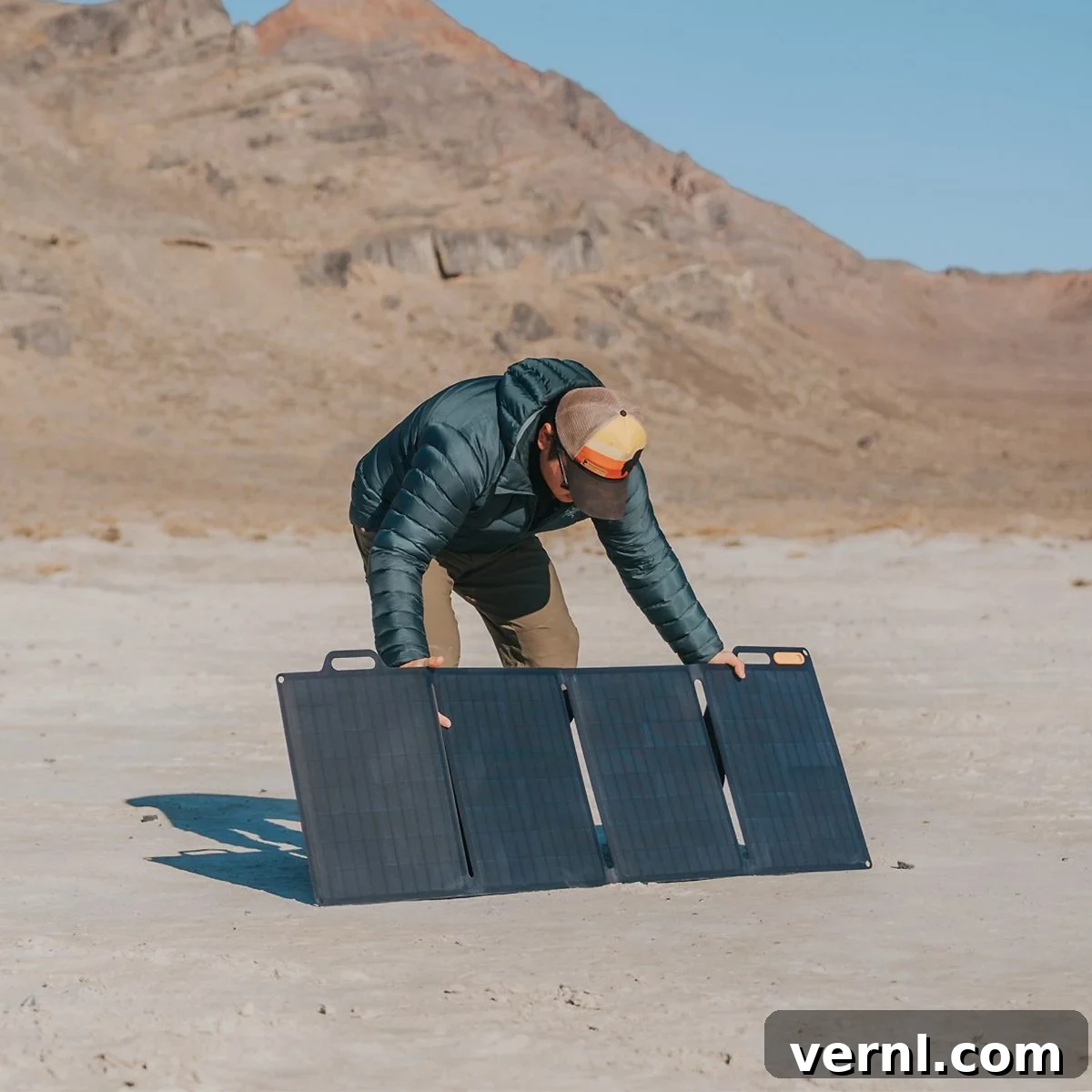
The sun, a colossal powerhouse, unleashes an astonishing 384 yottawatts of energy every second—an output equivalent to roughly 384 hydrogen bombs exploding simultaneously. This immense, free energy source is readily available, and with a modern portable solar panel, you can harness enough of it to power a wide array of devices, from essential laptops and smartphones to heavy-duty power tools and even small appliances.
For many outdoor enthusiasts, like my partner and me, portable solar panels have become indispensable for camping adventures. Our 400-watt solar setup efficiently powers our electric cooler, coffeemaker, laptops, and mobile phones, ensuring comfort and connectivity even in remote locations. We typically connect our panels to a robust portable power station, keeping its internal battery consistently charged. However, many advanced portable solar panels now feature integrated USB ports, allowing for direct charging of your electronics, simplifying your setup on the go.
Embracing portable solar technology isn’t just about convenience; it’s a step towards sustainable living and greater self-sufficiency. Whether you’re exploring the wilderness, living the van life, preparing for emergencies, or simply seeking to reduce your carbon footprint, these devices offer a quiet, clean, and renewable energy solution that empowers you to generate electricity wherever the sun shines.
Key Considerations When Choosing Portable Solar Panels
Selecting the right portable solar panel requires careful thought to match your specific needs. Here’s what to keep in mind:
- Wattage Output (Watts): Panels are rated by the maximum watts they can generate under ideal conditions. However, it’s crucial to understand that real-world performance rarely matches this peak rating. Expect panels to produce approximately 60% to 70% of their advertised wattage. For instance, a 100W panel will typically deliver about 60 to 70 watts per hour under optimal sun exposure. Factors like cloud cover, ambient temperature, panel angle, time of day, and season all significantly influence actual output. To calculate your needs, list all devices you plan to power, their individual wattages, and how many hours you intend to use them. For example, a laptop might draw 60W, and a phone charger 10W. If you use the laptop for 3 hours and charge the phone for 2 hours, you’d need (60W * 3h) + (10W * 2h) = 180Wh + 20Wh = 200Wh. You then need a solar setup capable of generating this energy plus a buffer.
- Geographic Location and Weather: Your environment plays a critical role. If you frequently find yourself in areas with dense tree cover, frequent cloudy days, or shorter daylight hours, you’ll need higher wattage panels. This allows you to accumulate sufficient energy more quickly during limited sun windows, ensuring your batteries are fully recharged for uninterrupted power.
- Maximum Wattage Input of Your Power Station: If you’re pairing your solar panels with a portable power station (which is highly recommended for storing energy), always check the power station’s maximum solar input capacity. Overwhelming the station with too many panels won’t increase charging speed beyond its limit and could potentially damage it. However, because solar panels rarely achieve their rated wattage, you can often exceed the station’s input limit slightly without issues, as the actual output will naturally be lower.
- Physical Dimensions and Portability: The “portable” aspect is key. Portable solar panels are designed to fold into various compact sizes. Assess how much space you have in your vehicle or backpack. Consider the folded dimensions and weight to ensure they are convenient for transportation and storage.
- Panel Composition and Efficiency:
- Monocrystalline: These panels are made from a single crystal silicon structure, making them the most efficient type of solar panel commercially available. They typically have a sleek, uniform dark appearance and perform better in low-light conditions. Most high-quality portable solar panels, including almost all the ones highlighted in this guide, utilize monocrystalline silicon crystals for superior energy conversion.
- Polycrystalline: Composed of multiple silicon fragments melted together, polycrystalline panels are slightly less efficient than monocrystalline but generally more affordable. They have a mottled blue appearance. While less common in high-performance portable models, they offer a good balance of cost and performance.
- Thin-Film (e.g., CIGS): These panels use a very thin layer of photovoltaic material (like Copper Indium Gallium Selenide, or CIGS) deposited on a substrate. They are incredibly flexible and lightweight, making them ideal for applications where traditional rigid panels are impractical. While typically less efficient than crystalline panels, their flexibility means they can conform to surfaces and maintain some energy production even when partially shaded.
- Output Connections and Charge Controllers: If you’re charging a standalone battery (like a car battery or deep cycle battery) directly, a solar charge controller is an absolute must. This device protects your battery from overcharging and prevents power from flowing back to the panels at night, which can drain your battery. Always connect the charge controller to the battery *before* connecting it to the solar panels. Failing to follow this sequence can result in damage to the charge controller.
- Universal Compatibility and Adapters: Most portable solar panel kits come equipped with a comprehensive array of adapters (e.g., MC4, DC 5521, Anderson) to ensure compatibility with a wide range of portable power stations and battery setups. However, be aware that some specific connectors, like certain Anderson power pole configurations, might require a simple rearrangement of their terminals to properly align. Fortunately, these are usually designed for easy modification.
- Cable Length: The length of the included cable is often overlooked. A longer cable allows you to position your solar panels in direct sunlight while keeping your portable power station or devices safely in the shade or inside your vehicle. If the standard cable length is insufficient for your needs, consider purchasing a compatible extension cable.
To maximize the efficiency and lifespan of your portable solar panels, regular maintenance is key. Routinely wipe off dust, pollen, and debris that can accumulate on the surface and obstruct sunlight. Periodically clean them with a mild soap and water solution, rinsing thoroughly. For optimal power generation, particularly when aiming for maximum charge, remember to adjust your panels’ position throughout the day to ensure they are always optimally angled towards the sun.
Understanding Portable Solar Panel Styles
Portable solar panels primarily come in two distinct styles, each offering unique advantages:
Suitcase-Style Panels: These panels feature a rigid aluminum frame with hinges, allowing them to fold in half like a suitcase. They are generally heavier and bulkier than their foldable counterparts, which makes them less portable for hiking but offers superior stability in windy conditions. Their robust construction often translates to greater durability, making them a popular choice for longer-term RV setups, truck campers, or base camps where they aren’t constantly being moved.
Foldable Solar Panels (Blanket/Flexible Style): Encased in a heavy-duty, canvas-like material, these panels are designed for ultimate portability and compactness. Most foldable solar panel faces are coated with Ethylene Tetrafluoroethylene (ETFE), a high-performance polymer. ETFE provides excellent protection against harsh weather elements, UV radiation, and general wear and tear, making the panels highly water-resistant and ensuring longevity. Their lightweight and flexible design makes them ideal for backpacking, van life, or any scenario where minimal space and weight are critical. They can often be draped over tents, vehicle hoods, or hung from structures.
It’s important not to confuse these portable options with “flexible” or “amorphous” solar panels, which are typically very thin, often semi-rigid, and designed to be mounted semi-permanently atop curved surfaces like the roofs of vans, boats, or RVs, adapting to their contours.
My partner and I embarked on a mission to field-test several leading portable solar panels, focusing specifically on the foldable style within the 50W to 200W range. This category best balances power output with the superior portability and packability we require for our extensive outdoor adventures. Here are some of our top picks, presented in alphabetical order:
Anker Solar Panel 625 100W
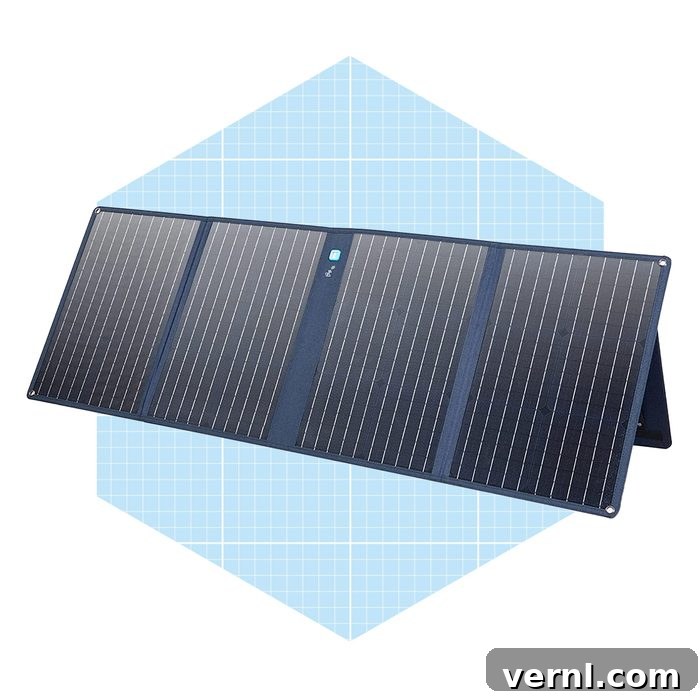
Mirroring the competitive pricing of their popular portable power stations, Anker’s 100W portable solar panels often offer a better value per watt-hour compared to many other major brands. This panel incorporates Anker’s innovative Suncast technology, which features an integrated sundial or alignment guide that assists you in positioning the panels precisely towards the sun for maximum energy capture. A significant advantage is its built-in USB-C and USB-A outputs, enabling you to charge two personal devices directly from the panel simultaneously, bypassing the need for an additional power station for smaller electronics. For a comprehensive power solution, it pairs seamlessly with Anker’s 757 PowerHouse or the more compact 521 PowerHouse portable power stations.
Specs: 11 pounds, folded dimensions 20.7-in. by 18.5-in. by 3.4 in.
BioLite SolarPanel 100
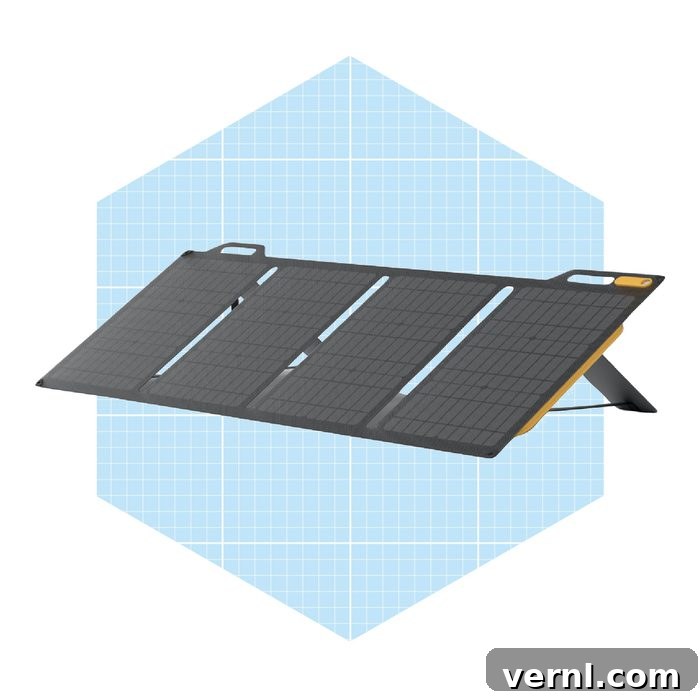
Our experience with BioLite’s SolarPanel 100s was exceptional, as we relied on them from the mountains of Colorado all the way down the rugged Baja Peninsula and back. These panels are not only commendably compact but also feature an integrated sundial, dubbed the “Optimal Sun System,” which greatly simplifies precise alignment for peak performance. Throughout our travels, the panels consistently delivered strong results, maintaining an impressive 70% output efficiency. Additional features include dedicated USB-A and USB-C ports for direct charging of electronics, the capability to chain up to four panels together with an adaptor cable for increased power, and a convenient integrated cable storage pouch to keep everything tidy. These panels are ideally paired with BioLite’s robust BaseCharge 1500 or the more portable BaseCharge 600. BioLite also offers an excellent 10+ solar panel, perfectly sized for backpackers seeking lightweight, reliable power.
Specs: 9.5 pounds, folded dimensions 20.1-in. by 14.25-in. by 1.5 in.
Bluetti PV120 Solar Panel
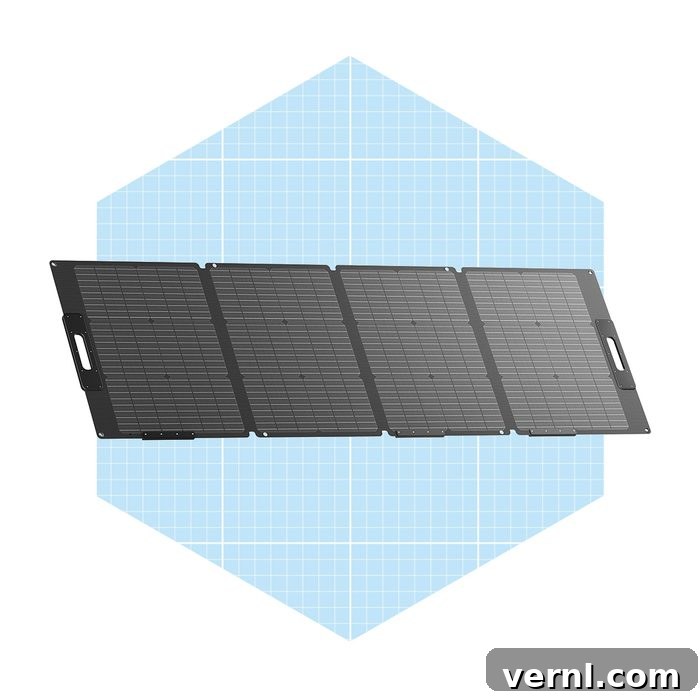
While most portable solar panels are commonly available in 100W or 200W configurations, the 120W Bluetti PV120 Solar Panel carves out a niche in a highly useful intermediate range. It strikes an excellent balance, remaining easily packable and only marginally larger than most 100W models. This extra 20% wattage input proves particularly advantageous in environments where daily sunlight exposure might be intermittently limited by natural obstacles like trees or unpredictable weather patterns. Designed with user convenience in mind, it features an easy-carry handle and secure snaps on its integrated kickstands, allowing you to precisely adjust and fix your desired sunlight collection angle for optimal performance. Bluetti also offers a more powerful 200W version for those with higher energy demands. Both panels are perfectly compatible with the robust Bluetti AC200P Portable Power Station, creating a powerful and versatile off-grid energy system.
Specs: 12.57 pounds, folded dimensions 21-in. by 18.5-in. x 1.5-in.
BougeRV Paso 100W CIGS Portable Solar Blanket
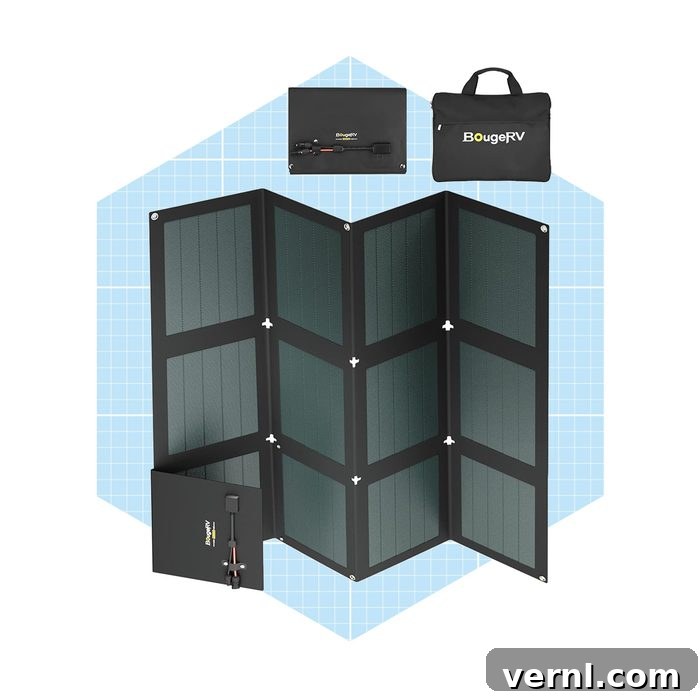
The BougeRV’s 100W solar blanket stands out for its incredible compactness, folding down to roughly the size of a laptop. This impressive portability is achieved through its advanced thin-film CIGS (Copper Indium Gallium Selenide) technology, which offers a different approach to solar energy conversion compared to traditional monocrystalline cells. Uniquely configured with 12 smaller individual panels, this blanket-style design allows it to be draped over irregular surfaces like the top of a tent, across a truck bed, or even hung vertically. This flexible arrangement means that even if a portion of the blanket is shaded or not perfectly aligned with the sun, other panels can still actively generate power, ensuring some continuous charge throughout the day without constant repositioning. Other practical features include a built-in charge controller, simplifying your setup, and a dedicated carry case for easy transport and protection.
Specs: 4.85 pounds, folded dimensions 14.1-in. by 10.6-in. by 1.2-in.
Go Power DuraLite 100-Watt Solar Kit
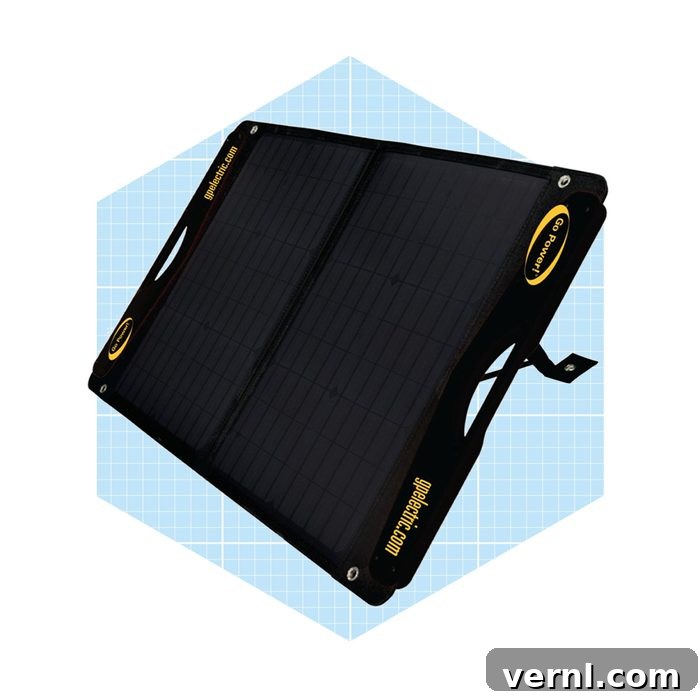
The Go Power DuraLite 100-Watt Solar Kit is a comprehensive solution for direct battery charging, perfect for those who prefer to bypass a portable power station. This kit comes complete with a robust 30-amp charge controller and versatile battery clamps, allowing you to efficiently recharge vehicle batteries, marine batteries, or other freestanding deep-cycle batteries. Beyond its primary function, it offers convenient built-in USB chargers for smaller devices, strong magnetic closures to keep the panel securely folded during transit, a generous 12 feet of cable for flexible placement, comfortable plastic handles for easy carrying, and a practical storage bag. If your primary use case involves connecting to an existing portable power station, you can opt for the more streamlined and slightly more affordable DuraLite 100W Expansion Solar Panel, which omits the battery charging accessories.
Specs: Nine pounds, folded dimensions 21.1-in. by 23.8-in. by 1.8-in.
Goal Zero Nomad 200
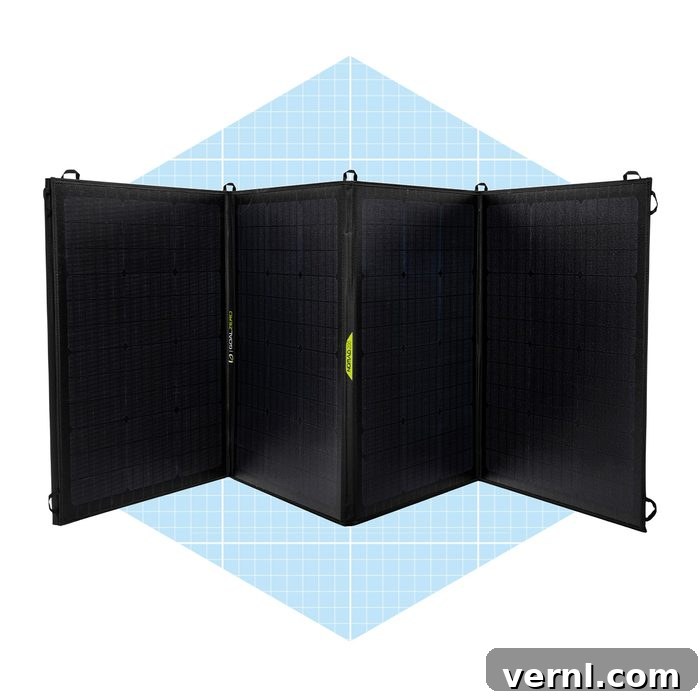
During our extensive Baja expedition, the Goal Zero Nomad 200 proved to be an invaluable power source. Its 200W output eliminates the need for managing two separate 100W arrays, simplifying setup and reducing clutter. While it boasts a larger footprint in your vehicle, the convenience of a single, powerful panel often outweighs the extra space requirement. This durable panel is meticulously designed for outdoor use, featuring convenient stake-down loops on its foldout legs to secure it against wind, a protective carrying case for transport, and a built-in USB-A connector for direct device charging. For those looking to scale up their power, it can be linked with other Goal Zero panels using a power port combiner. Goal Zero’s Nomad series also includes highly portable 100W and 50W foldable panels to suit various power needs. For optimal performance, pair the Nomad 200 with the robust Yeti 500X or the high-capacity Yeti 1500X portable power stations.
Specs: 22 pounds, folded dimensions 28.2-in. by 22.3-in. by two inches.
Lion 50W Foldable Solar Panel
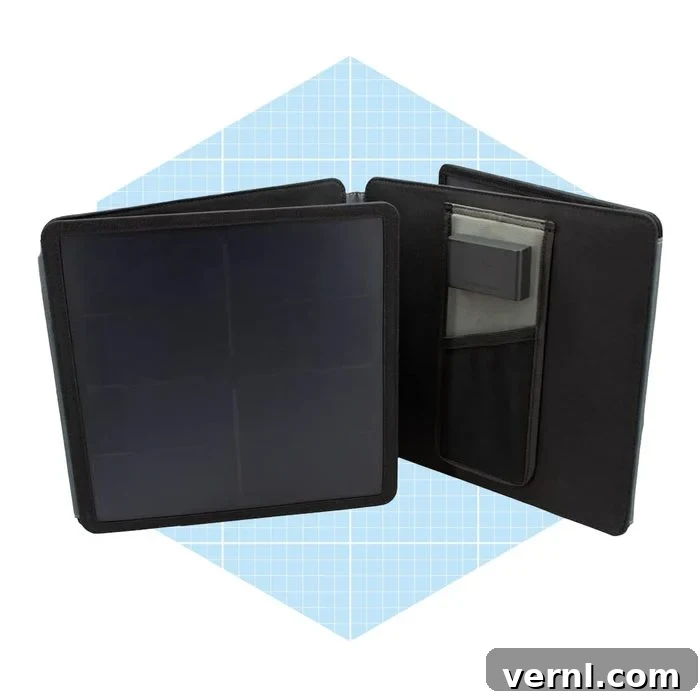
The Lion 50W panel sets itself apart in its class primarily due to its exceptionally low weight and compact size. Tipping the scales at a mere three pounds, it’s approximately half the weight of many competing 50W models, making it an ideal choice for backpackers and hikers where every ounce matters. This panel is not just lightweight; it’s also highly functional, featuring both USB-A and USB-C ports for direct charging of a variety of personal electronics. Furthermore, it comes equipped with a versatile 10-foot barrel-to-barrel cord, offering ample reach for flexible placement and connection to compatible devices or power stations.
Specs: Three pounds, folded dimensions 11.25-in. by 11.25-in. by 1.63-in.
Nicesolar 100W Foldable Solar Panel
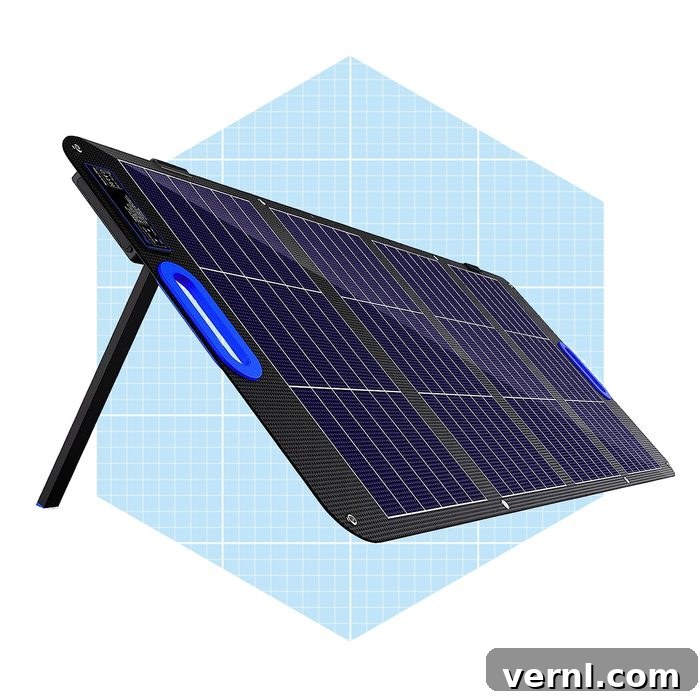
For those seeking the best balance of affordability and performance in a 100W foldable solar panel, the Nicesolar 100W Foldable Solar Panel is an excellent contender. It matches the compactness of other 100W models, making it highly portable. This panel is well-equipped with both USB-A and USB-C ports, providing convenient options for directly charging your personal electronic devices. It also includes a practical carrying case for easy transport and a comprehensive array of connectors, ensuring broad compatibility with virtually any portable power station on the market. While it may possess a few minor quirks not found in more premium, name-brand alternatives, its overall value proposition is outstanding. The manufacturer claims it to be waterproof; however, it’s crucial to note that the connector ports themselves are susceptible to moisture. Therefore, adequate protection for the connectors is advised if the panel is left exposed to rain.
Specs: 7.3 pounds, folded dimensions 20.7-in. by 14-in. by 1.6-in.
Renogy E.FLEX 80 Portable Solar Panel
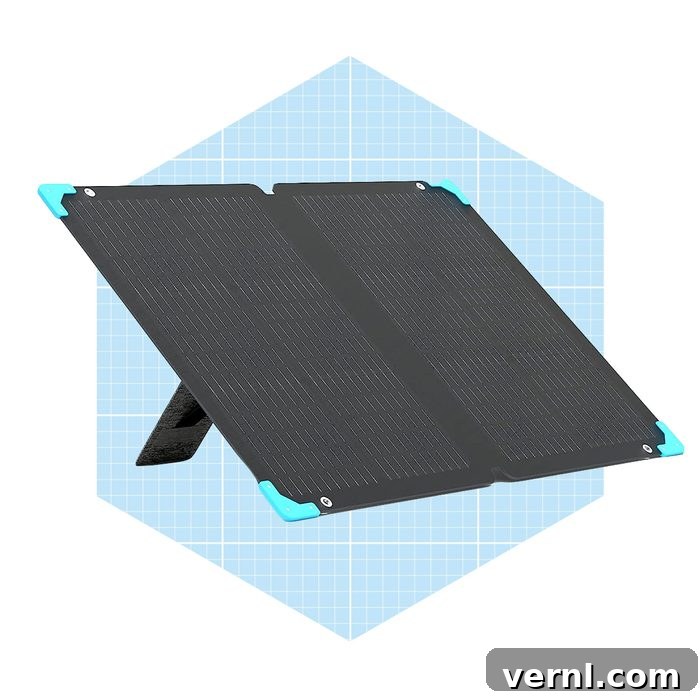
Renogy has established itself as a leading authority in comprehensive off-grid home and RV solar power solutions. Our personal experience with installing one of their robust systems in our van camper has been exceptionally positive, underscoring their commitment to quality and reliability. Building on this expertise, Renogy also produces a range of outstanding portable solar panels, including the highly-regarded E.Flex 80. These panels are renowned for their exceptional durability and consistently high performance in input tests, typically delivering around 70% of their rated power. A significant advantage is their weather-resistant design, allowing them to be left exposed to rain without concern. Thoughtful features include comfortable carrying handles for easy transport, a waterproof storage case for protection, a versatile five-in-one adapter for broad compatibility, and a generous eight feet of cable. For a complete and reliable portable power setup, the Renogy E.Flex 80 pairs perfectly with Renogy’s Phoenix 500 portable power station.
Specs: 7.3 pounds, folded dimensions 24.8-in. by 17.1-in. by one inch.