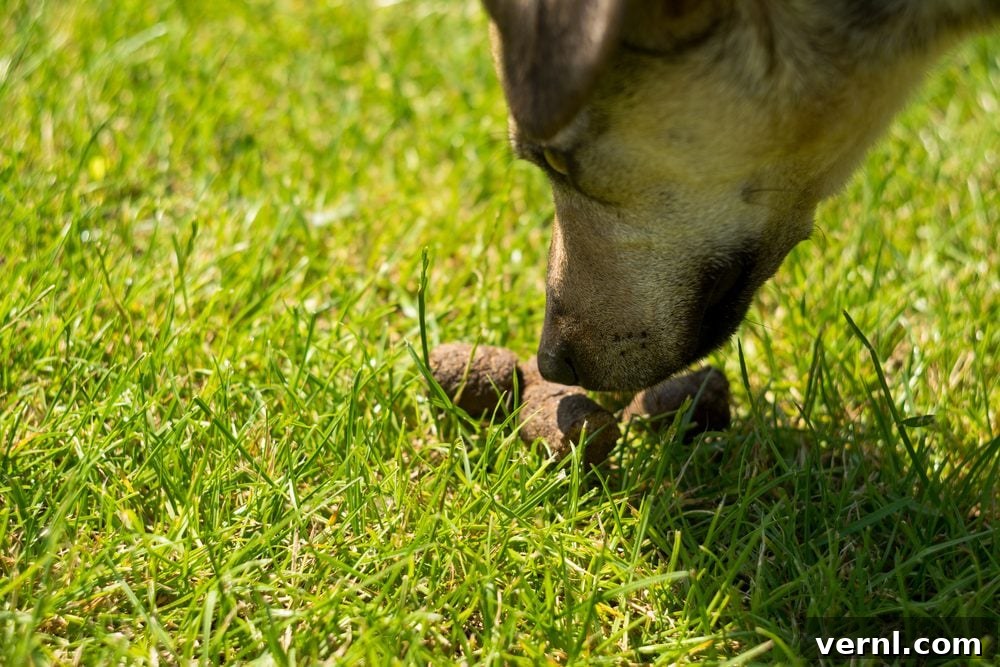
Dogs are beloved companions, known for their loyalty, playful antics, and sometimes, their utterly perplexing behaviors. From the peculiar ritual of kicking up grass after urinating to the comical pre-poop spin, our canine friends often exhibit habits that leave us scratching our heads. While these actions might seem strange, they usually have an underlying instinctual or learned reason. One of the most bewildering and common behaviors among dogs, however, is coprophagia – the act of eating feces.
For many dog owners, discovering this habit can be unsettling, if not outright disgusting. Yet, coprophagia is far from rare. It’s a prevalent issue that affects dogs of all breeds, ages, and backgrounds. While the thought of it might make you cringe, understanding why your dog engages in this behavior is the first crucial step towards effectively addressing it. This comprehensive guide will explore the various reasons behind canine coprophagia, ranging from natural instincts to underlying health issues, and provide actionable strategies to help put an end to this unsavory habit.
Exploring the Instinctual Roots of Coprophagia
Mimicking Maternal Behavior
One of the most widely accepted theories for coprophagia, particularly in puppies, stems from their earliest interactions with their mother. Canine mothers are remarkably diligent in keeping their den clean. They meticulously consume their puppies’ feces, especially during the first few weeks of life, to maintain hygiene and prevent the scent from attracting predators. This innate behavior serves a crucial survival purpose in the wild.
Puppies, being highly observant and imitative, often learn from their mother’s actions. They witness her consuming waste and may begin to mimic this behavior themselves. Initially, this is a natural part of their development. Once puppies begin to eat solid food and produce more substantial waste, and as they grow strong enough to venture outside the den for elimination, the mother typically ceases this practice. However, the learned behavior in the puppy may persist, carrying over into adulthood simply because it’s a habit they’ve developed and reinforced over time.
It’s important to distinguish this early developmental behavior from other forms of coprophagia. While maternal mimicry explains why many young dogs might initially try eating poop, it doesn’t always account for why an older, well-adjusted household dog might develop the habit later in life. For those instances, we must look deeper into potential environmental, behavioral, and health-related factors. Remember, just as we teach our dogs how to avoid accidents indoors, we can guide them away from this particular outdoor habit too.
Psychological and Behavioral Factors Behind Eating Feces
Stress and Anxiety
Just like humans, dogs can experience stress and anxiety, which can manifest in various behavioral issues, including coprophagia. A dog under stress might resort to eating feces as a coping mechanism, a way to self-soothe, or even to hide evidence of an accident if they fear punishment. Common stressors include:
- Changes in Environment: Moving to a new home, the introduction of a new pet or family member, or even a change in routine can be overwhelming.
- Separation Anxiety: Dogs left alone for long periods may develop anxiety, leading to destructive behaviors or coprophagia as a way to cope with loneliness and distress.
- Harsh Training Methods: If a dog is punished for accidents, they may learn to eat their feces to “dispose” of the evidence, fearing repercussions. This is particularly common in dogs from abusive backgrounds who have learned to hide their waste to avoid punishment.
- Confinement: Dogs kept in small, unsanitary spaces for extended periods may develop coprophagia out of desperation or a need to keep their immediate area clean.
It’s crucial for owners to react calmly and avoid punishment when they witness this behavior. A negative or overly emotional reaction can inadvertently reinforce the behavior, as the dog might associate defecating with a negative experience, leading them to consume their stool to avoid your displeasure. Instead, focus on creating a secure, predictable, and positive environment for your dog. For instance, understanding why your dog follows you everywhere can also be linked to their need for security and attention.
Experiencing Boredom and Lack of Stimulation
A dog that lacks sufficient mental and physical stimulation can quickly become bored, leading them to find their own forms of entertainment – which sometimes includes playing with or eating feces. Dogs are intelligent creatures with natural instincts for exploration, play, and problem-solving. When these needs aren’t met, they can develop undesirable habits. Consider these scenarios:
- Prolonged Crate Time: If a dog is confined to a kennel or a small area for extended periods without toys, interaction, or breaks, boredom can set in. Eating poop might simply be a way to alleviate monotony or act as a “toy.”
- Insufficient Exercise: A dog with pent-up energy is more likely to engage in destructive or unusual behaviors. Regular walks, runs, and playtime are essential for their well-being.
- Lack of Mental Engagement: Beyond physical exercise, dogs need mental challenges. Puzzle toys, training sessions, and interactive games can keep their minds sharp and reduce boredom.
Ensuring your dog has a rich and stimulating environment is key. Provide plenty of appropriate toys, engage in regular training sessions, and make sure they get ample exercise tailored to their breed and age. A tired, mentally stimulated dog is less likely to seek out undesirable entertainment.
Seeking Attention
Dogs are masters at getting our attention, even if it’s negative attention. If a dog discovers that eating poop elicits a strong reaction from their owner – whether it’s yelling, chasing, or even just rushing over – they may learn to repeat the behavior simply to gain interaction. This is especially true for dogs who feel they aren’t receiving enough positive attention or engagement from their families.
The cycle often starts innocently: an owner sees the behavior and reacts. The dog, craving interaction, interprets this reaction as a form of attention. Over time, the dog may intentionally eat feces to trigger this response. To break this cycle, it’s vital to avoid giving any attention, positive or negative, to the act itself. Instead, focus on ignoring the behavior while simultaneously increasing positive reinforcement for desirable actions and providing ample appropriate attention throughout the day.
Health and Dietary Reasons for Coprophagia
Feeling Malnourished or Nutrient Deficiencies
One of the most common underlying physiological reasons for coprophagia is a dietary imbalance or malnourishment. This can manifest in several ways:
- Insufficient Food Intake: Some dogs, particularly rapidly growing puppies or highly active adult dogs, may not be receiving enough calories or food to meet their energy requirements. Hunger can drive them to seek out alternative food sources, including feces, which still contain undigested nutrients.
- Poor Quality Food: Many commercial dog foods contain fillers and ingredients that are difficult for dogs to digest properly. If a dog’s food isn’t providing adequate nutrition or is poorly absorbed, undigested nutrients pass through their system and remain in their stool. The dog’s body, sensing a nutritional deficit, may compel them to eat the feces in an attempt to re-ingest these missing nutrients.
- Intestinal Parasites: Worms and other intestinal parasites can rob a dog of essential nutrients, leading to chronic hunger and malabsorption. Even if a dog is eating enough food, these internal invaders can cause malnourishment, prompting the dog to eat feces in a desperate attempt to satisfy their hunger and nutrient needs. Regular deworming and veterinary check-ups are crucial for preventing this.
Addressing nutritional deficiencies often involves evaluating your dog’s diet, ensuring they are fed a high-quality, nutrient-dense food appropriate for their age, size, and activity level. Consulting with a veterinarian is essential to rule out parasites or other underlying medical conditions.
Digestion Issues and Medical Conditions
Beyond simple malnourishment, various digestive problems and underlying medical conditions can also contribute to coprophagia. When a dog’s digestive system isn’t functioning optimally, their body may not be able to fully extract and absorb nutrients from their food, leading to a state of internal hunger or deficiency.
- Exocrine Pancreatic Insufficiency (EPI): This condition, common in some breeds, means the pancreas doesn’t produce enough digestive enzymes. Without these enzymes, food passes through the digestive tract largely undigested, making the dog feel perpetually hungry and sometimes leading to coprophagia as they seek to re-ingest enzymes or nutrients.
- Malabsorption Syndromes: Various gastrointestinal diseases can impair a dog’s ability to absorb nutrients, even from a good diet. Conditions like Inflammatory Bowel Disease (IBD) can lead to chronic hunger and nutrient loss.
- Diabetes or Thyroid Issues: Certain metabolic diseases can increase a dog’s appetite or alter their metabolism, potentially leading to unusual eating habits.
- Medication Side Effects: Some medications, like steroids, can increase a dog’s appetite, which might inadvertently lead to coprophagia.
If your dog suddenly starts eating poop, especially if accompanied by other symptoms like weight loss, vomiting, diarrhea, or changes in appetite, a prompt visit to the veterinarian is crucial. A thorough medical examination, including blood tests and stool analysis, can help diagnose any underlying health issues that need to be addressed.
Effective Strategies to Stop Coprophagia
While the reasons behind coprophagia are varied, the good news is that there are multiple effective strategies to curb this behavior, often requiring a combination of approaches. Consistency and patience are key.
- Optimize Their Diet:
- High-Quality Food: Transition your dog to a premium, easily digestible dog food rich in protein, fiber, and essential nutrients. Avoid foods with excessive fillers or artificial ingredients.
- Proper Portions and Schedule: Ensure your dog is receiving adequate food for their age, activity level, and breed. Feed smaller, more frequent meals if recommended by your vet to aid digestion and prevent extreme hunger.
- Digestive Supplements: Discuss with your veterinarian about adding digestive enzymes or probiotics to their food, especially if digestive issues are suspected.
- Coprophagia Deterrents: There are supplements designed to make stool taste unappetizing to dogs. These typically contain ingredients like Yucca schidigera, garlic, or monosodium glutamate. While they can be effective for some dogs, results vary, and they should be used under veterinary guidance.
- Environmental Management and Hygiene:
- Immediate Clean-Up: This is arguably the most effective and simplest method. As soon as your dog defecates, clean it up immediately. Don’t give them the opportunity to eat it. This is crucial for both indoor and outdoor spaces. Here are 8 ingenious ways to pick up your dog’s poop.
- Supervision: Supervise your dog closely during outdoor potty breaks. Keep them on a leash in the yard if necessary to prevent them from accessing feces.
- Increase Exercise and Mental Stimulation:
- Adequate Physical Activity: Ensure your dog gets plenty of exercise daily. Long walks, runs, fetch, and dog park visits can burn off excess energy and reduce boredom.
- Mental Enrichment: Engage your dog’s mind with puzzle toys, interactive feeders, scent games, and regular training sessions. A mentally stimulated dog is a happy dog.
- Behavioral Training and Positive Reinforcement:
- “Leave It” Command: Teach your dog the “leave it” command. Practice this with various tempting items (not poop, initially!) and generalize it to outdoor environments. When you see them approaching feces, use the command.
- Reward Desired Behavior: Instead of punishing for eating poop, reward them generously for leaving it alone, for focusing on you during potty breaks, or for coming to you after eliminating. Positive reinforcement is far more effective than punishment.
- Avoid Punishment: Never punish your dog for eating poop or for having accidents. Punishment can increase stress and anxiety, potentially worsening the problem.
- Seek Professional Veterinary Advice:
- Comprehensive Health Check: Always consult your veterinarian first. They can rule out any underlying medical conditions, such as parasites, malabsorption issues, or other diseases, that might be contributing to the behavior.
- Behavioral Consultation: If medical issues are ruled out, your vet may refer you to a certified professional dog trainer or a veterinary behaviorist. These experts can help design a tailored behavioral modification plan to address the specific triggers and motivations behind your dog’s coprophagia.
Coprophagia, while unpleasant, is a common canine behavior with diverse origins. By carefully observing your dog, understanding their needs, and implementing a multi-faceted approach involving dietary adjustments, environmental management, increased stimulation, and positive reinforcement training, you can significantly reduce or eliminate this habit. Remember, patience and consistency are your greatest allies in helping your furry friend overcome this peculiar behavior and ensuring they lead a healthier, happier life.