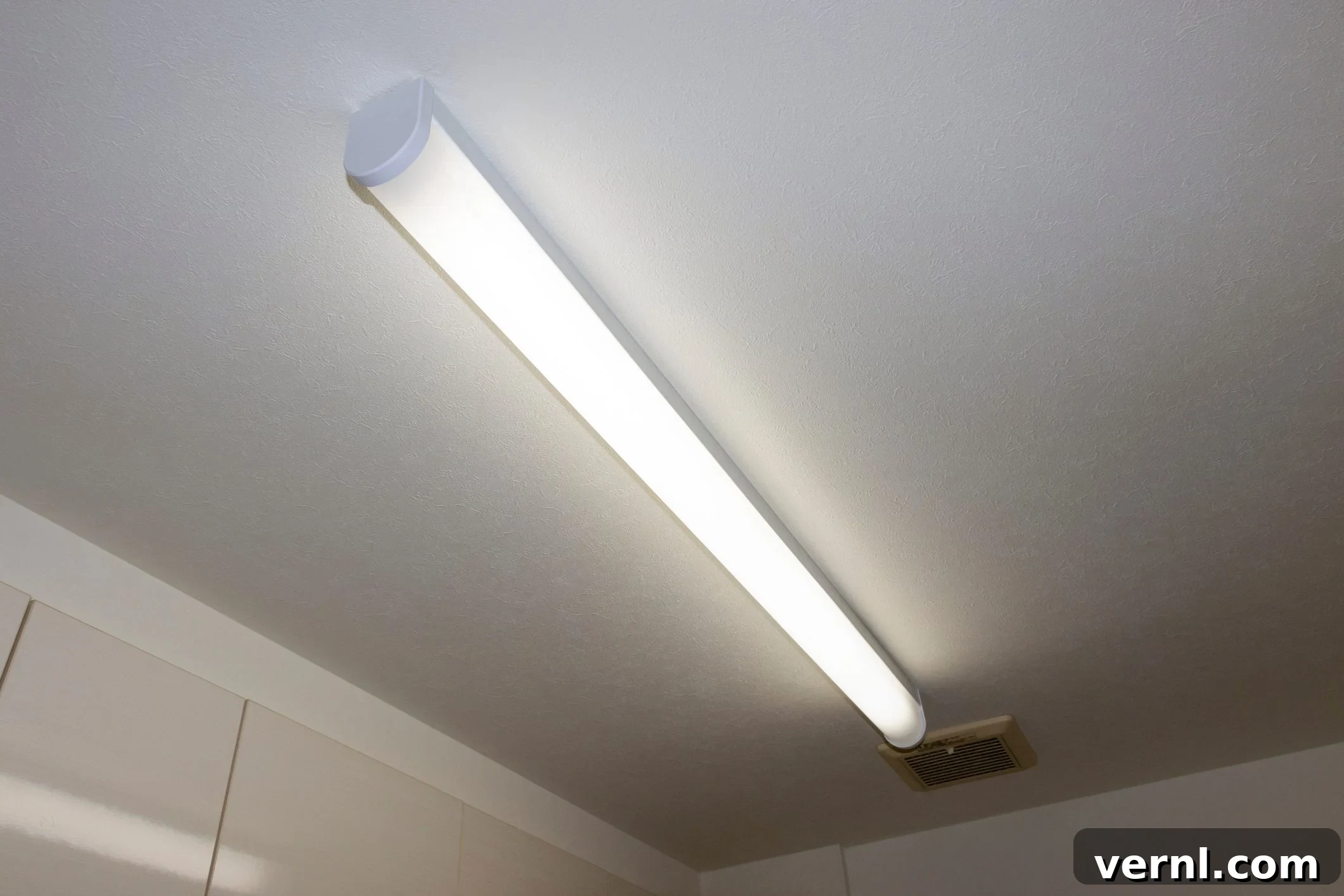
Fluorescent Lights: Unpacking the Enduring Glow
In our modern world, artificial lighting is a ubiquitous convenience we often take for granted. We enter a room, and with a simple flick of a switch, illumination instantly transforms the space. But beyond the immediate comfort of light, have you ever paused to consider the specific technology behind the glow? While light-emitting diodes (LEDs) now dominate conversations about cutting-edge lighting, the humble fluorescent lamp, commonly known as a fluorescent lightbulb, continues to play a significant role in countless environments.
From the expansive aisles of your local supermarket to the bustling offices and classrooms that form the backbone of our communities, fluorescent lighting has been the go-to choice for large-space illumination for decades. Those familiar long, slender tubes are a testament to a technology that revolutionized efficiency and affordability in lighting. To truly understand this enduring innovation, we sought insights from leading experts: Terry McGowan, director of engineering at the American Lighting Association, and Joel Worthington, president of Mr. Electric. Join us as we delve into the dependable, cost-effective world of fluorescent lights.
What Exactly Are Fluorescent Lights?
Fluorescent lights represent a distinct category of energy-efficient lighting technology, prevalent in diverse settings ranging from residential garages and workshops to vast commercial spaces, corporate offices, educational institutions, and industrial facilities. Their intriguing name, “fluorescent,” is directly derived from the unique scientific principle by which they produce light. In essence, a substance that “fluoresces” has the remarkable ability to absorb energy, typically in the form of light or other electromagnetic radiation, and then re-emit that energy as visible light, usually at a different, longer wavelength.
Prior to the advent of fluorescent technology, humanity largely relied on the incandescent lamp. This older technology generated light by heating a tiny metal coil, known as a filament, until it glowed white-hot within a glass bulb. Terry McGowan aptly describes the incandescent lamp as a “hot wire in a bottle,” highlighting its fundamental inefficiency. Incandescent bulbs typically produced a meager 10 lumens of light output per watt of electricity consumed, squandering a significant portion of their energy as wasted heat rather than visible light. This inherent inefficiency was the primary driver behind the urgent quest for more effective lighting solutions.
The development of fluorescent technology marked a monumental leap forward in lighting efficiency. Early fluorescent lamps dramatically boosted light output to an impressive 60 to 70 lumens per watt, representing a six to seven-fold improvement over their incandescent predecessors. While the precise historical timeline of its invention involves “some controversy about who did what and when,” according to McGowan, it is widely acknowledged that General Electric (GE) pioneered the commercial introduction of fluorescent lamps to the market in the autumn of 1938. This innovation quickly transformed how large spaces were lit, offering brighter, more uniform, and far more economical illumination.
More than eighty years since their debut, fluorescent lights continue to be widely utilized. Joel Worthington underscores their enduring appeal, noting that fluorescents are remarkably efficient, inexpensive, and highly versatile. “No other type of lighting has historically cost less for general interior lighting,” he affirms, emphasizing their unparalleled value proposition. While the lighting landscape is undeniably shifting towards newer technologies, particularly LEDs, Worthington advises against panic. He clarifies that while fluorescents are “less common in new construction due to the growing popularity of LED lighting,” they remain readily available for purchase, ensuring that existing fixtures can continue to be maintained and used effectively. For those interested in enhancing their existing fluorescent setups, exploring options like fluorescent light covers can be a great way to transform drop ceiling aesthetics and light distribution.
The Inner Workings: How Fluorescent Lights Produce Illumination
The magic of a fluorescent light stems from a fascinating interplay of electricity, gas, and specialized coatings. At its core, fluorescent light production involves passing an electric current through a contained gas or vapor, initiating a multi-step process that ultimately generates visible light.
Consider a typical long fluorescent tube, similar to those you’d encounter in a retail store or warehouse. Inside this sealed glass tube resides an inert gas, such as argon, combined with a minute amount of mercury vapor. When you activate the light switch, an electrical current flows to electrodes located at each end of the tube. This current creates an electrical arc between the electrodes, exciting the inert gas and, critically, the mercury vapor within. As the mercury atoms become energized, they emit invisible ultraviolet (UV) light.
Since UV light is imperceptible to the human eye, a conversion mechanism is essential. This is where the “phosphor” coating comes into play. Manufacturers meticulously coat the entire inner surface of the fluorescent lamp with this powdered chemical compound. When the UV light emitted by the excited mercury atoms strikes the phosphor coating, the phosphor absorbs the UV energy and, in turn, fluoresces, re-emitting the energy as visible light that we can perceive. As Terry McGowan explains, “The visible light that comes from fluorescent bulbs comes from the inside surface of the bulb itself,” making the phosphor coating the true source of the visible glow.
Crucial to the operation of fluorescent lights is a component known as a “ballast.” This essential device, often housed within the light fixture itself or, in more compact designs, integrated into the lamp’s base, serves as a current-limiting mechanism. Without a ballast, the electrical arc within the tube would quickly become unstable and increase uncontrollably, leading to rapid destruction of the lamp. Ballasts regulate the flow of electricity, providing the necessary voltage to initiate the arc and then stabilizing the current to ensure consistent, efficient operation. Older fluorescent fixtures typically feature magnetic ballasts, which can sometimes produce an audible hum and contribute to light flicker, whereas newer electronic ballasts offer quieter operation and more stable light output.
Understanding this process highlights the fundamental differences between various lighting technologies. Unlike incandescent lamps, which rely on extreme heat to generate light, or LEDs, which produce light directly from the surface of a semiconductor diode, fluorescent lamps employ a gaseous discharge and a two-stage conversion process. Terry McGowan further differentiates LEDs by noting they have “no gas, no tubing, and no hot filament.” While LEDs also utilize phosphor to achieve specific visible light colors, this phosphor is typically painted directly onto the diode, a composite of metals and alloys integrated into the light housing. With LEDs, “When the electricity flows, light is emitted directly from the surface of the LED,” signifying a more direct and often more efficient light generation method compared to fluorescence.
The Evolution of Fluorescent Lights: From Tubes to CFLs
While the iconic long fluorescent tubes revolutionized commercial and industrial lighting, for many decades, there remained a significant gap in the market: a truly energy-efficient replacement for the small, screw-in incandescent bulbs commonly found in homes. Fluorescent technology, while versatile in terms of tube configurations, sizes, and colors, needed to adapt to more conventional residential fixtures. This need paved the way for a crucial evolutionary step: the compact fluorescent lamp, or CFL.
Developed in the 1970s, the CFL was an ingenious engineering solution designed to mimic the familiar form factor of an incandescent bulb while retaining the superior efficiency of fluorescent technology. As McGowan points out, CFLs were designed to “look more like an incandescent lamp in size,” despite fundamentally being “still a fluorescent lamp with a long arc tube and a ballast.” The key innovation was a miniaturized glass tube, often intricately folded or spiraled, which allowed the lamp to fit into standard incandescent sockets. Furthermore, the essential ballast, traditionally a separate component within the light fixture, was successfully integrated into the base of the CFL itself. This self-contained design granted consumers unprecedented freedom, enabling them to easily upgrade to more energy-efficient lighting in their existing household fixtures without needing new wiring or specialized equipment.
CFLs brought substantial improvements in performance. They were significantly more energy-efficient than incandescents, consuming a fraction of the electricity for comparable light output. Moreover, their lifespan was dramatically extended, offering 6,000 to 15,000 hours of use compared to the typical 1,000 hours of an incandescent bulb. This meant fewer bulb replacements and lower energy bills, fulfilling a crucial need for increased efficiency and innovation in residential lighting.
Despite these compelling advantages and concerted public awareness campaigns, particularly by organizations like Energy Star, CFLs “never quite caught on” with the widespread enthusiasm their developers hoped for. Several factors contributed to this lukewarm adoption. Initial CFLs often had a noticeable warm-up period, taking a few moments to reach full brightness, which was a contrast to the instant-on nature of incandescents. Many consumers also found the light quality or color rendering of early CFLs to be less appealing or “cooler” than the warm glow of incandescent bulbs. Their distinctive spiral or bent tube shapes, while functional, didn’t always aesthetically blend with certain fixture designs. However, one of the most significant drawbacks, and a point of growing concern, was disposal. As Joel Worthington highlights, because fluorescent lamps, including CFLs, contain mercury, “handling and disposing of fluorescent bulbs requires some care.” This mandates taking them to specialized recycling centers or approved retail locations rather than simply discarding them with regular household garbage, adding a layer of inconvenience that many consumers were unwilling to accept.
Fluorescent Lights: A Balanced View of Pros and Cons
Fluorescent technology has undeniably left a lasting impact on how we illuminate our world. Yet, like any technology, it comes with a distinct set of advantages and disadvantages. Evaluating these can help determine if fluorescent lighting remains the right choice for specific applications, especially in an evolving market.
Pros of Fluorescent Lighting
- Excellent Value: Fluorescent lamps are renowned for their cost-effectiveness. Not only are they typically inexpensive to purchase initially, but their operational costs are also low due to their superior energy efficiency compared to incandescent bulbs. This makes them a budget-friendly choice, especially for large-scale installations where numerous fixtures are required.
- Long Lifespan: One of the significant advantages of fluorescent lighting is its extended operational life. Full-sized fluorescent tubes can provide between 20,000 to 30,000 hours of use before requiring replacement, while compact fluorescent lamps (CFLs) are rated for up to 15,000 hours. This impressive longevity significantly reduces maintenance frequency and associated labor costs, particularly in commercial or industrial settings.
- Widely Available: Despite the rise of LEDs, fluorescent lamps remain widely available in the market. This ensures that facility managers and homeowners with existing fluorescent fixtures can easily find replacement bulbs, preventing the need for costly and extensive fixture upgrades in the short term.
- Good Variety and Versatility: Fluorescent lights offer considerable versatility in terms of configurations, sizes, and light outputs. They are available in various tube diameters (T12, T8, T5), circular shapes, and a spectrum of color temperatures, from warm white to cool white and even daylight simulations. This variety allows for customization to suit different aesthetic preferences and functional requirements of a space.
- Ease of Installation and Maintenance: Fluorescent lamps are generally lightweight, making them relatively easy to install, particularly the long tube variants in lay-in ceiling grids. Their simple design also contributes to straightforward cleaning and routine maintenance procedures.
Cons of Fluorescent Lighting
- Temperature Sensitivity: Fluorescent lights do not perform optimally in extreme temperatures. In very cold environments, their light output can drop significantly, and they may even struggle to start. Conversely, if they operate in excessively hot conditions, their lifespan can be reduced, and their efficiency might decrease. This makes them less suitable for unheated outdoor spaces or high-heat industrial applications.
- Environmental Concerns: A primary environmental drawback of fluorescent lamps is their mercury content. Mercury is a potent neurotoxin, and if bulbs are broken or disposed of improperly, this mercury can contaminate soil and water sources, posing significant ecological and health risks.
- Complicated Disposal: Due to their mercury content, fluorescent lamps cannot be simply thrown into regular household garbage. They require special handling and must be taken to designated recycling centers or retail locations that participate in take-back programs. This adds a layer of inconvenience and can be a barrier for proper disposal, leading to environmental contamination if not followed.
- Flicker: Older fluorescent fixtures, especially those with magnetic ballasts, can exhibit a noticeable flicker. While often imperceptible to the naked eye, this flicker can cause eye strain, headaches, and general discomfort for some individuals. It can also interfere with certain types of video recording and photography.
- Poor Dimming Capabilities: Dimming fluorescent lighting is technically complex and often expensive. It requires specialized dimmable ballasts and compatible switches, which significantly increases the overall cost and complexity of the lighting system. This limitation makes them less ideal for applications where adjustable light levels are frequently desired, such as residential living areas or presentation spaces.
- Audible Hum or Buzz: Magnetic ballasts, common in older fluorescent fixtures, are known to produce an audible hum or buzz during operation. While not always disruptive, this noise can be bothersome in quiet environments like offices, libraries, or homes, impacting comfort and concentration.
- Warm-up Time: While modern fluorescents have improved, many, particularly older models and CFLs, still require a brief warm-up period to reach full brightness. This “instant-on” delay can be an inconvenience in areas where immediate full illumination is desired.
Do Fluorescent Lights Have a Future? A Look Ahead
The trajectory for fluorescent lights, while not immediate extinction, points towards a gradual but inevitable phase-out. Their future is increasingly constrained by environmental regulations and the rapid advancements of superior, more sustainable lighting alternatives, primarily LEDs.
The critical catalyst for fluorescence, mercury, is also its Achilles’ heel. As a major neurotoxin, the presence of mercury in these bulbs raises serious environmental concerns. When fluorescent bulbs break or are improperly disposed of—a fate that befalls an estimated 75% of all fluorescent bulbs in the U.S., according to the American Council for an Energy-Efficient Economy (ACEEE)—the mercury can leach into landfills, eventually finding its way into lakes, rivers, and wetlands. This contamination poses severe threats to aquatic ecosystems, harming fish and shellfish, and ultimately impacting human health through the food chain. Joel Worthington notes that “fluorescent lightbulbs are gradually being phased out in many regions due to their environmental impact and the advent of more energy-efficient alternatives.”
Regulatory actions are accelerating this transition. Currently, seven U.S. states—California, Vermont, Hawaii, Colorado, Oregon, Rhode Island, and Maine—have already taken decisive steps to ban the sale of general-use fluorescent lightbulbs. This patchwork of state-level bans is often a precursor to broader federal action. Terry McGowan anticipates that the Department of Energy (DOE) will further tighten federal restrictions on lighting efficiency standards in the coming years. The DOE’s current regulations require most lamps sold to achieve at least 45 lumens per watt, a standard that effectively banned incandescents from the general market. McGowan predicts that if the DOE raises this standard to a more stringent 100 lumens per watt, as expected, fluorescent lamps will be the next category to face a widespread federal ban.
Despite these clear indications of a winding down, fluorescent lights are still pervasive in existing infrastructure globally. McGowan points out that it will realistically take many years to develop truly universal LED counterparts for every specialized application and to fully replace the vast number of existing fluorescent lamps in service. Some niche applications, such as high-heat incandescent oven lights, still lack effective fluorescent or even widespread LED alternatives, suggesting a period of technological overlap. However, the trajectory is clear: as LED technology continues to advance, becoming ever more efficient, versatile, and affordable, McGowan concludes that “the virtual elimination of other types is likely.” The future of lighting is undeniably LED, with fluorescent lamps slowly fading into the annals of lighting history.
About the Experts
- Terry McGowan serves as the director of technology for the esteemed American Lighting Association. With a distinguished career spanning over 20 years at General Electric Lighting, his expertise is invaluable in understanding lighting advancements.
- Joel Worthington is the president of Mr. Electric, a Neighborly company. Mr. Electric provides a comprehensive range of residential and commercial electrician services, making Joel a key voice on practical lighting applications and trends.
- Cathy Milbourn, the press contact for the U.S. Environmental Protection Agency (EPA), provided crucial background information and context on lighting innovations and their environmental implications.