Objects in Mirror Are Closer Than They Appear: A Driver’s Guide to Mirror Safety
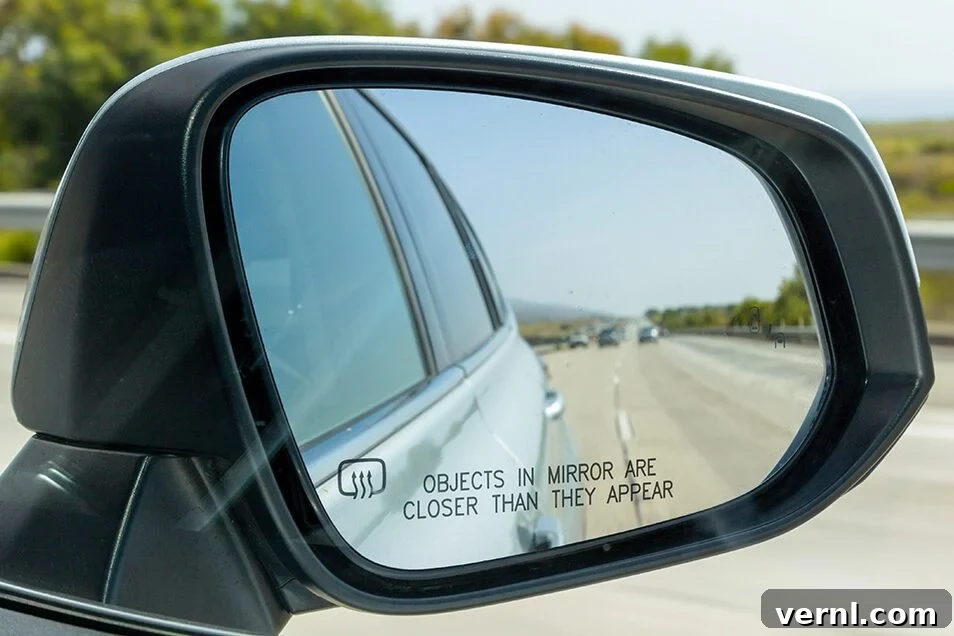
“Objects in mirror are closer than they appear.”
This familiar warning is etched onto almost every sideview mirror, a constant reminder for drivers. But have you ever truly considered what it signifies? We often read it without fully grasping its implications. What does it actually mean that objects are closer than they appear? How much closer, and how should drivers adjust their actions on the road based on this information? This article delves into the science behind sideview mirrors, specifically the passenger-side mirror, and clarifies how drivers can best utilize them to enhance road safety and prevent accidents.
This guide aims to provide a clear understanding of why sideview mirrors can be deceptive when it comes to judging distance and provides practical advice for safer driving habits. We’ll explore the design differences between driver-side and passenger-side mirrors, the impact of these differences on the perceived distance of objects, and essential safety tips for mitigating the risks associated with mirror distortions.
The Unreliability of Passenger-Side Mirrors
The mirrors on your car are not created equal. There’s a fundamental difference between the driver’s side and the passenger’s side mirrors. This difference significantly impacts how you perceive the surrounding traffic and environment.
The driver’s side mirror is typically a flat mirror. This design provides an accurate reflection of distance and size, mirroring reality without distortion. This is the same type of mirror you see when brushing your teeth each morning. Because the mirror surface is flat, the reflection accurately represents the size and distance of objects.
However, the passenger-side mirror is typically a convex mirror. This is where the warning “Objects in mirror are closer than they appear” comes into play. The convex shape is curved outwards, giving a wider field of view. This wider view is a great advantage, allowing you to see a broader area alongside your vehicle. This feature is particularly useful for spotting vehicles in your blind spot and for monitoring traffic flow.
The trade-off for this wide view is distortion. The curvature of the convex mirror causes objects to appear smaller and farther away than they actually are. This distortion can be a significant hazard if drivers are not aware of it. The primary function of a convex mirror is to increase the field of view. The design compresses the image, allowing drivers to see more of what’s to their side, which aids in safe lane changes and merges. However, this compression also creates a visual illusion where objects seem further away than they are.
How Distance Perception is Affected
The primary issue with convex mirrors is the alteration of distance perception. The distorted images that they produce can lead drivers to misjudge the distance of other vehicles on the road.
When you glance into your passenger-side mirror, an approaching car may look to be a safe distance away. However, due to the mirror’s curvature, the car is likely much closer than it appears. This distortion can be dangerous when making maneuvers like changing lanes or merging into traffic.
This is because the convex shape of the mirror effectively shrinks the image. A car that is, in reality, a short distance away will appear to be further away because of the compression caused by the curvature. This deceptive perspective can lead to incorrect decisions.
This is where the warning on the mirror becomes crucial. It serves as a constant reminder that the images you see are not entirely accurate, and that you should take extra precautions and use multiple methods to verify the safety of any maneuver. This inherent distortion requires drivers to rely on additional checks to ensure their safety and the safety of others on the road.
The Importance of Compensating for Mirror Distortion
The impact of mirror distortion on driving safety is significant, which is why experts emphasize the need for drivers to use mirrors correctly and cautiously. The distorted image that convex mirrors provide requires the driver to compensate and use additional methods to verify safety.
It’s vital to recognize that your sideview mirrors, particularly the passenger-side mirror, should be used as a reference point only. Do not solely rely on them to determine distances or the safety of a lane change or turn. It’s crucial to supplement your mirror checks with a physical head check.
Before changing lanes, turning, or merging, always turn your head and look over your shoulder to check your blind spot. This direct visual confirmation of your surroundings is the only reliable way to ensure that the path is clear and that no other vehicles are in your blind spot. This action helps eliminate the inherent inaccuracy of the sideview mirror and ensures the safety of the maneuver.
For example, you might believe that a lane is empty based on the appearance in your passenger-side mirror. But, the car in that lane might actually be much closer than it appears. Without the physical head check, you risk a collision.
Similarly, when backing out of a parking space, relying solely on your mirrors can be risky. Cars and pedestrians can appear farther away than they actually are, increasing the chances of an accident. Always conduct a thorough visual sweep of the area before moving your vehicle.
In addition to the head check, be mindful of the speed of approaching vehicles. A vehicle that appears to be far away in your mirror can quickly close the distance. Always factor in the speed of other vehicles when making decisions. If you are unsure, it’s always best to wait for an opportunity to safely maneuver.
Safe Driving Practices with Sideview Mirrors
To enhance driving safety and mitigate the risks associated with mirror distortions, here are several safe driving practices:
- Adjust Your Mirrors Properly: Before driving, adjust your sideview mirrors to minimize blind spots. The mirrors should be angled outward slightly so that you can see the side of your car, the road, and the traffic around you.
- Use Mirrors as a Reference, Not a Guarantee: Understand that your sideview mirrors offer a broad overview of your surroundings, but they’re not a perfect representation of distance or speed.
- Perform Shoulder Checks: Always look over your shoulder to check your blind spots before changing lanes, merging into traffic, or turning.
- Be Mindful of Speed: Pay attention to the speed of approaching vehicles. A vehicle that seems far away can rapidly close the distance.
- Check Your Mirrors Frequently: Regularly glance at your mirrors to stay aware of your surroundings, but always confirm with a head check before changing lanes or making any significant maneuver.
- Give Yourself Extra Space: When in doubt, give other vehicles plenty of space. It’s always better to err on the side of caution.
By implementing these practices, drivers can significantly reduce their risk of accidents and become more aware of the limitations of their vehicle’s mirrors. This will lead to safer driving habits and a decreased chance of collisions on the road.
Conclusion: Prioritizing Safe Driving
The warning “Objects in mirror are closer than they appear” is more than just a phrase; it’s a vital safety reminder. Recognizing the distortions caused by convex mirrors is essential for every driver. By understanding how these mirrors work, and supplementing mirror checks with shoulder checks, and incorporating other safety practices, drivers can make informed decisions. This allows them to drive more safely and confidently, protecting themselves and others on the road.
Driving safely means adopting a proactive approach and a mindset of continuous awareness. By following the tips and recommendations discussed in this article, you can improve your driving skills and substantially reduce your chances of being involved in a collision.
Source
California Driver’s Handbook Section 8: Safe Driving 2025
Related Articles
- Do You Know What That Little Button on Your Seat Belt Is For?
- What Those Lines on Your Backup Camera Really Tell You
- Here’s What The Small Panel On Your Car’s Front Bumper Is For