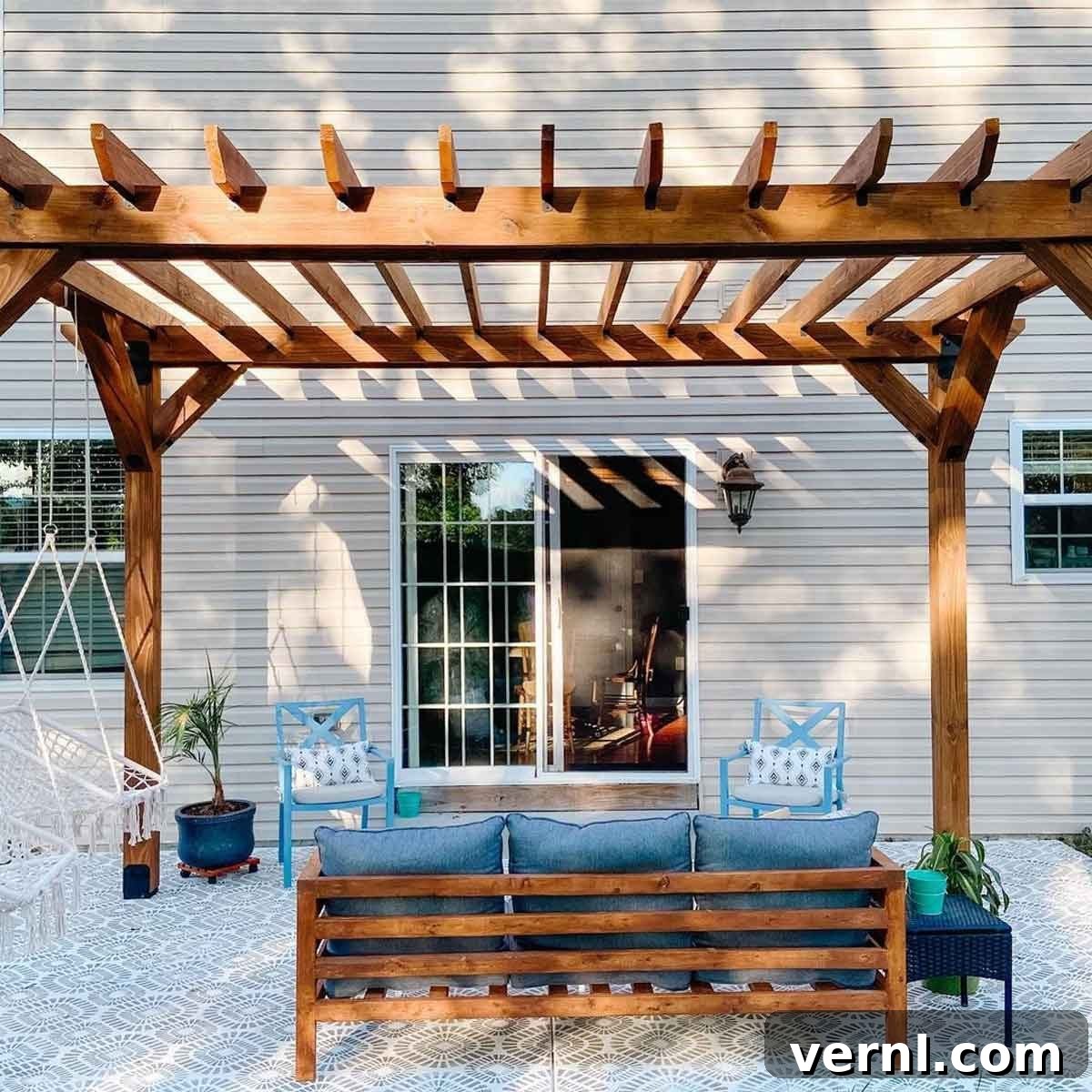
Pergolas: Elevate Your Outdoor Space
The word “pergola,” originating from Italian, evokes images of tranquil outdoor settings – think meals enjoyed beneath a canopy of fragrant climbing plants like bougainvillea or jasmine. In recent years, pergolas have surged in popularity, becoming a sought-after addition to homes across the country.
Outdoor living continues to be a priority for many, making now an excellent time to consider enhancing your deck or patio with a stylish and functional pergola. Adding a pergola not only creates a visually appealing focal point but also significantly improves the usability of your outdoor space.
What is a Pergola? A Definition and Overview
A pergola is a permanent garden structure, essentially a hardscape element, consisting of vertical columns or pillars that support an open crossbeam roof. This design provides a framework that can be adorned with climbing vines, flowering plants, or left bare for a more minimalist aesthetic. Pergolas can be freestanding, attached to a building, or connect two structures.
Contemporary pergola designs often embrace modern styles, with bare crossbeams or coverings made from materials such as bamboo, clear vinyl, or fabric, providing shade and adding visual interest to your outdoor area.
Why Choose a Pergola for Your Deck or Patio? Key Benefits
A pergola offers a fantastic way to expand your living space outdoors. The combination of cross beams, greenery, or a roof provides essential shade, making your deck or patio more comfortable during the hottest parts of the day. This creates a pleasant environment where you can relax, entertain, and enjoy the outdoors.
If you opt for a waterproof covering or cultivate a dense canopy of vines, a pergola can even provide a functional outdoor space during light rain showers, extending its usability even further.
Beyond shade, pergolas enhance privacy, allowing you to create a secluded outdoor retreat. While a classic pergola has open sides, you can personalize your space by adding fabric panels, latticework covered in vines, or even flowing outdoor curtains to create an open-air sanctuary.
While a permanent structure, a pergola is relatively easy to build, either from scratch or with a convenient pergola kit that includes pre-cut wood and necessary hardware. You can find a vast array of materials and designs to match your budget and complement your home’s style. This versatility allows you to create a stylish centerpiece for your yard and transform your outdoor space.
Finally, a pergola creates a defined space ideal for outdoor dining and entertaining. By adding elements like ambient lighting, comfortable seating, outdoor rugs, hanging flower pots, and personalized accessories, you can transform your pergola into a welcoming open-air living room, perfect for relaxation and socializing.
Types of Pergolas: Exploring Material Options
Pergolas are no longer limited to wood construction. Today, a diverse range of materials provides homeowners with numerous design choices. Here’s a look at some common options:
Cedar or Redwood
Cedar and redwood are popular choices, prized for their natural insect resistance. These woods can be stained, sealed to retain their color, or left untreated to weather gracefully over time. Their inherent beauty and durability make them excellent choices for outdoor structures.
Teak or Exotic Woods
Teak and other exotic hardwoods offer superior durability, resisting rot and cracking better than softer woods like cedar or redwood. However, this superior performance comes with a higher price tag.
Pressure-Treated Pine
Pressure-treated pine is a more affordable option that offers reasonable longevity. However, it can be prone to warping, cracking, or splitting in dry climates or when exposed to the elements. Regular staining or painting and consistent maintenance are crucial for preserving its appearance and extending its lifespan.
Composite Decking Boards (Trex)
Composite decking boards, such as those from Trex, provide a wood-like appearance while offering enhanced durability. They resist splintering and rotting, and are weather-resistant. Though more expensive than pressure-treated pine, composite materials require minimal maintenance, making them a popular choice for many homeowners.
Alumawood
Alumawood is an aluminum material, painted and embossed to resemble wood. It offers good resistance to the elements and is generally less expensive than wood. However, it can be susceptible to fading in the sun and is easily dented, necessitating periodic maintenance. Alumawood pergolas are often available only in kit form.
Vinyl (with a Wood or Metal Core)
Vinyl is a low-maintenance, highly durable option. It’s a top choice for pergola kits or for custom builds using pre-cut parts. Regular cleaning with a power washer every few years is usually sufficient to maintain its appearance for decades.
Fiberglass
Fiberglass pergolas are generally the most expensive option but offer significant advantages. They are lightweight and strong, making them ideal for adding to existing decks or patios, often requiring fewer columns and shallower footings. Fiberglass usually requires purchasing a kit or a custom-designed pergola.
What to Consider Before Adding a Pergola to Your Deck or Patio
Wooden pergolas require regular maintenance. The frequency of maintenance depends on the wood type, initial treatment, and your local climate. Plan to clean, treat, and/or repaint your pergola at least every two years to maintain its appearance. Additionally, it’s essential to regularly check for signs of mildew or termite damage.
If you choose a traditional pergola with climbing plants, regular trimming is necessary to prevent the pergola from being weighed down and to ensure the vines remain healthy and lush. This ensures both the structural integrity and aesthetic appeal of your pergola.
Pergola Costs: Budgeting for Your Project
The cost of a pergola varies depending on the materials, size, and installation complexity. The average cost ranges around $3,600 for a 10-ft. cedar pergola, including materials and labor. However, quality DIY kits can be found for under $1,000. High-end custom pergola projects can reach $10,000, with an additional $500 to $1,000 for installation.
Build or Buy? Making the Right Choice for Your Pergola
Deciding whether to build a pergola from scratch or purchase a kit depends on your budget, skills, and design preferences. Let’s explore the pros and cons of each approach:
A custom pergola, especially when professionally installed, is a significant investment. However, it offers complete design flexibility in terms of size, materials, and style. If you have an irregularly shaped outdoor space or specific design requirements, a custom pergola may be the only suitable option.
Assembling a pergola from a kit is generally the more cost-effective choice. With pre-cut wood and included hardware, assembly can often be completed in a day. However, kits typically offer limited choices of sizes and styles, often adhering to standard square or rectangular shapes and traditional designs. Some kits include retractable covers for added convenience.
Pergola Options: A Detailed Comparison
Here’s a breakdown of your main options for adding a pergola to your patio or yard:
Custom Pergola Assembled Professionally
Pros
- Unlimited choice of materials.
- Sized to perfectly fit your space.
- Designed by experts for structural stability.
- All-inclusive service, from materials to the final build.
Cons
- Most expensive option.
Custom Pergola with DIY Assembly
Pros
- Freedom to choose materials and sizes.
- Structural integrity based on a professional design.
- No labor costs.
Cons
- Customer support may vary during assembly.
- May require specific or difficult-to-find tools.
- Assembly may require multiple people.
Pergola Kit Assembled Professionally
Pros
- Generally less expensive than custom designs.
- Stability of a professional design.
- Pieces and hardware included.
- Professional builders with experience and necessary tools.
Cons
- Labor costs increase the overall price.
- Limited material choices.
- Standard sizes may not fit all spaces.
Pergola Kit with DIY Assembly
Pros
- Most affordable option, with no design or labor costs.
- Structural integrity based on a professional design.
- Pieces and hardware included.
Cons
- Limited material choices.
- Standard sizes may not fit all spaces.
- Customer support may vary during assembly.
- May require specific tools.
- Assembly may require multiple people.
DIY Pergola from Design Through Build
Pros
- Unlimited choice of materials and style.
- Sized to fit your space.
- Control over material sourcing.
- No labor costs.
Cons
- Structural stability may be compromised without design experience.
- Time and effort required for purchasing materials.
- No support during the build process.
- May require specific tools.
- Assembly may require multiple people.