Artificial Turf Installation Guide: Your Comprehensive Guide to a Perfect Lawn
Artificial turf has revolutionized landscaping, offering a beautiful, low-maintenance alternative to traditional grass. From professional sports stadiums to residential backyards, artificial turf installation is becoming increasingly popular. This guide provides everything you need to know about artificial turf, from its origins and benefits to expert tips for a flawless installation.
Invented and patented by Monsanto, artificial turf, initially known as ChemGrass, made its debut in 1964. It gained significant recognition when it was used to replace a worn-out natural grass field in the Houston Astrodome in 1966, where it was rebranded AstroTurf. Today, the market has expanded to include a variety of manufacturers, and you’ll find artificial turf in professional stadiums, college fields, and high schools across the country.
Modern artificial turf is designed to look remarkably realistic, often indistinguishable from natural grass. It’s an excellent option for those who want to eliminate mowing and watering or for areas that don’t receive enough sunlight for healthy grass growth.
Before installing artificial turf, it’s important to weigh the pros and cons. Let’s delve into the advantages and disadvantages to help you make an informed decision.
Pros and Cons of Artificial Turf
-
Pros:
- Low Maintenance: No mowing, watering, or fertilizing required.
- Durability: Withstands heavy foot traffic and various weather conditions.
- Appearance: Always looks green and pristine, regardless of the season.
- Pet-Friendly: Easy to clean and manage pet waste.
- Water Conservation: Reduces water consumption, contributing to environmental sustainability.
- No Allergies: Doesn’t trigger allergies, as it doesn’t produce pollen.
- Versatile: Can be installed in various areas, including patios, balconies, and playgrounds.
-
Cons:
- Initial Cost: Higher upfront cost compared to natural grass.
- Heat Retention: Can get hot in direct sunlight.
- Installation Complexity: Requires proper preparation and installation to prevent issues.
- Environmental Concerns: Some infill materials can raise environmental concerns.
- Not Biodegradable: Artificial turf doesn’t decompose naturally.
- May require professional installation: DIY installation can be challenging.
- Potential for odors: Trapped pet waste can create odors.
Choosing the Right Artificial Turf and Infill
Selecting the appropriate turf and infill is crucial for the longevity and performance of your artificial lawn. Several factors influence your decision, including the intended use of the area and your personal preferences.
Turf Materials
Artificial turf is typically made from nylon, polypropylene, or polyethylene. Each material has unique characteristics:
- Nylon: Offers a soft and realistic feel but is less durable.
- Polypropylene: Highly durable but may not look as natural.
- Polyethylene: Strikes a balance between realism and durability, and is easy to clean, making it a good choice if you have pets.
Pile Height
Pile height, or the length of the turf blades, affects both the appearance and functionality of your lawn:
- High-Traffic Areas: A pile height of 2 to 3 inches is best, as it increases durability and comfort.
- Low-Traffic Areas: Shorter pile heights, from 1/2 to 1 1/2 inches, are easier to maintain and suitable for courtyards and balconies.
Infill Options
Infill is the material spread on the turf after installation to weigh it down, provide cushioning, and help mitigate heat retention. Common infill materials include:
- Crumb Rubber: Made from recycled car tires, it’s a cost-effective option, but can retain heat and synthetic odors. It is also an environmental concern due to toxic chemicals.
- Acrylic Coated Sand and Silica Sand: Safer choices that offer good performance and drainage.
- Zeolite: An eco-friendly option with deodorizing properties, beneficial for pet owners.
Preparing Your Area for Artificial Turf Installation
Proper preparation is key to a successful artificial turf installation. Here’s how to prepare the area, ensuring your turf lasts for years.
Removing Existing Grass
If you’re replacing an existing lawn, it’s essential to completely kill the grass before installing turf. This prevents it from growing through the turf.
- Solarization: Cover the existing grass with black plastic and let the sun bake it for a few months. This kills both the grass and weeds.
- Digging: Alternatively, remove the old grass by digging out at least four inches of topsoil to ensure you get all the roots.
Creating a Solid Substrate
While you can install artificial turf directly on the ground, a solid base is highly recommended for optimal results.
- Base Layer: Install a four-inch base of class-2 road base rock or a similar material. Compact this layer thoroughly.
- Leveling Layer: Add a 1/2- to one-inch layer of compacted sand or decomposed granite to create a smooth surface. This also aids drainage.
- Minimum Slope: Ensure the finished surface has a minimum slope of 1/4 inch per foot towards a runoff point to prevent water from pooling.
Detailed Installation Guide
Follow these steps to ensure a professional-looking and long-lasting artificial turf installation.
Blade Direction
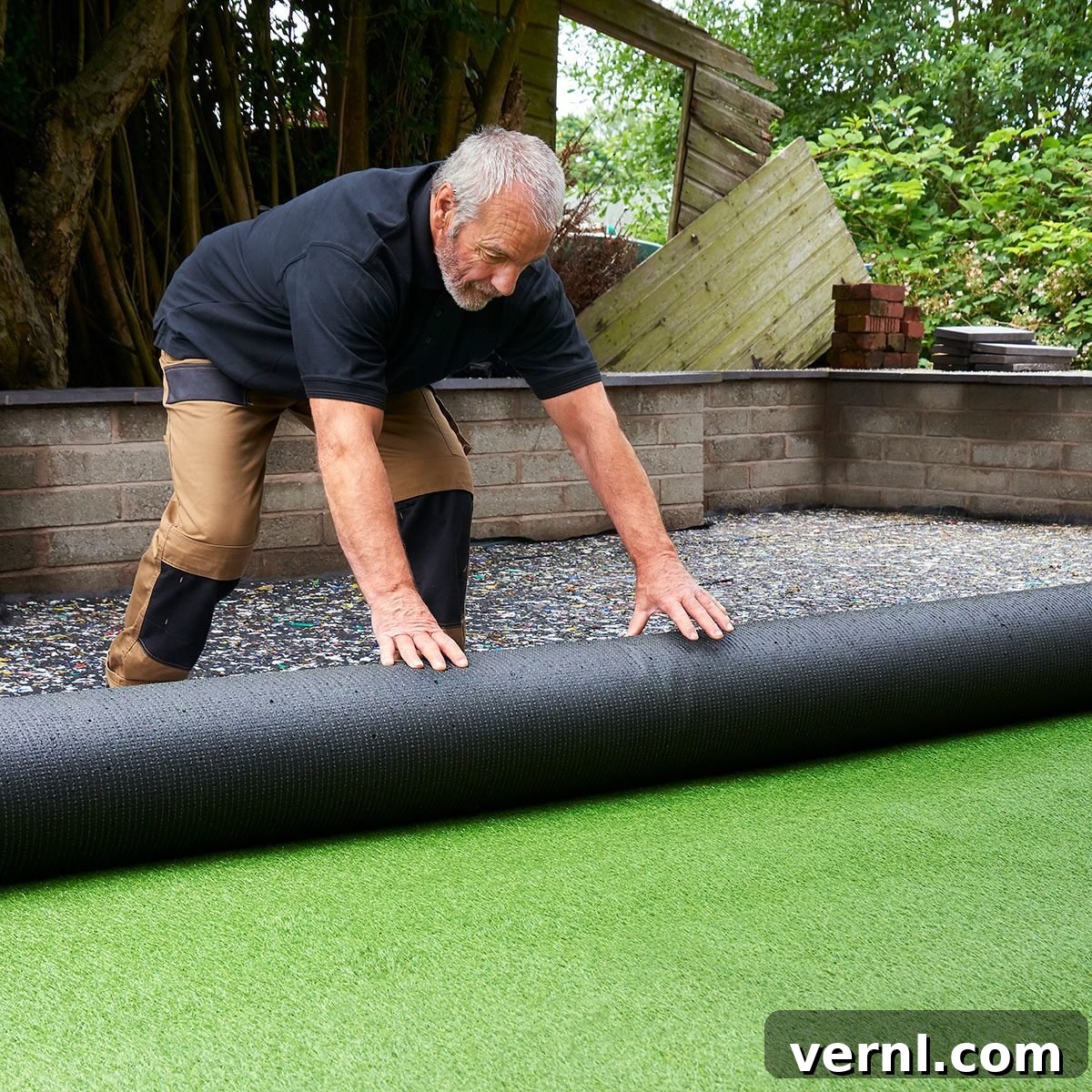
Artificial turf rolls are heavy and difficult to manage alone. When laying turf, ensure the blades of adjacent sections face the same direction to avoid a patchy appearance.
Cutting the Edges
Use a sharp utility knife, always cutting from the back, to trim the edges of the turf, leaving a few extra inches to tuck under borders or against walkways. This ensures a clean and secure finish.
Securing the Edges
Secure the edges of your turf using landscape staples or landscape nails. Use a carpet installer’s knee-kicker to stretch the turf and remove wrinkles.
Spreading and Brushing Infill
Use a drop spreader to apply the infill material as recommended by the turf manufacturer. Then, use a hard-bristle push broom, brushing in the same direction as the blades to make them stand up.
Artificial Turf Costs
The cost of artificial turf varies depending on the material and whether you choose professional installation.
- Material Costs:
- Polypropylene turf: $1.90 to $6.75 per square foot
- Polyethylene turf: $2.55 to $3.85 per square foot
- Nylon turf: $5.05 to $5.85 per square foot
- Professional Installation: Expect to pay between $5.50 and $18.75 per square foot. This includes both labor and materials.
- DIY Installation: You can save money by doing it yourself, but it’s a labor-intensive project that requires equipment rental and a solid understanding of the process.
Frequently Asked Questions (FAQs)
What are the most difficult parts of installing artificial turf grass?
The most challenging aspect of installing artificial turf is the preparation of the ground, particularly excavation and ensuring proper drainage. The surface must be level with a proper slope for water runoff.
How do I know which artificial grass is right for me?
Choose the right turf based on your needs. Consider the desired look and the expected wear and tear. If you have pets, look for turf with good drainage, backing, and infill that is easy to clean. For children, select shorter pile heights and softer blades. If you live in a hot climate, opt for heat-resistant fibers.
About the Expert
David Barbera is the President of Artificial Turf Supply and a dedicated expert in gardening and outdoor design. David specializes in creating stunning, sustainable outdoor spaces using innovative landscaping solutions.