Sponsored by Home Depot: This piece was created in partnership with Home Depot, home to Kidde fire safety products that can help you protect your home and family with fire alarms, carbon monoxide alarms and fire extinguishers.
Ensuring the safety and well-being of your home and loved ones is an undeniable top priority for every homeowner. Among the myriad of considerations for safeguarding your dwelling, having a robust and dependable fire detection system stands as a foundational pillar of home safety 101. Whether your primary concerns revolve around the potential for common household items to inadvertently spark a fire, the increasing threat of environmental risks like wildfires impacting residential areas, or simply the inherent desire to provide the utmost protection for your family, equipping your home with the most effective smoke alarms is critically important. These essential devices serve as your earliest warning system, offering invaluable minutes that can spell the difference between a minor incident and a life-altering tragedy.
The installation of UL-certified smoke alarms strategically throughout your residence is not merely a recommendation; it represents one of the most vital fire safety tips you need to know, a proactive measure that has demonstrably saved countless lives and preserved properties. However, navigating the market to choose the “right” smoke alarm can often feel overwhelming, given the vast array of types, features, and technologies available. To simplify this crucial decision-making process, we engaged with a leading fire safety expert and conducted a thorough evaluation of the pros and cons associated with cost, reliability, and installation complexities for both hardwired smoke alarms and battery-operated models. Here’s a comprehensive guide to everything you need to know to make an informed, confident choice for your home’s fire safety strategy.
Hardwired vs. Battery-Operated Smoke Detectors: A Comprehensive Safety Showdown
One of the most fundamental and impactful decisions you’ll encounter when selecting a smoke detector for your home is whether to invest in a hardwired model or a battery-operated unit. Both categories offer distinct advantages and present unique considerations that can heavily influence your choice, depending on your home’s existing infrastructure, your DIY comfort level, and your specific safety priorities. A clear understanding of these differences is paramount to selecting the most effective and reliable protection for your household.
The Unrivaled Reliability of Hardwired Smoke Alarms
According to Sharon Cooksey, a respected fire safety educator for Kidde, “Having a hardwired smoke alarm significantly increases the chance that alarms will maintain continuous power and be fully operational to signal in the event of a fire.” This consistent power supply is a cornerstone of hardwired systems’ superior safety profile. Directly integrated into your home’s electrical circuit, these alarms draw a constant, reliable source of energy, virtually eliminating concerns about power loss under normal circumstances. Cooksey powerfully underlines this point, stating, “In fact, a staggering three out of five home fire fatalities occur in residences without working smoke alarms, often due to missing or dead batteries.” This statistic serves as a stark reminder of the critical importance of an uninterrupted power source, which hardwired systems inherently provide.
Understanding the Flexibility and Limitations of Battery-Operated Smoke Alarms
In contrast, battery-operated smoke alarms offer unparalleled flexibility and ease of installation, making them an accessible fire safety solution for nearly any home, regardless of existing electrical wiring. However, their reliance on batteries introduces a critical ongoing maintenance responsibility. Homeowners with traditional 9-volt battery-operated units must diligently check and replace batteries regularly, typically at least once a year, or even biannually to align with daylight saving time changes. The risk of forgetfulness is a significant concern, as neglected batteries can render the alarm useless and leave a home dangerously vulnerable. While newer advancements, such as 10-year sealed batteries, have significantly mitigated the need for frequent battery changes in modern battery-operated units, the fundamental distinction remains: hardwired units benefit from a continuous, unwavering power supply, offering an unmatched level of perpetual readiness.
Winner: Hardwired smoke alarms are our definitive choice for superior safety and unwavering reliability. They are particularly ideal for homeowners who may be prone to overlooking routine battery replacements, ensuring a constant, vigilant watch against potential fire threats. Their direct integration into the home’s power system provides an unparalleled level of dependable, always-on protection, making them a cornerstone of any robust fire safety strategy.
Installation Dynamics: Hardwired vs. Battery-Operated Smoke Alarm Setup
The installation process often emerges as a primary deciding factor for many homeowners when selecting smoke alarms. This aspect largely hinges on your personal comfort level with electrical wiring, your existing DIY expertise, and the specific electrical infrastructure of your home. Each type of smoke alarm presents a distinct set of installation requirements and varying levels of complexity.
The Nuances of Hardwired Smoke Alarm Installation
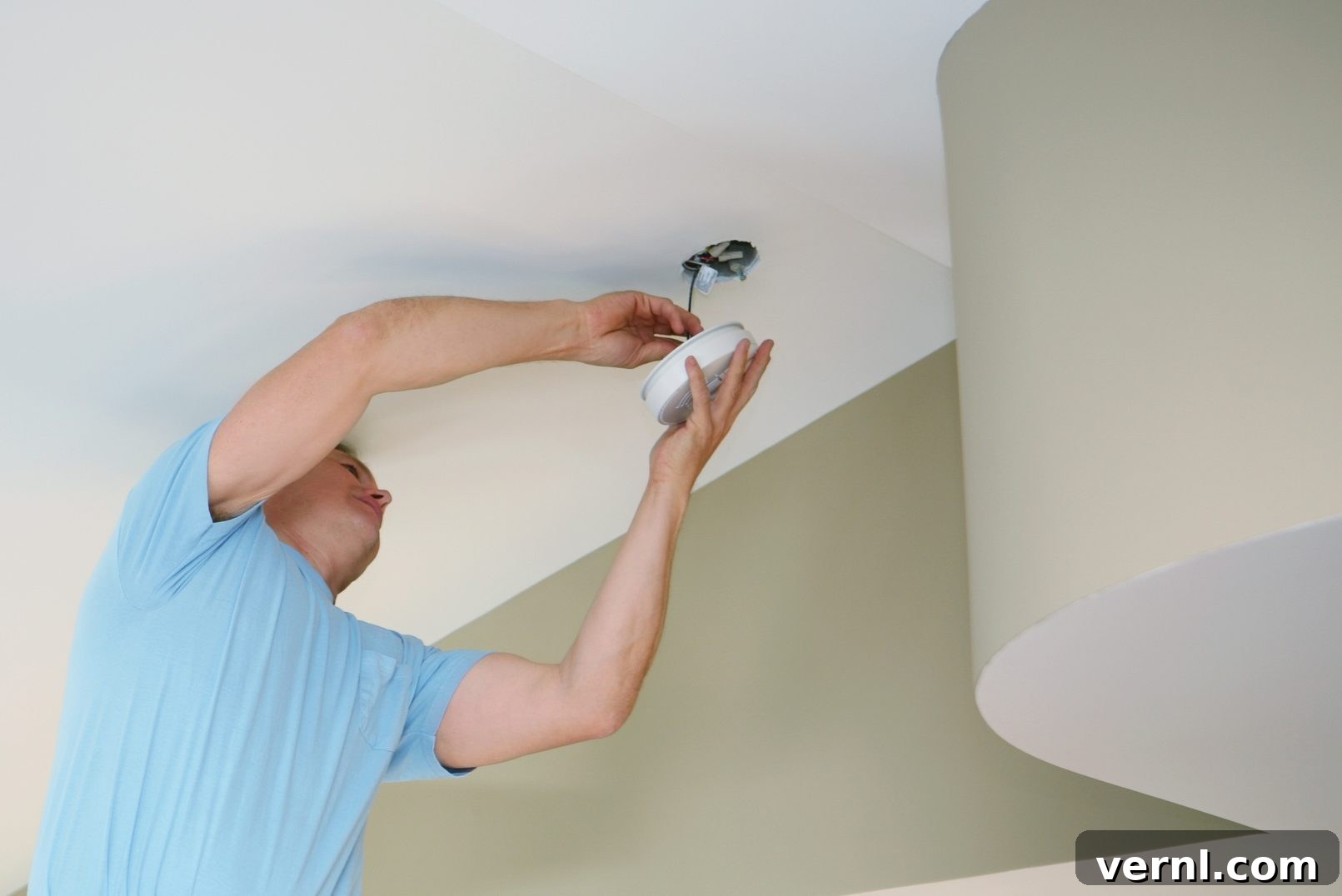
For the installation of a completely new hardwired fire alarm system, especially in homes not pre-wired for such devices, it is unequivocally recommended to enlist the services of a certified electrician. This undertaking is typically not a suitable DIY project, as it involves intricate work with your home’s main electrical system, strict adherence to local building codes, and ensuring precise wiring connections for optimal safety and functionality. Attempting to install new hardwiring without professional expertise can lead to significant electrical hazards, non-compliance with safety regulations, and potential system malfunctions. However, if your task is merely to replace an existing hardwired alarm unit with a newer model, the process can be relatively straightforward for individuals with basic handy skills. Such replacements often involve safely disconnecting the old unit and attaching the new one to the existing wiring harness, a much simpler procedure than initial installation.
The Simplicity of Battery-Operated Smoke Alarm Installation
Conversely, battery-operated smoke alarms epitomize ease and accessibility when it comes to installation. They require absolutely no electrical wiring expertise, making them the ideal choice for anyone preferring the simplest possible setup with minimal technical know-how. Installation typically involves little more than securely mounting the unit to a wall or ceiling with a few screws and inserting the batteries. This remarkable accessibility positions battery-operated alarms as a highly popular choice for apartments, older homes lacking pre-existing hardwiring, or as supplementary alarms in areas where hardwiring is either infeasible or cost-prohibitive.
Regardless of the power source, proper placement of any smoke alarm is critical. For hardwired alarms, always ensure they are installed in any room featuring exposed lightbulbs, as these can surprisingly be one of the most overlooked fire hazards at home. Strategic placement throughout your home is vital for comprehensive coverage, including on every level, within all sleeping areas, and just outside sleeping areas. It is also important to install them near kitchens but not so close as to trigger nuisance alarms from cooking fumes.
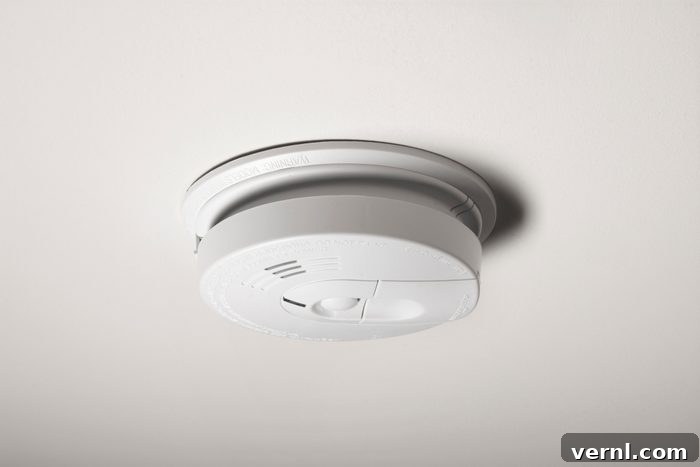
An economical and remarkably simple-to-install model, such as the Kidde Firex Smoke Detector, perfectly illustrates the convenience offered by battery-operated units. It boasts user-friendly operation and a practical front-loading battery door, making routine maintenance a breeze for virtually anyone. You simply replace the batteries when the unit emits a low-battery chirp or at least once a year, depending on the battery type.
Winner: This category is truly subjective and heavily depends on your individual comfort level with DIY projects and complex electrical work. Hardwired options, while potentially incurring professional installation costs upfront, consistently provide enhanced safety protection due to their uninterrupted power supply. Battery-operated smoke alarms, conversely, demand the least amount of technical skill for installation, offering unmatched flexibility and quick deployment. For the ultimate blend of safety and practicality, consider installing hardwired alarms in primary living spaces and bedrooms, supplementing them with high-quality, 10-year sealed battery-operated units in areas where hardwiring is challenging or impractical.
Analyzing the Costs Associated with Smoke Detector Systems
When assessing the financial investment required for smoke detectors, many homeowners are pleasantly surprised to discover that the initial purchase price for both hardwired and battery-operated units typically falls within a similar and highly affordable range. This means that the upfront unit cost often isn’t the primary factor distinguishing between the two types of alarms, making essential fire safety equipment accessible across various budgets.
Sharon Cooksey confirms this commonality, stating, “Whether you’re choosing a hardwired smoke detector or a battery-operated unit, you’ll find plenty of affordable options on the market. They’re both typically offered at similar price points, ensuring that critical safety measures don’t break the bank.” However, it is crucial to look beyond just the sticker price of the individual unit and consider the total cost of ownership over the alarm’s lifespan, which can present significant variations.
Beyond the Price Tag: Hidden Costs and Long-Term Value
For hardwired systems, while the individual unit cost might be comparable to that of battery-operated models, the potential need for professional installation can introduce a substantial additional expense. If your home is not already equipped with the necessary wiring for smoke detectors, engaging a licensed electrician for new wiring installation can represent a considerable upfront investment. Nevertheless, this initial outlay is often justified by the long-term benefits of continuous, worry-free power and the elimination of recurring battery purchases and the associated labor for replacement.
Battery-operated units, while generally cheaper to install (often a straightforward DIY task), do incur ongoing costs for battery replacements. Traditional 9-volt batteries, for instance, typically require replacement at least annually, and sometimes more frequently, which can accumulate over the 10-year operational lifespan of the alarm. Conversely, newer models featuring 10-year sealed batteries effectively eliminate this recurring expense, offering a convenient “set-it-and-forget-it” solution for the alarm’s entire operational life.
Ultimately, the “cost” of failing to have working smoke alarms in your home far outweighs any monetary investment in detection systems. The potential for catastrophic loss of life, property damage, and irreplaceable memories resulting from a house fire renders any expenditure on fire safety not just wise, but absolutely necessary. Beyond merely installing detectors, homeowners should also proactively focus on how to prevent home fires in the first place, through practices such as regular inspection of electrical systems, diligent maintenance of appliances, and adherence to safe cooking habits.
Winner: A tie for the initial unit cost. This category truly boils down to your personal preference and willingness to handle the installation process. If one accounts for potential electrician fees for new hardwiring, battery-operated units might appear more economical initially. However, the emergence of 10-year sealed battery units effectively balances this by eliminating ongoing battery costs. The true winner, therefore, is the system that consistently delivers reliable, uninterrupted protection, which should always remain the ultimate and overarching goal for every homeowner.
Longevity and Maintenance: Maximizing Your Smoke Alarm’s Lifespan for Enduring Protection
The operational lifespan and the required maintenance regimen of your smoke alarms are undeniably critical factors in ensuring continuous and unwavering home safety. While a common misconception might suggest that smoke alarms function indefinitely, it is a fundamental truth in fire safety that every unit possesses a definitive operational life. Understanding these timelines and proactively addressing maintenance needs is absolutely crucial for uninterrupted protection against fire hazards.
The Universal 10-Year Replacement Rule for All Smoke Alarms
A cardinal rule in fire safety, applicable without exception to all types of smoke alarms—whether hardwired, battery-only, or combination units—is that every alarm must be replaced at least every 10 years from its date of manufacture. This is not merely a suggestion; it is a universally accepted standard based on irrefutable evidence that the internal sensing components of these devices can degrade and become less effective over time. To ascertain your alarm’s age, always locate the manufacturing date clearly printed on the back of the unit. Adhering to this 10-year replacement cycle is non-negotiable for maintaining optimal detection capabilities.
The Extended Longevity of Hardwired Smoke Alarms
If your primary objective is to achieve the longest possible period of dependable smoke alarm coverage with minimal intervention, hardwired alarms frequently stand out as the superior choice. These units are meticulously engineered to offer a robust 10 years of consistent protection, directly benefiting from their continuous connection to your home’s stable electrical power supply. This eliminates the prevalent risk of an alarm failing due to a dead or missing battery, a common issue associated with traditional battery-only models, thereby ensuring constant vigilance.
“Most fire codes today, especially for new construction and significant renovations, mandate hardwired alarms,” emphasizes Cooksey, highlighting the industry’s clear shift towards more reliable, permanently powered fire safety solutions. She further elaborates on technological advancements, stating, “There is also a significant trend towards hardwired smoke alarms that thoughtfully incorporate a built-in, sealed 10-year battery backup. This battery is designed to last the entire operational life of the alarm, completely eliminating the need for periodic battery changes, which represents a huge leap in both convenience and safety. While most fire experts prioritize any working smoke alarm, hardwired systems are an excellent choice in spaces that readily accommodate the necessary wiring. If hardwiring isn’t feasible, we strongly advocate for a battery-only unit equipped with a built-in 10-year battery to ensure unwavering, long-term protection.”
An advanced option like this Kidde 10-Year Worry-Free Hardwired Smoke Detector perfectly embodies this evolution in fire safety technology. It delivers robust, long-lasting protection, enhanced by sophisticated features such as a clear voice alarm that articulates the specific type of hazard and its location, alongside an ambient light ring for improved visibility during an emergency. This seamless integration of hardwiring with a sealed battery backup provides the ultimate “install-and-forget” solution for a full decade.
Longevity and Modern Battery-Operated Smoke Alarms
While traditional battery-operated alarms historically necessitated annual battery changes, modern technological advancements have ushered in a new generation of battery-operated smoke alarms equipped with sealed 10-year batteries. These innovative units offer comparable peace of mind regarding battery maintenance as their hardwired counterparts with backups, as you will not need to change batteries for the alarm’s entire 10-year lifespan. This makes them an exceptionally practical and dependable choice for homes where hardwiring is not feasible or desired, ensuring continuous protection without the recurring hassle of routine battery swaps.
An outstanding example of this modern approach is the Kidde 10-Year Worry-Free Sealed Battery Smoke Detector, which also boasts advanced wireless voice interconnectivity. This crucial feature means that if one alarm detects smoke or CO, all interconnected alarms throughout your home will sound simultaneously, significantly amplifying the warning and ensuring every occupant is alerted promptly, regardless of their specific location within the house.
Winner: Hardwired smoke alarm systems, especially those thoughtfully equipped with 10-year sealed battery backups, unequivocally emerge as the champions in this round for their unparalleled longevity and remarkably minimal maintenance requirements over a full decade. They represent the most robust, reliable, and hands-off solution for continuous fire detection. However, if your living space does not easily allow for hardwiring, modern battery-operated smoke alarms with built-in 10-year batteries stand as a highly suitable and dependable alternative, ensuring you still benefit from long-lasting, worry-free protection.
Dependability: The Cornerstone of an Effective Home Fire Safety System
In the critically important realm of home fire safety, dependability is arguably the single most vital attribute of any smoke alarm system. The effectiveness of an alarm is entirely contingent upon its ability to function flawlessly and without hesitation precisely when it matters most – during the nascent stages of a fire. Here, the inherent distinctions between hardwired and battery-operated units become particularly pronounced, although continuous modern innovations are progressively narrowing this gap, offering enhanced reliability across the board.
The Unwavering Power Advantage of Hardwired Alarms
“Hardwired alarms are directly connected to a constant power supply, which inherently guarantees the uninterrupted power necessary for a consistently working smoke alarm,” explains Cooksey. This direct and permanent link to your home’s electrical system virtually eradicates the most common cause of smoke alarm failure: dead or missing batteries. This continuous power supply translates directly into superior dependability, as the alarm is perpetually drawing energy and is, therefore, always “on alert” and ready to respond. The statistics underscore this critical advantage: “Working smoke alarms effectively double the chance of escape from a home fire, so having that constant, utterly reliable power supply is immensely helpful and often life-saving,” Cooksey emphasizes. This continuous operational readiness means that in the crucial, fleeting early moments of a fire, you can implicitly trust your hardwired system to activate promptly and provide the necessary warning, granting your family invaluable time to evacuate safely.
Interconnected Systems: Amplifying Dependability and Alertness
A significant number of hardwired smoke alarms offer an interconnected feature, a game-changer for comprehensive home safety. This means that if one alarm detects smoke, all other interconnected alarms throughout the entire home will sound simultaneously. This capability dramatically enhances dependability by ensuring that occupants on different floors or in distant rooms are immediately alerted, even if the fire originates in an area far removed from their current location. Modern wireless interconnected battery-operated alarms also provide this vital feature, bringing a similar level of widespread, synchronized alert to homes where hardwiring is either not practical or not desired, extending robust protection to more diverse home environments.
The Non-Negotiable 10-Year Replacement Rule
Irrespective of the power source or advanced features, Cooksey provides a crucial and often overlooked reminder: “We caution that every alarm—whether hardwired, battery-only, or a combination unit—needs to be replaced at least every 10 years from its date of manufacture.” Even the most advanced and dependable system has a finite expiration date, as the internal sensing components are subject to degradation over time, inevitably making the unit less effective and potentially unreliable. Regular checks of the manufacturing date and strict adherence to the 10-year replacement schedule are absolutely non-negotiable for maintaining maximum dependability and ensuring your home remains continuously protected.
The Role of Sensing Technologies in Enhancing Dependability
Beyond the power source, the specific type of sensing technology integrated within a smoke alarm also significantly impacts its dependability in detecting different kinds of fires. Understanding these technologies allows for a more tailored and dependable fire safety strategy:
- Ionization Smoke Alarms: These alarms are generally more responsive to fast-flaming fires, which are characterized by the rapid production of small, often invisible combustion particles. They are highly effective for situations where fire spreads quickly and intensely.
- Photoelectric Smoke Alarms: These units are inherently more sensitive to slow-smoldering fires, which typically generate larger, visible smoke particles. These types of fires can smolder for hours, filling a home with toxic smoke before bursting into open flames, making early detection by photoelectric sensors critically important for occupant safety.
- Dual-Sensor Alarms: Many contemporary smoke alarms ingeniously incorporate both ionization and photoelectric technologies within a single unit. This dual-sensor approach offers a more comprehensive and balanced detection capability for a wider spectrum of fire types, often making them the most dependable all-around choice for general home protection.
Selecting a truly dependable system also involves carefully considering the appropriate sensing technology for potential fire risks in various areas of your home. For example, photoelectric alarms are frequently recommended for installation near kitchens (though placed far enough away to avoid false alarms from cooking activities) and in living areas where upholstered furniture, which tends to smolder, might be present.
Winner: Hardwired smoke alarms, particularly those enhanced with battery backup and interconnected features, undeniably emerge as the clear winner in the dependability category due to their consistent, uninterrupted power supply and inherent ability to create a synchronized, house-wide warning system. However, it is vital to acknowledge the significant value offered by modern battery-operated alarms, especially those equipped with 10-year sealed batteries and wireless interconnectivity, for homes where hardwiring is simply impractical or cost-prohibitive. The ultimate recommendation is to strategically choose hardwired alarms for primary areas with easy electrical wiring access and to judiciously supplement these with high-quality, 10-year sealed battery-operated alarms for trickier, less accessible areas, thereby ensuring that every corner of your home benefits from comprehensive, reliable fire protection.
Prioritizing Safety: Adopting a Holistic Approach to Home Fire Protection
When it comes to the paramount task of protecting your family and property from the devastating effects of fire, any working smoke alarm is unequivocally superior to having none at all. The act of simply having a functional device installed represents the crucial first step on the path to significantly enhanced home safety. However, for truly robust, enduring, and worry-free protection, embracing a more comprehensive and forward-thinking approach to fire safety is not just advisable—it’s essential.
The Gold Standard: Hardwired with a 10-Year Battery Backup
Sharon Cooksey emphatically stresses that hardwired smoke detector units, particularly those thoughtfully equipped with a 10-year sealed battery backup, often represent the pinnacle of long-term safety and reliability. This innovative dual-power system guarantees that you will most likely have an active and audible alarm even in the most challenging scenarios, such as when the primary electrical power is interrupted due to a fire, a natural disaster, or an unexpected grid outage. “Hardwiring combined with a 10-year backup battery creates a nearly foolproof system, ensuring that at least one power source is always operational, even if the other fails,” Cooksey explains. This built-in redundancy is an invaluable feature, providing continuous and unwavering vigilance against all potential fire threats.
Furthermore, the hardwired system, especially with a sealed backup battery, is an exceptional solution for individuals who may be prone to forgetfulness regarding routine battery checks and replacements. With such a system, the need for manual battery intervention is virtually eliminated for the entire 10-year lifespan of the alarm, offering unparalleled convenience and profound peace of mind, knowing your protection is always active.
Beyond Smoke: The Indispensable Importance of Carbon Monoxide Detection
A truly holistic and responsible fire safety plan must extend its protective embrace beyond mere smoke detection. Carbon monoxide (CO) is an insidious gas—colorless, odorless, and tasteless—making it exceedingly dangerous and earning it the chilling moniker of the “silent killer.” This toxic gas is produced whenever fuels (such as wood, oil, natural gas, kerosene, coal, gasoline, or propane) are burned incompletely. CO can leak from faulty furnaces, compromised water heaters, gas ranges, or clogged chimneys. Therefore, the installation of combination smoke and carbon monoxide alarms, or dedicated CO detectors, is a vital and non-negotiable component of a truly comprehensive safety strategy.
- Combination Alarms: These integrated units offer the convenience and efficiency of detecting both smoke and CO within a single device, thereby reducing the total number of alarms needed and simplifying the installation process.
- Dedicated CO Detectors: For areas within your home that present a higher inherent risk of CO exposure, such as spaces adjacent to attached garages or in close proximity to fuel-burning appliances, a dedicated CO detector can provide more focused and specific protection.
Ensuring you have UL-listed CO detectors properly placed on every functional level of your home and within or immediately outside all sleeping areas is as profoundly crucial as having an adequate number of smoke alarms.
Completing Your Fire Safety Ecosystem: A Multi-Layered Defense
While smoke and CO alarms provide the indispensable critical early warnings, they represent only one vital layer within a complete fire safety ecosystem. To genuinely prioritize safety, consider integrating these additional, complementary elements to create a multi-layered defense:
- Fire Extinguishers: Strategically position UL-rated fire extinguishers in key hazard areas, most notably the kitchen, the garage, and near any heating appliances. Knowing how to correctly operate them can empower you to tackle small, contained fires before they have a chance to escalate and spread. However, always remember to prioritize immediate evacuation if the fire is growing, if the smoke is overwhelming, or if you ever feel unsafe attempting to extinguish it.
- Fire Escape Plan: Develop and rigorously practice a detailed fire escape plan with every member of your household, including children and elderly occupants. This comprehensive plan should meticulously outline at least two distinct escape routes from every room, designate a predetermined outdoor meeting point far away from the house, and clearly define instructions for how to call emergency services (911 or local equivalent) once everyone is safely outside.
- Regular Maintenance and Testing: Regardless of the alarm type, establish a routine of conducting monthly tests by simply pressing the test button on each unit. For traditional battery-operated units, replace batteries annually. Additionally, regularly clean your alarms to prevent the accumulation of dust and debris from affecting their sensitive sensors, which can impair their performance.
By intelligently integrating hardwired smoke alarms with 10-year battery backups, supplementing with carbon monoxide detectors, strategically placing fire extinguishers, and meticulously practicing a well-defined escape plan, you create multiple, robust layers of protection that collectively and significantly enhance your home’s overall safety profile, safeguarding everything and everyone you cherish.
Winner: Hardwired smoke alarms, especially those featuring a 10-year backup battery operation and the added capability of carbon monoxide detection, are the undisputed champions in this comprehensive safety round. They deliver superior reliability, extended periods of maintenance-free operation, and provide an overarching early warning system, thereby forming the indispensable cornerstone of an intelligent, resilient, and proactive home fire safety strategy. Investing in such an advanced system provides the highest attainable level of peace of mind, granting you the assurance that your home is guarded by the most robust and sophisticated technology available.