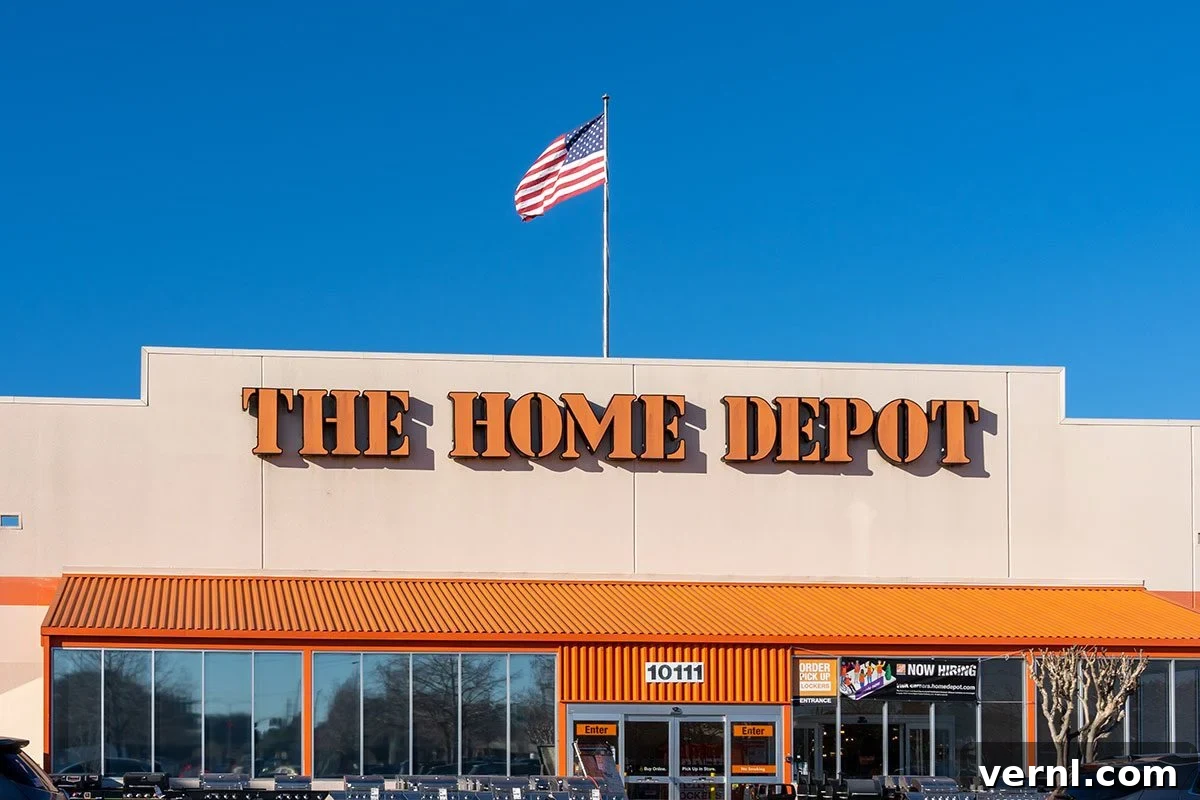
Home Depot’s Strategic Stand: Stable Pricing Amidst Trade Tariffs and Economic Shifts
In a retail landscape increasingly shaped by global trade dynamics and fluctuating economic conditions, companies are constantly recalibrating their strategies to maintain profitability and market position. While many major retailers, including giants like Walmart, have publicly signaled impending price increases in response to tightened profit margins and the ripple effects of trade disputes, one prominent player stands out for its decidedly different approach: Home Depot. The home improvement behemoth has made a clear declaration that it will not be raising its prices, a strategic decision with profound implications for its customers, suppliers, and competitive standing.
A Contrarian Approach to Tariff Pressures
The backdrop to Home Depot’s pricing decision is President Donald Trump’s trade war, a period characterized by the imposition of tariffs on various imported goods. These tariffs significantly increased the cost of doing business for many American companies, prompting widespread concern among retailers about absorbing these costs or passing them on to consumers. Walmart, for instance, openly discussed the necessity of raising prices to offset the impact, highlighting the severe pressure on profit margins across the industry.
However, on May 20, Home Depot’s Chief Financial Officer, Richard McPhail, offered a stark contrast to this prevailing sentiment. In an interview with CNBC, McPhail unequivocally stated that the retailer had no intention of increasing prices in response to the newly enacted tariffs. This bold commitment stems from a combination of factors, which McPhail elaborated upon: “Because of our scale, the great partnerships we have with our suppliers and productivity that we continue to drive in our business, we intend to generally maintain our current pricing levels across our portfolio.” This statement underscores a proactive and deeply embedded strategy within Home Depot to manage costs and sustain competitive pricing.
The company’s immense operational scale provides significant leverage in negotiations with suppliers, enabling more favorable terms even in challenging economic climates. Coupled with robust, long-standing supplier relationships, Home Depot can often secure inventory at better rates than smaller competitors. Furthermore, continuous efforts to enhance operational productivity—streamlining supply chains, optimizing inventory management, and improving in-store efficiency—play a crucial role in absorbing rising input costs without burdening the consumer. These internal efficiencies are the bedrock of their ability to uphold a stable pricing strategy, a testament to thoughtful strategic planning rather than mere reaction to external pressures.
The Strategic Advantage of Supply Chain Diversification
A key enabler of Home Depot’s resilience against tariffs and a cornerstone of their long-term strategy is their emphasis on supply chain diversification, particularly through increased domestic sourcing. Richard McPhail highlighted that more than half of the company’s vast product assortment is already manufactured within the United States. This is not a recent, reactive measure but rather the outcome of a sustained, deliberate effort by the company to broaden its sourcing base and reduce reliance on any single country or region for its goods.
This foresight positions Home Depot advantageously, significantly mitigating its exposure to import tariffs. By having a substantial portion of its products made domestically, the company inherently insulates itself from the direct impact of tariffs levied on goods from countries like China. Domestic sourcing also offers numerous other benefits, including reduced shipping times, greater control over quality, potentially lower transportation costs (especially for bulky items typical in home improvement), and a smaller carbon footprint due to shorter supply routes. It also fosters stronger relationships with American manufacturers, contributing to the nation’s economy and potentially leading to more flexible production schedules.
Looking ahead, Home Depot has set an ambitious target to further solidify its supply chain resilience: by 2026, McPhail anticipates that no single country outside the U.S. will represent more than 10% of Home Depot’s total product portfolio. This long-term goal underscores a commitment to risk management and robust supply chain architecture, ensuring that the company remains agile and less susceptible to geopolitical trade disputes or regional economic instability. This proactive approach to sourcing is a powerful differentiator, providing a structural advantage that allows Home Depot to maintain price stability even when competitors are forced to adjust upwards.
Seizing Market Share: A Strategy for Growth
Home Depot is not merely weathering the storm; it views its stable pricing strategy as a significant opportunity for growth. McPhail explicitly articulated this during an earnings call, stating, “It’s a great opportunity for us to take share, and it’s a great opportunity for our suppliers to take share as well.” This perspective transforms a potential challenge into a competitive advantage.
When competitors raise prices due to tariff impacts or general inflation, Home Depot’s ability to hold its prices steady makes its offerings more attractive to cost-conscious consumers. This can lead to increased foot traffic, higher sales volumes, and ultimately, a larger slice of the home improvement market. By demonstrating a commitment to affordability, Home Depot strengthens customer loyalty and expands its customer base, drawing in shoppers who might otherwise have chosen a competitor or delayed purchases due to rising costs.
Moreover, this strategy benefits its suppliers. By ensuring stable pricing for the end consumer, Home Depot helps its supplier partners maintain healthy sales volumes. In an environment where other retailers might scale back orders or demand price concessions from suppliers due to rising costs, Home Depot’s consistent demand creates a stable partnership. This strengthens the collaborative relationship, potentially leading to better terms, innovation, and mutual growth in the long run. It’s a win-win scenario that leverages Home Depot’s market power to create enduring value for both its business and its network of partners.
Navigating Economic Headwinds: Focus on Smaller Projects
Beyond the trade war, the home improvement sector has faced its own set of economic challenges. Sky-high interest rates and elevated mortgage rates have had a chilling effect on the housing market, leading to a noticeable slowdown in large-scale home renovation projects and new home construction. Despite these headwinds, Home Depot’s CEO, Ted Decker, remains optimistic, identifying new avenues for sales growth.
Decker points to a discernible shift in consumer behavior: “People are painting again and working in their yards and doing smaller projects, but just have not engaged in the larger projects.” This insight reveals a pragmatic adaptation among homeowners. While major renovations requiring significant capital investment might be on hold, the desire to maintain and enhance one’s living space persists. This translates into increased demand for smaller, more manageable DIY tasks, such as interior painting, landscaping, minor repairs, and decorative upgrades.
The “healthy customer” is key to this trend. Decker emphasized, “Our customer is healthy, and we think that’s what has supported their level of engagement in home improvement.” This suggests that even with higher borrowing costs, many homeowners still possess the disposable income and motivation for smaller, impactful projects that improve their immediate living environment without breaking the bank. Home Depot’s vast inventory and merchandising strategy are well-suited to cater to this shift, offering an extensive range of products for everything from a fresh coat of paint to garden tools and smart home devices. By focusing on these accessible projects, Home Depot taps into a resilient segment of the market, ensuring continued engagement and sales despite broader economic slowdowns in housing.
The Broader Economic Landscape and Tariff Dynamics
The trade war’s impact is complex and ever-evolving. Interestingly, amid Home Depot’s declarations, there was a significant, albeit temporary, development on the trade front. The Trump administration announced on May 12 that tariffs on China would be drastically slashed from an exorbitant 125% to a more manageable 30% for a period of 90 days. This timing was particularly fortuitous for Home Depot, as spring typically represents their peak sales season. A temporary reduction in tariffs during this crucial period could provide additional breathing room, potentially enhancing profit margins on imported goods without requiring price adjustments.
However, the question remains whether Home Depot can truly stick to its current pricing plan in the long term. Geopolitical trade relations are notoriously unpredictable, and a 90-day reprieve is just that – a temporary measure. The company’s long-term success in maintaining stable prices will depend on several factors: the continued efficacy of its supply chain diversification efforts, its ongoing ability to drive productivity and cost efficiencies, and the broader trajectory of global trade policy. Should tariffs revert to higher levels or new trade barriers emerge, even Home Depot’s formidable scale and proactive strategies could face renewed pressure. Yet, their commitment to a diversified, largely domestic supply chain provides a robust defense against future uncertainties, reflecting a strategic depth that goes beyond immediate reactions to market fluctuations.
Conclusion: A Blueprint for Retail Resilience
Home Depot’s decision to maintain stable pricing in the face of significant economic headwinds and trade tariffs offers a compelling case study in strategic resilience and proactive management. By leveraging its immense scale, cultivating strong supplier partnerships, relentless pursuit of operational productivity, and a forward-thinking approach to supply chain diversification (emphasizing US-made products), the company has carved out a distinct competitive advantage. Their strategy isn’t merely about absorbing costs; it’s about actively using price stability as a tool to gain market share and strengthen relationships across its value chain.
Furthermore, Home Depot’s keen understanding of evolving consumer behavior, specifically the shift towards smaller, more manageable home improvement projects amidst high interest rates, demonstrates an agile adaptation to changing market realities. This multifaceted approach – combining robust internal controls, strategic sourcing, and astute market analysis – positions Home Depot not just as a survivor but as a potential leader in navigating the complexities of the modern retail environment. While only time will truly reveal the long-term sustainability of this ambitious plan, Home Depot has laid a solid foundation, offering a potential blueprint for other retailers striving for stability and growth in an uncertain world.
Sources
- CNBC: “Home Depot CFO says retailer doesn’t plan to raise prices due to tariffs”
- CNBC: “Why Walmart decided to say it would raise prices — and risk Trump’s fury”
- CNBC: “U.S. and China agree to slash tariffs for 90 days in major trade breakthrough”