The Boxelder Bug: Understanding, Preventing, and Controlling This Common Nuisance
As autumn leaves begin to fall and temperatures dip, many homeowners across North America brace themselves for the annual invasion of a familiar, albeit annoying, pest: the boxelder bug. Often observed congregating in large numbers on sunny exterior walls or finding their way indoors, these distinctive insects can transform a peaceful home environment into a frustrating battleground against unwanted guests. While largely harmless, their sheer numbers and tendency to stain surfaces make understanding and managing boxelder bugs a priority for effective home pest control.
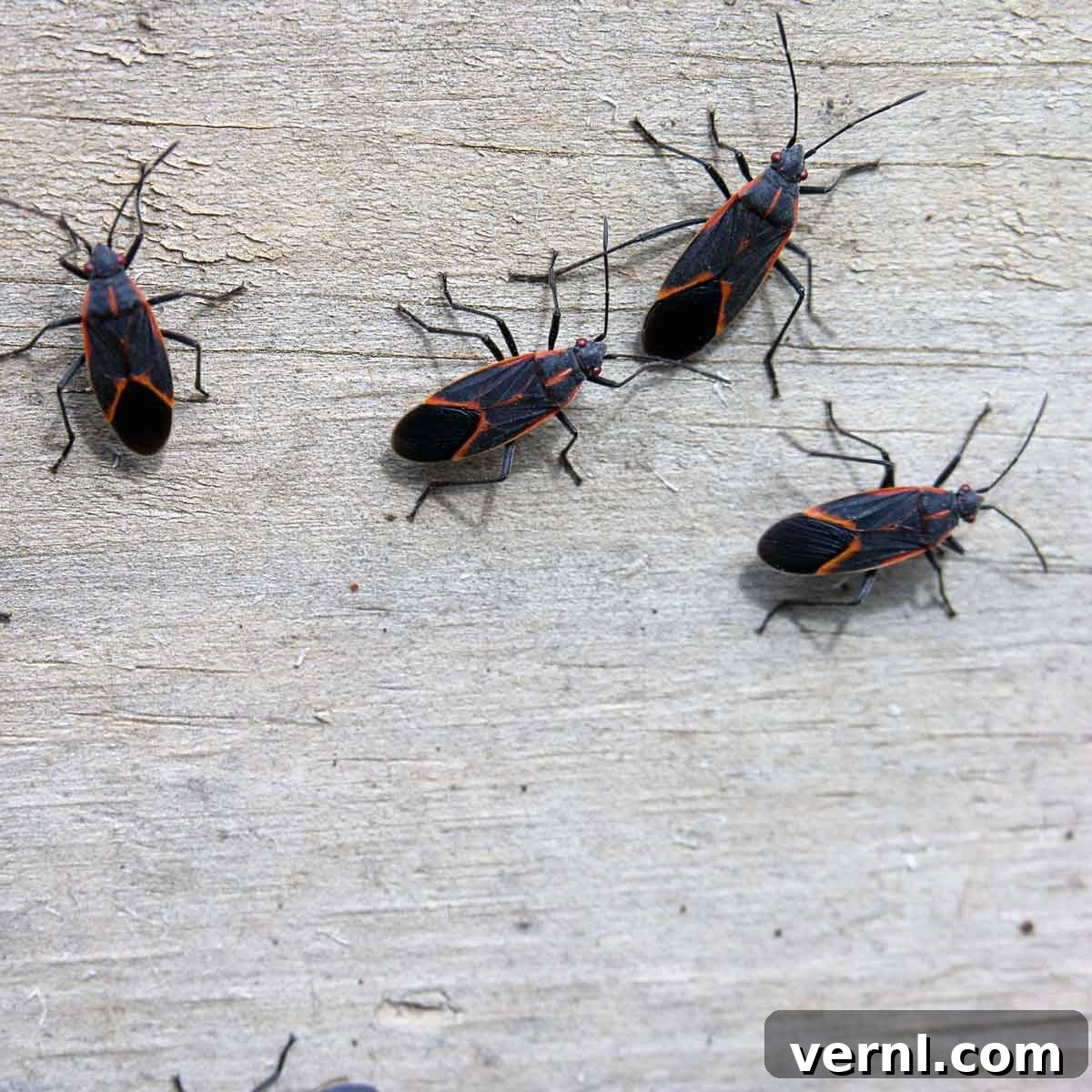
Related to cicadas, aphids, planthoppers, leafhoppers, bed bugs, and shield bugs, boxelder bugs (Boisea trivittata) are part of the order Hemiptera, commonly known as true bugs. They are easily identifiable by their flat, elongated-oval shape, typically measuring around half an inch long, with striking black bodies adorned with vibrant red-orange markings along their backs and wings. These distinctive patterns include three prominent red stripes on the pronotum (the area behind the head) and a thin red-orange border around the edges of their wings, making them quite recognizable. They predominantly feed on the seeds of the boxelder trees — hence their name — but can also be found in and around maple and ash trees, especially those that are seed-bearing.
Identifying Boxelder Bugs: What Do They Look Like?
Accurate identification is the first step in effective pest management. Boxelder bugs possess a unique appearance that distinguishes them from other common household insects. Adults are typically about 1/2 inch long, with a dark gray to black body. What truly sets them apart are the bright red or orange markings. These include three longitudinal stripes on the prothorax (the segment just behind the head) and distinct red veins on their wings, which, when at rest, form an ‘X’ or ‘V’ pattern over their backs. Their flat, oval bodies are characteristic of many true bugs, but the color scheme is largely unmistakable.
Young boxelder bugs, known as nymphs, are smaller and lack fully developed wings. They are typically bright red with black markings, gradually darkening as they mature and grow. During their developmental stages, they undergo incomplete metamorphosis, meaning they hatch from eggs resembling miniature adults and progressively grow larger through a series of molts, shedding their exoskeletons multiple times. Understanding their distinct appearance helps differentiate them from other occasional invaders like stink bugs, which are often confused due to their similar nuisance behavior and defensive odors.
The Life Cycle and Habits of Boxelder Bugs
The life cycle of the boxelder bug is closely tied to its host trees. Adults emerge from overwintering sites in early spring, typically around the same time that boxelder, maple, and ash trees begin to develop leaves and seeds. Female boxelder bugs lay their small, red eggs in the crevices of tree bark, on leaves, or in other protected spots on their host plants. These eggs hatch into bright red nymphs that immediately begin to feed on the sap and developing seeds of the trees.
Throughout the spring and summer, the nymphs mature, undergoing several molts before reaching adulthood. By late summer and early autumn, a new generation of adult boxelder bugs is ready to emerge. It is this generation that becomes the primary nuisance for homeowners. As temperatures begin to drop and the days shorten, boxelder bugs instinctually seek warm, sheltered locations to overwinter. This migratory behavior often leads them to congregate on the sunny, south-facing sides of homes and other buildings, absorbing warmth before eventually attempting to find cracks and crevices to slip inside and escape the impending cold. They do not reproduce indoors; their breeding cycle is exclusively tied to their host trees in the spring.
Their diet primarily consists of the seeds of female boxelder trees (Acer negundo). However, they can also feed on the seeds and sometimes the leaves of other maples, such as silver maple (Acer saccharinum), and even ash trees (Fraxinus spp.). While feeding on these trees, they typically cause little to no significant damage to the overall health of the tree, mainly affecting the seeds. The presence of boxelder trees, particularly the female seed-bearing varieties, around a property is a strong indicator of potential boxelder bug activity.
Are Boxelder Bugs a Threat? Addressing Common Concerns
When large numbers of any insect appear around or inside your home, it’s natural to wonder about potential dangers. Fortunately, boxelder bugs pose very little threat to humans, pets, or your property beyond being an aesthetic nuisance and, in some cases, causing minor cosmetic damage.
To Humans: Bites and Health Risks
Boxelder bugs are not known to bite humans. Their mouthparts are designed for piercing plant tissue and sucking sap, not for biting flesh. On the rare occasion that one does chomp down, perhaps when feeling trapped or severely provoked, it can puncture the skin. This incident is extremely uncommon and typically leaves a small, irritating red mark that’s similar to a mosquito bite. Unlike some other pests, boxelder bugs are not vectors for any known human diseases. They do not sting, nor do they possess venom. The primary concern for humans is their tendency to emit a pungent, foul-smelling odor when crushed or handled roughly. This defensive mechanism is why they are often confused with their cousin, the stink bug (Halyomorpha halys), which employs a similar strategy.
To Pets: A Nasty Taste, But Harmless
Considered harmless, boxelder bugs have no venom and don’t sting. If your curious dog or cat should happen to eat one, there’s no need for alarm. Boxelders have a very nasty taste, which acts as a natural deterrent. This unpleasant flavor often makes dogs and cats vomit, or at the very least, causes them to quickly spit out the bug and learn not to repeat the experience. While the experience might be unpleasant for your pet, it is not toxic and does not pose a serious health risk. However, it’s always wise to be aware of other pests that are dangerous to your pets.
To Homes and Property: More Nuisance Than Danger
While boxelder bugs can be incredibly annoying, particularly when they congregate in large numbers, any damage they inflict on homes and yards is usually minor. Their primary motivation for entering homes is to escape cold temperatures. At the first sign of frost, they seek refuge inside buildings where it’s warm and dry. Setting up shop in basements, between walls, attics, and on the sunny side of a house’s exterior, swarms can number into the thousands, creating a significant nuisance.
Once boxelders congregate inside a house, garage, or shed, their most notable impact is their tendency to stain light-colored surfaces. Their fecal matter, which is dark brown or reddish, can leave unsightly spots on drapes, upholstery, walls, clothing, and even paper products. Another downside, as mentioned, is the release of their characteristic smelly odor if they are crushed or disturbed. While these stains and odors are generally cosmetic and can be cleaned, they can be persistent and difficult to remove entirely from certain fabrics or porous materials. Importantly, boxelder bugs do not chew through wood, damage structural components, or infest food items. They are simply seeking shelter, not sustenance, once indoors.
In the yard (during spring and summer), there’s no evidence that boxelder bugs do significant harm to vegetation and ornamental plants. Their feeding primarily targets seeds and sap, not the foliage or fruit flesh directly. However, they do sometimes feed on fruit, particularly thin-skinned varieties like apples, peaches, or plums. This feeding can cause roughed-up pits and skin dimpling, making the fruit less appealing, though typically still edible. This damage is usually localized and does not pose a threat to the overall health of fruit trees or garden plants.
Comprehensive Strategies for Boxelder Bug Control and Prevention
Dealing with boxelder bugs effectively requires a multi-pronged approach that combines exclusion, sanitation, and, in some cases, targeted treatment. The most successful strategies focus on preventing them from entering your home in the first place, as removing them once they’re inside can be an ongoing chore. The National Pest Information Center, along with other pest management experts, recommends a series of steps for comprehensive control.
Proactive Outdoor Management
Addressing boxelder bug populations outside your home is crucial, especially in late summer and early fall before they begin their migration indoors.
- Clean Exterior Walls with Soapy Water: If you notice large numbers of boxelder bugs congregating on the sunny exterior walls of your house, especially in the fall, a simple solution of soapy water can be highly effective. Spraying or washing bugs from outside walls with soapy water can kill many of them on contact and deter others from gathering there. The soap breaks down their exoskeletons, leading to dehydration.
- Remove Potential Harborage Sites: Boxelder bugs, like many insects, seek shelter in cluttered areas. Regularly remove wood stacks, piles of leaves, rocks, and overgrown plants or debris that are close to your house. These areas provide ideal hiding spots and overwintering locations for the bugs before they seek entry into your home. A tidy yard is less attractive to pests.
- Rake Up Fallen Seedpods: Since boxelder bugs primarily feed on the seeds of boxelder and maple trees, reducing their food source can help manage populations. Rake up and dispose of fallen seedpods below boxelder trees, particularly during the late summer and fall. This simple step can disrupt their feeding cycle and reduce the number of bugs that mature and seek shelter.
- Consider Host Tree Management: For severe, recurring infestations, and if feasible, consider pruning or even removing female boxelder trees directly adjacent to your home. While a drastic measure, it eliminates the primary food source and breeding ground for these pests, significantly reducing their presence. Consult with an arborist before making such decisions.
Fortifying Your Home: Indoor Exclusion
Preventing boxelder bugs from entering your home is by far the most effective control strategy. These efforts should ideally be completed before the bugs begin their fall migration.
- Caulk or Seal Cracks and Crevices: Thoroughly inspect the exterior of your home for any cracks, gaps, or openings in the foundation, siding, window frames, and utility entry points. Use high-quality caulk to seal these potential entry points. Pay close attention to areas around pipes, wires, and vents where small gaps often exist.
- Install Sweeps and Weather Stripping on Doors: Gaps under and around doors are common entry points. Install sturdy door sweeps at the bottom of all exterior doors to eliminate gaps. Apply weather stripping around door frames to ensure a tight seal when doors are closed. This not only keeps bugs out but also improves energy efficiency.
- Put Screens on Windows and Dryer Vents: Ensure all windows have intact, tightly fitting screens. Repair any tears or holes in existing screens. Similarly, dryer vents and other exterior vents should be equipped with fine mesh screens or covers to prevent insects from entering. Even small openings can be an invitation for these persistent bugs.
Effective Removal of Indoor Invaders
If boxelder bugs do manage to find their way indoors, direct removal is the safest and most recommended approach.
- Vacuum or Sweep Up the Bugs: The most effective and clean method for removing boxelder bugs from inside your home is to vacuum them up. A strong vacuum cleaner with a hose attachment can quickly collect large numbers of bugs without crushing them. After vacuuming, immediately empty the vacuum bag or canister outdoors, far from your house, or seal it in a plastic bag and dispose of it to prevent the bugs from simply crawling back out. Sweeping them into a dustpan and releasing them outdoors is also an option for smaller numbers.
- Avoid Smashing Bugs: While tempting, resist the urge to smash boxelder bugs. As mentioned, they release a foul-smelling, sometimes staining, liquid when crushed. This can leave unpleasant odors and marks on your surfaces.
- Use Soapy Water Spray for Direct Contact: For bugs you can reach directly, a spray bottle filled with a solution of water and a few drops of dish soap can be effective. The soapy water coats the bugs, disrupting their breathing, and quickly immobilizing and killing them. This method is non-toxic and safe for indoor use.
Targeted Chemical Applications (When Necessary)
Chemical control should be considered a last resort and used with caution, particularly indoors. For outdoor populations, specific treatments can be effective when applied correctly.
- Diatomaceous Earth: A low-toxicity pesticide like diatomaceous earth (DE) can be applied in areas where bugs are active or congregating, such as around windowsills, cracks, or along baseboards. DE is a natural powder made from fossilized diatoms. It works by abrading the insect’s exoskeleton, causing them to dehydrate and die. Ensure you use food-grade DE if applying indoors.
- Springtime Nymph Treatment: For persistent outdoor infestations originating from nearby boxelder trees, a targeted approach can be taken in the spring. Spraying a low-toxicity pesticide specifically formulated for insects (like neem oil or pyrethrin-based products) into infested female (seed-bearing) boxelder trees in the spring can eliminate the newly-hatched nymphs before they have a chance to mature. This is often best handled by a professional pest control service to ensure proper application and minimize environmental impact.
Dispelling Common Myths About Boxelder Bugs
Understanding boxelder bugs also means separating fact from fiction. Two common misconceptions often cause unnecessary alarm. Firstly, the belief that boxelder bugs are dangerous or carry diseases. As established, they are largely harmless, do not transmit illnesses, and their bites are extremely rare and minor. Secondly, there’s a myth that they reproduce indoors. This is untrue; boxelder bugs require specific outdoor conditions and host trees for their breeding cycle. While they may overwinter inside your home, they will not lay eggs or create new generations within your living space.
When to Call a Professional Pest Control Service
While DIY methods are often effective for managing boxelder bugs, there are instances when professional intervention is warranted. If you’re facing an overwhelming infestation that DIY efforts cannot control, or if bugs are consistently finding ways into your home despite your best exclusion efforts, a pest control professional can offer more advanced solutions. They can identify hidden entry points, apply targeted treatments safely, and provide expert advice for long-term prevention strategies, ensuring your home remains a sanctuary, free from these nuisance pests.
Conclusion: Proactive Measures for a Pest-Free Home
Boxelder bugs are primarily a nuisance pest, not a destructive or dangerous one. Their presence, particularly in the fall, signals a call to action for homeowners. By understanding their life cycle, recognizing their preferences, and implementing a comprehensive strategy of exclusion, outdoor sanitation, and careful indoor removal, you can significantly reduce their impact. Proactive measures, taken before the cool weather sets in, are the most effective way to prevent these distinctive red and black insects from making themselves unwelcome guests in your home. With diligent effort, you can enjoy the changing seasons without the added frustration of an indoor boxelder bug invasion.