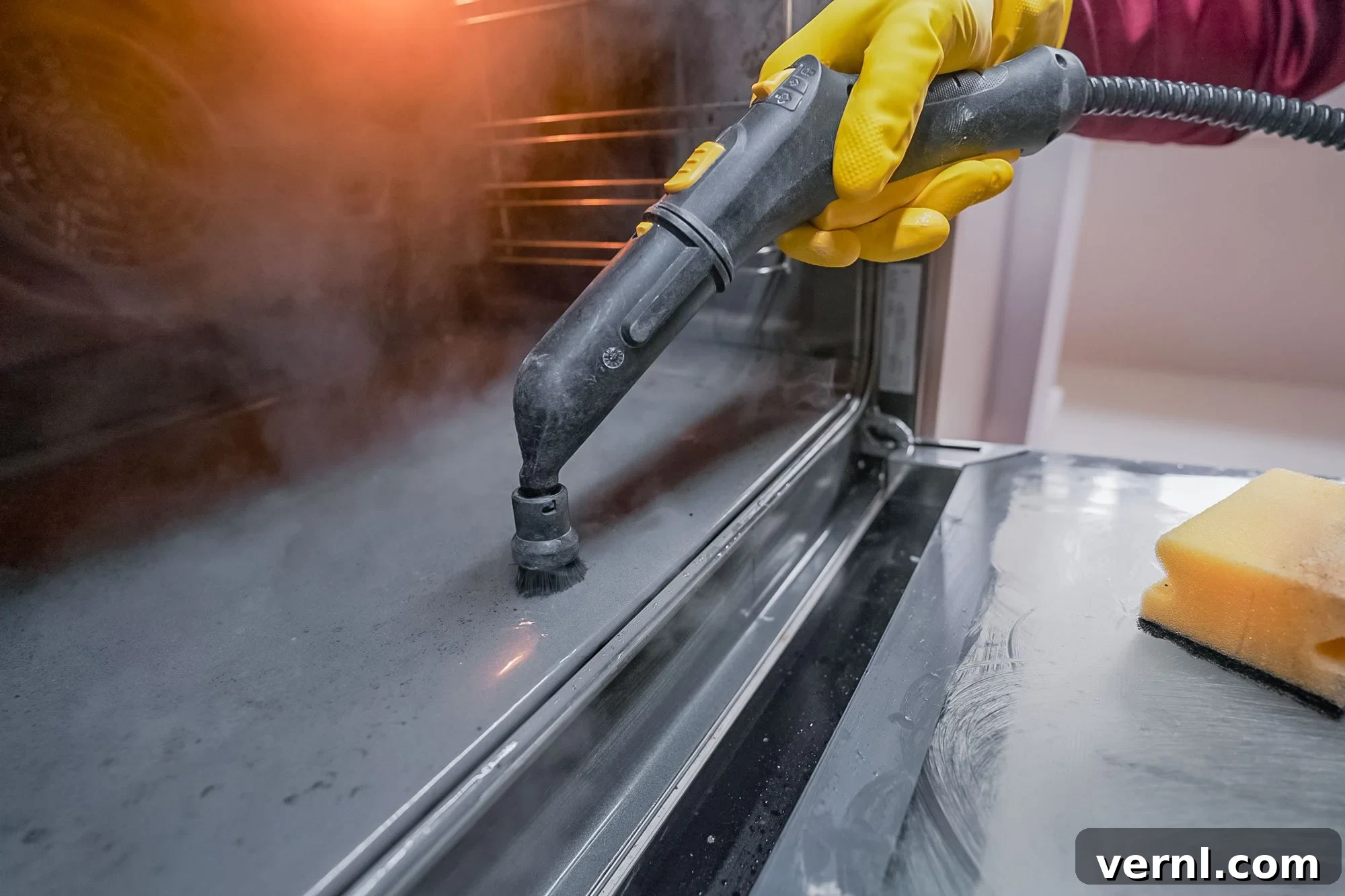
Cleaning your oven might not be the most glamorous chore on your kitchen cleaning checklist, but it’s an essential task that should never be overlooked. Allowing grease, grime, and burnt-on food to accumulate can have several detrimental effects: it impairs your oven’s efficiency and cooking performance, creates an environment ripe for bacterial growth and unpleasant odors, and, most critically, poses a significant fire hazard. Fortunately, mastering how to steam clean your oven manually offers a straightforward, safe, and highly effective technique for loosening even stubborn, baked-on dirt, regardless of whether your appliance boasts a fancy self-cleaning function or is a more basic model.
I recently consulted with Marla Mock, President of Molly Maid, a leading expert in home cleaning services, to delve deeper into the numerous benefits of oven steam cleaning. Our discussion aimed to clarify its role as a powerful maintenance tool and why, while incredibly effective, it complements rather than completely replaces the need for occasional deep cleaning.
The Remarkable Benefits of Steam Cleaning Your Oven
“Many modern ovens come equipped with built-in steam cleaning features,” explains Marla Mock. “These features are designed to do an excellent job of softening dirt and loosening debris inside the oven cavity, making the subsequent manual wipe-down much easier and less laborious.” However, it’s crucial not to confuse these steam cleaning functions with the more intense, higher-temperature self-cleaning oven cycles. The latter uses extreme heat to incinerate grime, a process that can be energy-intensive and often requires robust ventilation due to potential fumes.
The beauty of manually steam cleaning an oven is its universal applicability. You don’t need a high-end appliance with specific features; even a basic oven can benefit from this technique. The process is remarkably simple, requiring only common household items: an oven-proof bowl and water. A significant advantage is the absence of harsh chemicals or caustic fumes, which means you can clean your oven without harsh chemicals. This eliminates the need for extensive room ventilation typically associated with traditional chemical oven cleaners or even some self-cleaning modes.
Beyond its chemical-free nature, routine steam cleaning serves as an excellent preventative measure. By regularly applying this method, you can keep your oven relatively free from lighter spills, spatters, and minor grease buildup. This proactive approach significantly reduces the need for strenuous scrubbing and the daunting task of tackling heavy grime accumulations during your more intensive deep cleaning sessions. It transforms a potentially arduous chore into a manageable part of your regular home maintenance routine, prolonging your oven’s life and ensuring its optimal performance for years to come.
Mastering the Art of Oven Steam Cleaning: A Step-by-Step Guide
Integrating oven steam cleaning into your routine can drastically improve your oven’s cleanliness and ease future deep cleaning efforts. Follow these straightforward steps to keep grease and grime from becoming overwhelming.
1. Prepare Your Oven: Remove Trays and Racks
Before you begin the steam cleaning process, ensure your oven is completely cool to the touch for safety. Open the oven door and carefully remove all internal components, including any baking trays, wire racks, and pizza stones. These items often harbor their own collection of baked-on food and grease. You can set them aside and soak them in warm, soapy water or use a dedicated method to clean your oven racks separately in your sink, allowing the steam cleaning to focus solely on the oven’s interior.
2. Initial Wipe-Down: Eliminate Loose Debris
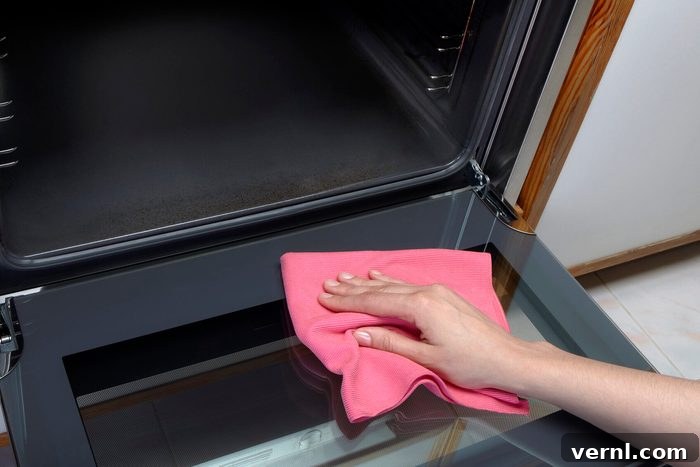
With the oven racks removed, take a damp, clean microfiber cloth or a soft sponge and perform an initial wipe-down of the oven’s interior surfaces. This step is crucial for picking up any loose crumbs, food particles, or superficial grease that hasn’t yet baked onto the surfaces. Removing this easily accessible debris beforehand will significantly speed up the steam cleaning process, allowing the steam to focus its softening power on the truly stuck-on grime rather than just wet loose dirt.
3. Preheat Your Oven: Reach Optimal Temperature
The key to effective steam cleaning lies in sufficient heat. “Set your oven to a high temperature, ideally around 450 degrees Fahrenheit (approximately 232 degrees Celsius),” advises Mock. The higher the temperature, the more potent and effective the steam generation will be once the water is introduced. Do not rush this step; it’s imperative that the oven reaches and maintains this target temperature before proceeding. Introducing water too early, before the oven is hot enough, could lead to the water evaporating prematurely without generating the sustained, high-temperature steam necessary to loosen stubborn grime.
4. Introduce Water: The Steam Generation Source
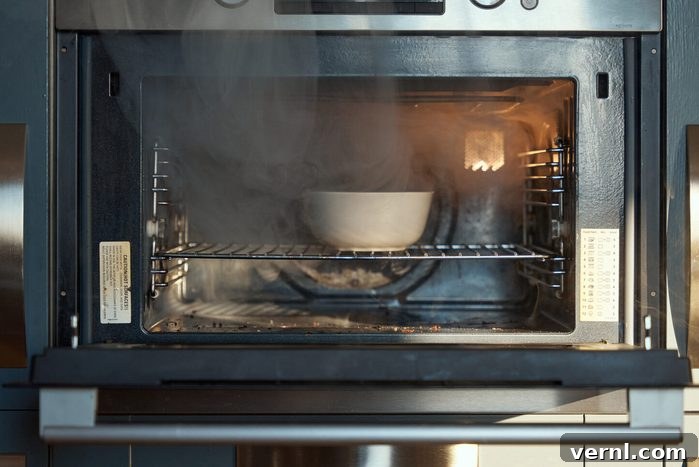
Once your oven has reached the desired temperature, it’s time to create the steam. “Select an oven-proof, large bowl – ideally ceramic or glass – and fill it with cold water,” Mock instructs. While cold water is fine, using warm or hot water can potentially speed up steam generation slightly. A crucial detail is the size of the bowl; a small bowl will cause the water to evaporate too quickly, diminishing the steam’s efficacy and duration. Aim for a bowl large enough to hold at least 2 to 4 cups of water, depending on your oven’s size, ensuring it won’t overflow when hot. Carefully place the bowl on the middle rack of your preheated oven. Mock recommends allowing the water to heat and generate steam for up to an hour, but always keep an eye on it to ensure the water hasn’t completely evaporated prematurely. For best results and to minimize water spots or mineral deposits on your oven’s interior, consider using filtered or distilled water instead of tap water.
5. Allow to Cool and Steam to Circulate
After the designated steaming time (around one hour), it’s time to let the magic of the trapped steam work its full effect. “Turn off the oven, but crucially, leave the oven door closed,” emphasizes Mock. This allows the accumulated steam to continue circulating within the sealed oven cavity, penetrating and softening the baked-on grime even further as the oven gradually cools down. Keeping the door closed also ensures the bowl of hot water has ample time to cool to a safe handling temperature. Patience is key here; allow at least another 30-60 minutes for the oven and water to cool down sufficiently before you attempt the final cleaning step.
6. The Final Wipe-Down: Removing Softened Grime
“Once the oven has cooled down to a safe temperature for handling, grab a clean microfiber cloth and begin wiping away the loosened grime,” advises Mock. You’ll likely be amazed at how easily much of the dirt and grease now comes off. For any particularly stubborn, stuck-on grime that resists a simple wipe, prepare a gently abrasive paste using baking soda and a small amount of water (enough to create a thick, spreadable consistency). Apply this paste directly to the remaining tough spots. For maximum effect, allow the baking soda paste to sit on the grime for at least half an hour, or even longer for very challenging areas, before scrubbing gently with a non-scratch sponge or plastic scraper. Finish by wiping down the entire oven interior thoroughly with a damp cloth, rinsing frequently, to remove all residue and reveal a sparkling clean surface.
Frequently Asked Questions About Oven Steam Cleaning
How Often Should You Steam Clean Your Oven?
The frequency of oven steam cleaning largely depends on your cooking habits. Ideally, it’s beneficial to steam clean your oven after any significant use that results in food spills, splatters, or noticeable grease buildup. This immediate action prevents light grime from hardening into much more difficult-to-remove baked-on deposits that would require strenuous effort during a deep clean. Marla Mock suggests incorporating a spot steam clean into your kitchen cleaning checklist at least once a month, even if there haven’t been major spills. “It’s imperative to understand that while highly effective, steam cleaning your oven serves as maintenance and should not be considered a complete replacement for a comprehensive deep clean,” Mock clarifies. For optimal hygiene and oven longevity, she recommends a full, intensive deep clean for your oven at least four times a year, or quarterly.
How Long Does It Take to Steam Clean an Oven?
The active time you’ll spend physically scrubbing or setting up for steam cleaning is remarkably short, usually less than 15 minutes. However, the entire process, from preheating to cooling down, takes longer. Allow approximately one hour for the oven to heat up and the water to generate steam effectively. Following that, you’ll need another 30 to 60 minutes for the oven and the hot water bowl to cool down to a safe temperature. Therefore, while much of the process is hands-off, you should allocate approximately two to two and a half hours from start to finish. During the heating and cooling phases, you’re free to attend to other household tasks, making it a time-efficient method.
Are There Any Cons to Steam Cleaning an Oven?
While oven steam cleaning offers numerous advantages, it’s important to be aware of its limitations. The primary benefit of steam cleaning is its ability to soften and loosen debris, making subsequent manual cleaning significantly easier. However, it’s generally not sufficient on its own to completely eradicate all types of stubborn, heavily burnt-on grime or deeply embedded carbon deposits. For these more challenging residues, you will still need to apply some good old-fashioned “elbow grease” and potentially utilize additional cleaning products, such as a baking soda paste or a gentle abrasive scrub, to ensure your oven is not just visually clean but truly sanitary. It’s a powerful helper, not a magic bullet for every cleaning challenge.
When Steam Cleaning Isn’t Enough, How Would You Deep Clean an Oven?
For those instances where steam cleaning needs a helping hand, particularly for heavily soiled ovens, Mock strongly advocates for deep cleaning an oven using baking soda, a natural and effective abrasive. Here’s her recommended method: Start by creating a thick, spreadable paste using about 3/4 cup of baking soda mixed with 1/4 cup of water. “Apply this paste generously to all interior surfaces of the oven, meticulously avoiding the heating elements,” she advises. The thickness of the paste is important; it needs to adhere well to the grime. “Allow the baking soda paste to sit and work its magic overnight, or for a minimum of 12 hours.” The following day, don a pair of gloves and use a damp cloth or sponge to begin removing the paste. For any particularly tenacious grime that resists, Mock suggests using a plastic oven scraper. These plastic tools are excellent for lifting off stubborn residues without the risk of scratching or damaging your oven’s delicate enamel surface. “Conclude the process by thoroughly wiping down the entire interior with a clean, damp cloth, rinsing it frequently, to ensure all baking soda residue and loosened grime are completely removed, leaving your oven sparkling clean.” For an extra boost, a spray of white vinegar can react with any remaining baking soda, creating a fizzing action that helps lift residue, which can then be wiped away.
About the Expert
-
Marla Mock is the distinguished President of Molly Maid, a renowned Neighborly company that specializes in providing professional residential cleaning services across the nation. Her expert insights were gathered through an email interview conducted on January 10, 2024.