
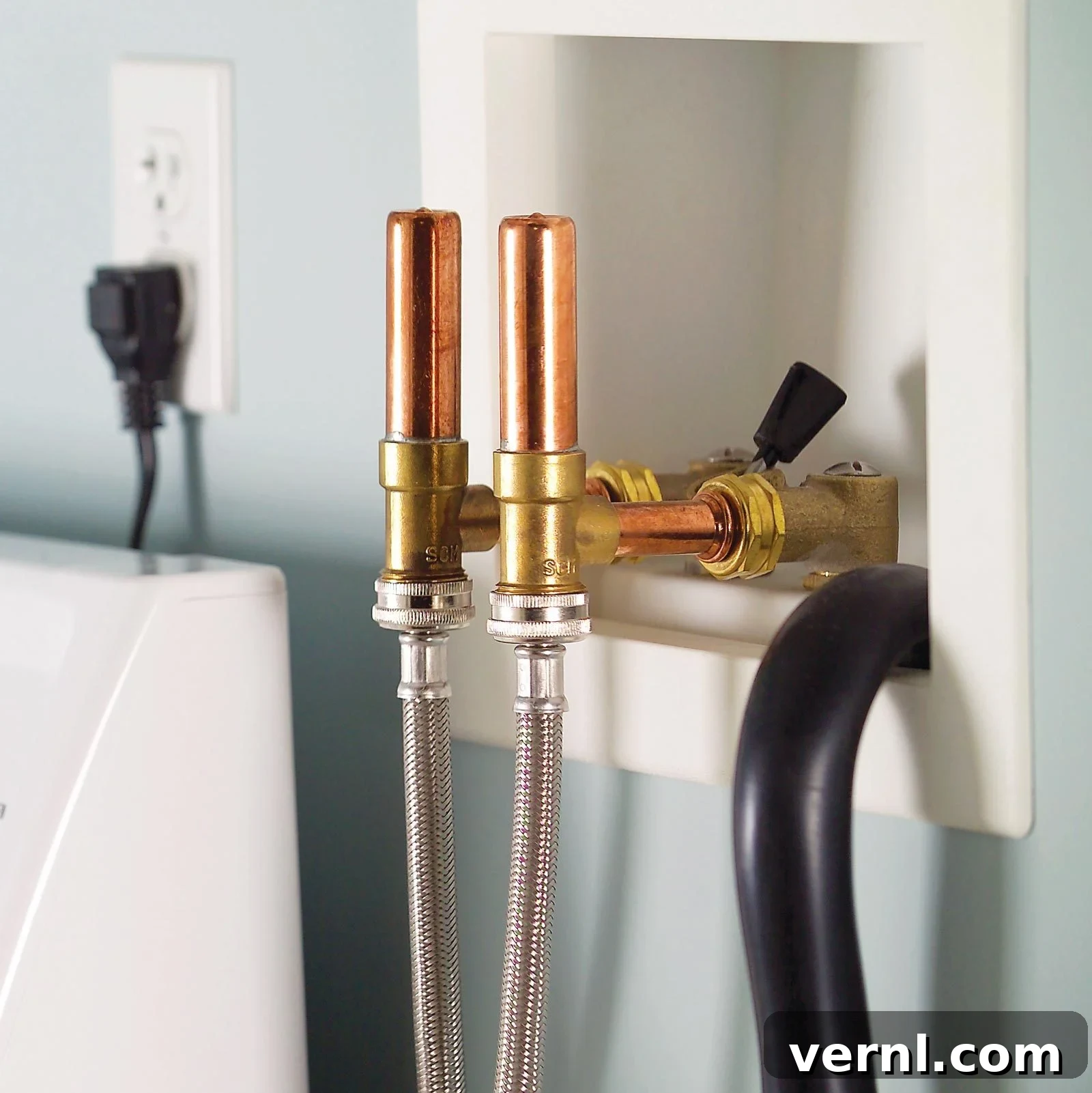
Does your plumbing system sound less like a peaceful network of pipes and more like a chaotic orchestra of clangs and bangs? If your home’s plumbing seems to be staging a metallic rebellion, you’re likely experiencing a common yet often misunderstood issue known as “water hammer.” This isn’t just an irritating noise; it’s a symptom of underlying stress on your entire plumbing infrastructure that, if left unaddressed, can lead to costly and inconvenient problems down the line. Fortunately, there’s a straightforward and effective solution: the water hammer arrestor. This often-overlooked device is an inexpensive yet highly efficient tool designed to quiet your pipes and protect your plumbing. Most homeowners can even tackle the installation in a single afternoon, transforming their noisy plumbing into a quiet, efficient system.
To provide you with the most comprehensive and actionable insights into this common household nuisance, I’ve consulted with a panel of seasoned, licensed plumbing experts. Our discussions delved into the fundamental causes of water hammering, explored why this seemingly minor issue can evolve into a serious threat to your home’s plumbing integrity, and detailed exactly how water hammer arrestors function as the ultimate remedy.
Understanding Water Hammer: The Causes and Consequences of Noisy Pipes
Imagine water hurtling through your pipes at considerable speed – a force you can readily appreciate by simply turning your kitchen faucet on full blast. Water moves with significant momentum, and when this rapid flow is abruptly halted, such as when a faucet is suddenly closed or an appliance valve snaps shut, the kinetic energy of the moving water has nowhere to go. This sudden stoppage causes a shockwave to travel back through the pipe, slamming into the pipe walls and fittings. The result is the distinctive and often startling “water hammer” noise, characterized by loud thumping, banging, or rattling sounds. These noises are a direct consequence of the pipe vibrating violently against its hangers, wooden framing, or any other structural elements it contacts.
Master plumber Aaron Adams vividly describes the experience: “Water hammering is very loud and causes pipes to shake violently. It’s not just a minor vibration; it’s a palpable shaking that can be quite alarming for homeowners. Other times, people might hear loud, intermittent bangs when they turn water on and off in specific areas of the home, perhaps in the laundry room or a bathroom upstairs.” This jarring noise is more than just an annoyance; it signals significant stress within your plumbing system. The constant, repetitive impact of water against the pipes can loosen connections, strain joints, and even compromise the structural integrity of the pipes themselves over time, paving the way for potential leaks and costly repairs.
Water Hammer Arrestors Explained: How These Devices Silence Your Plumbing
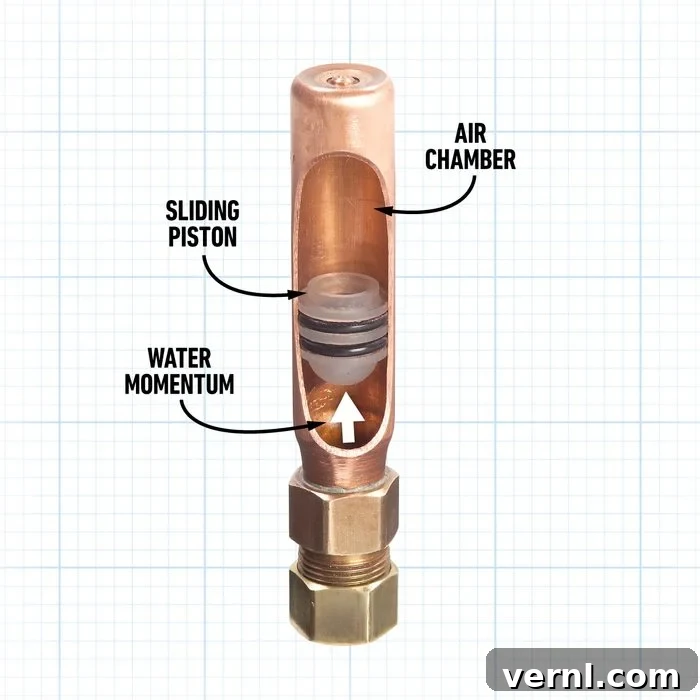
A water hammer arrestor acts as a vital safety valve for your plumbing system, effectively providing an “off-ramp” for the water’s momentum. Think of it like the emergency escape ramps you see on steep mountain highways, designed to safely divert runaway trucks that have gained too much speed. In a plumbing context, when water flow is suddenly cut off, instead of the momentum crashing directly into the pipe’s end, it’s redirected into the arrestor.
At the heart of a modern water hammer arrestor is a cleverly designed mechanism: a sealed chamber containing either a piston or a diaphragm. This component acts as a flexible barrier, separating the main water line from a sealed, air-filled chamber on the other side. When the water’s momentum surges rapidly due to an abrupt shut-off, the pressure pushes against the piston or diaphragm. This component then moves into the air-filled chamber, compressing the air within. The beauty of this design lies in physics: air is compressible, so it absorbs and dissipates the water’s kinetic energy, much like a shock absorber on a vehicle. This absorption process neutralizes the damaging pressure wave, preventing it from reverberating through your pipes and eliminating the disruptive banging noises.
This innovative design represents a significant advancement over older, less effective solutions, such as the rudimentary “air chambers” often found in historic homes. These older systems were essentially vertical sections of pipe filled with air, intended to cushion water surges. However, without a physical barrier like a piston or diaphragm, these air chambers would inevitably fill with water over time, rendering them completely ineffective. Modern arrestors, with their sealed air chambers, maintain their functionality indefinitely, providing reliable, long-term protection.
Shaylin King, a licensed plumber with Mr. Rooter, aptly compares water hammer arrestors to essential shock absorbers for your plumbing system. “While not always deemed strictly necessary in every installation, especially if your plumbing system is meticulously designed with properly sized pipes and securely fastened, arrestors are undoubtedly a smart preventative measure,” King explains. “They offer invaluable protection against sudden and potentially damaging pressure surges, helping to safeguard against premature pipe wear and even catastrophic pipe bursts.”
The Critical Importance of Water Hammer Arrestors: Protecting Your Home’s Plumbing
While the incessant banging and clanging of water hammer can range from a mere nuisance to a highly alarming cacophony, it’s crucial to understand that the noise itself is merely a symptom. The true danger lies in the powerful, repetitive forces at play within your pipes. These forces exert immense stress on your entire plumbing infrastructure, significantly increasing the risk of severe and costly plumbing damage, including weakened joints, premature leaks, and even catastrophic pipe bursts.
The most immediately apparent benefit of installing water hammer arrestors is the elimination of those maddening noises. However, this silence is merely an indicator that the real problem has been solved: the violent slamming of water at full velocity against pipe junctions. Over time, this relentless force can cause pipes to shake loose from their hangers and mounting brackets, exacerbating the noise and further compromising stability. More critically, these intense vibrations can loosen pipe fittings and connections, creating microscopic gaps that eventually expand into troublesome leaks. Such leaks, often hidden behind walls or beneath floors, can lead to extensive water damage, mold growth, and structural deterioration before they are even discovered.
As master plumber Aaron Adams emphasizes, “Plumbing pipes are inherently not designed to withstand constant shaking or movement. They are meant to be static and secure.” The cumulative effect of this constant agitation is profound. Over years, the relentless shaking can cause pipe connections to separate, leading to significant water spills. Furthermore, the friction and wear generated by vibrating pipes rubbing against framing or other materials can literally wear holes through the pipe walls, leading to unexpected and often severe water damage within your home. Installing water hammer arrestors is not just about peace and quiet; it’s about preserving the integrity and longevity of your home’s most essential systems.
Which Appliances and Fixtures Need Water Hammer Arrestors?
Before embarking on the installation of water hammer arrestors, the first critical step is to accurately identify which specific faucets or valves in your home are the culprits behind the disruptive noises. While water hammer can occur anywhere, certain appliances and fixtures are particularly prone to causing it due to their operational design. Washing machines and dishwashers are prime suspects, often at the top of the list. This is because these appliances typically utilize fast-closing solenoid valves that abruptly shut off the water supply, creating the sudden pressure surge that leads to water hammer.
However, the need for an arrestor isn’t universal for every water-using device. If an appliance’s valve closes gradually enough, the change in water momentum is minimal, and thus, water hammer is unlikely to occur. For instance, a traditional garden hose spigot, which you manually turn off slowly, rarely causes water hammer. Conversely, modern, quick-closing faucets, especially single-lever mixer types, and toilets equipped with rapid-fill valves can also be significant contributors to the problem. Ice makers in refrigerators, with their intermittent and sudden water demands, are another common source of banging pipes.
To pinpoint the source, try listening carefully when you operate different fixtures. If the banging consistently occurs when your washing machine fills or when a particular toilet finishes refilling, you’ve likely found your culprit. Generally, if you are not experiencing the telltale signs of water hammer—the loud banging, thumping, or rattling noises—then there is no immediate need to install an arrestor on that particular fixture. Focus your efforts on the areas where the problem is most pronounced to achieve the greatest impact on both pipe protection and household tranquility.
Cost Considerations: The Investment in Quieter, Safer Plumbing
The cost of a water hammer arrestor unit itself is remarkably affordable, typically ranging from $15 to $50 per device. These essential plumbing components are readily available through various channels, including popular online retailers, major home improvement centers, and local hardware stores. However, it’s important to understand that the bulk of the expense associated with a water hammer arrestor installation often lies in the labor, especially if you opt for professional plumbing services.
Engaging a qualified plumbing professional to install water hammer arrestors typically incurs a cost ranging from $250 to $500. Shaylin King explains that this price can fluctuate significantly based on several factors, most notably the specific placement within your home’s intricate plumbing system. In scenarios where an arrestor needs to be installed on a pipe run that is difficult to access, such as those hidden behind finished walls or under floors, the installation process may necessitate opening up walls. This not only adds complexity but also introduces additional labor for drywall removal, repair, and finishing, potentially escalating the total cost to as high as $1,000 or more. Such situations underscore the critical importance of selecting accessible installation points whenever possible.
Given the potential for significant labor costs, a do-it-yourself (DIY) installation can offer substantial savings for handy homeowners. However, it’s paramount to approach this task with diligence and precision. As Aaron Adams sagely warns, “Cutting corners to save dollars in plumbing can lead to nightmares for homeowners.” Improper installation can result in leaks, further damage to your plumbing system, or even significant water damage to your home’s structure. Therefore, while DIY is an attractive option for cost savings, it should only be undertaken by those confident in their plumbing skills and prepared to follow manufacturer instructions meticulously to ensure a correct and leak-free installation.
DIY Installation Guide: Silencing Your Pipes with Confidence
Installing water hammer arrestors yourself can be a rewarding and money-saving project, provided you approach it with the right tools and knowledge. Arrestors are designed to be compatible with virtually every common type of piping material, including copper, PEX, and CPVC. The specific tools you’ll need will largely depend on the type of pipe you’re working with and the chosen installation location. For copper pipes, you might need a pipe cutter and soldering equipment. For PEX, a crimping tool or a push-fit connection system would be appropriate, while CPVC might require specialized cement and cutters. In some cases, you may need to cut into an existing pipe to insert a tee fitting for the arrestor. In others, if there’s an accessible threaded connection, installation might be as simple as screwing the arrestor in place.
The most effective location for installing an arrestor is typically as close as possible to the plumbing fixture that is generating the hammering noise. This is usually at the end of a water line, just before the supply connection to the appliance or faucet. If placing an arrestor at this point doesn’t completely eliminate the water hammering, Shaylin King suggests installing additional units at any 90-degree turns in the pipe run leading to the problematic fixture. These turns are often points of increased stress and can benefit from additional protection.
Once you’ve selected the optimal location, you’ll find a great deal of flexibility regarding the arrestor’s orientation. “Generally, there is no ‘upside-down’ for a water hammer arrestor,” states Aaron Adams. “Most arrestors are effective whether installed vertically (in either direction, facing up or down), horizontally, or even at an angle.” However, this broad flexibility isn’t universal across all models, so it’s absolutely crucial to consult the manufacturer’s specific instructions for your chosen arrestor to confirm its recommended installation orientation.
You might also consider coordinating your water hammer arrestor installation with other plumbing work. Destry Thompson, of John Stevenson Plumbing, advises installing them “in conjunction with a thermal expansion tank for your water heater to relieve excess pressure in the entire plumbing system.” This holistic approach can significantly enhance the longevity and performance of your plumbing system. Personally, when I’m installing an arrestor on older washing machine supply lines, I always take a moment to evaluate the condition of the existing shut-off valve. If the valve shows signs of wear or is nearing the end of its life, I seize the opportunity to upgrade to new valves that come with integrated water hammer arrestors, streamlining the system and adding a layer of protection.
King offers one final, invaluable tip: “Give some thought to the accessibility you’ll need down the road.” When choosing an installation spot, consider future maintenance. Install arrestors in areas you’ll be able to easily access when the time comes for a replacement, which brings us to our next important topic: the lifespan and replacement of water hammer arrestors.
Lifespan and Replacement: When to Update Your Water Hammer Arrestors
Fortunately for homeowners, water hammer arrestors are designed for durability and typically do not require frequent replacement. “Their lifespan is fairly long considering the dynamic forces they encounter on a regular basis,” observes Aaron Adams. This resilience means you won’t be constantly worrying about their upkeep. However, it is important to acknowledge a universal consensus among the plumbing experts I consulted: water hammer arrestors, like all mechanical devices, have a finite operational lifespan and will eventually need to be replaced.
“Similar to a car’s shock absorbers, which gradually lose their effectiveness over time, water hammer arrestors do wear out and will eventually need replacing to maintain optimal performance,” explains Shaylin King. The precise duration of their effectiveness, however, is a subject where professional estimates can vary significantly. I heard estimates ranging from as little as 5 years to as long as 25 years. This wide range isn’t due to disagreement on their function but rather reflects the multitude of factors that influence an arrestor’s working life.
Destry Thompson highlights several key determinants: “Hammer arrestors can wear out depending on a combination of factors such as the local water quality, the overall age of the plumbing system, and the prevailing water pressure within the lines.” Hard water, for instance, can lead to mineral buildup within the arrestor, potentially hindering the piston’s movement. Older plumbing systems might experience more fluctuating pressures, placing greater stress on the arrestor. Another significant factor is the frequency of use. An arrestor installed on a washing machine supply line, which cycles multiple times a week, will naturally experience more wear and tear compared to one on a guest bathroom toilet that sees infrequent use.
You’ll know it’s time to consider replacing an arrestor if the familiar banging noises begin to return, indicating that the device is no longer effectively absorbing the pressure waves. Additionally, any visible signs of wear, such as leaks at its connections, are clear indicators that the arrestor’s integrity has been compromised and it requires immediate attention. Proactive checks, as suggested by Adams, can help you stay ahead of potential issues and ensure your plumbing remains quiet and protected.
Frequently Asked Questions About Water Hammer Arrestors
Do water hammer arrestors wear out?
Yes, absolutely. While designed for durability, water hammer arrestors do wear out over time due to the constant stress of absorbing pressure waves. Factors like water quality, system pressure, and frequency of use all contribute to their eventual degradation. Aaron Adams suggests occasionally checking arrestors for any signs of leaks at their connections or any visible wear to proactively address potential problems caused by aging or malfunction.
Can water hammer arrestors be installed upside down?
This is a common question, and the answer depends entirely on the specific model and design of the arrestor you are using. Most modern water hammer arrestors, particularly those featuring a piston or diaphragm, are designed to be highly versatile and can be installed in virtually any orientation—vertically (up or down), horizontally, or at an angle—without affecting their performance. However, it is critically important to always consult your specific model’s instructions and the manufacturer’s guidance to ensure correct installation and optimal functionality. Some older or less common designs might have specific orientation requirements.
What is the difference between an air chamber and a water hammer arrestor?
While both aim to mitigate water hammer, their design and effectiveness differ significantly. An air chamber is essentially a vertical section of pipe that traps a pocket of air, relying on this compressed air to absorb shock. The major drawback is that over time, the air pocket can be absorbed into the water, rendering the chamber ineffective. A modern water hammer arrestor, however, features a sealed air chamber separated from the water by a piston or diaphragm. This physical barrier ensures the air remains trapped and effective, providing consistent, long-term performance without losing its air cushion.
Do I need a water hammer arrestor for every fixture?
Not necessarily. Water hammer arrestors should primarily be installed at or near the fixtures and appliances that are specifically causing the banging noise. Common culprits include washing machines, dishwashers, ice makers, and quick-closing faucets or toilets. If a fixture operates quietly and doesn’t generate water hammer, an arrestor isn’t needed there. In some cases, a single, properly sized whole-house arrestor might be effective for general pressure issues, but point-of-use arrestors are often best for localized, specific problems.
About the Experts
Aaron Adams is a highly respected Master Plumber and the CEO of Aaron Services: Plumbing, Heating, Cooling. His family-owned company has been proudly serving the Atlanta Metro area with unparalleled expertise and dedication since its establishment in 1978.
Shaylin King is a licensed plumber contributing his extensive knowledge and skills to Mr. Rooter Plumbing, serving the communities of Tri-Cities, Yakima, and Hermiston, Oregon, with a commitment to quality and customer satisfaction.
Destry Thompson brings nearly nine years of invaluable experience within the plumbing industry. Currently, he serves as the distinguished General Manager of John Stevenson Plumbing, a testament to his leadership and profound understanding of plumbing systems.