
Is Your Monstera Sick? A Comprehensive Guide to Troubleshooting Common Plant Problems
The Monstera, a magnificent tropical plant known for its iconic split leaves and lush greenery, has captured the hearts of plant enthusiasts worldwide. From a small desk companion to a grand corner statement piece, these plants often become beloved members of our homes. My own Monstera, for instance, began as a modest desktop plant from Trader Joe’s years ago and has since transformed into a sprawling, impressive specimen in our bedroom. It has required multiple repottings, a sturdy moss pole to support its upward climb, and has consistently delighted me with the emergence of every new, beautifully fenestrated leaf. Fortunately, I’ve never had to grapple with the anxiety-inducing question, “Is my Monstera sick?” However, given the immense popularity of this particular houseplant, it’s a concern that many plant parents inevitably face. Understanding the subtle cues your Monstera provides is key to ensuring its long-term health and vibrant growth.
What Is a Monstera Plant? Understanding This Tropical Beauty
The Monstera deliciosa, often affectionately called the “Swiss Cheese Plant” due to its distinctive leaf perforations, is a captivating tropical plant native to the lush rainforests of Central America. In its natural habitat, this epiphytic vine gracefully climbs the towering trees of the forest canopy, reaching impressive heights. Characterized by its glossy, heart-shaped leaves, the Monstera is renowned for developing striking fenestrations – the natural splits or holes – as its leaves mature. These unique features are not merely aesthetic; they are believed to help the plant withstand strong winds and allow light to penetrate lower leaves in the dense jungle undergrowth.
While generally considered a hardy and adaptable houseplant, Monsteras are living organisms susceptible to environmental stressors and improper care. They thrive in conditions that mimic their native rainforest environment, which can sometimes be challenging to replicate perfectly indoors. Factors such as inappropriate lighting, inconsistent watering, and insufficient humidity can all contribute to a stressed or unhealthy plant. Recognizing the early signs of distress is paramount for any Monstera owner, allowing for timely intervention and preventing minor issues from escalating into significant problems. In the following sections, we will delve into the specific indicators to watch for, providing you with the knowledge to keep your beloved Monstera not just surviving, but truly thriving.
Decoding Your Monstera’s Distress: Clear Signs of Sickness
The moment you start wondering, “Is my Monstera sick?” it’s highly likely your plant is already exhibiting some visible symptoms that something isn’t quite right. Your Monstera communicates its needs and distress through various visual cues on its leaves, stems, and overall appearance.
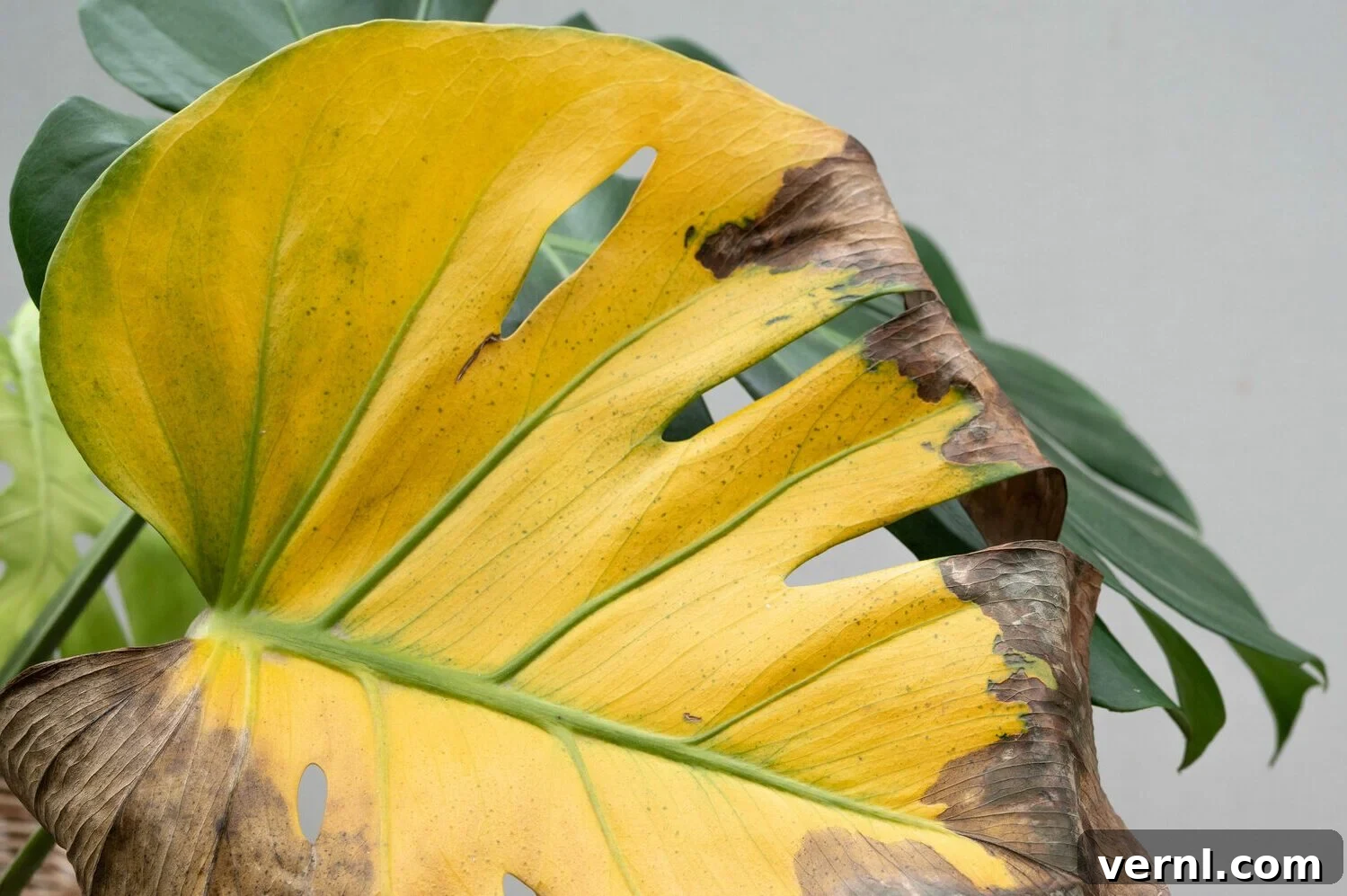
Megan Brame, a revered plant expert and host of The History of Plants podcast, emphasizes the importance of paying attention to these signals. She notes, “There are a few ways your Monstera is signaling things aren’t going well. Yellowing or drooping leaves are usually the first sign, eventually leading to brown, crispy edges.” These initial visual warnings are critical to catch early.
Similarly, Gail Pabst, a horticulturist and marketing communications coordinator for the National Garden Bureau, advises all plant owners to adopt a routine of frequent observation: “You must take time to look at your plants frequently.” She echoes Brame’s sentiment regarding yellowing leaves as a primary indicator of distress. Pabst further specifies that the pattern of yellowing can offer additional clues: “If a leaf is higher on the plant or yellows from the tip inwards, that can indicate additional problems.” This specific pattern often points to issues like nutrient deficiencies or more severe root problems.
- Yellowing Leaves: While a single lower leaf turning yellow might be natural aging, widespread or patterned yellowing across multiple leaves, especially newer ones or from the tips inwards, almost always signals an underlying problem. This can be caused by overwatering, underwatering, nutrient deficiencies, or too much light.
- Drooping or Wilting Foliage: A healthy Monstera should have firm, upright leaves. If your leaves appear limp, soft, or sag downwards, it’s a clear sign of stress. This often points to watering issues (both over and under) or even temperature extremes.
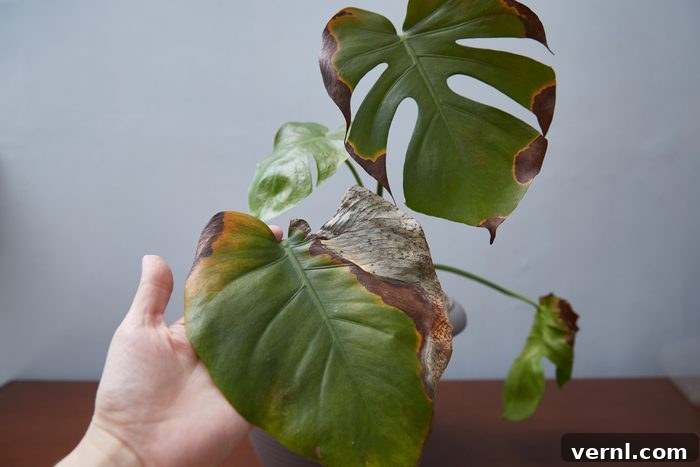
- Brown and Crispy Edges or Tips: Dry, brittle, brown patches, particularly along the leaf margins or tips, are typically indicative of insufficient humidity or underwatering. These areas of the leaf are essentially drying out and dying.
- Leaf Curling: When Monstera leaves begin to curl inward or outward, it’s often a desperate attempt by the plant to conserve moisture. This symptom is most commonly associated with underwatering or extremely low humidity.
- Lack of New Leaf Growth: A healthy Monstera in its growing season should consistently produce new leaves. If growth stalls for an extended period, it suggests the plant is under stress, perhaps due to inadequate light, nutrients, or an unsuitable environment.
- Absence of Fenestrations: While not always a sign of sickness, a complete lack of fenestrations on mature leaves can indicate the plant is not receiving optimal conditions. Fenestrations are a sign of a truly happy and thriving Monstera.
- Ripping or Tearing Leaves: Leaves that tear or rip easily, especially when lightly brushed against, can suggest they are too dry and brittle, often a result of extremely low humidity.
- Leggy Growth: If your Monstera’s stems are elongated with sparse leaves and long gaps between nodes, it’s described as “leggy.” While not a disease, leggy growth is a strong indicator that your plant isn’t receiving enough light and is stretching to find it. This impacts the plant’s structural integrity and overall vigor.
Observing these signs and understanding their potential causes is the first crucial step in diagnosing and remedying any health issues your Monstera might be experiencing.
Debunking Monstera Myths: Misconceptions About Plant Health
In the world of houseplants, misinformation can sometimes lead to unnecessary panic or incorrect care practices. Monsteras, being such popular plants, are no exception. Several common misconceptions about their health can often mislead even experienced plant parents.
One prevalent misconception revolves around yellowing leaves. While widespread yellowing is indeed a red flag, not all yellow leaves signify a critical problem. Horticulturist Gail Pabst clarifies this nuance: “Yellowing leaves are a good indication that something might be wrong with your Monstera. If one lower leaf turns yellow from the inside out, it might not indicate a problem and might just be older. But if a leaf is higher on the plant or yellows from the tip inwards, that can indicate additional problems. You must take time to look at your plants frequently.” Her advice highlights the importance of context; an old leaf dying off is a natural part of the plant’s lifecycle and shouldn’t cause alarm, whereas widespread or unusual yellowing warrants investigation.
Another significant misunderstanding pertains to the much-admired fenestrations, or leaf splits. Many gardeners expect new Monstera leaves to immediately display these iconic cuts, and their absence often leads to concern that the plant is unwell. Megan Brame addresses this common misinterpretation directly: “Some gardeners will expect fenestrations to show up right away on new leaves,” she explains, “but fenestrations only begin once the plant has matured and is totally content in its environment.” She elaborates on the botanical reasoning behind this phenomenon: “If you think about it, that makes sense: The plant is giving up valuable real estate that would’ve been used for accumulating the things it needs for photosynthesis.” Essentially, producing fenestrations requires energy and resources. A young or stressed plant will prioritize basic survival and growth over developing these aesthetic features.
Therefore, leaves that haven’t fenestrated are not, in themselves, a sign that your Monstera is struggling. On the contrary, the presence of beautifully split leaves is a strong indicator of a happy and flourishing plant. Brame further reinforces this point: “It’s only when things are going really well that the plant ‘thinks’ it’s safe enough to give up parts of its leaves to fenestration. Consequently, new growth rarely gets more than one notch or two, so don’t take a solid leaf as a sign something is wrong. Look for the other more common tell-tale signs instead, like yellow, wilted leaves.” This insight encourages plant owners to focus on more fundamental health indicators rather than panicking over the absence of splits on every new leaf. Understanding these nuances can help you provide more accurate care and avoid unnecessary anxiety about your Monstera’s well-being.
Common Monstera Problems & How to Fix Them
Proactive care and early detection are crucial for maintaining a healthy Monstera. By understanding the most common issues these plants face and how to effectively address them, you can resolve problems long before they escalate into serious health crises. Here’s a detailed look at typical Monstera ailments and practical solutions to keep your plant vibrant and happy.
Floppy or Leggy Growth: The Need for Support
Monsteras are natural climbers. In their native rainforest environment, they use aerial roots to anchor themselves to trees, ascending towards the light. Indoors, without adequate support, their stems can become weak, floppy, and unsightly, leading to a sprawling, leggy appearance. This not only diminishes their aesthetic appeal but can also hinder leaf size and fenestration development.
The Fix: Provide a sturdy climbing structure. Megan Brame suggests, “Use a trellis, moss pole, or grid wall panel to help prop it up. Plant Velcro is a popular way to attach Monstera stems to a support, but any hook-and-loop tape, twine, or twist ties will do. Just make sure it’s not too tight around the stem, restricting it.” A high-quality moss pole is often recommended as it allows aerial roots to cling, mimicking their natural habit and encouraging larger, healthier leaves. As your Monstera grows, continue to gently guide and secure its stems to the support structure.
Too Much Light: Sunburn and Stress
While Monsteras appreciate bright conditions, they are accustomed to filtered light. In their natural habitat, they grow under the dense canopy of the rainforest, where direct sunlight rarely penetrates. This means they thrive in indirect, dappled light rather than harsh, direct sun. Exposure to too much intense light can quickly stress your Monstera, leading to visible damage.
The Signs: Your Monstera will signal excessive light through yellowing leaves, particularly if the yellowing is widespread and not confined to lower, older leaves. You might also notice leaves curling at the tips, becoming bleached, or developing brown, crispy edges, almost like sunburn. In severe cases, entire leaves can turn pale and brittle.
The Fix: Replicate their natural lighting conditions. Brame suggests “plopping your potted Monstera somewhere that doesn’t allow light to directly reach the leaves, but instead fills the room with light. Things like semi-sheer curtains on a window or placing your Monstera off to the side instead of directly in front of a window will do wonders for its health.” East-facing windows are often ideal, offering gentle morning sun, while south or west-facing windows might require a significant step back or sheer curtains to diffuse intense afternoon light.
Overwatering: The Silent Killer
Perhaps the most common culprit behind houseplant woes, overwatering is particularly detrimental to Monsteras. While they love humidity, their roots do not tolerate constantly wet soil, which can quickly lead to suffocation and rot. Overwatering restricts the plant’s access to oxygen, as water displaces air pockets in the soil, suffocating the roots.
The Signs: Classic indicators of overwatering include wilting and generalized yellowing of leaves, often starting with the lower or inner foliage. You might also notice a peculiar “sweating” or guttation from the leaf tips as the plant tries to expel excess moisture. A crucial sign is soil that remains visibly wet or soggy for extended periods between waterings, emitting a foul, musty odor. The most severe consequence is root rot, where roots turn mushy and brown, unable to absorb water and nutrients.
Gail Pabst highlights this widespread issue: “People often water too much rather than too little. Overwatering can lead to a lack of oxygen in the soil, making the plant vulnerable to pests.” This lack of oxygen weakens the plant, making it a prime target for opportunistic pests.
The Fix: The first step is to recognize the signs and adjust your watering habits. Always allow the top 2-3 inches of soil to dry out completely before watering again. Use your finger to check the soil moisture. Ensure your pot has ample drainage holes to prevent water from accumulating at the bottom. Consider bottom watering: place the pot in a tray of water for 20-30 minutes, allowing the plant to soak up what it needs. If signs of severe overwatering persist or worsen, you might need to inspect the roots. Gently remove the plant from its pot and examine the root ball. If you find mushy, brown, or black roots, carefully prune away all damaged portions using sterile shears. Repot the Monstera in fresh, well-draining potting mix, ensuring the new pot is clean and has good drainage. Avoid watering immediately after repotting to allow the roots to heal.
Underwatering: Parched and Thirsty
The opposite of overwatering, insufficient moisture can also severely stress your Monstera, especially given its tropical origins.
The Signs: An underwatered Monstera will often display drooping or limp leaves, similar to overwatering, but the soil will feel bone dry to the touch. Leaves may also develop crispy, brown edges and tips, curl inwards, or even become brittle and easily torn. New growth might be stunted, and existing leaves may appear dull or lack their usual vibrant gloss.
The Fix: Consistent and thorough watering is key. When the top few inches of soil are dry, water deeply until water drains freely from the bottom of the pot. Ensure the plant is not sitting in standing water. If the soil has become so dry that it’s compacted and hydrophobic (repelling water), consider bottom watering to rehydrate the entire root ball, or give it a good soak in the shower. Establish a regular watering schedule, but always check the soil moisture before watering, as environmental factors can change the plant’s needs.
Too Dry: Low Humidity Woes
Hailing from the humid rainforests, Monsteras thrive in high humidity environments. The average indoor home often provides much drier conditions than they prefer, especially during winter months with heating systems running.
The Signs: Your Monstera will signal its need for more humidity through its leaves. Look for curling at the edges, where the leaf tries to cup itself to conserve moisture. Brown edges or crispy tips are also common indicators. If leaves become brittle and rip easily, even when lightly brushed against, it’s a strong sign that the air is too dry.
The Fix: Increase the ambient humidity around your plant. Several methods can help:
- Misting: While a temporary solution, frequent misting (daily or every other day) with distilled or filtered water can provide short bursts of humidity. Focus on the undersides of leaves and aerial roots.
- Humidifier: Placing a small room humidifier near your Monstera is one of the most effective ways to consistently raise humidity levels. Aim for 60-80% humidity.
- Pebble Tray: Fill a shallow tray with pebbles and water, then place your potted Monstera on top, ensuring the pot itself doesn’t sit directly in the water. As the water evaporates, it creates a localized humid microclimate.
- Grouping Plants: Grouping several plants together can naturally increase humidity as they release moisture through transpiration.
Pests: Unwanted Visitors
Even healthy Monsteras can occasionally fall victim to common houseplant pests, which can quickly compromise their health if left unchecked.
Common Pests: Look out for spider mites (fine webbing, tiny red/brown specks on undersides of leaves), mealybugs (fuzzy white cotton-like clusters in leaf axils and stems), thrips (silvery streaks on leaves, tiny black specks), and scale (small, immobile bumps on stems and leaves).
The Signs: Beyond seeing the pests themselves, signs include sticky residue (honeydew), discolored spots, distorted new growth, or a general decline in plant vigor.
The Fix: Isolate the infested plant immediately to prevent spread. For mild infestations, a strong spray of water can dislodge many pests. For more severe cases, use insecticidal soap, neem oil, or horticultural oil, carefully following product instructions. Regular inspection of your Monstera’s leaves (especially the undersides) can help catch infestations early.
Nutrient Deficiencies: Hunger Pangs
While Monsteras are not heavy feeders, a lack of essential nutrients can eventually lead to poor growth and overall weakness.
The Signs: General yellowing of older leaves (nitrogen deficiency), stunted growth, pale green or yellowish new leaves, or unusual discoloration patterns can indicate a lack of nutrients. However, these signs can also overlap with watering issues, so consider your watering routine first.
The Fix: Fertilize regularly during the growing season (spring and summer) with a balanced, all-purpose houseplant fertilizer. Always dilute fertilizer to half strength or according to package directions to avoid nutrient burn. Reduce or cease fertilizing during the dormant winter months.
Is It Too Late to Save My Monstera? Assessing Viability
When faced with a struggling Monstera, the question “Is my Monstera sick?” can quickly escalate to “Is it too late to save my Monstera?” The decision to invest time and energy into resuscitation can be a deeply personal one, especially if the plant holds sentimental value. You might be catching a minor issue early, or you might be confronting a plant that has been deteriorating for some time.
Gail Pabst wisely observes that the decision to save a dying plant is often a matter of personal commitment. However, Megan Brame provides practical, concrete steps to help objectively assess your Monstera’s chances of recovery: “My best advice for knowing whether a Monstera is savable depends on the roots and nodes. If you’ve got a completely dead leaf, cut the stem down as much as you need until you see green on the inside. This might mean going as far as cutting it down to the soil line.”
The internal color of the stem is a critical indicator. “If every cut shows nothing but a brown and hollow inside, and the roots are brown and dry or mushy, then the Monstera is a goner,” Brame explains. A brown, hollow stem signals widespread tissue death, indicating that the plant’s vascular system, responsible for transporting water and nutrients, is compromised beyond repair. Similarly, severely damaged roots – either completely desiccated and brittle or soft and decaying – mean the plant cannot absorb what it needs to survive.
However, there’s always hope if you find signs of life. Brame concludes, “However, if you see a green center and the roots are white with a little suppleness, there’s still hope.” A green core within the stem indicates living tissue and the potential for new growth from nodes. White, firm, and slightly pliable roots are healthy roots capable of absorbing water and nutrients. Even if much of the foliage is lost, a healthy root system and viable nodes mean your Monstera has a strong chance of bouncing back with proper care and patience. Don’t discard your plant prematurely without performing this vital “autopsy” first.
Frequently Asked Questions About Monstera Care
Do Monstera plants need a lot of light?
Monstera plants thrive in bright, indirect light. They do not tolerate direct, harsh sunlight, which can scorch their leaves. Because their natural habitat is the forest floor beneath a dense canopy, they flourish in conditions that mimic dappled sunlight. This ideal lighting can be achieved by placing your Monstera in a room that receives ample sunlight but positioning it a few feet away from a window, or by using sheer curtains to diffuse intense light.
What is the best fertilizer for a Monstera plant?
A balanced, all-purpose houseplant fertilizer is ideal for Monstera plants. Look for a fertilizer with an NPK ratio (Nitrogen, Phosphorus, Potassium) that is relatively equal, such as 5-5-5 or 10-10-10. You should fertilize approximately every two to four weeks during the active growing season (spring and summer) and reduce feeding to once a month or cease entirely during the dormant winter months. Always follow the product’s instructions for dilution to prevent nutrient burn.
How often should I water my Monstera?
The frequency of watering depends on several factors, including the size of your plant, the type of soil, pot material, and environmental conditions (temperature, humidity). As a general rule, water your Monstera when the top 2-3 inches of soil feel dry to the touch. It’s always better to underwater slightly than to overwater. Ensure your pot has adequate drainage holes to prevent waterlogging. You can also monitor for signs like slightly drooping leaves as an indicator of thirst.
What type of soil is best for Monstera?
Monstera plants prefer a well-draining, airy, and nutrient-rich potting mix that mimics their tropical environment. A good mix typically includes a base of peat moss or coco coir, amended with perlite or pumice for drainage, and orchid bark or coco chips for aeration. This combination prevents compaction, allows for good airflow to the roots, and retains adequate moisture without becoming waterlogged.
Why are my Monstera leaves not splitting (fenestrating)?
The absence of fenestrations on your Monstera’s leaves can be attributed to several factors, none of which necessarily mean your plant is “sick.” Young Monsteras will not produce split leaves until they reach a certain level of maturity and size. Additionally, sufficient bright, indirect light and consistent, optimal care (proper watering, humidity, and nutrients) are crucial. If your plant is mature but still not fenestrating, evaluate its lighting conditions and ensure it’s not stressed by environmental factors. A truly happy and thriving Monstera will eventually develop its characteristic splits.
How long do Monstera plants live?
Monstera plants are remarkably long-lived. As houseplants, with proper care, a Monstera can thrive for 20 years or even more, becoming a cherished heirloom plant. In their natural wild habitat, they can live for up to 50 years, making them one of the longest-living and most rewarding houseplants to cultivate.
About the Experts
- Megan Brame is a distinguished plant expert, science writer, and the insightful host of the Plantrums + The History of Plants podcast. Through her work, she conducts in-depth interviews with leading botanists, horticulturists, historians, and fellow plant enthusiasts, delving into the fascinating evolution of specific plants from their wild origins to their cultivated forms. Her personal plant collection boasts an impressive 247 plants.
- Gail Pabst is a highly respected horticulturist and serves as the marketing communications coordinator for the National Garden Bureau. She holds a degree in Agriculture, Ornamental Horticulture from the University of Illinois, Urbana-Champaign, bringing a wealth of academic and practical knowledge to her expertise.
Sources
- “Wisconsin Horticulture Division of Extension: Swiss-Cheese Plant, Monstera deliciosa”
- “University of Maryland Extension: Overwatered Indoor Plants” (2023)
- “PennState Extension: Monstera as a Houseplant” (2024)
RELATED
- 7 Reasons Why Your Houseplants Might Stink
- 8 Must-Know Tips to Drought-Proof Your Lawn
- Tired of Raking Leaves? Plant These Trees Instead