Building a home from the ground up offers unparalleled freedom and personalization, allowing you to tailor every detail, from the exact location to the interior finishes, to your unique vision. This bespoke approach often surpasses the compromises involved in purchasing an existing property. However, before embarking on this exciting journey, it’s crucial to thoroughly evaluate the financial landscape to ensure your new construction project aligns perfectly with your budget and expectations.
In this comprehensive guide, we will explore the average national costs associated with each major phase of home construction, drawing upon the latest insights from the National Association of Home Builders (NAHB). It’s important to note that the current real estate market is highly dynamic. A surge in buyer demand, coupled with significant increases in building material costs, particularly lumber, means that present figures are notably higher than those reported in the NAHB’s 2019 Construction Cost Survey, published in early 2020. This upward trend in expenses is largely attributable to an imported lumber shortage, which has driven prices up by a staggering 188 percent, consequently increasing the total expenditure on a new home build by almost 10 percent. While the figures provided here offer an excellent starting point for your financial planning, always conduct thorough research into local pricing to obtain the most accurate estimate for your specific area.
Understanding New Home Construction Costs: An Overview
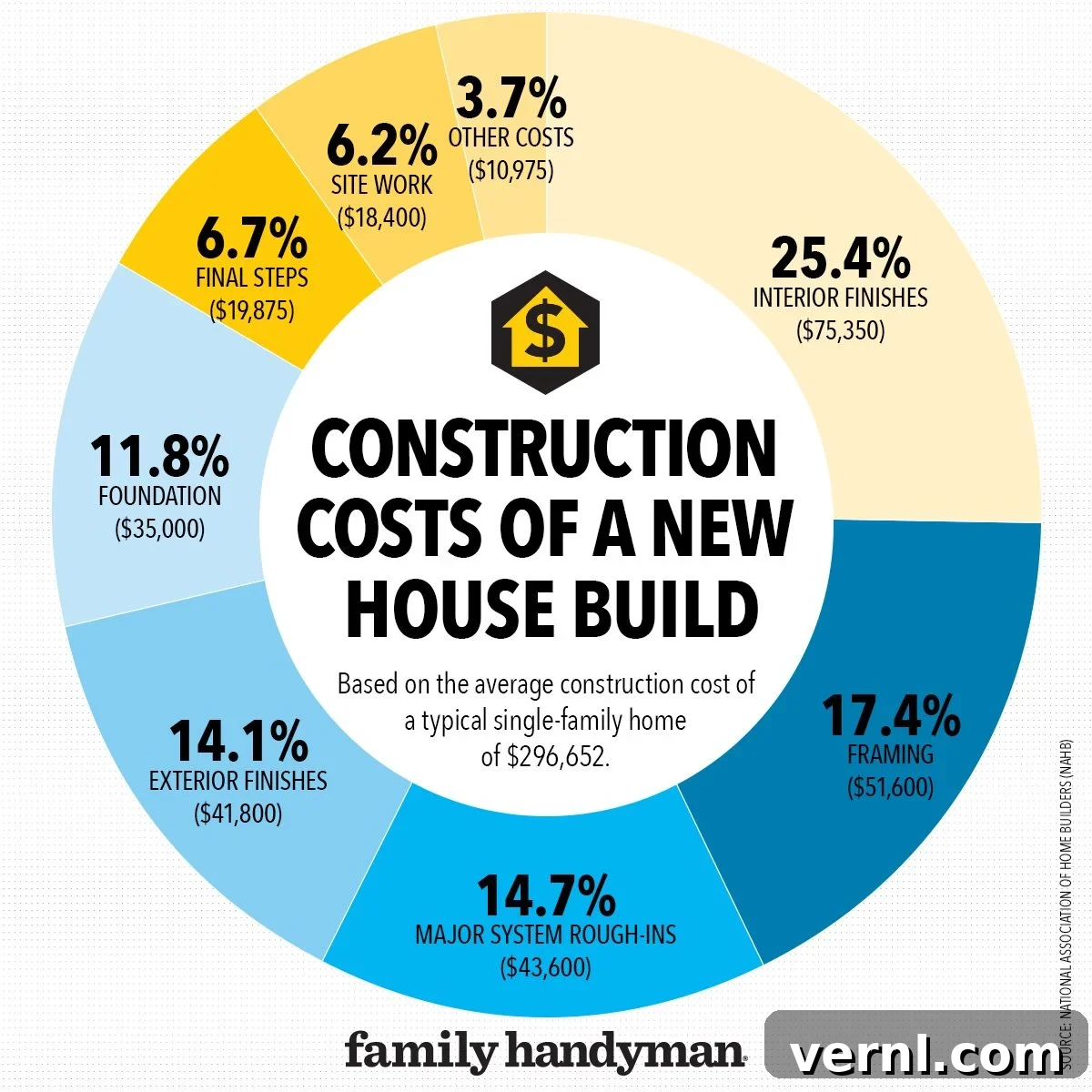
According to the NAHB’s 2019 survey, the average construction cost for a typical single-family home stood at approximately $296,652. This translates to about $114 per square foot, marking a $28 increase since 2017. Interestingly, despite the rise in construction costs, the average size of new single-family homes has seen a slight decrease, with the 2019 survey reporting an average of 2,594 square feet of finished floor space – the smallest average recorded since 2011. This trend might reflect a growing preference for more efficient designs or an adjustment to rising per-square-foot costs.
Generally, construction expenses account for a substantial portion, typically ranging from 75 to 80 percent, of the overall cost of building a new home. The remaining 20 to 25 percent is allocated to other essential aspects, including land acquisition, thorough site preparation (such as clearing, grading, and installing septic or sewer systems), and financing charges. The NAHB conveniently categorizes construction costs into eight primary stages, assigning a percentage of the total budget to each. Each category encompasses all related expenditures, including labor, material procurement, and the engagement of subcontractors.
Detailed Breakdown of Home Construction Phases and Costs
To provide a clearer picture, let’s delve into each of the eight major construction stages and their respective average cost percentages:
-
Interior Finishes: 25.4 percent, approximately $75,350.
-
Framing: 17.4 percent, approximately $51,600.
-
Major System Rough-Ins: 14.7 percent, approximately $43,600.
-
Exterior Finishes: 14.1 percent, approximately $41,800.
-
Foundation: 11.8 percent, approximately $35,000.
-
Final Steps: 6.8 percent, approximately $20,200.
-
Site Work: 6.2 percent, approximately $18,400.
-
Other Costs: 3.8 percent, approximately $11,300.
Interior Finishes: Personalizing Your Living Space
Representing the largest share of construction costs, interior finishes offer the most significant opportunity for cost fluctuation based on your design choices. Opting for high-end selections like bespoke hardwood flooring, designer lighting, custom cabinetry, and premium appliances will naturally increase costs compared to more budget-friendly alternatives. This category encompasses a wide array of elements: comprehensive insulation for energy efficiency, drywall installation and finishing, interior trim work including baseboards and crown molding, doors and mirrors, professional painting services, lighting fixtures, custom or semi-custom cabinets, various countertop materials (such as granite, quartz, or laminate), kitchen and laundry appliances, all types of flooring (from luxurious tiles to durable carpets), plumbing fixtures in bathrooms and kitchens, and the installation of fireplaces. Every selection here contributes to the overall aesthetic and functionality of your home, making it a critical area for budget allocation and personal expression.
Framing: The Skeleton of Your Home
Framing, including the intricate roof structure and pre-fabricated trusses, constitutes another substantial construction expense. Your budget flexibility in this area is limited, primarily because it’s a structural necessity that often requires professional expertise unless you possess advanced DIY skills. The past year has seen unprecedented spikes in softwood lumber prices, which have reportedly increased the average cost of a new single-family home by over $24,000. This makes careful consideration of framing costs paramount when planning your build. This stage also includes essential elements like exterior sheathing, which adds rigidity and a surface for exterior finishes, and general metal and steelwork for structural reinforcement.
Major System Rough-Ins: Essential Utilities
The installation of major utility systems—plumbing, electrical wiring, and HVAC (heating, ventilation, and air conditioning)—represents significant cost considerations. The total expenditure for these systems is directly influenced by the size of your home, the number of bathrooms, the complexity of the layout, and the efficiency ratings of the chosen equipment. Plumbing rough-ins involve laying all water supply and drainage pipes, while electrical rough-ins include all wiring, breaker panels, outlets, and switches. HVAC systems encompass furnaces, air conditioning units, ductwork, and thermostats, all of which are crucial for comfort and energy management.
Exterior Finishes: Curb Appeal and Protection
Just like interior finishes, the cost of your home’s exterior will largely depend on your material selections. Premium options like brick, natural stone veneer, or high-quality stucco will significantly increase costs compared to more economical choices such as vinyl or fiber cement siding. Roofing materials also present a wide price range; a solar panel roof, for instance, can be twice as expensive to purchase and install as traditional asphalt shingles, though it offers long-term energy savings. Custom windows and doors, including specialized or high-end garage doors, also play a substantial role in the overall exterior budget, impacting both aesthetics and energy efficiency.
Foundation: The Bedrock of Your Home
The cost of pouring a foundation has been on a steady rise due to increasing ready-mix concrete prices over the past two years. A simple slab foundation is typically the most budget-friendly option, providing a flat, stable base directly on the ground. However, a full basement offers additional living or storage space but comes with a higher price tag due to the extensive excavation, increased concrete volume, and the necessary rebar reinforcement. Crawl spaces offer a middle-ground solution, providing access to utilities beneath the house without the full expense of a basement.
Final Steps: Bringing Your Vision to Life
The final touches, though seemingly minor, significantly enhance your home’s curb appeal and overall functionality. This category includes comprehensive landscaping, the installation of outdoor structures such as porches, decks, or patios, and the creation of driveways and walkways. Opting for elaborate landscape designs, extensive hardscaping, or luxurious outdoor living spaces can substantially increase these costs. The NAHB also includes final grading, utility connections, and post-construction site cleanup within this essential stage, ensuring your property is move-in ready and aesthetically complete.
Site Work: Preparing the Canvas
Before any groundbreaking can occur, essential site work and regulatory approvals are required. This phase involves obtaining the proper building permits from local authorities, paying impact fees (which fund community infrastructure), and covering water and sewer inspection fees. Additionally, costs for architectural and engineering plans are incurred during this stage. While these may seem like minor details individually, they collectively amount to thousands of dollars. Initial site work also includes surveying the land, conducting necessary soil tests, and preparing the lot for construction by clearing vegetation or demolishing existing structures if applicable, along with establishing temporary utilities for the construction crew.
Other Costs: The Essential Contingency
This “other costs” category serves as a crucial buffer for unforeseen expenses that can arise during construction. It typically includes the builder’s profit and overhead, various forms of insurance (such as builder’s risk insurance), and a vital contingency fund. A recommended contingency of 10-20% of the total construction cost is prudent to cover unexpected issues like material price hikes, labor delays, or unforeseen site conditions. Ignoring this fund can lead to significant financial stress later in the project.
Additional Factors Influencing New Home Construction Costs
Beyond the direct construction phases, several broader factors significantly impact the final cost of building a new home.
Location: Where You Build Matters Most
Location is arguably one of the most influential factors determining the final price tag of a home build. According to the 2020 U.S. Census report, the West stands as the most expensive region in the U.S. for home construction, followed by the Northeast, Midwest, and South. However, even within these regions, costs vary dramatically by city, county, and state. Local building codes, property taxes, labor rates, and material availability all contribute to these regional discrepancies. Therefore, meticulous research into local fees, permit requirements, and prevailing market rates is essential when selecting your building site.
Building in a rural area often presents unique challenges and additional costs. These can include expenses for installing a septic system or connecting to a distant sewer line, drilling a well for water, establishing propane tanks for heating, extending electric and telephone lines, and even constructing a private road or a long driveway to connect to a main thoroughfare. Conversely, building in an urban area might incur higher land costs and specific fees for dense zoning or infrastructure impact.
Size and Complexity: Beyond Square Footage
While the total square footage of your new home undeniably impacts construction costs, it’s not the sole determinant. The complexity of the home’s design also plays a crucial role. A simple, rectangular single-story home will generally be less expensive per square foot than a multi-story house with an intricate roofline, numerous corners, architectural bump-outs, or varying ceiling heights. More complex designs require more specialized labor, custom materials, and longer construction times. Similarly, a small two-bedroom home in a highly desirable metropolitan area, finished with high-end materials and appliances, can easily rival the cost of a much larger, simpler home built with more economical materials in a less expensive region.
Customization: Production vs. Bespoke
The degree of customization you desire for your home profoundly affects its cost. Opting for a fully custom home, meticulously designed to your exact specifications by an architect and brought to life by a general contractor, will inherently be more expensive than purchasing a home from a developer in a planned subdivision. Production home builders achieve cost efficiencies through economies of scale, bulk purchasing of materials, and standardized construction processes across multiple homes. While customization in production homes is usually limited to interior finishes, landscaping packages, and minor upgrades, a custom build offers unparalleled freedom in design, materials, and layout, albeit at a premium for design fees, unique material sourcing, and specialized labor.
Budgeting and Managing Costs for Your New Home
Effective budgeting and vigilant cost management are paramount to a successful home build. Begin by creating a highly detailed budget that itemizes every anticipated expense, from land acquisition to final landscaping. Obtain multiple bids from reputable contractors and subcontractors for each phase of work, ensuring clarity on what is included. Prioritize your “wants” versus “needs” early on, as this will help you make informed decisions when faced with cost overruns or attractive upgrades. Always allocate a substantial contingency fund, ideally 10-20% of the total project cost, to absorb unexpected expenses without derailing your finances. Consider investing in energy-efficient materials and systems, as these can lead to significant long-term savings on utility bills. Maintain open communication with your builder, regularly monitor progress, and thoroughly understand all contracts before signing. By taking these proactive steps, you can navigate the complexities of home construction with greater confidence and financial control.
Conclusion: Building Your Dream Home Smartly
Building a new home is an incredibly rewarding endeavor, offering the unique opportunity to create a living space perfectly tailored to your lifestyle and preferences. However, it represents a substantial financial commitment that requires careful planning, diligent budgeting, and a clear understanding of the many factors that influence costs. From the initial site work and foundation to the intricate interior and exterior finishes, each stage carries its own set of expenses and decisions. By leveraging national averages as a starting point and meticulously researching local market conditions, material costs, and labor rates, you can develop a realistic and robust budget. Always be prepared for unforeseen expenses with a healthy contingency fund and consider the long-term value of your choices, especially regarding energy efficiency and durability. With thorough preparation and an informed approach, your dream of building a custom home can become a well-managed and satisfying reality.