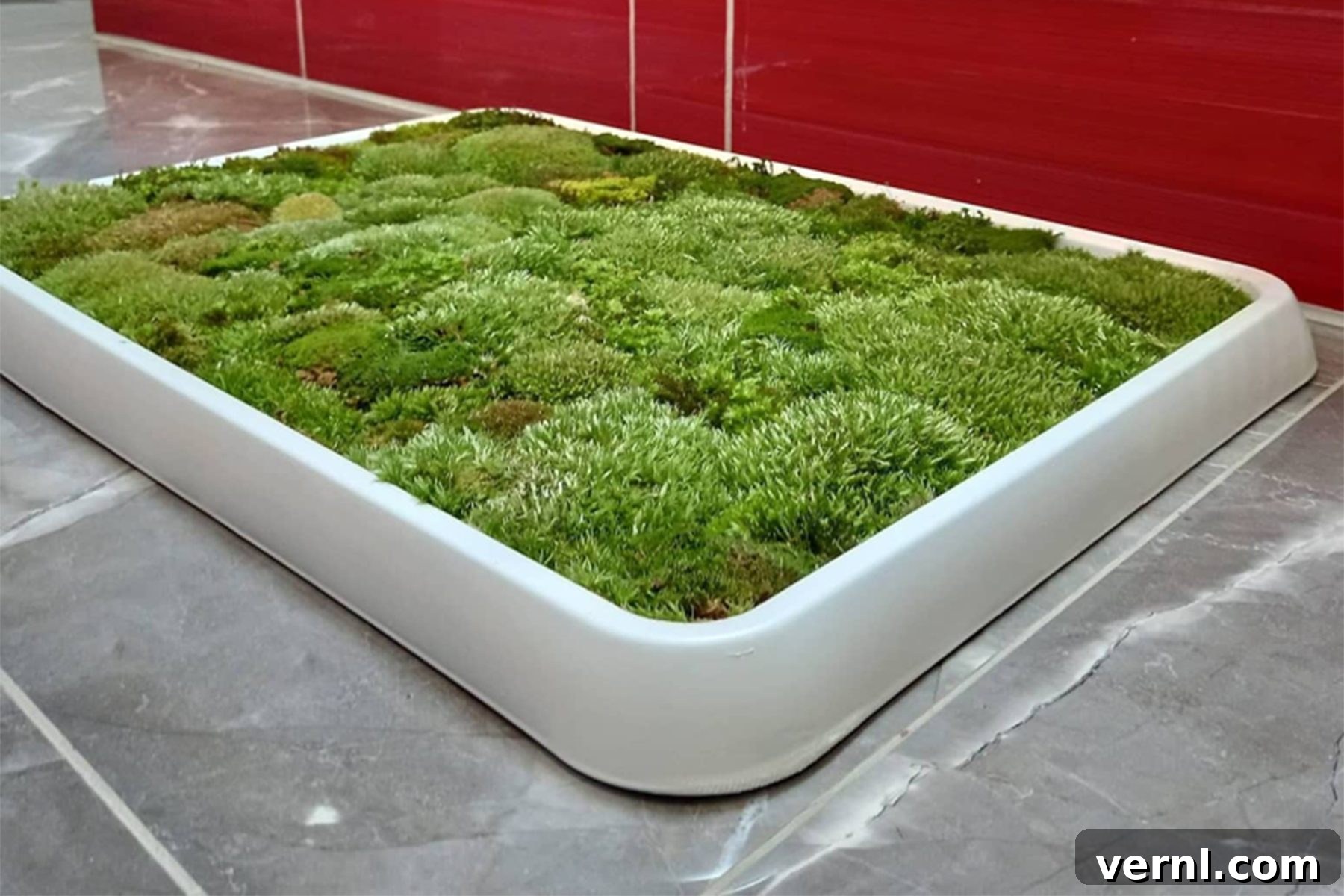
Imagine stepping out of your shower onto a soft, verdant cushion that feels like a patch of pristine forest floor. This delightful experience is precisely what a moss rug, often referred to as a moss mat, offers. These living, breathing pieces of art have been captivating interior design enthusiasts and spreading across social media feeds, promising to infuse any home with natural beauty and a sense of tranquility. Whether you’re considering purchasing one online or embarking on a rewarding DIY project, a moss rug is more than just a decor item; it’s a mini magic carpet that brings the lush, serene look and feel of nature directly into your personal sanctuary.
To provide you with the most insightful information, we consulted Jim Fucetola, the esteemed president of Moss Acres. This innovative company specializes in large-scale moss installations, including moss walls and roofs, in addition to crafting exquisite moss rugs. For the hands-on enthusiast, Moss Acres also offers comprehensive DIY moss rug kits, along with all the individual components required to cultivate your own botanical masterpiece. Join us as we explore every facet of moss rugs to help you decide if this unique green accent is the perfect addition to your living space.
What Exactly is Moss? Unveiling Nature’s Remarkable Plant
Before integrating moss into your home environment, understanding its fundamental nature is key. Moss is a truly unique organism, classified as a non-vascular plant. This means it lacks the complex internal transport systems—roots, stems, and true leaves—that characterize most other plant species. This distinctive biological makeup allows moss to thrive in ways that conventional plants cannot.
As Jim Fucetola explains, moss absorbs all its necessary moisture and nutrients directly through its leaves. This remarkable adaptation enables it to grow without soil, making it an ideal candidate for unconventional planting surfaces and humid indoor environments like bathrooms, where it can flourish with minimal direct sunlight. Its ability to absorb moisture from the air is a testament to its ancient survival strategies, allowing it to adapt to diverse ecological niches.
A common concern when considering indoor moss is the potential for attracting insects or developing mold. However, these worries are largely unfounded when proper care and sourcing are observed. By procuring your moss rug or its components from a reputable supplier, you ensure the moss is healthy and free from existing pests or pathogens. Furthermore, maintaining appropriate moisture levels—keeping the moss consistently damp but never waterlogged or sitting in standing water—is crucial. This simple practice effectively deters both mold growth and insect infestations, ensuring your moss rug remains a pristine and healthy addition to your home.
It is strongly advised against harvesting moss from the wild. This practice not only safeguards the delicate natural ecosystems where moss plays a vital role but also prevents the unwitting introduction of unwanted pests, spores, or other organisms into your home environment. Opting for commercially grown or responsibly sourced moss is always the best and most sustainable choice.
Beyond its use in rugs, moss is a celebrated element in various landscape designs. A moss garden, for example, involves the deliberate cultivation of moss in an outdoor setting, creating tranquil, evergreen landscapes that evoke a sense of ancient serenity and natural artistry.
The Allure of a Moss Rug: Bringing Biophilic Design Home
A moss rug is precisely what its name suggests: a specially designed mat or rug featuring a base that securely holds and nourishes live moss plants. It’s an innovative fusion of horticulture and interior design, transforming a functional item into a vibrant, living landscape that constantly evolves and breathes with your home.
These captivating pieces are incredibly versatile and can seamlessly integrate into a myriad of interior design styles. They are particularly striking in modern or minimalist settings, where their organic texture provides a soft, biophilic counterpoint to clean lines and stark surfaces. In homes inspired by a Japanese aesthetic, a moss rug enhances the serene, meditative atmosphere, aligning with principles of natural beauty and mindfulness. They also find a perfect home in rustic cabins, infusing spaces with the essence of the outdoors, or in dwellings aiming for a whimsical, fairytale, or hobbit-like charm, adding an undeniable touch of enchantment and wonder.
While a moss rug cannot fully replicate the deep, immersive experience of true forest bathing amidst towering trees, it powerfully embodies the principles of biophilic design. This architectural and design philosophy posits that humans possess an inherent, biological need to connect with nature. By incorporating natural elements like a moss rug into your indoor environment, you can significantly reduce stress, enhance mood, boost cognitive function, and cultivate a profound sense of peace and well-being. A moss rug serves as a constant, gentle invitation to pause, connect, and breathe, fostering a calming ambiance in your daily life.
The Profound Benefits of Incorporating a Living Moss Rug
- Unparalleled Aesthetic Appeal: Moss mats introduce a vibrant, unparalleled lush green color and a distinctly soft, feathery texture that beautifully contrasts with the hard, often cold surfaces commonly found in bathrooms, kitchens, and other living areas. They become an instant, captivating focal point, inviting both visual admiration and tactile exploration.
- A Unique Sensory Experience: As Jim Fucetola vividly describes, “You get that sensory feeling of grounding, and walking on live vegetation.” The soft, cool sensation of live moss underfoot is profoundly therapeutic and grounding, offering a fleeting but potent connection to the natural world. It’s a moment of mindful interaction that can reduce stress and elevate spirits.
- Enhanced Indoor Air Quality: Despite their modest size, moss plants are incredibly efficient oxygen producers. Fucetola highlights this impressive fact: “Because it’s all leaf, moss makes more oxygen per square foot than any other plant. A handful of moss is equivalent to the leaf surface of a tree.” This robust photosynthetic activity means that a moss rug can contribute to a subtle but discernible improvement in your home’s indoor air quality, making your living environment feel fresher, cleaner, and more invigorating.
- Natural Humidity Regulation: Beyond oxygen production, live moss can naturally contribute to balancing ambient humidity levels in its immediate vicinity. It effectively absorbs excess moisture from the air when humidity is high and gradually releases it when the air becomes drier. This subtle interaction can help create a more comfortable and stable microclimate around the rug.
- Subtle Sound Absorption: The dense, cushioned texture of moss possesses natural sound-dampening properties. While a single rug won’t soundproof a room, it can help to absorb ambient noise and reduce echoes, contributing to a quieter, more peaceful, and acoustically softer home environment, especially beneficial in hard-surfaced bathrooms.
- Eco-Friendly and Sustainable Decor: When sourced responsibly and properly cared for, a moss rug represents an eco-conscious decor choice. It’s a natural, biodegradable material that supports local ecosystems if cultivated ethically, aligning with sustainable living principles.
Considerations and Practical Drawbacks of Moss Rug Ownership
While moss is undeniably resilient and low-maintenance in its natural habitat, its indoor care requires a nuanced understanding. Jim Fucetola underscores a crucial point: “While moss is resilient, Fucetola says it needs regular misting indoors. Moisture, even in your bathroom, is not sufficient to wet the surface.” This distinction is paramount for the long-term vitality of your moss rug.
- Consistent Hydration is Non-Negotiable: Unlike vascular plants that draw water from roots in soil, moss relies entirely on absorbing moisture through its leaf surface. Therefore, regular misting is not merely a suggestion but an essential daily or every-other-day task, depending on your home’s humidity and temperature. Inconsistent hydration will lead to dormancy and browning.
- Optimal Placement is Critical: The health of your moss rug is heavily dependent on its location. It thrives in diffuse, indirect natural light. Avoid areas that receive harsh, direct sunlight, which can rapidly scorch and dry out the moss. Equally important is to keep it away from significant heat sources such as radiators, heating vents, or heated floors, as these drastically accelerate moisture evaporation, making proper hydration extremely challenging.
- Risk of Dormancy and Browning: If a moss rug is neglected or allowed to dry out extensively, its vibrant green color will gradually fade to yellow and then brown as it enters a state of dormancy. While moss is remarkably hardy and can often be revived with consistent rehydration, prolonged periods of dryness can weaken the plant and diminish its aesthetic appeal.
- Initial Investment and Maintenance Time: High-quality live moss and specialized rug bases can represent a moderate initial investment. Furthermore, while not demanding, the consistent routine of misting requires a certain level of commitment and attentiveness, which might not suit everyone’s lifestyle.
- Not Suitable for High-Traffic Areas: While resilient, moss rugs are best suited for areas with lighter foot traffic, such as bathrooms, beside a bed, or in a meditation corner. Placing them in busy entryways or hallways where they might be consistently stepped on or crushed could damage the delicate moss structure.
Crafting Your Own Green Oasis: The DIY Moss Rug Project
For those who delight in hands-on projects and the satisfaction of personalizing their home decor, creating a DIY moss rug is an immensely rewarding experience. While convenient moss rug kits offer an excellent entry point, constructing your own allows for maximum creativity, custom sizing, and a deeper connection to your unique living art piece. Here’s a detailed outline of the components you’ll need and the steps to follow:
- The Foundation: Selecting a Waterproof, Non-Slip Base
The base is the structural bedrock of your moss rug, providing both stability and crucial waterproofing to protect your floors. It must be completely waterproof and equipped with a non-slip feature for safety. Consider these material options:
- Wood Trays: Opt for water-resistant wood types or treat a standard wood tray with a marine-grade sealant. Wood offers a warm, natural, and rustic aesthetic.
- Metal Trays: Galvanized steel, stainless steel, or aluminum trays provide a sleek, modern look and superior water resistance. Ensure edges are smooth for safety.
- Plastic or Silicone Trays: These are often the most practical choice due to their inherent waterproof nature, lightweight design, and availability in various shapes and sizes.
Regardless of the material, it is imperative to attach a high-quality, non-slip rug backing to the underside of the base using a strong, waterproof spray adhesive. This prevents the rug from shifting on smooth surfaces.
- The Growing Medium: A Breathable, Moisture-Retaining Center
This critical layer sits within your base and serves as the primary medium for holding moisture and supporting the moss. It should provide approximately an inch of depth for optimal moss adherence and hydration. Excellent choices for this layer include:
- Capillary Mats: Often made from recycled plastic fibers, these mats are designed to wick and retain moisture efficiently, gradually releasing it to the moss above.
- Coconut Fiber Matting (Coir): An environmentally friendly option, coir is highly effective at retaining moisture while also promoting good aeration. It also adds a natural, earthy look to the base.
- Cork Sheeting: Naturally water-resistant, antimicrobial, and sustainable, cork provides a stable and moisture-retentive layer for the moss.
- High-Density Foam (e.g., Plastazote): This closed-cell foam type does not absorb water itself but traps it within its intricate structure, ensuring consistent moisture delivery to the moss without becoming soggy.
- The Star of the Show: Choosing Your Moss
This is where your rug truly comes to life. You have two main avenues: live moss for dynamic growth or dried moss for effortless aesthetics.
- Living Moss: The Authentic Experience
Living moss offers unparalleled natural beauty, a truly soft tactile experience, and all the environmental benefits like air purification and humidity regulation. Sourcing living moss from reputable online nurseries or specialized suppliers like Moss Acres is highly recommended, guaranteeing healthy, vibrant specimens. Popular types include:
- Sheet Moss: Known for its ability to grow in flat, expansive layers, making it ideal for creating a seamless, carpet-like base.
- Cushion Moss (Bun Moss): Forms delightful, dense, rounded clumps, adding beautiful three-dimensional texture and visual interest to your rug.
- Reindeer Moss: Technically a lichen, it’s frequently used in moss arrangements for its unique, branched, and airy appearance, often available in various dyed colors. It generally requires less moisture than true mosses.
- Sphagnum Moss: Excellent for its exceptional moisture retention properties, often used as a base layer or in areas requiring significant, consistent hydration.
Typically, living moss arrives in a dormant, dried state and is easily revitalized by a thorough soaking in clean water for several hours before planting. Remember, this moss requires regular misting every few days to maintain its lush vitality.
- Dried (Preserved) Moss: The Low-Maintenance Alternative
If the commitment of regular misting is not suitable for your lifestyle, dried or preserved moss offers a visually appealing, maintenance-free solution. It retains its color and texture indefinitely without any need for water or light. However, it’s important to acknowledge a few distinctions:
- It offers fewer variations in natural color and tactile texture compared to its living counterpart.
- It does not provide the same air-purifying benefits, humidity regulation, or the dynamic sensory connection of live vegetation.
This option is perfect for those who desire the aesthetic beauty of moss without the associated care responsibilities.
- Living Moss: The Authentic Experience
A Step-by-Step Guide: How to Plant Your DIY Moss Rug
Once all your selected components are prepared, the planting process is straightforward and enjoyable, allowing your creative vision to take shape:
- Prepare the Moss: If you are using living moss, begin by submerging it in a shallow tray of clean, room-temperature water. This crucial step rehydrates the moss, making it supple, vibrant, and much easier to work with. Allow it to soak thoroughly while you prepare the rug base.
- Moisten the Planting Base: Ensure that your chosen breathable center (capillary mat, coconut coir, cork, or foam) is thoroughly pre-moistened. This creates an immediate, welcoming damp environment that encourages the moss to begin absorbing water upon contact.
- Adhere the Moss: Apply a suitable, plant-safe moss adhesive, such as Moss-Tac or a similar tackifier, directly onto the pre-moistened planting base. Carefully arrange your rehydrated moss pieces on top of the adhesive, ensuring they cover the entire surface uniformly. Gently press down on the moss to create firm contact with both the adhesive and the underlying planting medium. This ensures strong adhesion and helps the moss settle securely into its new home.
- Achieving a Seamless Look: For sheet moss, strategically fit the pieces together like a natural puzzle, minimizing any visible seams to create a smooth, continuous surface. For cushion moss, arrange the clumps thoughtfully to create variations in height and texture, adding depth and visual interest to your rug.
Elevating the Design: Adding Natural Embellishments
To further personalize your moss rug and enhance its visual appeal, consider incorporating small, natural decorative elements:
- River Rocks and Smooth Pebbles: Small, rounded river rocks or polished pebbles can be artfully arranged and secured (often with a strong, waterproof adhesive) onto the moss surface or nestled within its crevices. They introduce diverse textures, grounding weight, and a beautiful contrast to the soft green, evoking the serene imagery of a miniature streambed or a tranquil forest path.
- Miniature Driftwood Pieces: Carefully selected, small pieces of weathered driftwood can introduce an element of rustic charm, organic form, and a touch of coastal or woodland elegance to your design.
- Tiny Terrarium Figurines: For a touch of whimsy and personal narrative, consider subtly placing small, weather-resistant figurines or miniature architectural elements within the moss, transforming your rug into a tiny, enchanting landscape with its own story.
Placement and Expert Care for Your Thriving Moss Rug
To ensure your living moss rug remains a vibrant, flourishing centerpiece in your home for years to come, thoughtful placement and consistent, informed care are paramount. Adhering to these guidelines will help your botanical masterpiece thrive:
- Optimal Lighting Conditions: Moss flourishes best in diffuse, indirect natural light. Avoid positioning your moss rug in areas exposed to harsh, direct sunlight, which can rapidly dry out and damage the delicate moss, causing it to brown and wither. A brightly lit bathroom window with filtered light, a shaded corner of a living room, or a spot further away from a sunny window where light is ambient, is ideal. Moss can also tolerate low-light environments, though brighter indirect light will generally promote more vigorous and robust growth.
- Temperature and Heat Sources: It is crucial to keep your moss rug away from any significant sources of heat. This includes radiators, heating vents, active fireplaces, and particularly, heated floors. Elevated temperatures drastically accelerate the rate of moisture evaporation from the moss, making it exceptionally difficult to maintain the consistent hydration levels it requires. Strive for stable room temperatures, generally within the comfortable range of 60-75°F (15-24°C).
- The Art of Watering: Consistent, Light Moisture: This is arguably the most critical aspect of moss care. Moss demands consistent, light moisture. Keep a dedicated plant mister or a watering can with a very gentle, fine-flow spout readily accessible. The key is to thoroughly mist or lightly water the entire surface of the moss every few days, or even daily in particularly dry climates or homes with air conditioning.
- Avoid Over-Saturating: As Jim Fucetola wisely cautions, “don’t allow water to accumulate in your tray, which could encourage mold growth.” Remember, moss lacks roots and cannot absorb moisture from below the surface. Excessive water pooling in the tray creates anaerobic conditions, which are highly conducive to the development of mold, bacteria, and potential rotting of the moss or its base. The planting medium should feel consistently damp, never waterlogged.
- Recognizing Thirst: A healthy moss rug will feel slightly damp and resilient to the touch. If the moss feels dry, brittle, or begins to appear dull and less vibrant, it is a clear indication that it is thirsty and requires immediate hydration.
- Routine Cleaning and Maintenance:
- Dust Removal: Gently blow away any accumulated dust or small debris from the moss surface. A very soft, clean brush can also be used for delicate dusting. Avoid using strong vacuum suction directly on the moss.
- Occasional Trimming: If certain areas of your moss rug become overly lush or develop an unruly appearance, you can gently trim the moss with small, sharp scissors to maintain its desired shape, density, and aesthetic.
- Pest and Health Check: Regularly inspect your moss for any subtle signs of pests or disease. While healthy moss from reputable sources rarely encounters these issues, early detection is crucial for addressing any problems promptly.
- Reviving Dormant Moss: Should your moss rug unfortunately dry out and its vibrant green color begins to fade to yellow or brown, do not despair. Moss is remarkably resilient and enters a dormant state to conserve energy during adverse conditions. With consistent, regular attention to misting and ensuring proper moisture levels, the moss has a strong capacity to gradually rehydrate, regain its lush green color, and return to its vibrant state. Patience, consistency, and a gentle touch are your best allies during this recovery phase.
Ready-Made Moss Rugs: Instant Biophilic Bliss at Your Fingertips
For individuals who seek immediate gratification, have a busy lifestyle, or simply prefer the convenience of a ready-to-display piece, a pre-made moss rug offers instant access to that coveted cushy green vibe. The market for these living art pieces has expanded significantly, providing numerous high-quality options to suit diverse aesthetic preferences and budgetary considerations.
- Specialized Retailers: Companies such as Moss Acres are leaders in the industry, offering expertly crafted, high-quality living moss rugs. Purchasing from specialized vendors ensures you receive a healthy, meticulously constructed product designed for longevity and optimal performance within your home environment. These retailers often provide comprehensive care instructions specific to their products.
- Artisan Marketplaces: Online platforms like Etsy serve as vibrant hubs for independent creators and artisans, where you can discover unique, handcrafted living moss mats. For instance, a beautifully designed luxury live pole moss bath mat might offer a distinct texture and visual appeal, making it a truly unique addition. When purchasing from such marketplaces, it is always wise to thoroughly review seller ratings, product descriptions for detailed care instructions, and their return policies to ensure satisfaction.
- Faux Moss Rug Alternatives: If the prospect of any maintenance, even the minimal misting required for live moss, is a significant deterrent, or if you are seeking a solution for very high-traffic areas, consider a textile lookalike moss rug. These rugs, crafted from high-quality synthetic fibers, are designed to closely mimic the appearance and often even some of the texture of real moss without any of the care requirements of a living plant. They offer a decorative solution that provides the desired biophilic aesthetic without the commitment of live plant care. For example, you might discover a plush green moss fluffy tufted irregular rug that delivers a similar visual impact and softness.
The decision to welcome a moss rug into your home is a deeply personal one. If you are captivated by the idea of bringing a living piece of the serene forest indoors, if you seek to enhance your space with the principles of biophilic design, and if you yearn for the luxurious, spa-like sensation of nature underfoot, then a moss rug is an exquisite and enriching choice. Embrace the unique charm and profound tranquility it offers, and revel in the refreshing, ever-present beauty of nature, perfectly cultivated for your modern living environment.