Master the Art of Tidying: Unlocking the KonMari Method for a Joyful Home
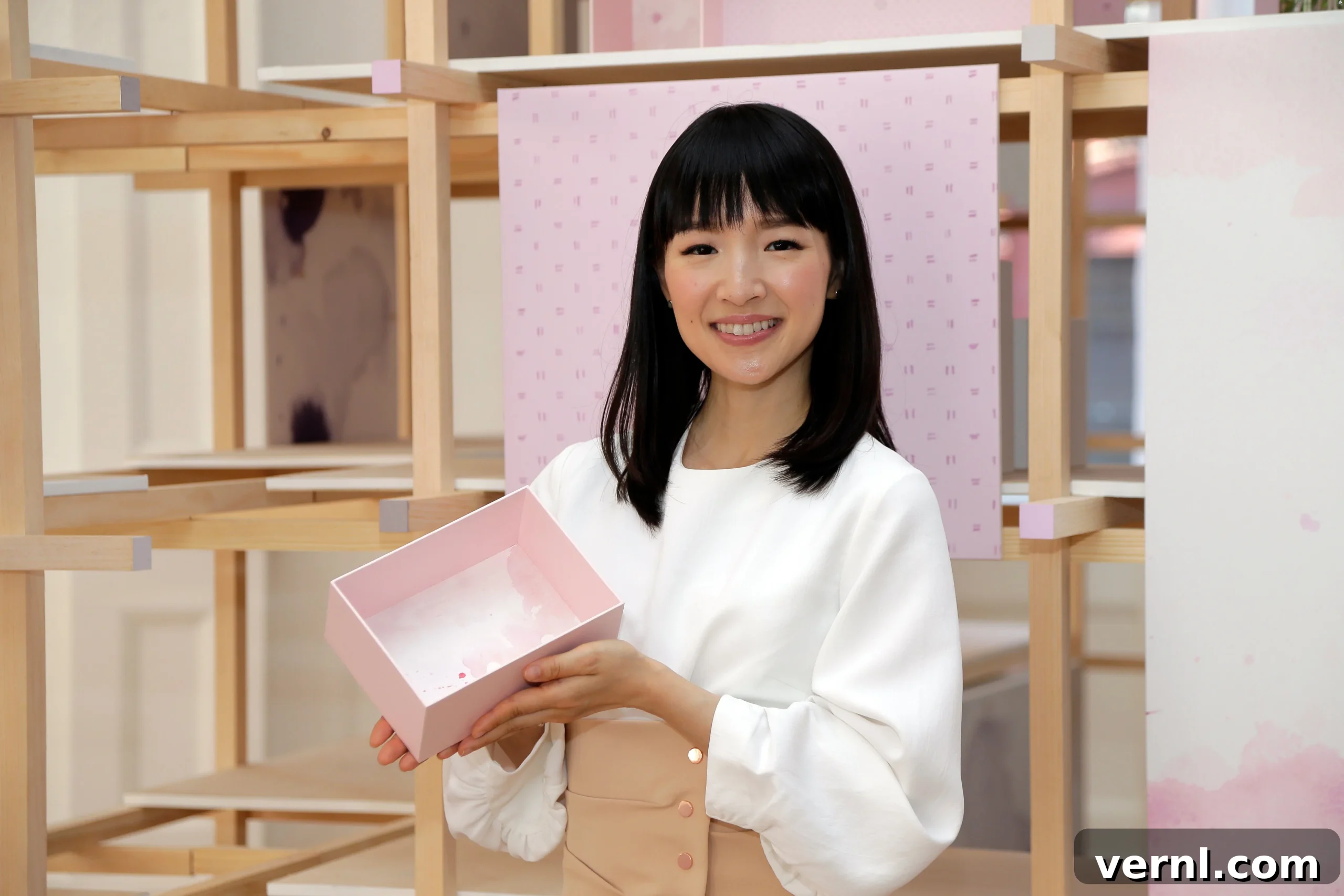
In a world often overwhelmed by clutter and endless possessions, one name has emerged as a beacon of order and simplicity: Marie Kondo. The renowned organizing expert has revolutionized how people approach their homes and, by extension, their lives. Since the publication of her seminal work, The Life-Changing Magic of Tidying Up (originally published in Japanese in 2011 and translated to English in 2014), Kondo has inspired millions. Her advice experienced a global resurgence with the immense popularity of her Netflix series, Tidying Up with Marie Kondo, bringing her unique KonMari method into countless households. This innovative approach to decluttering and organizing has not only transformed physical spaces but also shifted mindsets, with Marie Kondo’s folding techniques becoming the gold standard for an efficient and visually appealing wardrobe.
The KonMari method is more than just a set of rules for neatness; it’s a philosophy centered on keeping only those items that “spark joy.” This core principle encourages a mindful relationship with our belongings, fostering gratitude for what we keep and a respectful farewell to what we let go. While the entire method encompasses various categories of items, from books to sentimental keepsakes, the foundation of a tidy home often begins with the most personal and frequently accessed items: clothes.
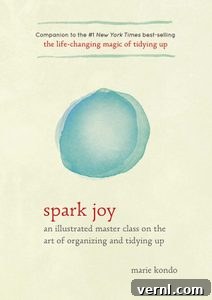
To delve deeper into the practical application of her method, Kondo followed up with Spark Joy: An Illustrated Master Class on the Art of Organizing and Tidying Up. This indispensable guide provides clear, step-by-step illustrations that demystify the popular Marie Kondo folding technique, making it accessible for anyone eager to tackle even the messiest parts of their house and life. Here, we explore the secrets to her transformative folding method and how it forms the cornerstone of a truly organized and joyful living space.
The KonMari Revolution: A Philosophy for Decluttering Your Life
At its heart, the KonMari method is an invitation to embark on a journey of self-discovery through tidying. It challenges conventional wisdom by advocating for organizing by category rather than by location, ensuring that you confront the true volume of each item type you possess. This holistic approach means that instead of decluttering a single closet, you would gather all your clothes from every corner of your home, place them in one spot, and then evaluate each piece individually.
The guiding question for every item is simple yet profound: “Does this spark joy?” If an item evokes a feeling of happiness, usefulness, or comfort, it stays. If not, it is thanked for its service and respectfully discarded. This seemingly straightforward question encourages a deeper connection with your possessions, helping you to build an environment that truly supports and inspires you. It moves beyond mere utility, tapping into the emotional value of your belongings and fostering a sense of appreciation for what you choose to keep.
By committing to this one-time “tidying festival,” as Kondo calls it, individuals can achieve a lasting state of order, preventing future clutter from accumulating. This isn’t about rigid minimalism but about intentional living and surrounding yourself only with what truly serves you. Once the decision to keep an item is made, the next crucial step is ensuring it is stored correctly, and for clothes, this means mastering the art of KonMari folding.
The Foundation of Order: Why KonMari Folding is a Game-Changer
Many people find the idea of perfectly folded clothes daunting, imagining it as a time-consuming chore. Marie Kondo reassures us with a simple mantra: “Never give up.” The secret, she reveals, lies in understanding that clothes are essentially rectangular pieces of fabric. Regardless of their original shape or complexity, any garment—from delicate silk blouses to bulky sweaters, and even challenging items like pants, underwear, and socks—can be transformed into a compact, self-standing rectangle. This ideal shape is not just for aesthetics; it’s a functional masterpiece designed to optimize storage and maintain garment integrity.
You might wonder if this meticulous folding is worth the effort. The answer, according to Kondo and countless converts, is a resounding yes. Trying it just once will demonstrate its immediate benefits. Proper KonMari folding effectively “deflates” clothes, removing trapped air and significantly reducing their volume. This maximizes the amount of clothing you can store in a given space, transforming chaotic drawers into neat, accessible libraries of attire. The true genius of the method, however, lies in its emphasis on vertical storage. Anything that can be folded into a rectangle firm enough to stand on its own should be stored upright in a drawer or box. This brilliant technique takes full advantage of the height of your storage space, allowing you to see every item at a glance, eliminating the frustration of digging through piles and rediscovering forgotten garments.
Step-by-Step Guide to Marie Kondo Folding Techniques
Once you’ve experienced the ease and efficiency of properly folded clothes, you’ll find subsequent tidying sessions much smoother, “as if the fabric remembers the shape.” This isn’t just poetic language; it speaks to the muscle memory you develop and the way clothes naturally settle into their new, more compact forms. Here, we delve into the illustrated techniques that make KonMari folding achievable for everyone, as detailed in Spark Joy.
Folding Shirts and Tops
Folding shirts, t-shirts, and other tops correctly is foundational. Begin by laying the garment flat on a clean surface, face up. Take one side of the shirt (e.g., the right side) and fold it inward towards the center, ensuring the sleeve is folded back neatly within this new line. Repeat this process on the other side, creating a narrower rectangle. Next, fold the top part of the garment down by about an inch or two, then fold the bottom hem up towards the top. The goal is to create a compact, firm rectangle that can stand on its edge. The final fold should be firm enough that the item holds its shape and can be easily placed upright in a drawer, showcasing its ‘spine’ like a book.
Folding Pants and Skirts
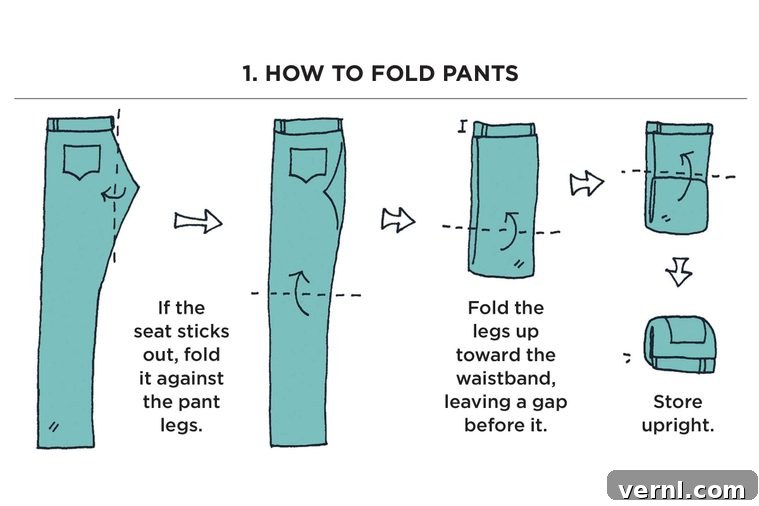
Pants and skirts also benefit immensely from the KonMari treatment. For pants, lay them flat, then fold them in half lengthwise. Now, bring the bottom hem up towards the waistband, folding them in half or thirds depending on their length and fabric thickness. For jeans or thicker trousers, you might fold them into a quarter to create a sturdy block. Skirts can be folded lengthwise and then into smaller sections to achieve the same self-standing rectangle. The key is to keep adjusting until the item is stable and compact, ready for vertical storage.
Mastering Underwear and Socks
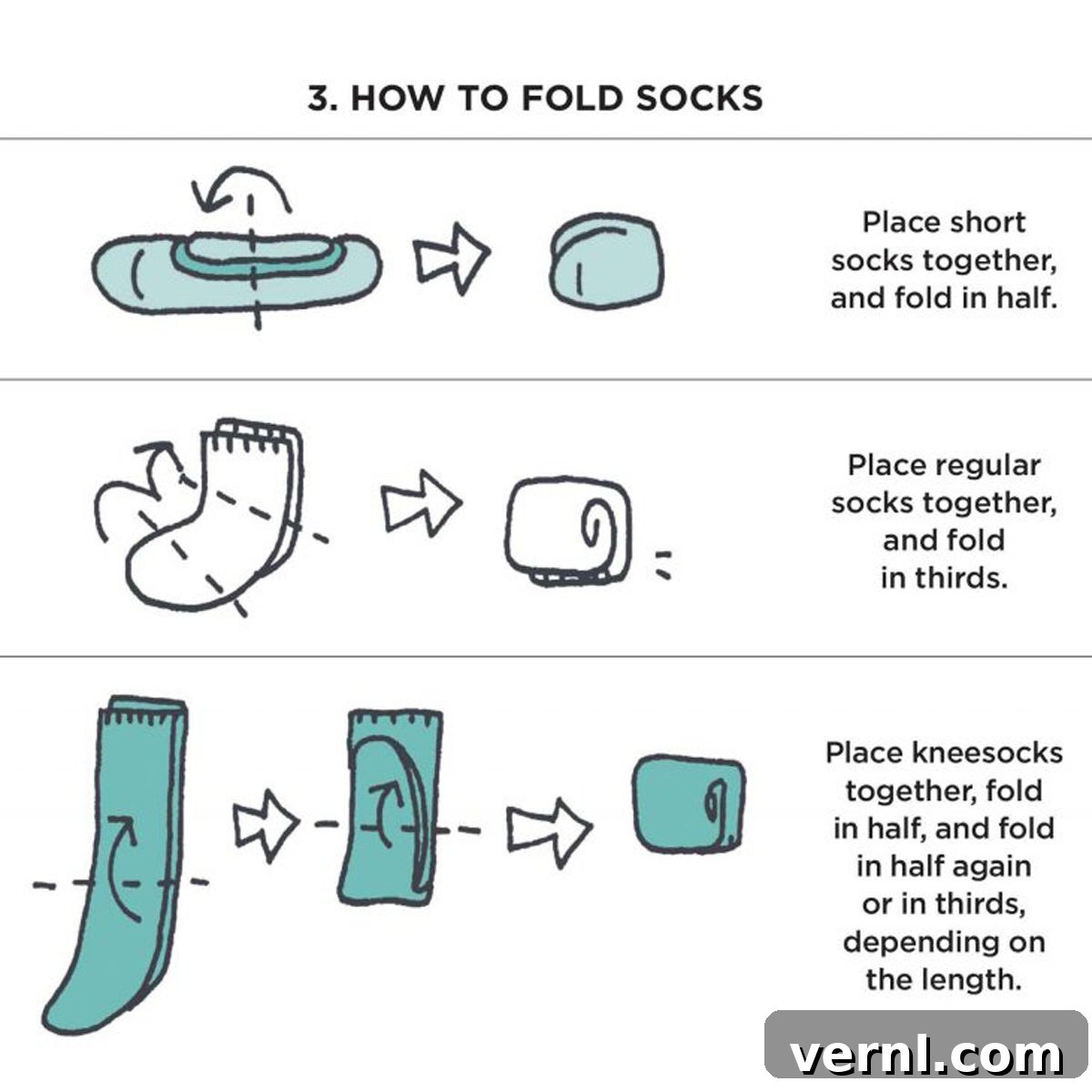
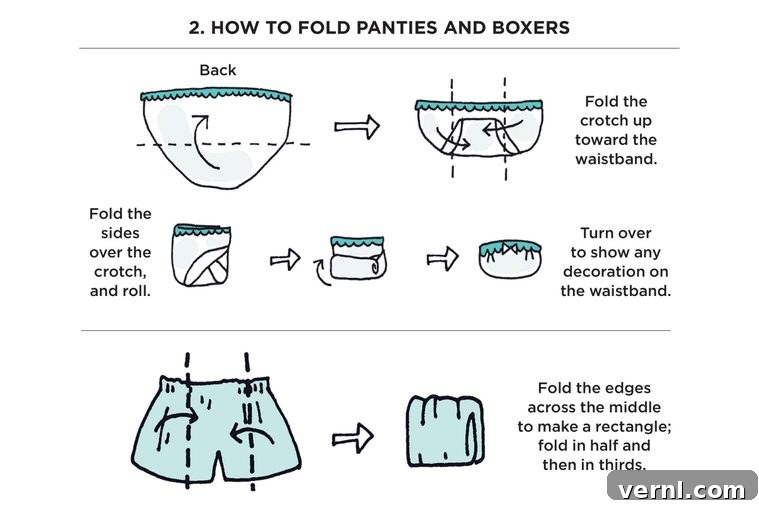
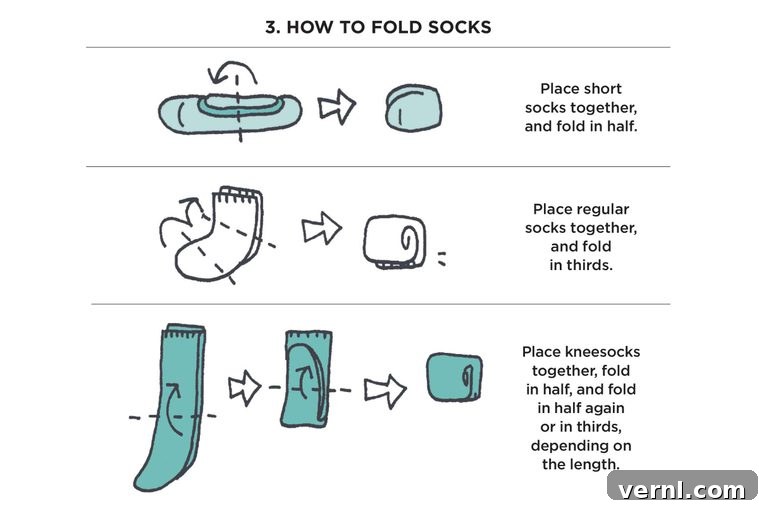
Even the smallest items can be folded with intention. For underwear, lay it flat, fold the sides inward, then fold from the bottom up in halves or thirds until you have a neat, small parcel. Socks are often a culprit for disarray; Kondo advises against balling them up, which stretches the elastic. Instead, lay them flat one on top of the other, fold in half, and then fold in thirds to create a small, neat square or rectangle. This preserves their shape and allows them to stand upright, making selection effortless.
The Magic of Vertical Storage: Maximizing Your Space
The act of folding is only half the battle; the other half is intelligent storage. Once your clothes are neatly folded into their perfect rectangles, the next step is to store them vertically. This revolutionary concept is what truly unlocks the space-saving potential of the KonMari method. By storing items on their edge rather than in horizontal stacks, you take full advantage of the height of your drawers and shelves. This simple shift prevents clothes from becoming an unidentifiable pile at the bottom of a drawer, where items are easily forgotten and wrinkled.
Vertical storage ensures that every item is visible at a glance. Imagine opening a drawer and instantly seeing every t-shirt, pair of socks, or even your underwear, arranged neatly like files in a cabinet. This not only saves you precious time when getting dressed but also eliminates the frustration of searching for specific items. Furthermore, it helps maintain the freshly folded state of your garments, as they are not compressed under the weight of other clothes. The visual order brings a calming aesthetic to your storage spaces, reinforcing the feeling of joy and efficiency that the KonMari method promises.
Beyond the Fold: Embracing the Full KonMari Lifestyle
The impact of adopting Marie Kondo’s folding techniques and vertical storage extends far beyond a tidy closet. It often serves as an entry point into a more profound transformation. The discipline and mindfulness required to maintain an organized wardrobe can spill over into other areas of your life, encouraging a more intentional approach to consumption and daily habits. The peace that comes from knowing exactly where everything is, and that every item you own sparks joy, is immeasurable. It reduces mental clutter alongside physical clutter, freeing up energy and focus for what truly matters.
As Kondo says, “Having folded clothes properly once, you’ll find the next time that much easier, as if the fabric remembers the shape.” This sentiment beautifully encapsulates the lasting change the KonMari method fosters. It’s not just about the one-time effort, but about building sustainable habits that create a consistently serene and functional home. This journey of tidying cultivates a deeper appreciation for your belongings, promotes a conscious consumer mindset, and ultimately contributes to a calmer, more joyful existence.
Your Journey to a Tidy and Joyful Home Begins Now
The KonMari method, with its emphasis on thoughtful folding and vertical storage, offers a powerful path to a more organized and harmonious home. By applying these simple yet transformative techniques, starting with your wardrobe, you can experience firsthand the life-changing magic of tidying up. Embracing this philosophy allows you to create spaces that are not only aesthetically pleasing but also deeply supportive of your well-being. Take the first step today; you might be surprised by how much joy a perfectly folded t-shirt can bring!
If these Marie Kondo folding tips resonate with you and inspire you to delve deeper into home organization, we have more resources to help you on your journey:
- Check out these 50 other organizing tips you’ll wish you knew all along for even more clever solutions.
- And for a specific challenge, learn How to Organize a Laundry Room with a Laundry Folding Table, transforming another essential space in your home.