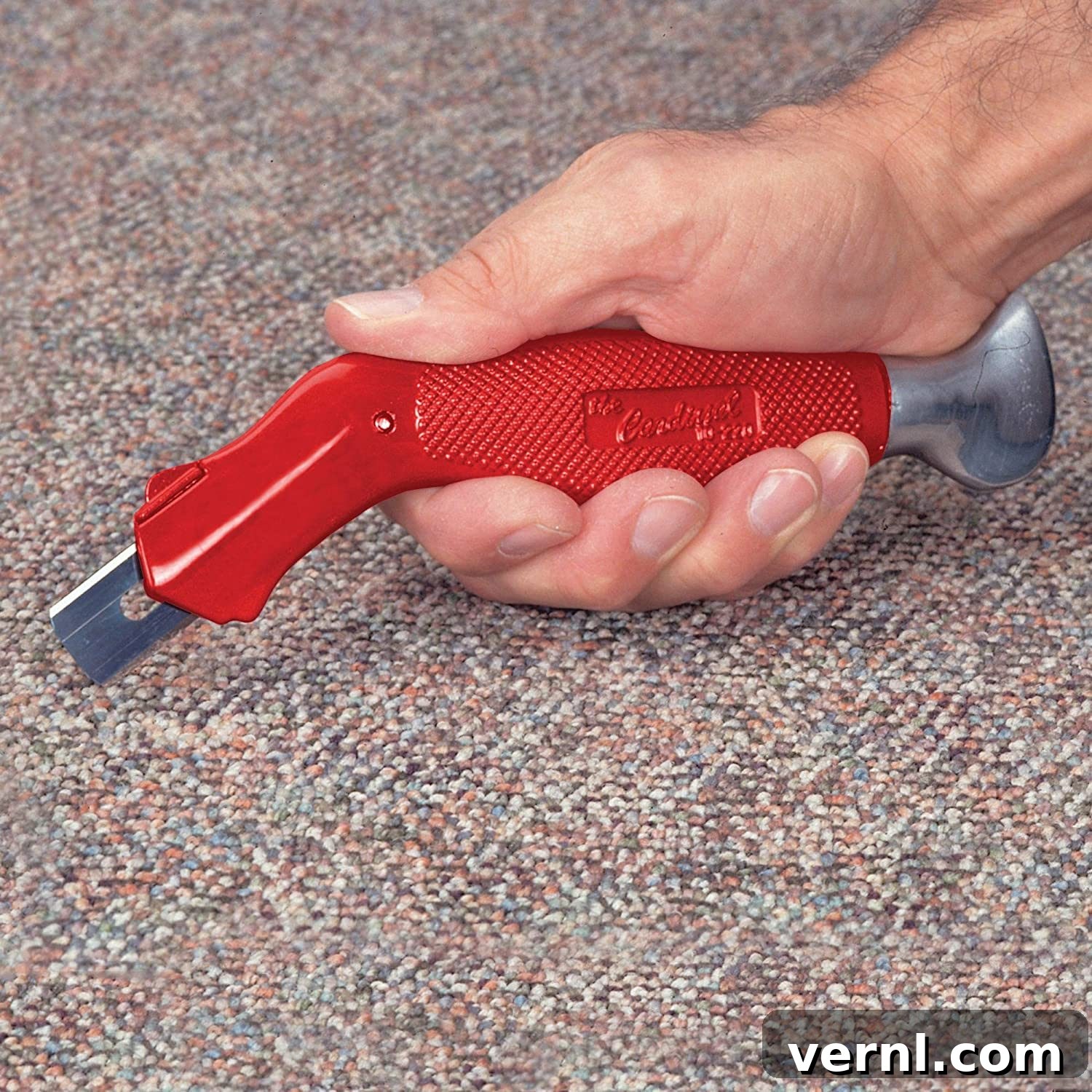
Cutting carpet, whether you’re undertaking the challenging task of removing old, worn-out flooring or meticulously trimming a brand-new installation, is far more complex than it might appear. Without the right tool, this physically demanding job can quickly become frustrating, leading to uneven cuts, wasted material, and significant strain. This is where a dedicated carpet knife becomes indispensable. Engineered specifically for the unique demands of carpet, this specialized tool offers unparalleled control, superior cutting ability, and the precision needed to effortlessly and accurately slash, slice, and trim your carpet rolls or pieces, ensuring a professional finish every time.
Understanding the Carpet Knife: Design and Ergonomics
While often mistaken for a common utility knife or box cutter, a carpet knife boasts several key design differences that make it uniquely suited for its purpose. These small, lightweight hand tools are distinguished by their typically angled handle, a feature carefully designed for optimal ergonomics. This angled grip allows for a more natural wrist position, making them exceptionally comfortable to hold even during extended periods of use. More importantly, this design provides the leverage crucial for ripping through dense and resilient carpet materials with minimal effort, reducing hand fatigue and improving cutting efficiency.
The business end of a carpet knife features a specialized mechanism for securing rectangular blades. These blades can be either fixed firmly in place, offering maximum stability, or designed to be retractable for enhanced safety and portability when not in use. Another common variation is the “hook handle” carpet knife, which incorporates a distinctive curved or hooked end. This design further enhances grip, providing even greater control and comfort, especially when dealing with particularly tough or thick carpeting that requires significant force.
Carpet Knife vs Utility Knife: A Critical Comparison
While both are cutting tools, the distinctions between a carpet knife and a utility knife are profound, especially when it comes to performance on carpet. The blades are the most significant differentiator. A carpet knife blade is engineered to be exceptionally thin and razor-sharp, facilitating clean, effortless cuts through carpet fibers without snagging or fraying. Unlike the pointed, triangular blades commonly found in utility knives, carpet knife blades are typically square-ended. This square profile significantly reduces the likelihood of the blade snapping under pressure during aggressive carpet cutting, a common hazard with triangular blades. Furthermore, these square corners make it harder to accidentally cut too deep, safeguarding the skirting boards or delicate hardwood flooring hidden beneath the carpet.
Another crucial advantage of carpet knife blades is their double-sided design. Each blade offers four distinct cutting edges, allowing users to simply flip or rotate the blade to access a fresh, sharp edge. This feature dramatically extends the lifespan of each blade, reducing the frequency of replacements and saving valuable time on large projects. In contrast, utility knife blades are often single-sided and frequently retractable, prioritizing versatility for various tasks. Carpet knives, however, tend to feature fixed or folding blades, which, while requiring more careful handling and storage, provide superior stability and precision during the demanding task of cutting carpet.
Beyond Carpet: Versatile Applications of a Carpet Knife
Despite its name, a carpet knife is a surprisingly versatile tool, proving invaluable for a wide array of cutting tasks beyond its primary function. Its unique design and exceptionally sharp blade make it a favorite among DIY enthusiasts and professionals alike for jobs requiring precision and control on various materials.
Online forums and expert recommendations frequently highlight their efficacy for cutting lightweight ceiling tiles, particularly for drop ceiling installations. The thin, sharp blades of a carpet knife create exceptionally precise, clean, and deep cuts in these materials, ensuring a neat and professional finish that might be difficult to achieve with less specialized tools.
Our own experience, and that of many others in the industry, confirms the great success of using carpet knives for scoring and cutting drywall panels. The blade’s strength and sharpness allow for deep scores that lead to cleaner breaks, streamlining the drywall installation process. Moreover, many craftspeople and tradespeople opt for carpet knives when cutting and trimming leather, appreciating the tool’s ability to produce smooth, clean edges without tearing or stretching the material. The convenience of the double-sided blade is a true time-saver across all these applications, minimizing interruptions for blade changes during long and intricate jobs.
No matter the material or the task, the fundamental principle of safety must always remain paramount. Always maintain a firm and confident grip on the tool, and be acutely aware of what lies beneath your cutting surface. Remember, the extreme sharpness that makes carpet knives so effective also makes them potentially dangerous if not handled with respect and caution.
Choosing the Right Carpet Knife: A Comprehensive Buying Guide
Selecting the ideal carpet knife for your needs involves considering several key factors that impact performance, safety, and user comfort. Here are the essential elements to evaluate when shopping for this crucial tool:
- Blade Change Mechanism: The efficiency of changing blades can significantly impact your workflow. Some carpet knives utilize a quick-release D-ring or a simple latch to open the body and replace the blade, allowing for swift changes. Others may require a screwdriver, which can be less convenient and more time-consuming, especially if you anticipate frequent blade replacements. If your projects demand regular blade changes, opting for a D-ring or tool-free mechanism will drastically cut down on downtime and frustration.
- Body Style: Carpet knives primarily come in two main body styles: fixed or folding.
- Fixed-Blade Knives: These models feature a blade permanently mounted to a solid, robust handle. They are often praised for their superior durability due to having fewer moving parts, making them incredibly sturdy for heavy-duty tasks. However, the exposed blade necessitates extra caution during storage and transport, as it poses a higher risk of accidental cuts. Never slide a fixed-blade knife into your pocket without a proper sheath.
- Folding-Blade Knives: Offering enhanced safety and portability, folding carpet knives allow the blade to retract or fold into the handle when not in use. This design makes them safer to carry and store, protecting both the user and the blade. While generally less rugged than fixed-blade counterparts due to their moving parts, modern folding knives are increasingly robust and a popular choice for their convenience.
- Hook Handle: For maximum control and reduced fatigue, a hook handle design is highly recommended. The distinctive curve at the end of the handle provides a natural resting place for your fingers or palm, allowing you to exert pressure more efficiently and maintain a firm grip without constant squeezing. In our experience, this ergonomic design significantly reduces forearm fatigue, making long cutting sessions more comfortable and manageable.
- Handle Material and Grip: Beyond the hook, consider the overall material of the handle. Options range from durable plastics to metal alloys, often featuring rubberized or textured grips. A good grip material enhances control, especially when hands might be sweaty or gloved, further reducing the risk of slippage.
- Blade Storage: Some carpet knives come with integrated storage compartments for spare blades within the handle. This convenient feature ensures you always have a sharp replacement readily available, eliminating the need to stop work and search for new blades.
- Weight and Balance: A well-balanced knife feels comfortable and natural in hand, contributing to better control and precision. While lightweight is generally good for reducing fatigue, a certain heft can also indicate durability and stability during heavy cutting.
Mastering the Use of a Carpet Knife: Safety and Techniques
Very carefully. A carpet knife is an exceptionally sharp and effective tool, but its power demands respect and meticulous attention to safety. Always maintain acute awareness of the blade’s position relative to your body and surroundings. Proper usage not only ensures your safety but also guarantees clean, efficient cuts.
- Blade Management: Always keep the blade retracted or folded until the moment you are ready to make a cut. As soon as you complete your task, immediately retract or fold the blade back into its protective housing. Never store a carpet knife with an exposed blade, even for a moment, to prevent accidental injury or damage.
- Secure Grip and Cutting Direction: Grip the handle firmly with your dominant hand, ensuring a solid, unyielding hold. Your non-cutting hand should be used to steady the carpet or guide a straightedge, but always keep it well clear of the blade’s path. Crucially, always cut away from your body. This fundamental safety rule minimizes the risk of the blade slipping and striking you.
- Maintain Blade Sharpness: Carpet knife blades, despite their durability, will eventually become dull with use. A dull blade is not merely inefficient; it is a significant safety hazard. Dull blades require more force to cut, making them prone to jumping unexpectedly, snagging carpet fibers, and causing unsightly, messy rips rather than clean cuts. At the first sign of diminished sharpness, you must switch the blade to a fresh, sharp one. Always dispose of old blades responsibly in a designated blade disposal container.
- Optimize Cutting Side: Whenever possible, cut the back of the carpet instead of the front. The carpet backing is typically much easier to cut through, requiring less effort and greatly reducing the chances of snagging the pile or damaging the visible surface of the carpet. This technique results in cleaner edges and preserves the aesthetic integrity of your flooring.
- Utilize a Straightedge: For perfectly straight cuts, always use a sturdy straightedge or a long metal ruler as a guide. Press down firmly on the straightedge to prevent it from shifting while you run the carpet knife along its edge.
- Multiple Passes for Thick Carpets: For very thick or dense carpets, it’s often more effective and safer to make several shallow passes rather than trying to cut through in a single, forceful stroke. This approach gives you more control and reduces the likelihood of the blade binding or veering off course.
Recommended Carpet Knives for Every Project
Whether you’re gearing up for an extensive flooring installation or simply appreciate the ergonomic design and precision of a well-crafted carpet knife for various DIY tasks, the market offers excellent options. Here are a few top-rated choices that should meet a wide range of needs, combining performance, safety, and durability:
- Best Overall: The Crain 217 Hook Handle Razor Carpet Knife stands out as a professional-grade tool designed for demanding use. Its defining feature is the prominent hook on the rear of the handle, expertly crafted to provide superior leverage and prevent your hand from slipping during aggressive cuts. This ergonomic design ensures a sturdy grip and exceptional control, significantly reducing hand fatigue over long working periods and allowing for consistently precise cuts.
- Best Multi-Purpose: The Roberts 10-220 Cut and Jam Carpet Knife offers more than just cutting capabilities. Its innovative design includes a flat, scalloped end that serves a dual purpose: it allows users to effectively jam carpet edges into gaps and seams, facilitating seamless installations and a professional finish. This multi-functional aspect makes it an invaluable tool for installers. Furthermore, its bright red color is not just aesthetic; it makes the knife highly visible, significantly reducing the chances of misplacing it amidst construction debris.
- Best for Safety: The Husky Foldable Carpet Knife is an excellent choice for those who prioritize safety and convenience. Its folding design allows the razor-sharp blade to retract fully into the handle when not in use, making it much safer to carry, store, and transport. This feature minimizes the risk of accidental cuts and protects the blade from damage. The quick and easy folding mechanism also saves time, eliminating the need to constantly re-sheath or secure an exposed blade.
Frequently Asked Questions About Carpet Knives
What kind of knife do you use to cut carpet?
The optimal tool for cutting carpet is a specialized carpet knife. These knives are specifically engineered with features like an angled handle for leverage and a unique, sharp, often square-ended or hooked blade designed to slice through dense carpet fibers cleanly and efficiently without snagging or fraying. While a utility knife can be used in a pinch, a dedicated carpet knife offers superior control, precision, and safety for carpet-related tasks.
Why are carpet knives so sharp?
Carpet knives are designed to be extremely sharp to achieve clean, precise cuts through the tough and often layered construction of modern carpets. This exceptional sharpness allows the blade to glide through various carpet fibers, backings, and adhesives with minimal effort, preventing uneven edges, fraying, or the need for excessive force. A sharp blade ensures a professional finish, reduces user fatigue, and is paradoxically safer than a dull blade, which tends to slip and snag.
What is the difference between a carpet knife and a utility knife?
The primary differences lie in their design and intended use. A carpet knife features an angled handle for ergonomic leverage and typically uses a specialized, often square-ended or hooked, double-sided blade that is very thin and exceptionally sharp, ideal for cutting dense carpet. Utility knives, conversely, usually have a straight handle and employ pointed, triangular, often retractable blades, making them highly versatile for general cutting tasks on a variety of materials. Carpet knives prioritize precision, efficiency, and safety specifically for carpet work, while utility knives are broader in their application.
Can I sharpen a carpet knife blade?
Generally, carpet knife blades, like most utility-style blades, are not designed to be sharpened. They are inexpensive and considered disposable. Attempting to sharpen them can be dangerous and is unlikely to restore the factory-edge sharpness required for clean carpet cuts. It is always recommended to replace a dull blade with a new, sharp one for optimal performance and safety.
How do I safely dispose of old carpet knife blades?
Old, dull blades are still very sharp and can cause injury. Never dispose of them loosely in the trash. The safest method is to use a dedicated blade disposal container, often a small, puncture-resistant box designed for this purpose. Alternatively, you can carefully wrap the dull blade in several layers of heavy tape, cardboard, or place it inside a sturdy, sealed container (like a plastic bottle or metal tin) before discarding it with your regular trash, ensuring it cannot cut through the bag or injure sanitation workers.