Understanding and Addressing a Failing Brake Booster: Your Comprehensive Guide to Safer Driving
A well-functioning brake system is paramount to vehicle safety, and the brake booster is a silent, yet crucial, component within it. While brake boosters are designed for durability, their failure can dramatically compromise your ability to stop your vehicle effectively. Recognizing the signs of a failing brake booster early can prevent dangerous situations and costly repairs down the line.
When you find yourself pressing the brake pedal with significantly more force than usual just to slow down, it’s a strong indicator that you might be dealing with a bad brake booster. This isn’t a situation to ignore, but it also doesn’t warrant panic.
“You do not need to panic, though— just keep pressing harder,” advises Chris “Moose” Pyle, an esteemed auto expert with JustAnswer.com. “The rest of the brake system is working. You can still drive, but you will get really tired, and you will need to start your braking sooner, which means you need to get this addressed sooner rather than later.” Pyle’s advice highlights the immediate need for vigilance and timely professional attention.
Often, issues with the brake booster don’t arise in isolation; they can be linked to other problems within your broader braking or vacuum system, such as worn brake pads, brake fluid leaks, or more commonly, a vacuum leak. If you suspect your brake booster might be failing, understanding its function and identifying the symptoms is the first step towards ensuring your safety on the road.
The Critical Role and Mechanism of Your Brake Booster
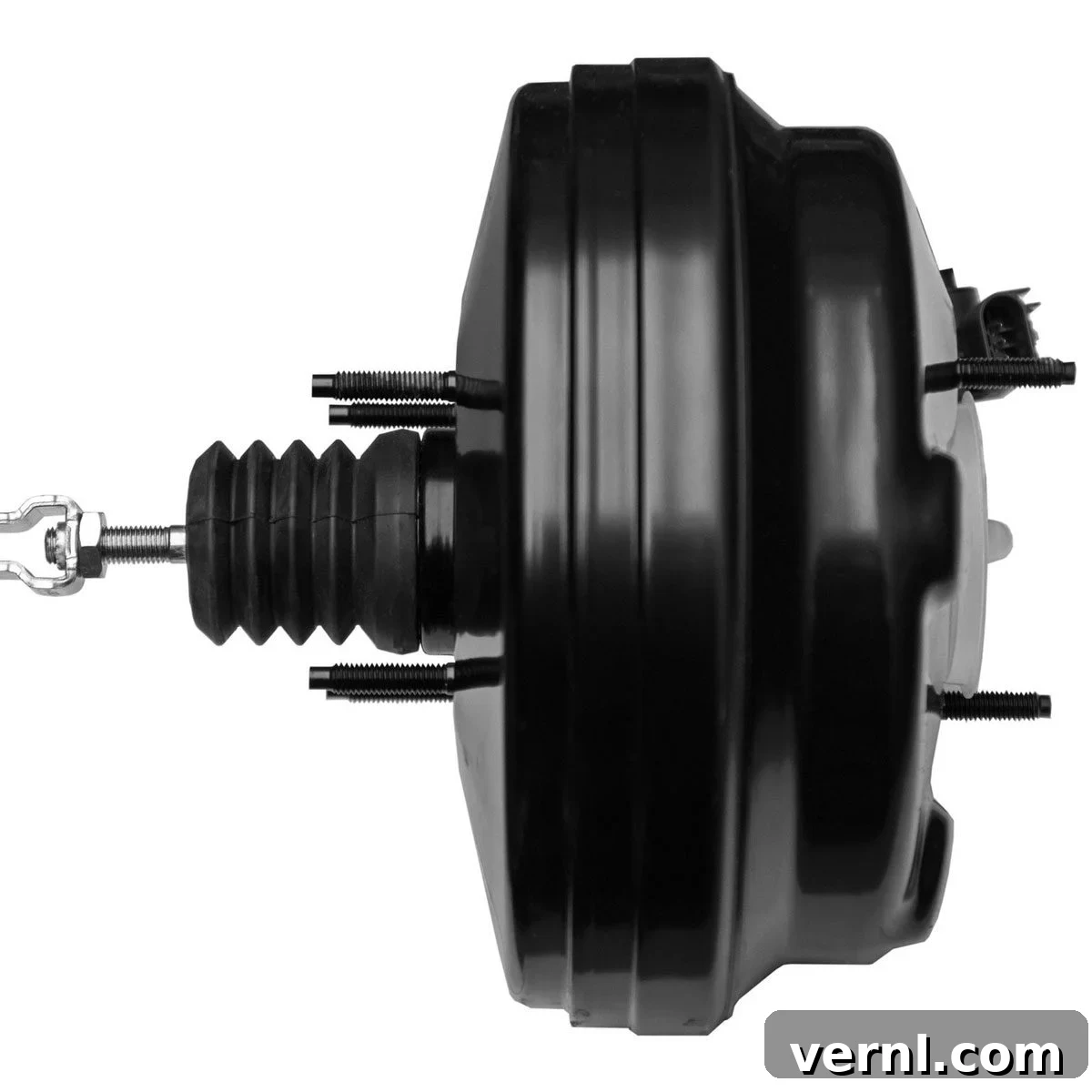
The brake booster is a vital component in modern vehicles equipped with disc brakes, fundamentally transforming the amount of physical effort required to stop a car. Typically located under the hood, mounted between the brake pedal and the master cylinder, this device amplifies the force applied by the driver to the brake pedal, transferring it to the hydraulic system of the car brakes. Without a functional booster, the physical exertion needed to halt a vehicle would be immense, and stopping distances would increase dramatically, posing a severe safety risk.
“Identifying problems with your brake booster is crucial to maintaining safety while on the road,” emphasizes Duane “Doc” Watson, a technical trainer at Bosch Mobility Aftermarket. “Lack of a well-functioning brake booster compromises your ability to operate the vehicle as you normally would, which puts you at greater risk of losing control and getting into an accident.”
The magic behind the brake booster lies in its ingenious use of engine vacuum. Inside the booster are two chambers, separated by a flexible diaphragm. These chambers typically maintain a similar drop in pressure as air is drawn into the engine through the air intake, which creates a vacuum. When you press the brake pedal, a valve inside the booster opens, allowing atmospheric pressure (ambient air) into one side of the diaphragm chamber. The vacuum, still present on the other side, then pulls on the diaphragm with considerable force. A rod connected to the brake pedal assembly runs through the center of this diaphragm and extends to the master cylinder piston.
As the diaphragm is pulled by the vacuum, it combines its amplified force with the direct force applied by your foot on the brake pedal. This combined force is then transferred via the rod to the master cylinder piston, which in turn pressurizes the brake fluid, ultimately engaging the brake calipers and slowing the car quickly and easily. Releasing the brake pedal closes the valve, restoring the pressure balance within the booster and allowing the system to reset.
Common Causes of Brake Booster Failure
While robust, brake boosters can fail for several reasons, often stemming from issues within the interconnected systems of your vehicle. Understanding these causes can help in accurate diagnosis:
- Vacuum Leaks: This is arguably the most common culprit. The brake booster relies heavily on a consistent vacuum supply from the engine. Any leak in the vacuum hose connecting the booster to the engine, or within the booster unit itself (e.g., a ruptured internal diaphragm), will diminish the vacuum assist, leading to a stiff pedal.
- Internal Diaphragm Rupture: The diaphragm inside the booster can tear or become brittle over time, losing its ability to create or hold the necessary pressure differential. This directly translates to a loss of power assist.
- Faulty Check Valve: A one-way check valve is situated in the vacuum line that connects the booster to the engine. Its purpose is to maintain vacuum within the booster even when the engine is off or when engine vacuum fluctuates (e.g., during acceleration). If this valve fails, vacuum can bleed out, resulting in a firm pedal even after the engine has been recently turned off.
- Master Cylinder Issues: Though less direct, a leaking master cylinder can sometimes allow brake fluid to seep into the booster, damaging the diaphragm and internal components.
- Corrosion or Physical Damage: Exposure to moisture, road salt, or physical impact can lead to corrosion or damage to the booster’s housing or vacuum lines, impairing its function.
Recognizing the Signs: Key Symptoms of a Bad Brake Booster
If you recognize any of the following bad brake booster symptoms, it’s imperative to take action immediately – ignoring them could render your car unsafe to drive and significantly increase the risk of an accident.
Stiff Brake Pedal Action
This is the hallmark symptom of a failing brake booster. As the booster loses its ability to provide the crucial vacuum-assisted force against the master cylinder piston, the driver must compensate. You’ll find yourself needing to exert significantly more pressure and physical effort on the brake pedal to achieve even a modest amount of braking. The pedal feels unusually hard or “wooden” underfoot, making routine stops physically demanding and potentially dangerous, especially in emergency situations.
Increased Braking Distance
A brake booster may fail gradually, making the decline in performance insidious and harder to notice immediately. If you perceive that you consistently need to begin braking much earlier than usual to come to a complete stop, or if your vehicle takes longer to slow down than it once did, it’s a strong indicator of reduced braking efficiency. If you’ve recently had your brakes checked, and the pads, rotors, and calipers appear to be in good condition, the underlying cause could very well be a failing brake booster. This extended stopping distance severely compromises your ability to react to sudden obstacles or traffic changes, dramatically increasing accident risk.
High Brake Pedal Position and Reduced Travel
Beyond the increased stiffness, you might also observe that the brake pedal appears to sit higher than normal and offers significantly less “travel” or depression when the brakes are engaged. When the booster chambers are out of balance or fail to create the necessary vacuum differential, the pedal’s ability to move freely and fully may be restricted. Additionally, the pedal return may feel slower or less responsive than normal, further contributing to a feeling of unresponsiveness in the braking system.
Hissing Sounds from the Brake Pedal Area
A distinct hissing sound, particularly when you depress the brake pedal or while the engine is running, often indicates an internal vacuum leak within the brake booster itself. This noise is the sound of air being drawn into the booster through a ruptured diaphragm or a compromised seal. While not always present, it’s a clear auditory cue that the vacuum system is compromised.
Poor Engine Function or Check Engine Light Illumination
Because the brake booster is intimately connected to the engine’s vacuum system, a significant leak within the booster can adversely affect engine performance. A hole in the booster’s diaphragm can allow unmetered air to enter the induction system, creating a substantial vacuum leak. This situation directly impacts the engine’s air-fuel mixture. In newer, fuel-injected vehicles, the engine control unit (ECU) may try to compensate for this unexpected air intake, leading to reduced fuel economy and potentially illuminating the check engine light with codes related to a lean condition or a vacuum leak. In older, carbureted vehicles, brake booster failure due to a vacuum leak can cause the engine to run excessively lean, meaning there’s insufficient fuel in the cylinder for optimal combustion.
Running lean can have serious consequences. Without the cooling action of a properly rich fuel mixture, friction and temperatures of internal engine parts can rise, leading to pre-ignition – where the fuel ignites before the spark plug fires. This might manifest as an audible “pinging” or knocking sound from the engine, or a noticeable loss of engine power and rough idling. If left unaddressed, persistent pre-ignition can cause severe internal engine damage, such as burnt valves or piston damage, potentially requiring a costly engine repair.
Duane Watson reiterates, “You’ll likely have to muster a great deal more strength than usual to force your vehicle to slow down, and even then, it will not do so as quickly or efficiently as it normally would.” He further adds that if the problem is a vacuum leak, you might hear a whistling sound or feel a stumbling sensation when you brake. The latter stems from the engine, which could be losing vacuum from its other components in the process, indicating a broader systemic issue.
Immediate Actions When Your Brake Booster Fails
If you observe your brakes exhibiting greater resistance to the point where you’re struggling to stop your vehicle safely, immediate action is crucial. Watson advises, “Immediately switch your turn signal on, pull to the side of the road and light up your hazards.” Assess the situation from a safe position. If you believe you can maintain sufficient control over the brakes to make it to a nearby repair shop, proceed with extreme caution. Ensure you allow yourself significantly more stopping distance between your car and any vehicle in front of you, anticipate stops well in advance, and avoid high-speed roads if possible.
“The bottom line is, you need to get your car into a repair shop as soon as possible,” he stresses. “Continuing to drive with brakes that are unreliable in any way is highly dangerous, and the problem could get worse if you ignore it, potentially leaving you completely incapable of stopping.”
Diagnosing a Faulty Brake Booster
While professional mechanics have sophisticated tools for diagnosis, there’s a simple test you can perform to get an initial indication of your brake booster’s health:
Test Your Brake Booster
- Engine Off, Pump Brakes: With the engine completely off, pump the brake pedal several times (typically 3-5 times). This action helps to deplete any residual vacuum stored within the booster. A properly designed brake booster allows for at least one or two brake applications even without the engine running, which is a safety feature in case of engine failure. The pedal should become firm and hard to depress after a few pumps.
- Hold Pedal, Start Engine: Next, maintain a light, consistent pressure on the brake pedal while you start the engine.
- Observe Pedal Response: If the brake booster is functioning correctly, you should feel the pedal slightly yield or “give” a bit under your foot as the engine starts and begins to generate vacuum. This sudden softening indicates that the booster has engaged and is assisting your pedal input.
- Interpreting Results: If the pedal remains hard, offers no change in resistance, or pushes your foot back up after the engine starts, it’s a strong indication that the brake booster has failed and is not providing the necessary power assist.
This test provides a quick confirmation of a problem but should always be followed up with a professional inspection.
Professional Diagnosis, Repair, and Prevention
Once a brake booster issue is suspected, it is critical to seek professional automotive service immediately. A qualified technician will perform a comprehensive diagnostic check, which may include:
- Vacuum Gauge Test: Using a vacuum gauge to test the engine’s vacuum supply to the booster and to check for leaks within the booster itself.
- Visual Inspection: Checking all vacuum lines, connections, and the booster unit for any signs of damage, cracks, or fluid leaks.
- Road Test: A controlled road test to observe braking performance under various conditions.
In most cases, brake boosters are sealed units and are not repairable. A faulty brake booster typically requires complete replacement. The cost of replacement can vary significantly depending on the vehicle’s make and model, as well as labor rates, but it is a necessary investment for your safety. Always ensure that a reputable mechanic performs the replacement, as incorrect installation can lead to further brake system issues.
While direct maintenance for a brake booster is minimal, ensuring the overall health of your vehicle’s vacuum system and brake components can indirectly extend its life. Regularly inspect vacuum lines for cracks or deterioration, promptly address any brake fluid leaks, and ensure your master cylinder is in good working order. These proactive measures contribute to a robust and reliable braking system.
Conclusion
The brake booster is an unsung hero of your vehicle’s safety system, silently ensuring that you can stop your car with minimal effort. When it begins to fail, the symptoms are often clear and unmistakable, primarily manifesting as a stiff brake pedal and extended stopping distances. Ignoring these warning signs can have severe and dangerous consequences, ranging from minor fender-benders to catastrophic accidents.
Prioritize your safety by acting swiftly if you suspect a bad brake booster. Perform the simple test, drive cautiously if absolutely necessary, and most importantly, get your vehicle to a certified mechanic as soon as possible. Professional diagnosis and timely replacement are the only ways to restore your braking system’s full functionality and ensure your peace of mind on every journey.
About the Experts
- Duane “Doc” Watson is a technical trainer at Bosch Mobility Aftermarket. He has more than 45 years of experience in automotive repair, has trained thousands of technicians and earned many industry awards, including Chevrolet Technician of the Year and Buick Service Master of the Year.
- Chris “Moose” Pyle is a master-certified technician with 20-plus years of automotive experience. He has also worked as an expert for JustAnswer.com since 2006, where he answers hundreds of car maintenance and repair questions a day.