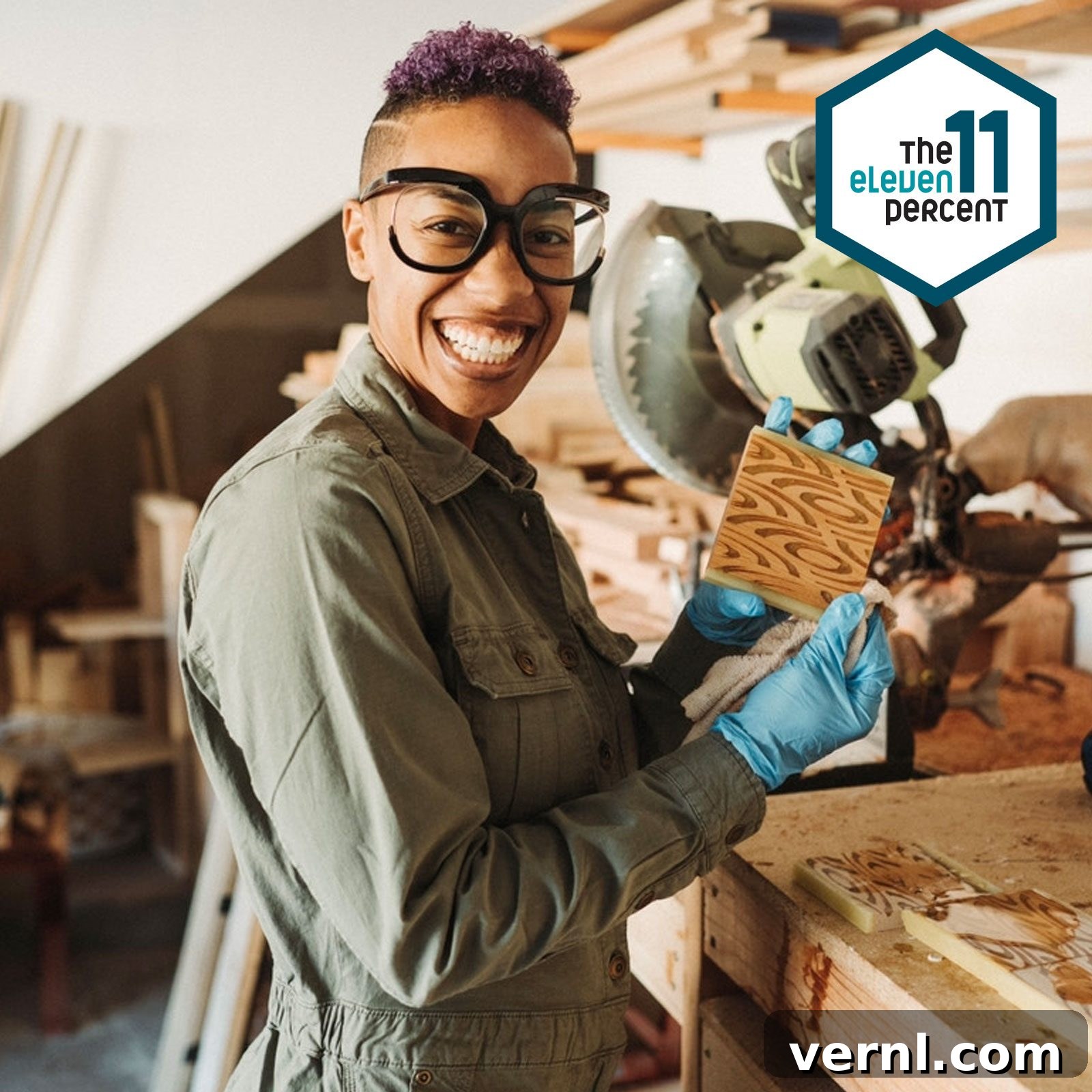
In an industry traditionally dominated by men, skilled women and nonbinary tradespeople are increasingly making their mark, comprising approximately 11 percent of the construction workforce in America. This inspiring series shines a spotlight on these trailblazers, sharing their stories, challenges, and triumphs. Today, we delve into the remarkable journey of D’ondra Howard, a Sacramento-based furniture maker whose passion for craftsmanship transformed into a thriving business. Her story is a testament to the power of self-taught skills, perseverance, and the courage to break new ground. Do you know someone whose story deserves to be told? We invite you to email us here and help us celebrate the diverse talents shaping the trades.
D’ondra Howard’s path to becoming a respected furniture maker began not with formal training, but with a simple desire to enhance her family’s home. With no prior background in the trades, she embarked on her first furniture piece, driven purely by the joy of creating. What started as a hobby soon blossomed into a prolific output of custom designs. Her house eventually became too small to accommodate her growing collection of handmade furniture, prompting her to consider a new direction. It was then that she took a leap of faith, listing one of her unique creations on Facebook Marketplace.
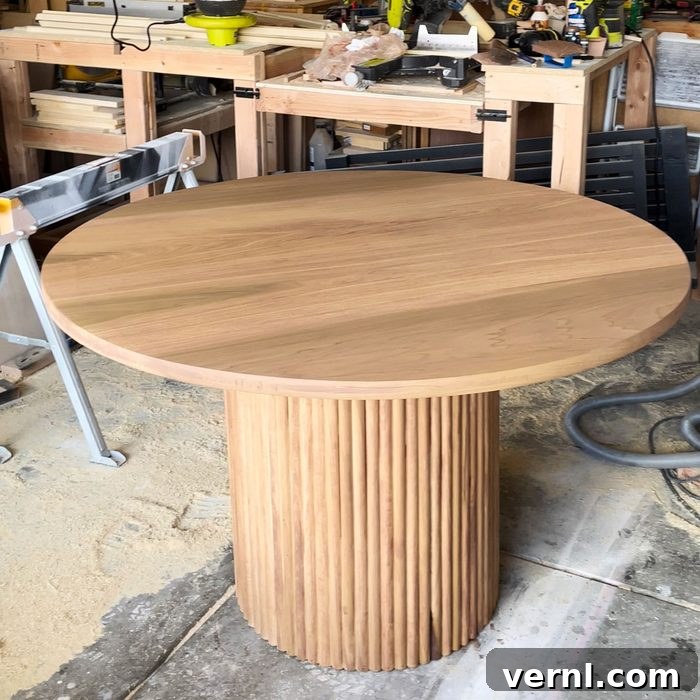
“I put a fluted table on there and people went crazy for it,” Howard recalls, the excitement still evident in her voice. “That’s when I truly realized the potential; people genuinely loved my work and were willing to buy it.” This initial success was a pivotal moment, signaling that her passion could indeed become a viable career. In 2021, D’ondra made the bold decision to transform her custom furniture crafting into a full-time profession, launching Workboots & Glasses directly from her garage in Sacramento, California. Today, her workshop is a hub of creativity, producing an impressive array of pieces, from elegant dining tables and functional desks to stylish platform beds and intricate charcuterie boards. Each item reflects her distinctive style and unwavering commitment to quality.
While Facebook Marketplace remains a platform for some of her sales, the majority of D’ondra’s business now comes from custom commissions, meticulously built in her home workshop. Her burgeoning reputation for exceptional craftsmanship and innovative designs has fostered a strong network of clients, with word-of-mouth referrals forming the cornerstone of her success. Beyond direct sales, D’ondra also actively showcases her latest creations and design process on Instagram, captivating a wider audience and inspiring aspiring woodworkers. We recently had the opportunity to sit down with D’ondra Howard to gather her unique insights on the evolving landscape of the woodworking industry and her personal journey within it.
Q: What made you start DIYing and building furniture?
A: My journey into DIY and furniture building truly began out of a need for a creative outlet during a significant life transition. When my husband joined the military, I found myself facing long periods at home alone. I knew I didn’t want to become miserable or simply pass the time; I wanted to create a fulfilling environment. So, I decided to make my home my canvas, pouring my energy and creativity into transforming our living space. Initially, my projects were simple. I found immense satisfaction in assembling IKEA furniture, meticulously arranging photographs of my children on the walls, and making our house feel more like a home. This progressed to exploring interior design elements, like selecting and buying rugs, and then ventured into more hands-on tasks. I started refurbishing our outdated furniture, giving old pieces a new lease on life, and even discovered the rewarding process of flipping some of it for profit. It was incredibly fun and ignited a spark within me. I quickly realized that I wanted to do more than just paint or redecorate; I yearned to build from scratch. The desire to replace the mass-produced IKEA items with custom, high-quality pieces I had made myself grew stronger. However, there was a significant hurdle: the power tools. The sheer thought of operating them was quite intimidating, and for a while, that fear held me back from truly pursuing my building aspirations.
Q: How did you get over that fear of power tools?
A: Overcoming my fear of power tools was a gradual process, but it was profoundly catalyzed by a moment of serendipitous inspiration. One night, while scrolling through Instagram, a woman’s DIY account popped up on my feed – Our Nest on Powell. I was instantly captivated. I spent hours, deep into the middle of the night, watching her videos. Her story was particularly moving; she was using DIY as a therapeutic outlet to cope with the profound grief of losing her sister. Seeing her transform raw materials into beautiful, functional pieces, all while navigating her personal struggles, resonated deeply with me. She was a beacon of courage and creativity, and her resilience was incredibly inspiring. The next morning, fueled by this newfound motivation, I resolved to face my fear head-on. I went straight out to gather the materials needed to build a sofa table. I had absolutely no idea what I was doing, and truth be told, that first sofa table was probably the worst piece of furniture I’ve ever made. It was wonky, imperfect, and far from what I had envisioned. But crucially, it wasn’t a failure; it was a powerful learning experience. Once I identified what went wrong and understood my “downfall,” I felt an unstoppable urge to try again, to apply what I had learned, and to do better. So, I immediately moved on to build a console table. Each successive project became a stepping stone: a workbench, a storage cabinet, a club chair. Every day thereafter, I just kept building, driven by an immense enjoyment and the continuous thrill of seeing my skills improve. I also discovered practical ways to manage my fears, like realizing that simply covering my ears when operating the table saw made a huge difference, preventing me from jumping every time the blade engaged. It’s these small victories and consistent effort that truly helped me conquer my initial apprehension.
Q: What’s it like being a woman in furniture-making?
A: My experience as a woman in the furniture-making industry has been overwhelmingly positive so far; I haven’t encountered any significant negativity or “jerks,” as some might expect. I’ve built a pleasant rapport with the staff at local building supply stores, where I’m a frequent customer due to my constant need for materials. We often see the same faces, and these regular encounters have fostered curiosity and conversation. They often strike up friendly conversations, asking me about my current projects and what I’m crafting this time, which is always a cool and affirming interaction. However, there is a recurring dynamic I’ve noticed, particularly from some men, where they feel compelled to offer unsolicited advice or explain how I “should” be doing something. It often comes across as them believing their method is inherently superior, or that I must be unaware of better techniques simply because I’m a woman in a trade. Guys, truly, don’t do that. It’s frustrating to hear prescriptive statements like, “You should do this,” or “This tool is better,” without context or a genuine understanding of my process.
I would much prefer a collaborative approach. If you have an insight or an alternative method, framing it as a question makes all the difference. For instance, asking something like, “Hey, have you ever considered using this tool instead?” or “Why don’t you try this technique?” opens the door for a productive exchange. Then, I can genuinely respond with, “Shoot, I didn’t even know I could do that! Thank you for the tip.” This approach fosters learning and mutual respect. It’s crucial to remember that in trades, there are countless ways to achieve the same end result, and a multitude of tools can accomplish similar tasks. Every artisan develops their own workflow, their preferred tools, and their unique solutions to common problems. Therefore, please, always ask a question; don’t just tell. It cultivates a more inclusive and supportive environment for everyone, allowing for shared knowledge without undermining anyone’s expertise or approach.
Q: What changes would you like to see in the trade?
A: The changes I’d like to see in the trade really echo what I was just saying about the difference between asking versus telling. My greatest hope is that we can cultivate an environment where everyone can “bump elbows,” meaning we can work side-by-side, learn from each other, and collaborate without judgment based on how we choose to approach our craft. This world is rich with diverse individuals, and nobody is exactly the same. While we may strive for similar outcomes, our methods, our processes, and our personal twists will always differ. For example, you might meticulously rub a circular motion to apply a finish, while I might prefer a sweeping or swirling technique. You might swear by a specific brand of wood stain or finish that you’ve grown to love, and I might opt for a different brand that I find works best for me. Ultimately, despite these variations in technique or product choice, the end result will still be beautiful and well-crafted.
Therefore, I sincerely hope that we can all embrace and welcome these individual differences, making ample room at the table for everybody, regardless of their background, their learning style, or their unique way of understanding and executing tasks. Whether we learn differently, interpret instructions differently, or simply have different preferences, we are all ultimately striving to achieve the same goal: creating something meaningful and well-made. Fostering this sense of collective respect and openness will not only enrich the trade itself but also make it a more inviting and inclusive space for newcomers, especially women and nonbinary individuals who are often navigating historically male-dominated fields. Embracing diverse perspectives can only lead to innovation, new techniques, and a more vibrant community for all who share a passion for building and creating.
Q: What’s your advice for young women considering entering the trades?
A: My advice for any young woman contemplating a career in the trades is unequivocal: do it. The most crucial step is simply to start. Don’t overthink it, don’t wait for the perfect moment; just put yourself out there and take that initial leap. It’s understandable to feel apprehension or uncertainty, especially when venturing into a field that might seem unfamiliar or intimidating. However, experience is the greatest teacher. If, after giving it an honest try, you realize that it’s not the right fit for you, that’s perfectly fine. You’ll have gained valuable experience and clarity, allowing you to confidently move on to explore something different without regret. But if you merely sit on the sidelines, hoping, wishing, and expecting opportunities to magically appear without investing the time or the effort to learn and engage, you’ll never truly know your potential. You won’t get good enough to genuinely enjoy the work, and you won’t even have the satisfaction of being able to say, “I tried this and it wasn’t for me.”
Furthermore, it’s vital to be kind to yourself throughout this journey. Don’t be too hard on yourself when you inevitably make mistakes or encounter challenges. Remember that everyone, no matter how skilled or experienced they are now, had to start somewhere. Proficiency in any trade is not an inherent trait; it’s developed through consistent practice and hands-on application. How we truly get better, how we refine our skills, and how we build confidence is by doing, by experimenting, by learning from our errors, and by persistently showing up at the workbench every single day. Embrace the learning process, celebrate your small victories, and understand that every project, successful or not, contributes to your growth as a tradesperson. Your potential is limitless once you decide to take that first step and commit to the journey of continuous learning and creation.
Q: What are your pro-specific tools?
A: When it comes to my essential tools, there are a few items that truly form the backbone of my workshop and empower my daily projects. My Ryobi drill is indispensable; it’s practically my right hand. I actually keep a couple of them readily available, which saves me a lot of time and hassle since I don’t have to constantly switch out drill bit sizes between tasks. This efficiency allows me to maintain a steady workflow and focus on the craftsmanship.
Another tool I frequently reach for is my brad nailer. It’s perfect for quickly securing trim, attaching thin pieces of wood, or for any application where I need a strong, subtle fastener without visible screw heads. My five-in-one tool is a versatile marvel. It’s incredibly handy for a myriad of tasks, from efficiently opening stubborn cans of paint and prying apart glued pieces of wood to effectively removing a misplaced nail or an overtightened screw. It’s a true multi-tasker that saves me from hunting for specialized tools for minor, yet critical, adjustments.
Of course, no woodworking shop is complete without a reliable circular saw. I pair mine with a track system to ensure I achieve perfectly straight, precise cuts every single time, which is paramount for the clean lines and tight joints my custom furniture demands. And for the finishing touches, a good quality cloth is essential. Whether I’m applying a stain, a protective finish, or simply cleaning up my workspace, I always need some type of cloth – not just for the wood, but also to wipe off any residue from my hands after a long day of crafting.
Beyond tools, proper workwear is crucial for comfort, safety, and functionality. I’m a huge fan of Dovetail Workwear because their clothing genuinely fits women the way it’s supposed to, which is a game-changer in a market often dominated by men’s sizing. Their overalls are incredibly comfortable and practical, offering ample pockets and durability, and their flannel workshirt provides warmth and flexibility. For years, I struggled with ill-fitting work clothes, often feeling swallowed by brands like Dickies, so discovering Dovetail was a revelation. I’ve also recently become a brand ambassador for Timberland and Truewerk, which is incredibly exciting. I especially appreciate Truewerk’s work pants for their robust construction and ergonomic design, and their performance shirts for their comfort and breathability. From Timberland, their pro hoodie is a staple for those cooler days in the workshop, providing both warmth and unrestricted movement. Having gear that fits well and performs under demanding conditions significantly enhances both my safety and my overall work experience.
D’ondra Howard: A Visionary in Woodworking
D’ondra Howard embodies the modern spirit of craftsmanship and entrepreneurship. Her journey into furniture making is a powerful narrative of passion meeting perseverance. Initially confronting a significant fear of power tools, she meticulously honed her skills through self-teaching and relentless practice, transforming herself into a proficient furniture maker, skilled woodworker, and respected DIY professional. As the founder and creative force behind Workboots & Glasses, D’ondra designs and builds exquisite custom furniture creations that blend functionality with artistic flair. Her work is celebrated for its quality and distinctive aesthetic, earning her a loyal client base and a growing reputation within the industry.
Beyond her direct commissions, D’ondra is a dedicated advocate for aspiring tradespeople. She serves as a consultant on Matriarchy Build, an innovative online consultation platform specifically designed to connect women and LGBTQ experts with individuals seeking guidance and advice on various DIY projects. In this role, she leverages her extensive experience to empower others, fostering a supportive community for learning and growth. Howard approaches every project with confidence and creativity, adeptly building everything from sturdy benches and sophisticated TV consoles to space-saving Murphy beds and much more. She particularly finds joy and fulfillment in the intricate process of designing and constructing tables, where her artistic vision and technical precision truly shine. D’ondra Howard’s story is a compelling inspiration, demonstrating that with dedication, passion, and a willingness to overcome challenges, one can carve out a successful and impactful career in the trades.
About the Author: Karuna Eberl
Karuna Eberl is a distinguished and regular contributor to Family Handyman, bringing a wealth of experience and storytelling prowess to her articles. Over the past 25 years, Karuna has cultivated an impressive career as a freelance journalist and filmmaker, dedicating her craft to telling compelling stories that span a diverse range of subjects, including people, nature, travel, science, and history. Her ability to weave intricate narratives and provide insightful commentary has earned her numerous accolades. Eberl has received multiple awards for her exceptional writing, her comprehensive Florida Keys Travel Guide, which serves as an invaluable resource for travelers, and her acclaimed documentary, The Guerrero Project. Her contributions to Family Handyman continue to enrich its content, offering readers engaging and expertly crafted insights into the world of DIY and home improvement.