Mastering the Art of Firewood Splitting: A Comprehensive Guide
Few methods of home heating offer the profound satisfaction and intrinsic reward of burning wood. There’s a unique connection to nature and a sense of self-sufficiency that comes with preparing your own fuel, especially when you’re involved in every step from cutting to splitting. The physical exertion of transforming raw logs into usable firewood is a grounding experience, unmatched by modern heating alternatives, culminating in the deep satisfaction of a warm, toasty home during the harshest winter blizzards.
My own journey with wood heat began early, growing up on a rural homestead. I carry countless cherished memories of splitting wood alongside my father, starting from as young as six or seven years old. These formative experiences instilled in me a deep appreciation for the craft. Even now, many years into owning my own home, I continue to heat with wood, finding immense joy and accomplishment in the annual ritual of splitting and stacking. It’s more than just a chore; it’s a sustainable lifestyle and a connection to tradition.
If you’re considering embracing the warmth and economic benefits of wood heat this winter but feel uncertain about where to begin with firewood preparation, you’ve come to the right place. This comprehensive guide will walk you through everything you need to know, from selecting the right tools to mastering efficient and safe splitting techniques, ensuring you’re well-prepared for the colder months ahead.
Why Learn to Split Firewood? The Benefits of DIY Wood Preparation
Beyond the undeniable satisfaction, learning how to split firewood offers a multitude of practical advantages. Opting for DIY firewood preparation allows you to significantly reduce heating costs, especially compared to fluctuating fossil fuel prices. It grants you independence, ensuring a steady fuel supply for your home regardless of external factors. Furthermore, the physical activity involved in splitting wood is an excellent full-body workout, enhancing strength, endurance, and overall well-being. Environmentally, when sourced sustainably, wood is a renewable resource, offering a carbon-neutral heating option. Embracing the tradition of wood heat connects you to generations past and fosters a deeper appreciation for natural resources and self-reliance.
Understanding Firewood: Types, Seasoning, and Efficiency for Optimal Heat
Before you even pick up a splitting axe or fire up a log splitter, it’s crucial to understand the characteristics of good firewood. The type of wood and its moisture content dramatically impact how efficiently and cleanly it burns. Hardwoods like oak, maple, hickory, and ash are generally preferred for heating as they are denser, burn hotter, and last longer. Softwoods such as pine, spruce, and fir ignite quickly but burn faster and produce less heat, often leaving more creosote in your chimney, making them better suited for kindling or occasional fires.
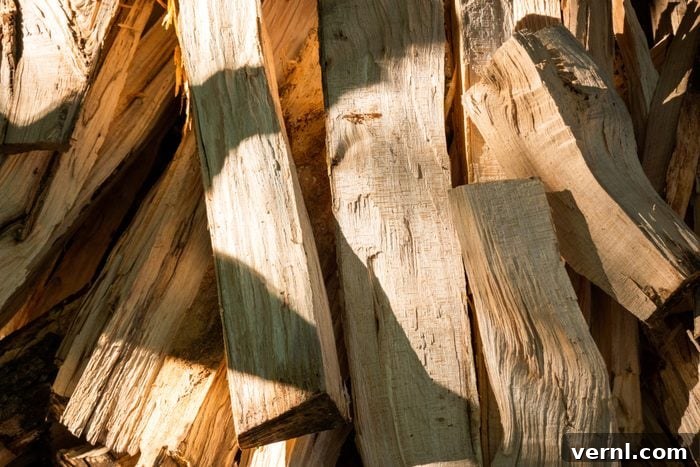
The most critical factor for efficient burning is proper seasoning. “Green” or freshly cut wood contains a high percentage of water, often 50% or more. Burning wet wood is inefficient, producing more smoke, less heat, and contributing to creosote buildup, which can be a fire hazard. Seasoned firewood, by contrast, has dried out to a moisture content of 20% or less. This process typically takes 6 to 12 months, or even longer for very dense hardwoods. You can identify seasoned wood by its lighter weight, darkened ends, cracks radiating from the center, and a hollow sound when two pieces are knocked together. A moisture meter is an invaluable tool for accurately assessing dryness, ensuring your efforts result in maximum warmth and minimal waste.
Choosing Your Tool: Different Methods to Split Firewood Effectively
Learning how to split firewood effectively hinges on two key elements: acquiring the right knowledge and selecting the appropriate tools. Skill develops with hands-on experience, and the most effective way to begin is often by learning alongside someone who has already mastered the art of log preparation. Your choice of tool will largely depend on the volume of wood you plan to process each season and how much time and physical effort you’re willing to invest. Let’s explore the primary options available for transforming logs into ready-to-burn firewood.
1. The Time-Honored Splitting Axe or Maul: Traditional and Rewarding
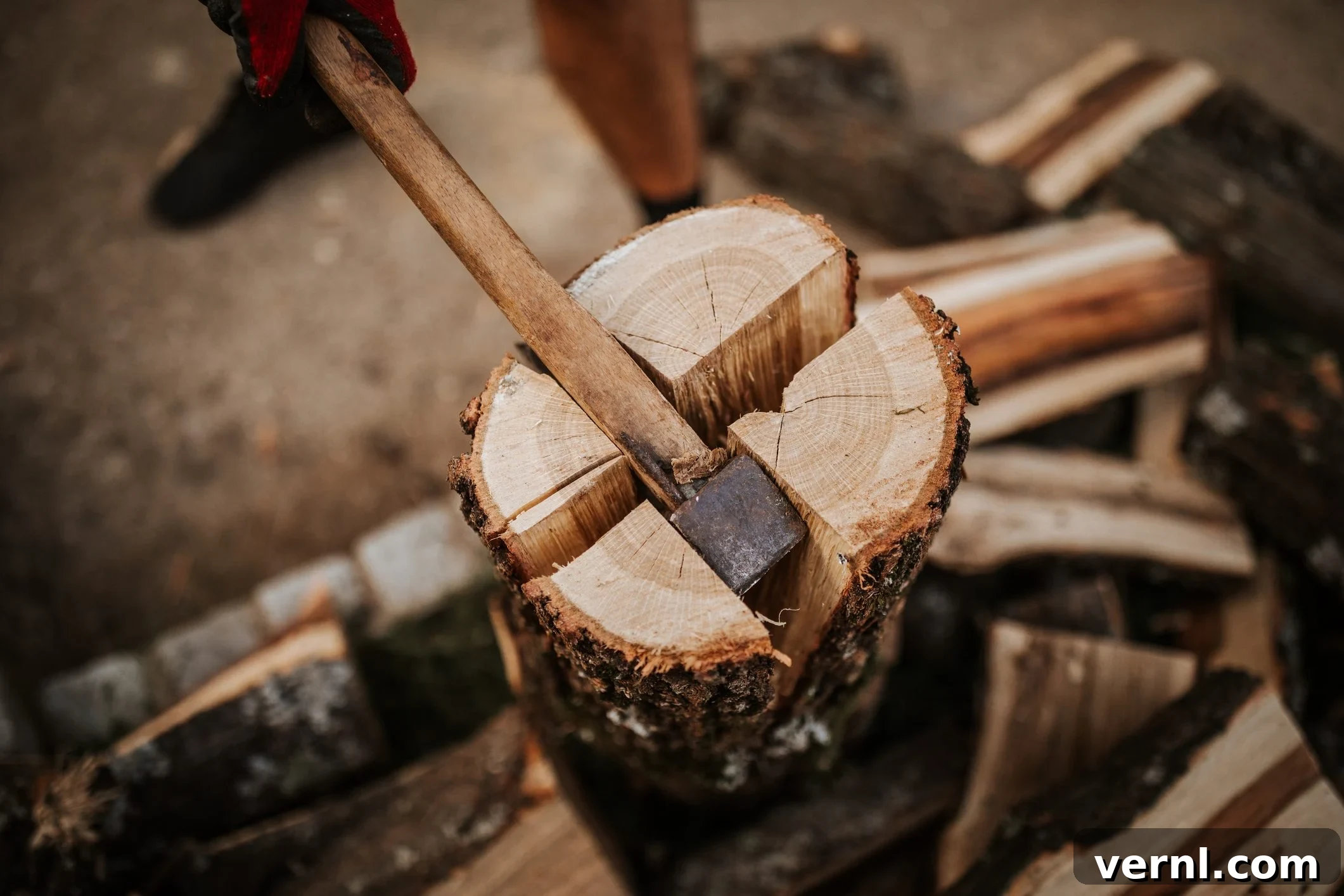
The splitting axe, often referred to as a splitting maul, represents one of the most fundamental and empowering ways to begin your firewood splitting journey. This classic tool is characterized by its large, heavy, wedge-shaped steel blade, securely attached to a long, sturdy handle, typically made of hickory or fiberglass. Unlike a felling axe designed for cutting across the grain, a splitting maul’s design is optimized to cleave wood along its grain, forcing the fibers apart with brute force.
The technique involves swinging the maul downward with controlled power, aiming to strike the thin edge of its head into the top surface of the log. The goal is to generate enough force to split the log in two. Once the log is halved, you set each piece on its end and repeat the process, continuing until the pieces of split firewood are of the desired size for your stove or fireplace. A standard splitting maul usually features a handle around three feet long and a head weighing approximately eight pounds, providing the necessary momentum. Shorter and lighter models are available for individuals who prefer less heft or are building up their upper-body strength.
Splitting firewood with an axe is undoubtedly more physically demanding and slower compared to a gas-powered splitter. However, it offers unparalleled satisfaction and a fantastic workout. For those planning to process only one or two cords of wood per year (a cord measures roughly 8-ft. x 4-ft. x 4-ft. when stacked), a quality splitting maul can be an excellent, cost-effective, and deeply rewarding choice. However, if your annual wood consumption exceeds this, or if you prefer less physical labor, you might consider power tools, unless you possess exceptional strength, fitness, and a genuine enjoyment for physical challenges.
2. Gas-Powered Kinetic (Inertia) Splitters: Speed and High-Volume Efficiency
For those prioritizing speed and high-volume output, the gas-powered kinetic splitter, also known as an inertia splitter, is a formidable machine. This innovative device harnesses the immense power of combustion to rapidly process large quantities of your firewood pile. Its internal mechanism typically involves a powerful engine driving a flywheel-and-belt system, which rapidly accelerates a steel wedge. When a lever is engaged, the stored kinetic energy in the flywheel is suddenly released, driving the wedge forward with incredible force.
The primary advantage of a kinetic splitter is its blistering speed. The wedge impact is swift, often splitting logs in a fraction of a second. While its “tonnage rating” – referring to the peak force applied to the log – can be impressive, this punch is instantaneous. This makes it exceptionally efficient for splitting straight-grained logs quickly. However, one potential drawback is that severely knot-filled or twisted rounds can occasionally stall the wedge. In such cases, the operator might need to retract and re-engage the lever a couple of times to successfully split the stubborn log. Despite this minor limitation, if pure speed and mechanical output are at the top of your list for efficient firewood processing, an inertia splitter is incredibly hard to beat.
3. Gas-Powered Hydraulic Splitters: Power and Consistency for Tough Logs
Often confused with kinetic splitters due to their shared gas-powered nature, hydraulic splitters operate on a fundamentally different principle, making them ideal for different applications. Instead of relying on kinetic energy, this machine converts combustion power into a steady, continuous, and immense splitting force through a hydraulic pump system. A lever activates the hydraulic ram, which slowly but powerfully pushes a steel wedge through the log, or sometimes pushes the log against a stationary wedge. This controlled pressure is the hallmark of a hydraulic splitter, offering unparalleled reliability and consistency.
While a hydraulic splitter may take a few seconds longer per split compared to the instantaneous impact of a kinetic model, its smooth and consistent pressure means significantly fewer jams, even with the most challenging, knotty, or twisted logs. This sustained force allows the wedge to slowly but surely work its way through dense wood, reducing operator fatigue and frustration. Consequently, hydraulic splitters are considered superior for processing large volumes of firewood, especially if you frequently encounter tough hardwoods or irregularly shaped logs. They excel in reliability and ease of handling stubborn rounds, making them the preferred choice for those serious about mastering how to split firewood efficiently, safely, and with minimal physical strain over extended periods. Their tonnage ratings, often ranging from 10 to 30 tons or more, directly reflect the amount of sustained force they can apply, making them versatile for nearly any type of wood.
4. Manual Splitters: Quiet, Safe, and Budget-Friendly Options
For individuals who prefer to split firewood without the noise, emissions, and maintenance of large gas-powered machines, or for those who lack the confidence or physical prowess to effectively swing a heavy splitting maul, manual splitters offer an excellent alternative. These tools vary in design but generally focus on safety and user-friendliness.
One common type features a heavy steel wedge attached to a shaft, which is mounted either into or next to the log. A sliding weight on the shaft is then forcefully slammed down onto the thick edge of the wedge, driving it into the wood’s end grain. This repeated impact gradually splits the log. This slide-hammer style manual splitter was often the first method I encountered as a child. It was perfect for me at the time because it offered a safer alternative to an axe and required minimal skill or brute strength. The primary trade-off, however, is speed; manual splitters are among the slowest methods for producing significant quantities of firewood.
Another traditional manual method involves simple steel wedges and a sledgehammer. You position a wedge against the log, tap it in slightly with the hammer to secure it, remove your hand, and then repeatedly strike the wedge with the sledgehammer until the log splits. This method is incredibly versatile and allows you to tackle very large or stubborn logs by using multiple wedges. While slower and more labor-intensive, these methods are quiet, require no fuel, and are highly portable. They are an ideal choice for occasional users, those with limited storage space, or individuals committed to a completely manual approach. These are some of the log splitters that we believe stand out for their performance and value.
Essential Equipment for a Successful Firewood Splitting Operation
Beyond your chosen splitter, a few other key pieces of equipment are crucial for a safe, efficient, and enjoyable firewood splitting experience:
- Chopping Block: For axe users, a sturdy, stable chopping block made from a large, flat-topped log (e.g., oak, maple) is essential. It raises the log to a comfortable height and protects your axe blade from striking the ground.
- Safety Gear: This cannot be overstated. Always wear ANSI-rated safety glasses, heavy-duty leather gloves to protect against splinters and impacts, and sturdy steel-toe boots to shield your feet from falling logs or dropped tools. Earmuffs are vital when operating noisy power splitters.
- Chainsaw: If you’re processing whole logs, a reliable chainsaw is necessary for cutting rounds to the appropriate length for splitting and for your stove. Always wear protective chaps over your pants, a helmet with a face shield, and hearing protection when operating a chainsaw.
- Log Carriers or Carts: These make transporting split wood much easier, saving your back from unnecessary strain.
- Firewood Racks or Shed: Proper storage is key to seasoning. Firewood racks keep wood off the ground and allow for air circulation, while a dedicated shed offers protection from rain and snow.
- Moisture Meter: An affordable tool that provides an accurate reading of your wood’s moisture content, ensuring optimal burning efficiency.
How To Split Firewood: Step-by-Step Techniques for Efficiency and Safety
For most individuals aiming to process a significant volume of wood for home heating, I often recommend a good gas-powered kinetic (inertia) splitter. They strike an excellent balance between speed, ease of use, and cost-effectiveness. The occasional binding on a stubborn log, while frustrating, typically doesn’t justify the higher upfront investment of a hydraulic splitter for average household needs. From my personal experience, splitting around 10 cords of wood annually, I’ve tried nearly every wood splitting tool available, and my inertia splitter is fired up more often than anything else. If you’re uncertain about your wood needs, most homes require between three and six cords of firewood each winter, depending on your local climate, the square footage of your home, and the quality of your residential insulation.
General Steps for Using a Power Log Splitter (Kinetic or Hydraulic):
- Prioritize Safety Gear: Always begin by donning your essential personal protective equipment (PPE): ANSI-rated safety glasses, 25 dB earmuffs, and thick, heavy-duty work gloves. Additionally, wear a short-sleeved shirt (to prevent sleeves from getting caught), tough work pants, and steel-toe boots to protect against impacts. Never operate a power splitter without these items.
- Prepare Your Logs: Use a chainsaw to cut your firewood logs to the appropriate splitting length. This length should be about two to three inches shorter than the burn box of your stove or fireplace to allow for easy loading and good airflow. Always wear protective chaps over your pants, a helmet, and hearing protection when operating a chainsaw.
- Pre-Operation Checks: Before starting, verify that your splitter has adequate gas and oil levels.
- Start the Splitter: Fire up your power splitter, usually with a pull cord or an electric start button. Allow it to warm up for a minute or two.
- Position the Log: Carefully lift one of the cut logs onto the bed of the splitter. Position it so that one end rests securely against the steel baseplate or the splitting wedge, ensuring it’s stable and won’t roll.
- Initiate the Split: With both hands well clear of the wedge and the log, pull or push the operating lever. Maintain your grip on the lever, holding it in position until the wedge fully splits the log. Avoid reaching into the splitting path at any time.
- Retract and Repeat: Once the log is split, retract the lever and wait for the wedge to return to its starting position. Then, reposition one of the split log halves (or a new log) against the baseplate and repeat the process until all your rounds are processed.
- Handle Stubborn Logs: If a log gets stuck, do NOT try to free it with your hands while the machine is running. Turn off the engine, ensure the wedge is fully retracted, and then carefully remove the stuck piece using another log or a pry bar.
Tips for Efficient Splitting with an Axe or Maul:
- Find the Grain: Look for natural cracks or fissures in the log. Aim your strike along these lines to maximize efficiency.
- Target the Edge: Instead of aiming for the dead center, try to hit just off-center or aim for the edges to initiate a split.
- Proper Stance: Stand with your feet shoulder-width apart, slightly staggered, providing a stable base. Keep your eyes on your target throughout the swing.
- Let Gravity Work: Don’t try to muscle the maul through; instead, focus on a smooth, powerful downward swing, allowing the weight of the maul head to do the work.
- Use a Chopping Block: Always split on a solid chopping block to prevent your maul from striking the ground and dulling or damaging the blade.
If you prefer not to split firewood yourself, there are convenient options. You can explore where to buy firewood that is already pre-split. For casual bonfires or occasional recreational use, a pre-split bundle from a grocery store or local vendor is usually sufficient. However, for primary home heating, purchasing larger quantities from reputable firewood suppliers will be more cost-effective.
Proper Firewood Storage and Seasoning: The Key to Optimal Burns
Once your firewood is split, the journey isn’t over. Proper storage is paramount to ensure thorough seasoning and efficient burning. Wood needs to be seasoned to reduce its moisture content, which improves its energy output and minimizes creosote buildup in your chimney. Here’s how to store it effectively:
- Raise it Off the Ground: Never stack firewood directly on the bare ground. Use a pallet, old timbers, or a dedicated firewood rack to keep the wood elevated. This prevents moisture absorption from the ground and allows for crucial airflow underneath.
- Ensure Air Circulation: Stack your wood in single rows or crisscross patterns to allow air to circulate freely around each piece. Good airflow is essential for drawing moisture out of the wood. Avoid tightly packed, solid piles.
- Top Cover, Sides Open: Cover the top of your firewood stack to protect it from rain and snow. A tarp or roofing material works well. However, leave the sides open to ensure continuous air movement. Completely enclosing a stack will trap moisture and hinder the seasoning process.
- Sunny, Breezy Location: Choose a storage location that receives plenty of sunlight and is exposed to prevailing winds. This combination accelerates drying.
- Seasoning Time: Most hardwoods require 6 to 12 months (sometimes longer for very dense species or large pieces) to properly season. Softwoods typically dry faster, often within 3 to 6 months. Plan your splitting and stacking well in advance of the heating season.
- Check Moisture Content: For optimal burning, use a moisture meter to ensure your firewood has a moisture content of 20% or less. This guarantees a clean, hot, and efficient fire, reducing smoke and creosote.
Safety First: A Comprehensive Guide for Firewood Splitting
While splitting firewood is a rewarding activity, it involves powerful tools and heavy logs, leaving little room for error. Adhering to strict safety protocols is non-negotiable, whether you’re wielding a swinging blade or operating a 20-ton splitter. Before you pick up your maul or engage your machine, make sure you follow these critical safety rules:
- Gear Up Properly: Always wear appropriate personal protective equipment (PPE). This includes ANSI-rated safety glasses to protect your eyes from flying debris, 25 dB earmuffs to shield your hearing from loud machinery, heavy leather gloves to prevent splinters and cuts, long pants to protect your legs, and steel-toed boots to safeguard your feet from falling logs or equipment.
- Ensure Stable Footing: Work on flat, stable ground. Clear away any ice, loose bark, debris, or tripping hazards from your work area. Stand with your feet shoulder-width apart for optimal balance, especially when swinging an axe.
- Establish a Safe Swing Zone: Maintain a clear perimeter around your splitting area. Keep children, pets, and any bystanders at least 10 to 15 feet away from your axe’s arc or the splitter’s operating bed. Never allow anyone to distract you while working.
- Recognize and Manage Fatigue: Firewood splitting is physically demanding. If you start to feel tired, lose focus, or notice yourself making mistakes, stop immediately and take a rest. Many accidents occur when operators try to push through “just one last log” when fatigued.
- Adhere to Splitter Protocol: When using a power splitter, always keep your hands well away from the wedge’s path. Never attempt to adjust a log or clear debris while the machine is running or the wedge is in motion. If a log becomes stuck, turn off the engine completely and ensure the wedge is fully retracted before attempting to free the log with a pry bar or another piece of wood, never your hands.
- Maintain Sharp Tools: A properly sharpened axe or maul bites into the wood more predictably and is less likely to glance off or cause an unexpected rebound. Regularly check and maintain the sharpness of your splitting tools. A dull edge requires more force, increasing the risk of injury.
- Be Mindful of Your Surroundings: Always be aware of your environment – overhead branches, uneven ground, or obstacles that could interfere with your swing or splitter operation.
- Lift Correctly: When loading logs onto a splitter or stacking firewood, lift with your legs, not your back, to prevent strains and injuries.
FAQ: Your Firewood Splitting Questions Answered
What is the best way to split firewood for beginners?
When you’re just starting out, the ideal technique to split firewood often involves a splitting maul combined with a sturdy, low chopping block. Focus on aiming for natural fissures or cracks in the log’s end grain, allowing the weight of the maul to do most of the work rather than relying solely on brute force. A common approach is to initially split each large round into four pieces to create more surface area, which helps accelerate the seasoning process. If the idea of a full-swing maul feels daunting or physically challenging, consider a slide-hammer style manual splitter instead. It provides a safer, more controlled method to achieve similar results with less intensive physical exertion, making it an excellent entry point for new splitters.
Can I split firewood when it’s wet, or should it be dry first?
Yes, absolutely, you should split green (wet) logs. It is significantly easier to separate fresh, pliable wood fibers than trying to split dry, hardened wood. Splitting green wood also creates more surface area, which is crucial for accelerating the drying process. Once split, stack the pieces loosely in a well-ventilated area, elevated off the ground, and cover only the top to protect from rain while allowing air to circulate freely around the sides. With proper stacking, your firewood will typically be ready to burn in 6 to 12 months, achieving a moisture level of 20% or less. Investing around $30 in a moisture meter will provide an accurate reading, helping you know precisely when your firewood is perfectly seasoned for a clean, efficient burn, optimizing your efforts to split firewood.
How much force (tonnage) do I need in a hydraulic wood splitter?
The required tonnage for a hydraulic wood splitter depends largely on the type and size of wood you’ll be processing. For typical household heating needs, processing 3 to 6 cords of wood per year, a 22- to 25-ton hydraulic splitter is usually sufficient to handle most common hardwoods like oak, maple, and birch with ease. If you frequently encounter very large diameter logs, exceptionally knotty rounds, or particularly dense species such as elm, you might consider stepping up to a 30-ton model for greater splitting power. For smaller diameter softwoods with straight grains (e.g., pine, cedar) or for occasional use, a 10- to 15-ton splitter is often adequate and represents a more budget-friendly option, making it an efficient choice for specific splitting tasks.