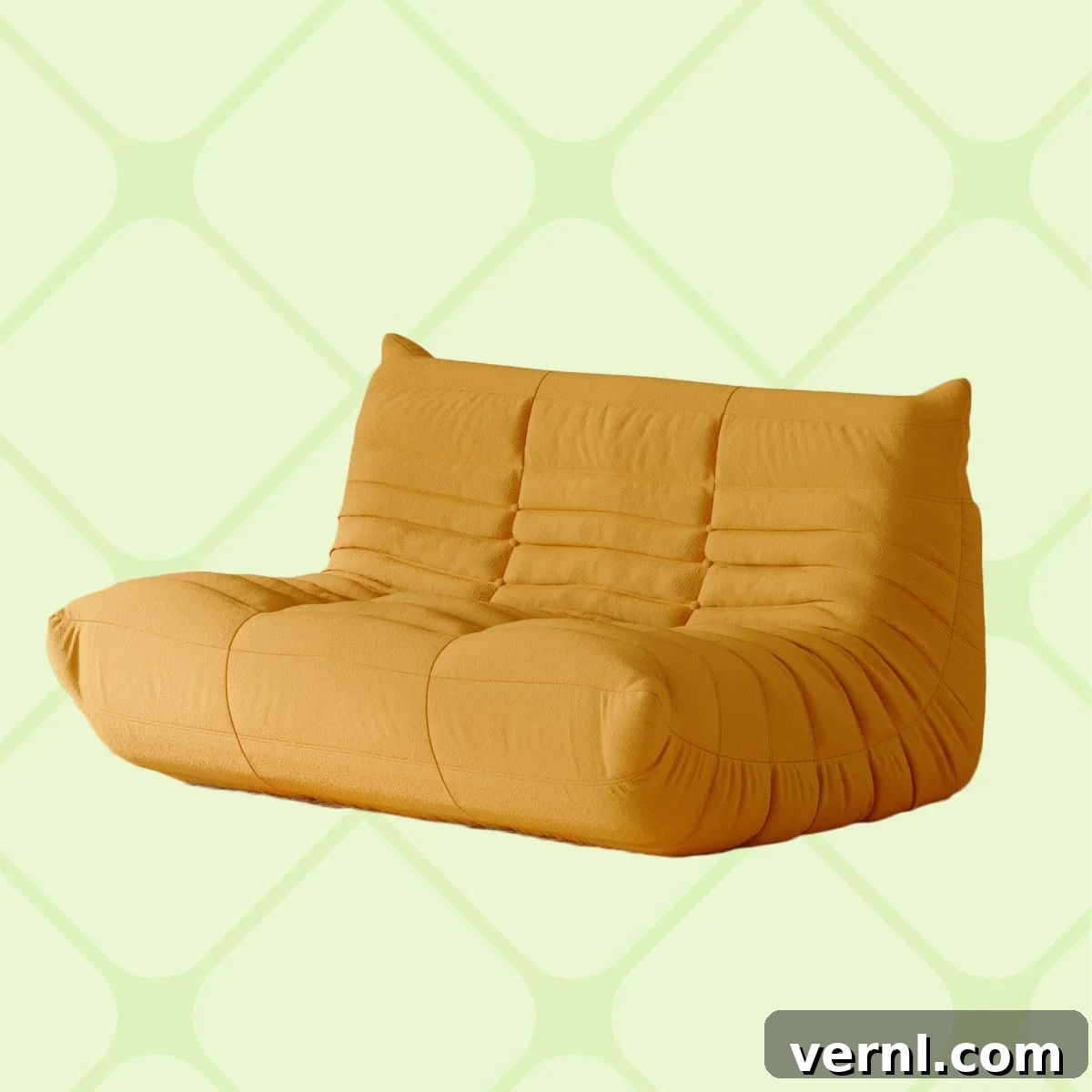
The world of home furnishings is constantly evolving, bringing forth innovative designs that challenge traditional notions of comfort and style. Among the latest trends capturing attention are “boneless couches,” a concept that has many re-evaluating their long-held furniture purchasing principles. For years, I’ve adhered to strict rules: always test a couch before buying, prioritize enduring quality, and ideally, look for features like 8-way hand-tied suspension – though I admit that last one isn’t always a deal-breaker. These principles have served my family well; our substantial leather sectional, a floor sample, has stood resilient for over 15 years, gracefully enduring five children, two large dogs, and countless hours of lounging.
However, the allure of boneless couches is undeniable, particularly in specific contexts. Their affordability is a significant draw, making stylish and comfortable seating accessible to a wider audience. Furthermore, their unparalleled ease of shipping and setup offers a practical advantage that traditional sofas simply cannot match. As someone who appreciates deeply comfortable seating and reveres our memory foam mattress, the prospect of an entire couch crafted from similar conforming material is incredibly intriguing. This trend prompts a compelling question: could boneless couches be a game-changer worth embracing?
This comprehensive guide delves deep into the essence of boneless couches, exploring their unique characteristics, key buying considerations, and the scenarios where they truly shine. Whether you’re furnishing a new apartment, seeking a flexible seating solution, or simply curious about the latest in home decor, understanding this evolving furniture category is essential for making an informed choice.
Understanding the Boneless Couch Phenomenon
At its core, a boneless couch is defined by its “frameless” construction. Unlike conventional sofas that rely on rigid internal structures made of wood or metal, boneless couches completely forgo these traditional components. This means no bulky frames, no visible legs, and no complex suspension systems. Instead, their entire form and stability are derived from the expertly designed shape and density of the foam materials they are composed of. Imagine a couch without a skeletal system, where plush, resilient foam forms its complete ergonomic profile.
This innovative design has a profound impact on logistics. Boneless couches are ingeniously engineered for shipping efficiency, typically arriving in compressed, vacuum-sealed packages. This compact packaging transforms what was once a monumental freight challenge into a remarkably manageable task. The boxes are significantly smaller and lighter than those for traditional sofas, making them far easier to carry – a particular blessing for navigating stairwells in apartment buildings or tight entryways. The “assembly” process is equally straightforward: simply unwrap the shrink-packaging and allow the high-density foam pieces to decompress and expand to their intended shape. Anyone familiar with setting up a foam mattress purchased online will find this process intuitive and hassle-free, transforming a potentially stressful furniture delivery into an exciting unboxing experience.
Beyond their practical advantages in shipping and setup, proponents of boneless couches celebrate their inherent comfort and casual aesthetic. These sofas typically feature a lower profile, closer to the ground, inviting a relaxed, sink-in comfort that encourages long periods of lounging. Much like memory foam mattresses adapt to the contours of your body for personalized support, boneless couches are designed to conform to the sitter, cradling them in plush softness. Furthermore, a significant number of boneless couch designs are modular, offering unparalleled versatility. Their individual pieces can be rearranged and reconfigured with ease, making them ideal for dynamic living spaces, multi-purpose rooms, or temporary living situations where flexibility is paramount.
The Crucial Role of Materials: What Are Boneless Couches Made Of?
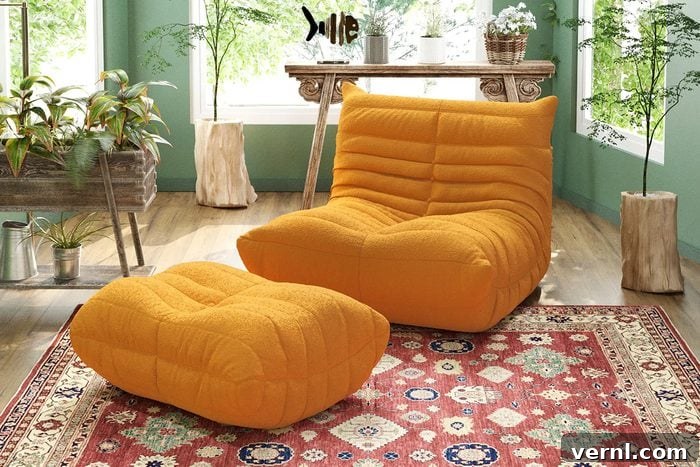
The performance and longevity of a boneless couch are almost entirely dependent on the quality of its core materials: high-density foam and durable upholstery fabric. The foam acts as the sole structural support, meaning its characteristics are paramount. High-density foam is specifically engineered for resilience, ensuring it maintains its shape, provides adequate support, and resists sagging over extended periods of use. When evaluating boneless couches, prioritizing the highest density foam your budget allows is a golden rule.
Ana Arun, CEO of Lifestyle Solutions Ventures LLC and a board member of Coddle, emphasizes this point with authority: “When choosing a boneless couch, foam quality is the most important factor. High-density compressed foam provides the best balance of comfort and resilience because it holds its shape, supports the body, and resists sagging over time.” She further explains that superior density directly correlates with the couch’s ability to retain its form and, consequently, its overall lifespan. In contrast, Arun cautions, “Lower-density foams or filler blends may feel soft at first but quickly lose structure, so those are best avoided for lasting comfort and support.”
Foam density is typically measured in pounds per cubic foot (lb/ft³), indicating how tightly packed the foam cells are. A higher density signifies better support and greater resistance to wear. According to Atnus Home, premium density foam ranges from 2.8 to 3.2 lb/ft³ or even higher. This premium range is highly recommended if your household includes children or pets, or if the couch will see heavy, daily use for lounging. For more moderate usage, a mid-range foam density of approximately 2.0 to 2.5 lb/ft³ may suffice. It’s also worth noting that many high-quality boneless couches feature a multi-layered foam construction, with a firmer, higher-density foam forming the base for structural integrity, topped with softer, lower-density layers designed for enhanced comfort.
Beyond density, foam resilience is another critical factor. Resilience refers to how quickly the foam springs back to its original shape after compression. Highly resilient foam recovers faster and more completely, indicating superior quality and contributing significantly to the couch’s durability and ability to resist permanent indentations. Finally, the choice of upholstery fabric plays a pivotal role. Just like with traditional sofas, the fabric’s quality affects not only the aesthetic appeal but also the longevity and practicality of the piece. Consider factors such as stain resistance, overall durability, and ease of cleaning. Performance fabrics like chenille, polyester blends, or heavy linen are excellent choices, offering a blend of attractive aesthetics and robust resilience. Ana Arun advises, “Performance fabrics like chenille or polyester blends are durable, stain-resistant and extend the life of the couch. For families or pet owners, choosing a cover that is both tough and easy to clean makes a big difference in maintaining the couch’s appearance and hygiene over time.”
Cost-Effectiveness and Value: How Much Do Boneless Couches Cost?
Boneless couches offer a broad spectrum of pricing, typically ranging from a few hundred dollars for smaller, simpler models to several thousand dollars for larger, more luxurious configurations made with premium materials. While various factors naturally influence the final price, such as size, the specific density and quality of the foam, and the type of upholstery fabric, boneless couches generally present a more budget-friendly alternative to traditional sofas of comparable size and perceived quality. This affordability stems from several key advantages in their manufacturing and distribution processes.
Firstly, the absence of a complex internal frame significantly reduces manufacturing costs. There’s less material (no wood, metal, or springs) and less labor involved in constructing the basic structure. Secondly, the innovative vacuum-sealed, compressed packaging directly translates to lower shipping expenses. More units can be transported in a single shipment, and the reduced weight and volume drastically cut freight costs. Lastly, reduced storage space requirements contribute to overall cost savings for retailers, which can then be passed on to the consumer. For buyers seeking stylish, comfortable, and contemporary seating solutions without the hefty price tag often associated with traditional framed furniture, boneless couches represent a compelling and often more accessible investment, making them an excellent choice for budget-conscious individuals or those furnishing on a tight timeline.
Longevity: How Long Can You Expect a Boneless Couch to Last?
The lifespan of a boneless couch is fundamentally tied to the quality of its components, particularly the foam and upholstery fabric, alongside the frequency and intensity of its use, and the diligence of its maintenance. Ana Arun provides clear insight into this, stating, “The lifespan depends on the quality of the foam and construction.” She elaborates further, “A well-made boneless couch with high-density, compressed foam can easily last five to ten years with regular use, especially if paired with a durable outer fabric.” This projection aligns with the longevity expectations for many mid-range traditional sofas, highlighting that quality boneless options are not necessarily short-term purchases.
Conversely, Arun warns, “Lower-quality versions with inexpensive foam may start breaking down within a year or two.” This stark contrast underscores the importance of intelligent purchasing. Investing in higher-quality materials upfront is crucial for ensuring durability and sustained comfort. Arun aptly draws a parallel to mattresses: “Think of it like a mattress—investment in higher-quality materials pays off in comfort and durability.” Regular maintenance, such as rotating modular pieces to distribute wear evenly, promptly cleaning spills, and protecting the couch from prolonged direct sunlight, can further extend its life and maintain its aesthetic appeal. By making an informed choice about material quality and committing to routine care, a boneless couch can prove to be a surprisingly durable and long-lasting addition to your home.
Boneless Couches: A Balanced Look at Pros & Cons
As with any furniture innovation, boneless couches come with their own set of advantages and disadvantages. Understanding these can help potential buyers make a decision that aligns with their lifestyle and aesthetic preferences. Ana Arun, a seasoned expert in the furniture industry, offers a clear articulation of these points, aiding in a balanced evaluation.
Advantages (Pros) of Boneless Couches:
- Unmatched Versatility and Modularity: Arun highlights, “Pros include versatility, lightweight design and comfort.” The modular nature of many boneless couches allows for easy reconfiguration, adapting to different room layouts or changing needs. This makes them ideal for small apartments, dorm rooms, or multi-use spaces where furniture often needs to be rearranged.
- Exceptional Ease of Transport and Setup: The frameless design means they are significantly lighter than traditional sofas and can be shipped in compressed, vacuum-sealed packages. This simplifies delivery, especially to upper-level units or through narrow doorways, and makes assembly as simple as unwrapping and allowing the foam to expand.
- Superior Comfort Profile: Known for their inviting, sink-in feel, boneless couches offer a plush, body-conforming comfort reminiscent of memory foam mattresses. They create a cozy, relaxed atmosphere, appealing to those who prioritize lounging and casual relaxation.
- Modern and Casual Aesthetic: They provide a contemporary, laid-back look that can effortlessly complement various modern interior design styles, from minimalist to bohemian. Arun notes they “provide a cozy, casual aesthetic that appeals to a wide range of lifestyles.”
- Affordability: Generally, boneless couches are more cost-effective than their traditional framed counterparts due to simpler manufacturing, reduced material usage, and lower shipping/storage costs. This makes stylish comfort more accessible.
Disadvantages (Cons) of Boneless Couches:
- Lack of Structured Silhouette: Arun points out, “On the con side, they don’t provide the same structured silhouette as a traditional sofa, which may not appeal to everyone.” Their soft, fluid lines might not fit formal or highly traditional decor schemes.
- Potential for Sagging with Low-Quality Foam: A critical consideration is quality. “Cheaper versions can flatten or lose shape quickly if the foam density isn’t high enough, so quality matters,” Arun warns. Investing in high-density foam is crucial to avoid premature wear and sagging.
- Reduced Firm Support: While offering sink-in comfort, the lack of a rigid frame and traditional suspension means they may provide less firm, orthopedic support compared to some traditional frame-based couches. Arun explains, “Some people may also find the lower seating profile less supportive compared to a traditional frame-based couch.”
- Lower Seating Profile: Their inherent low-to-the-ground design, while contributing to a casual aesthetic, might pose accessibility challenges for individuals with mobility issues or those who prefer a higher seating position.
- Perceived Durability: Despite advances in foam technology, some consumers may harbor skepticism about the long-term durability of a couch without a “skeleton,” making it a mental hurdle to overcome.
Is a Boneless Couch the Right Fit for Your Home?
The decision to invest in a boneless couch is a deeply personal one, influenced by a confluence of factors including your current living situation, your stage in life, personal aesthetic preferences, and the intended use of the furniture. There are specific scenarios where a boneless couch truly excels, offering unparalleled advantages.
For instance, if you find yourself in a transitional living arrangement, such as a rental apartment on an upper floor without an elevator, or if you anticipate frequent moves, the ease of transport and assembly offered by a boneless couch makes it an ideal solution. Its modularity also caters perfectly to multi-functional spaces, allowing you to easily reconfigure your seating arrangement to suit various activities – from movie nights to social gatherings. Students, young professionals, or first-time homeowners furnishing on a budget will appreciate their affordability and modern appeal.
Furthermore, boneless couches are an excellent choice for creating a relaxed, cozy, and informal atmosphere. They are particularly popular in family rooms, media rooms, or casual living areas where comfort and lounging are prioritized. Families with young children or pet owners might also find them appealing, especially if paired with performance fabrics that are durable and easy to clean, mitigating concerns about spills and wear.
However, if your priority is purchasing furniture for the absolute long haul, seeking the utmost in structural rigidity and traditional support, or if your interior design aesthetic leans towards formal or classic styles that demand a more defined silhouette, a traditional framed sofa might be a more suitable choice. While high-quality boneless couches offer excellent longevity, they present a different kind of support and visual presence.
Ultimately, if you decide to embrace the boneless couch trend, your satisfaction will hinge on making an informed purchase. Thoroughly understanding the implications of foam density, fabric quality, and the expected lifespan for different price points is crucial. By aligning your expectations with the quality of the materials you select, you can ensure that your investment in a boneless couch is a wise one, delivering comfort, style, and practicality perfectly suited to your needs.
About the Expert
Ana Arun is the insightful CEO of Lifestyle Solutions Ventures LLC, where her expertise guides strategic growth, product development, and sales operations. With over two decades of experience within the company, she possesses a profound understanding of the brand’s identity and the ever-evolving needs of consumers in the furniture market. Ms. Arun also serves on the board of Coddle Inc., a prominent direct-to-consumer furniture company celebrated for its innovative modular, tech-integrated, and lifestyle-driven designs.
Sources
“Atnus Home: How to Choose a Boneless Sofa: A Simple Guide” (2025)
Related Content to Explore
- 7 Signs You’re Over-Decorating
- 18 Cheap Decor Ideas That Look Expensive
- 14 Traditional-Style Home Decor Ideas That Are Still Cool