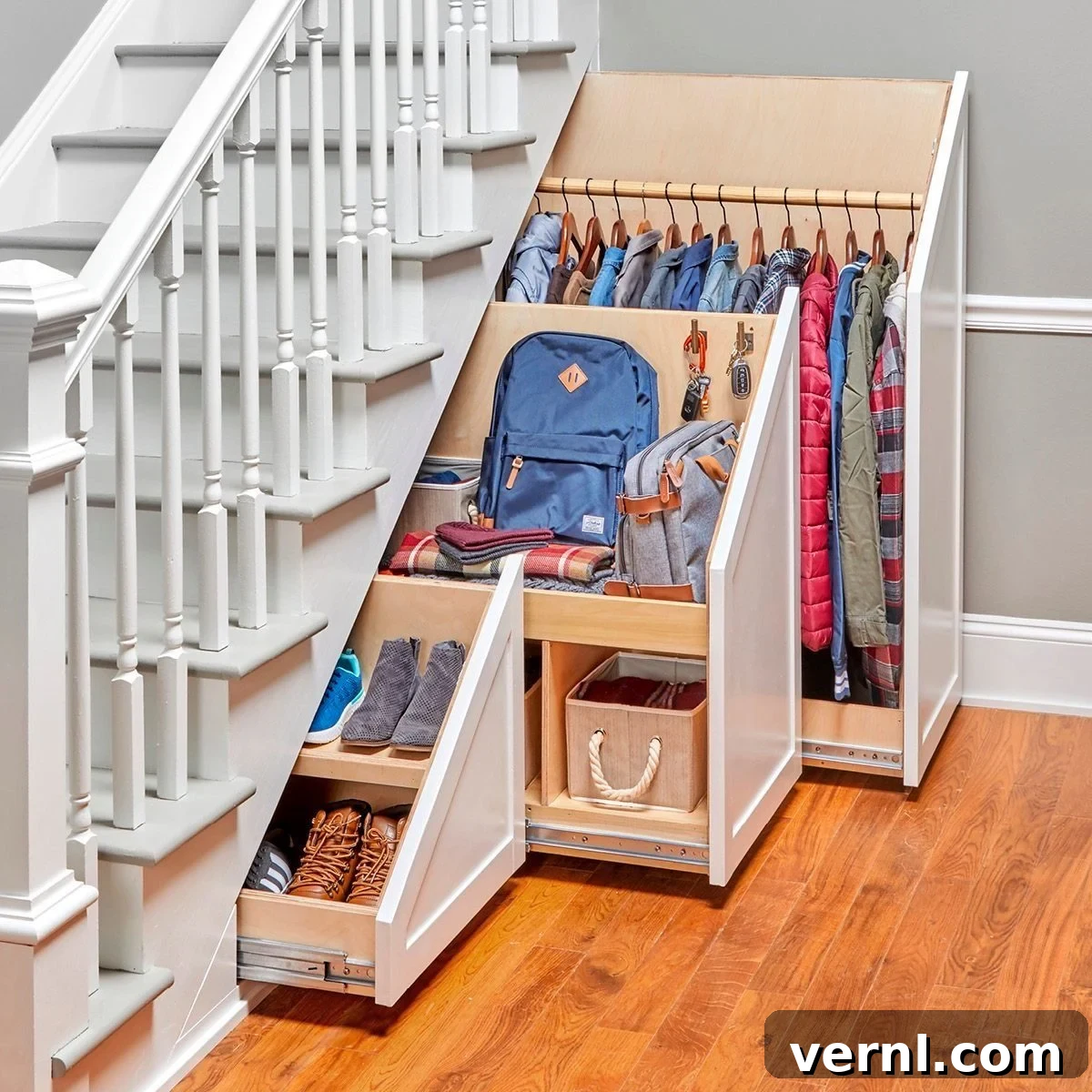
Maximize Your Home: A Comprehensive DIY Guide to Building Under Stair Storage Drawers
Are you constantly searching for more storage space in your home? Do you look at that neglected void beneath your staircase and see nothing but wasted potential? You’re not alone! The area under your stairs is often one of the most underutilized spaces, yet it holds incredible possibilities for enhancing your home’s functionality and aesthetic appeal. Transforming this dead space into smart, accessible storage is a rewarding DIY project that can significantly declutter your living areas and add tangible value to your property. This comprehensive guide will walk you through everything you need to know about designing, planning, and building custom under stair storage drawers, helping you reclaim every square inch of your home with confidence and creativity.
Why Under Stair Storage Is a Game Changer for Your Home
Before diving into the construction details, let’s explore why investing time and effort into under stair storage is such a brilliant idea. It’s more than just adding a few drawers; it’s about intelligent space utilization and thoughtful home organization, leading to a more harmonious living environment.
- Unlocking Hidden Potential: Most homes feature this triangular or rectangular space that typically serves no purpose beyond collecting dust. Imagine transforming it into a highly functional storage unit, perfectly tailored to your unique needs and preferences.
- Decluttering Your Living Spaces: With dedicated, purpose-built compartments for items like shoes, coats, books, pantry goods, or cleaning supplies, you can free up valuable surface areas and floor space in other rooms. This leads to a tidier, more organized, and ultimately more serene home atmosphere.
- Enhancing Home Aesthetics: Thoughtfully designed under stair storage isn’t just practical; it can become a striking architectural feature. Custom-built drawers or cabinets can seamlessly integrate with your existing interior design or stand out as a stylish, functional focal point, elevating your home’s overall appeal.
- Increased Property Value: Functional, attractive, and custom storage solutions are a significant draw for potential buyers. Homes that demonstrate smart space management and innovative storage options are often perceived as more valuable and desirable in the real estate market.
- Customization to Your Lifestyle: Unlike mass-produced furniture, a DIY under stair storage solution offers unparalleled customization. It can be precisely designed to fit your specific requirements – whether that means deep drawers for bulky winter blankets, shallow compartments for office supplies, a clever pull-out pantry for groceries, or even a cozy pet nook.
Planning Your Under Stair Storage Project: The Foundation of Success
Careful and thorough planning is absolutely paramount for the success of any home improvement endeavor, particularly one involving custom carpentry. Dedicating ample time to meticulous planning will prevent costly mistakes, minimize wasted materials, and ensure the final result not only meets but exceeds your expectations for both functionality and appearance.
1. Assess Your Space and Storage Needs
Begin by conducting a comprehensive evaluation of the area directly beneath your staircase. Carefully consider its precise dimensions, including width, depth, and varying heights, especially accounting for the ascending angle of the stairs. Identify and note any existing architectural features or potential obstructions such as electrical outlets, plumbing lines, or structural supports. Simultaneously, make a detailed inventory of the items you intend to store. This critical step will directly inform the type, size, and optimal configuration of your storage units.
- What specifically will you store? Categorize items such as coats, footwear, books, children’s toys, kitchen pantry essentials, cleaning products, seasonal decorations, or home office supplies.
- How frequently will you access these items? High-traffic items will benefit most from easily accessible drawers or smooth pull-out units.
- Are there any structural or utility limitations? If you have any doubts about the structural integrity of the walls or suspect hidden electrical/plumbing, it is always wise to consult blueprints or a qualified professional.
2. Explore Design Concepts and Storage Types
Once you possess a clear understanding of your available space and storage requirements, it’s time to unleash your creativity and brainstorm various design concepts. The inherent beauty of a DIY project lies in the freedom to customize every aspect to perfectly suit your preferences!
- Pull-Out Drawers: Consistently the most popular and versatile option. These can be designed as shallow drawers for smaller accessories or deep for bulkier household items. They glide out smoothly on slides, providing complete access to their contents.
- Cabinets with Doors: An excellent choice for concealing larger items, cleaning supplies, or for achieving a uniform, minimalist aesthetic. Cabinets can feature adjustable shelving inside for maximum adaptability.
- Open Shelving: Ideal for displaying books, cherished decorative objects, or items that require immediate and frequent access. This can also add an airy, decorative element to the space.
- Combination Units: A clever blend of drawers, open shelves, and closed cabinets can provide the ultimate in storage flexibility, catering to a diverse range of items and needs.
- Specialized Units: Think beyond basic storage. This space can be transformed into a sophisticated wine rack, a cozy pet nook, a compact mudroom bench, or even a discreet, pull-out home office desk.
Take the time to sketch out your initial ideas. You don’t need to be an artist; simple diagrams illustrating the proposed layout, approximate dimensions, and types of storage will be immensely valuable during the planning and building phases.
3. Selecting Materials and Essential Tools
The selection of appropriate materials and the availability of the right tools are crucial for achieving a professional-quality finish and ensuring the durability of your project. For the construction of sturdy drawer boxes, high-quality plywood (such as Baltic birch or cabinet-grade plywood) is frequently recommended due to its inherent stability and strength. Alternatively, melamine-faced particleboard can offer a smooth, pre-finished interior, which is particularly advantageous for pantry storage or areas prone to spills.
Essential Tools for the Project:
- Measurement & Marking: Reliable tape measure, straightedge or ruler, speed square, and a spirit level for accuracy.
- Cutting: A circular saw or miter saw is indispensable for making precise, clean cuts. A jigsaw may be useful for intricate shapes.
- Assembly: A drill/driver for fastening, and a pocket hole jig (like a Kreg jig) is highly recommended for creating strong, concealed joints effortlessly.
- Finishing: A sander (orbital or belt) and various grits of sandpaper for smooth surfaces.
- Safety Gear: Always wear safety glasses, hearing protection, and a dust mask to protect yourself throughout the project.
Key Materials for Construction:
- Panels: Plywood, MDF (Medium-Density Fiberboard), or solid wood for drawer boxes, drawer fronts, and any internal shelving.
- Framing Lumber: 2x4s or 2x3s for constructing the robust internal framework that will support the entire unit.
- Drawer Slides: Full-extension ball-bearing slides are highly recommended for optimal accessibility and smooth operation.
- Fasteners & Adhesives: Assorted wood screws, wood glue for strong, lasting joints.
- Finishing Products: Primer, paint, wood stain, or varnish to achieve the desired aesthetic and protection.
- Hardware: Decorative drawer pulls/handles, hinges (if incorporating cabinet doors).
Step-by-Step Guide: Building Your Custom Under Stair Storage Drawers
With meticulous planning complete, all your materials procured, and your tools ready, it’s time to transition from concept to creation. This section provides a detailed, step-by-step walkthrough to guide you through the construction of practical, elegant, and durable pull-out drawers beneath your staircase.
1. Prepare the Area and Take Precise Measurements
Begin by thoroughly clearing out the entire under stair area. This often involves removing any existing drywall, plaster, or other obstructions to fully expose the structural studs and framework of the staircase. This preparatory stage is critically important for identifying and marking the exact locations of any hidden electrical wiring, plumbing pipes, or HVAC ducts. Clearly mark these areas to prevent accidental damage during subsequent construction phases.
Using your tape measure and a reliable spirit level, take extremely precise measurements of the opening where your custom drawers will be installed. Measure the height, width, and depth at multiple points, as existing walls are rarely perfectly plumb, level, or square. Pay close attention to the angle of the ascending staircase, as this will significantly influence the varying heights of your individual drawer boxes and their corresponding fronts. Create a detailed, annotated diagram incorporating all these crucial measurements.
2. Construct the Robust Framework for Your Drawer Units
This internal framework serves as the foundational support for your entire drawer system, ensuring stability and smooth operation. Utilize 2x4s or 2x3s to build a sturdy skeletal structure directly within the prepared under stair space. This framework typically comprises vertical supports (similar to wall studs) and horizontal supports (rails) that collectively define the precise openings for each individual drawer unit.
- Cut Vertical Supports: Accurately measure and cut lumber pieces to fit vertically from the floor up to the underside of the stairs (or to the predetermined top height of your planned drawer openings).
- Install Horizontal Rails: Securely attach horizontal lumber pieces between the vertical supports. These will form the top and bottom edges of each drawer opening. Crucially, ensure these rails are perfectly level and square using your spirit level and speed square.
- Secure the Framework: Fasten the newly constructed framework robustly to the existing wall studs and floor joists using strong wood screws. Employ shims as needed to ensure the entire structure is perfectly plumb and level, providing an ideal base for your drawer slides.
The primary objective here is to create distinct, individual cubbies or compartments, each designed to be slightly wider than your final drawer box to adequately accommodate the thickness of the drawer slides.
3. Meticulously Build the Drawer Boxes
This is the stage where your plywood begins to take shape. For each individual drawer, you will need five distinct pieces: a bottom, two side panels, a front panel, and a back panel. The precise dimensions of these components will be determined by the openings you’ve meticulously created within your framework, critically factoring in the specific thickness of your chosen drawer slides (typically requiring a subtraction of about 1/2 inch per side, totaling 1 inch from the opening’s width).
- Measure and Cut with Precision: Carefully measure and accurately cut all plywood pieces for each drawer. For exceptionally sturdy drawer boxes, consider utilizing pocket hole joinery, dado joints, or reinforced butt joints secured with both screws and wood glue.
- Assemble the Box Squarely: Attach the side panels to the front and back panels, ensuring that the resulting box is perfectly square at all corners. Subsequently, securely attach the bottom panel. For drawers intended to bear heavier loads, a recessed bottom panel, glued and screwed into dados, offers superior strength and longevity.
- Sand and Finish Interior Surfaces: Prior to final installation, thoroughly sand the interior surfaces of your drawer boxes until smooth. It is often more convenient and effective to apply any desired finish (paint, stain, or clear protective coat) to the interior at this stage, rather than after the boxes are fully installed.
Repeat this meticulous process for every single drawer box required for your under stair storage unit.
4. Install the Drawer Slides for Seamless Operation
The quality and correct installation of drawer slides are absolutely fundamental for the smooth, reliable operation of your storage unit. Full-extension ball-bearing slides are highly recommended for under stair applications, as they enable the drawer to pull out completely, granting you full and unobstructed access to items stored at the very back.
- Mount to Framework: Attach one component of each drawer slide (referred to as the “cabinet member”) to the inside surfaces of your framework openings. It is paramount to ensure these are perfectly level and precisely parallel to each other. Utilizing a spacer block can help maintain consistent placement across all slides.
- Mount to Drawer Box: Attach the corresponding component of each drawer slide (the “drawer member”) to the exterior sides of your assembled drawer boxes.
- Test Fit and Adjust: Gently slide each complete drawer box into its designated opening to thoroughly test for smooth, unimpeded operation. Make any necessary fine-tune adjustments to the slide placement or framework to achieve optimal performance.
5. Craft and Attach the Aesthetic Drawer Fronts
The drawer fronts are the most visible element of your new storage unit and play a paramount role in defining its overall aesthetic appeal. You have the flexibility to choose a simple, modern flat panel design, a classic shaker style, or a more ornate raised panel, depending on the existing architectural style and decor of your home.
- Cut Drawer Fronts to Size: Carefully cut your chosen material (plywood, MDF, or solid wood) to the required dimensions. Drawer fronts are typically designed to be slightly larger than the actual drawer box, creating an attractive overlay. Aim for consistent, even gaps (e.g., 1/8 inch) around all sides of each drawer front to ensure a professional, cohesive look.
- Pre-Drill for Hardware: If you plan to install pulls or handles, it is advisable to pre-drill the necessary holes in the drawer fronts before permanently attaching them. This prevents potential wood splitting during hardware installation.
- Precisely Attach Drawer Fronts: This step demands utmost precision. Utilize double-sided tape or clamps to temporarily position each drawer front onto its respective drawer box. Meticulously ensure uniform gaps around all edges. Once perfectly aligned, from inside the drawer box, securely screw the front into place. Then, carefully remove the temporary fasteners.
6. Apply Finishing Touches and Install Hardware
With the structural integrity and basic assembly complete, it’s time to apply the final aesthetic and functional enhancements that will bring your under stair storage to life.
- Sanding and Painting/Staining: Thoroughly sand all visible surfaces of your drawer fronts and any exposed framework until impeccably smooth. Apply a high-quality primer, followed by your chosen paint or stain to perfectly match or complement your home’s decor. Aim for a durable, hard-wearing finish that can withstand daily use and maintain its beauty over time.
- Install Decorative Hardware: Carefully attach your selected drawer pulls, handles, or knobs. Ensure they are perfectly aligned, level, and securely fastened for both aesthetic appeal and practical functionality.
- Add Trim and Molding (Optional): For a truly integrated, custom-built appearance, consider adding decorative trim pieces or molding around the perimeter of your new storage unit or between individual drawer sections. This detail can elevate the entire project.
- Integrate Safety Features: If young children are present in the household, it is highly recommended to consider installing child-proof locks or soft-close mechanisms on the drawers to prevent pinched fingers and ensure a safer environment.
By diligently following these comprehensive steps, you will have successfully transformed a previously neglected and underutilized space into a highly functional, aesthetically pleasing, and remarkably durable storage solution that will serve your home effectively for many years to come.
Alternative Under Stair Storage Ideas for Inspiration
While pull-out drawers are incredibly popular and highly effective, the versatile under stair space offers a plethora of possibilities for other creative and functional storage solutions that might better suit your specific needs or design preferences:
- Integrated Bookshelf Nook: Design and build open shelving to create a cozy reading corner, a dedicated display area for your cherished book collection, or a stylish showcase for decorative items and family photos.
- Compact Home Office: With the clever integration of a pull-out desk surface, some compact shelving, and perhaps a small file drawer, this space can transform into a discreet and highly efficient home office workspace, perfect for remote work or managing household tasks.
- Pet Haven: Create a personalized and comfortable built-in bed area for your beloved furry friend, complete with integrated food and water stations, and neatly tucked-away storage for pet toys and supplies.
- Sophisticated Wine Cellar/Bar: Custom racking, coupled with consideration for temperature control, can convert this space into an impressive and functional wine storage area or a stylish home bar, perfect for entertaining.
- Efficient Mudroom Closet: Near an entrance, this area can become a compact mudroom, featuring hooks for coats, cubbies for shoes and bags, and even a small built-in bench for sitting, helping to keep entryways tidy and organized.
Essential Tips for a Successful DIY Under Stair Storage Project
Embarking on a DIY project of this scale requires attention to detail and adherence to best practices. These tips will help ensure your project proceeds smoothly and yields exceptional results:
- Prioritize Safety Above All: Always wear appropriate personal protective equipment, including safety glasses, hearing protection, and a dust mask, especially when operating power tools. Familiarize yourself with all tool safety guidelines.
- Measure Thrice, Cut Once: Accuracy is paramount in carpentry. Double-check and even triple-check all your measurements before making any cuts to prevent costly errors and material waste.
- Cultivate Patience: Do not rush any stage of the project. Taking your time, especially during the meticulous planning, cutting, and finishing stages, will contribute significantly to a superior final product.
- Seek Professional Expertise When Needed: If you encounter any structural concerns, or if complex electrical or plumbing issues arise within the under stair space, do not hesitate to consult a qualified professional before proceeding.
- Budget Wisely and Thoroughly: When planning your budget, account for not only the primary materials like wood and hardware but also consumable items such as sandpaper, wood glue, paint/stain, and potential costs for tool rentals if you don’t own them.
- Enlist Assistance: An extra pair of hands can prove invaluable for tasks such as lifting heavy panels, holding components steady during assembly, and ensuring the absolute precision of measurements.
Maintenance and Care for Your New Storage Solution
Once your beautiful and functional under stair storage unit is complete, a small amount of ongoing care will ensure its longevity, continued smooth operation, and enduring aesthetic appeal:
- Regular Cleaning: Periodically wipe down drawer fronts and the interiors of your drawers with a soft, damp cloth to remove accumulated dust, grime, and any minor spills.
- Inspect Hardware: Routinely check that all screws on drawer slides, handles, and any hinges remain tight. If drawer slides begin to feel stiff or noisy, apply a suitable lubricant specifically designed for drawer mechanisms.
- Avoid Overloading: While your custom drawers are designed for strength, continuously overloading them beyond their intended capacity, especially with extremely heavy items, can strain the slides and joinery over time.
- Protect Surfaces: Consider using felt pads, drawer liners, or protective mats inside drawers if you plan to store items that could potentially scratch, scuff, or stain the interior surfaces.
Conclusion: Reclaim Your Space and Transform Your Home
Building custom under stair storage drawers is undoubtedly an ambitious undertaking, yet it is an incredibly rewarding DIY project. It represents a fantastic opportunity to transform an often-overlooked and underutilized space into a highly functional, visually appealing, and integral part of your home’s infrastructure. From the initial meticulous planning and precise measurements to the careful construction of each drawer box and the application of the final aesthetic touches, every single step contributes to creating a bespoke storage solution that perfectly aligns with your unique needs and lifestyle.
By diligently following this comprehensive guide, you will not only gain invaluable storage space that alleviates clutter but also significantly enhance the overall appeal, efficiency, and market value of your home. So, gather your tools, embrace your inner craftsman, and embark on a project that promises to bring superior organization, sophisticated style, and remarkable efficiency to your living environment. Say a definitive goodbye to wasted space and enthusiastically welcome smart, beautifully integrated storage into your home!
Further Resources & Visual Guide
To help visualize the construction process and gain additional practical insights, we recommend watching this helpful video tutorial:
For even more detailed instructions, project photographs, and inspiration, you can visit the original project guide:
How to Build an Under-the-Stairs Storage Unit