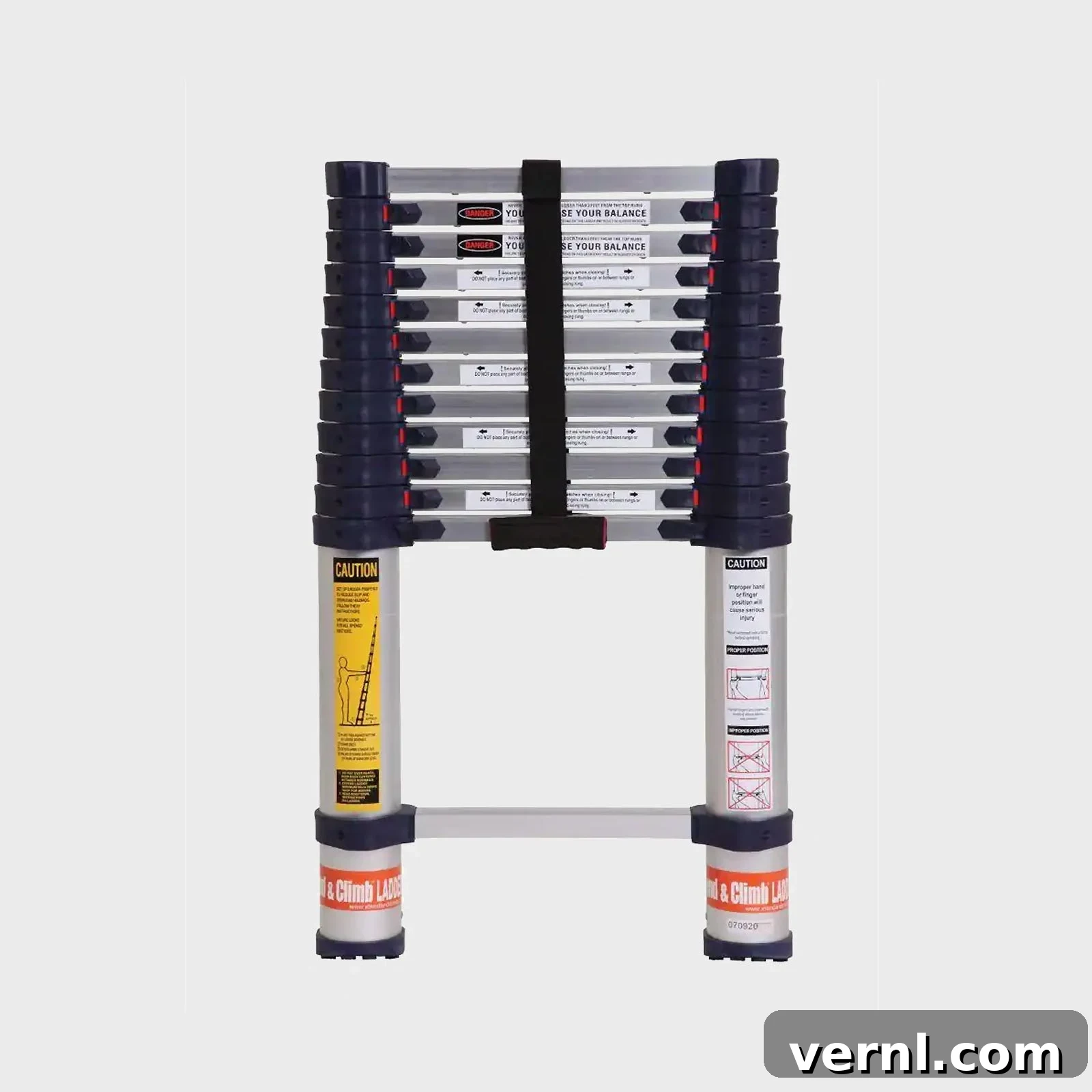
The Ultimate Guide to Telescoping Ladders: Your Compact Solution for DIY Success
For savvy DIYers, homeowners, and even light professionals, a telescoping ladder isn’t just another tool – it’s a game-changer. While not every task calls for one, their unparalleled versatility, portability, and compact storage make them an indispensable asset, especially for those with limited storage space or individuals who frequently work across multiple locations. Gone are the days of wrestling with bulky, unwieldy traditional ladders; the telescoping ladder offers a streamlined, efficient alternative.
I distinctly remember my initial skepticism. The first time I encountered a telescoping ladder, its design seemed almost too simple, too elegant, to be truly functional or safe. However, after putting one through its paces, it quickly transformed from a curiosity into an essential piece of equipment for my maintenance runs and warranty calls. Its ease of transport alone was enough to win me over.
When fully collapsed, these ladders are astonishingly compact, fitting effortlessly into my truck cab or the trunk of a family sedan. This convenience extends beyond just vehicle transport. Navigating tight turns and narrow stairways within a home, or carrying the ladder through a bustling job site, becomes a breeze. There’s no longer the constant worry of bumping into valuables, scuffing walls, or struggling to maneuver around obstacles, a common frustration with conventional ladders.
What Exactly Is a Telescoping Ladder?
Imagine the elegance of an antique pirate’s spyglass, extending with smooth precision to reveal distant horizons. A telescoping ladder operates on a remarkably similar principle. It comprises a series of interconnected metal tubes, each progressively smaller than the last, nesting neatly within one another when collapsed. This ingenious design allows the ladder to extend and retract effortlessly, much like its telescopic namesake.
Users have the flexibility to extend a telescoping ladder to its maximum height or to any intermediate height required by the project at hand. As each segment is pulled upwards and extends, a robust safety latch automatically engages, securing that section firmly in place. This critical safety mechanism ensures the ladder remains stable and prevents accidental collapse until the user intentionally retracts each segment, typically by depressing release buttons or levers. The sophisticated locking system provides peace of mind, knowing that once extended, the ladder is locked and ready for safe use.
The true marvel of a telescoping ladder becomes apparent when it’s fully collapsed. Many models shrink down to a mere two or three feet in height, making them incredibly easy to lift and carry comfortably under one arm. This compact form factor fundamentally redefines convenience for transportation and storage. Consider the stark contrast with a traditional 16-foot extension ladder: when collapsed, it still measures a cumbersome eight feet long and typically demands three times the storage space of its telescoping equivalent. Furthermore, while traditional extension ladders rely on an overlap between sections for structural integrity, a telescoping ladder extends to its full nominal length with minimal overlap, maximizing usable reach.
Who Benefits Most from a Telescoping Ladder?
A telescoping ladder is a remarkably versatile tool, capable of handling virtually any task that would typically require a standard extension ladder. For those models designed with multi-position capabilities, they can even seamlessly substitute for a stepladder, offering unmatched flexibility. However, telescoping ladders truly shine and prove particularly useful for DIY enthusiasts and professionals facing specific challenges:
For Those Tight on Storage Space
One of the primary appeals of a telescoping ladder is its minimal storage footprint. A typical model collapses to a height of around 36 inches and can weigh as little as 35 pounds, depending on its length and duty rating. This makes it an ideal solution for storage in compact garages, sheds, or even tucked away in a closet without consuming valuable square footage. Many homeowners who access their attic through a panel (often referred to as a “scuttle hole”) rather than a built-in ladder or stairs find a telescoping ladder to be the perfect, unobtrusive solution for safe and convenient attic access.
When Easy Transport is Non-Negotiable
The compact and lightweight design of a telescoping ladder makes it the ultimate choice for keeping readily available in a vehicle. Having a reliable ladder always on hand is an immense advantage, particularly for DIYers who manage rental properties, frequently assist family members with home improvement projects, or tackle impromptu tasks. It eliminates the need to plan around borrowing or hauling a cumbersome full-sized ladder, enabling greater spontaneity and efficiency in your work.
Effortless Indoor Maneuverability
The compact profile of a telescoping ladder truly comes into its own when you need to move it around indoors. If you’ve ever had the frustrating experience of navigating a large, rigid extension ladder through narrow doorways, around furniture, or up and down staircases, you’ll immediately appreciate the profound convenience offered by a telescoping model. Its ability to maneuver through tight spaces without the risk of damaging walls, knocking over possessions, or requiring a second person to assist is a significant time and effort saver.
Ideal for Heights Up to 15-20 Feet
While incredibly versatile, it’s important to note that telescoping ladders typically don’t offer the same maximum reach as similarly priced, professional-grade traditional extension ladders. Most consumer-grade telescoping ladders are designed for working heights up to approximately 15 to 20 feet. If your projects consistently demand access to heights exceeding this range, such as two-story gutter cleaning or professional roofing work, a dedicated extension ladder with greater reach may be a more appropriate and cost-effective choice. Always consult the ladder’s specifications for its maximum safe working height.
Are Telescoping Ladders as Safe as Traditional Ladders?
When utilized correctly and according to manufacturer guidelines, telescoping ladders are every bit as safe as their standard straight or extension ladder counterparts. Modern telescoping ladders are engineered with advanced safety features and subjected to rigorous testing to meet stringent industry standards, such as those set by ANSI (American National Standards Institute).
The vast majority of ladder-related injuries stem not from inherent flaws in the ladder design, but from user error. Common culprits include overstretching beyond the ladder’s safety zone, setting the ladder up on uneven or unstable ground, or positioning it at an unsafe angle. It is absolutely crucial to always observe the manufacturer’s recommended safe climbing angle (typically 75.5 degrees, often indicated by an angle guide or foot position on the ladder itself) and to ensure all locking mechanisms are fully engaged before ascending.
Additionally, always be mindful of the ladder’s weight limitations, known as its duty rating. All ladders are rated to hold a maximum total weight, which encompasses the user’s body weight plus any tools, materials, or equipment they might be carrying. For instance, if you weigh 170 pounds and plan to carry a 60-pound bundle of three-tab shingles up the ladder, your total load would be 230 pounds. In this scenario, choosing a ladder rated for only 200 lbs (Type II duty rating) would be unsafe and could lead to structural failure. Always opt for a ladder with a duty rating that comfortably exceeds your anticipated total load (e.g., a Type I (250 lbs) or Type IA (300 lbs) ladder).
Ladder safety is a topic that cannot be overemphasized. Leading ladder manufacturer Werner, for example, annually hosts a series of informative webinars in March to commemorate Ladder Safety Month. These valuable safety resources are free and readily available online, offering expert advice and best practices for safe ladder use, inspection, and maintenance.
Crucial Safety and Maintenance Tip: Before collapsing and storing your telescoping ladder, make it a habit to thoroughly wipe down the rails. DIY projects invariably lead to accumulations of paint spatters, sawdust, drywall dust, or other debris. This particulate matter can easily accumulate within the intricate mechanisms, gumming up the smooth action of the rails and potentially hindering the proper engagement or disengagement of the safety latches. Taking a few moments to clean the rails as part of your post-project routine can significantly extend the lifespan of your ladder and ensure its continued safe operation.
How Much Does a Quality Telescoping Ladder Cost?
The price of telescoping ladders can vary considerably, primarily influenced by factors such as their maximum extended length, material construction (e.g., aluminum, fiberglass), load capacity (duty rating), and the inclusion of additional features. Generally speaking, a high-quality telescoping ladder suitable for most DIY applications will fall within a price range of $150 to $500. Most dedicated DIYers can find an excellent and reliable telescoping ladder to meet their needs in the $150 to $300 bracket. Models that incorporate multi-position functionality (allowing use as a stepladder, extension ladder, or scaffold base) or integrated work platforms typically command higher prices due to their enhanced versatility and design complexity.
It’s important to acknowledge that telescoping ladders often carry a slightly higher price tag than traditional extension ladders of a comparable size and duty rating. This premium reflects the sophisticated engineering, advanced locking mechanisms, and the convenience offered by their compact, telescopic design. For instance, an XTend + Climb Type I 15.5-foot aluminum telescoping ladder, known for its robust construction and safety features, might retail for around $340. In contrast, a Werner Type I 16-foot aluminum extension ladder, while offering similar reach and load capacity, could be purchased for approximately $219. The added cost for the telescoping model is often justified by its unparalleled portability and ease of storage, making it a valuable investment for many users.
Choosing the Right Telescoping Ladder for Your Needs
Selecting the perfect telescoping ladder involves considering several key factors to ensure it meets your specific requirements for safety, functionality, and durability:
- Maximum Height: Determine the highest point you realistically need to reach. Remember, you should never stand on the top three rungs of an extension ladder. Factor in your own height and arm’s reach to calculate the necessary ladder length.
- Duty Rating: This is paramount for safety. Ladders are categorized by their load capacity:
- Type III (Light Duty): 200 lbs (Not recommended for most DIY tasks or professional use).
- Type II (Medium Duty): 225 lbs (Suitable for light household use).
- Type I (Heavy Duty): 250 lbs (Ideal for most DIYers and general professional use).
- Type IA (Extra-Heavy Duty): 300 lbs (For heavier professionals and demanding jobs).
- Type IAA (Special Duty): 375 lbs (For industrial and highly demanding professional applications).
Always choose a rating that comfortably accommodates your weight plus any tools and materials.
- Material: Most telescoping ladders are made from aluminum, offering a great balance of strength and lightweight portability. Fiberglass ladders, while heavier and more expensive, are non-conductive, making them the safer choice for electrical work.
- Locking Mechanism: Inspect the locking tabs or buttons. Look for sturdy, easy-to-operate mechanisms that provide clear visual or auditory confirmation of engagement. Some ladders feature “no-pinch” closures to protect your fingers.
- Stability Features: Check for wide, anti-slip feet that articulate to adapt to uneven surfaces. A wider base can also contribute to overall stability.
- Certifications: Ensure the ladder meets recognized safety standards such as ANSI (American National Standards Institute) or OSHA (Occupational Safety and Health Administration) in the U.S., or equivalent international standards.
- Portability & Weight: While all telescoping ladders are compact, some are lighter than others. Consider how frequently you’ll be moving it and over what distances.
Maintenance Tips to Extend Your Ladder’s Lifespan
Beyond the crucial step of wiping down the rails, a few simple maintenance practices can significantly prolong the life and safe operation of your telescoping ladder:
- Regular Inspection: Before each use, visually inspect the ladder. Check for any dents, cracks, bends, or damage to the rungs, rails, and feet. Ensure all locking mechanisms are clean, free of debris, and engage smoothly and securely. Look for loose rivets or fasteners.
- Lubrication: Occasionally, a light spray of silicone lubricant on the locking mechanisms and rail interfaces can help maintain smooth extension and retraction. Be careful not to over-lubricate, as this can attract dirt.
- Proper Storage: Store your ladder in a dry, protected environment, away from extreme temperatures and direct sunlight. Avoid storing it outdoors where it can be exposed to moisture, which can lead to corrosion over time, especially with aluminum models.
- Cleanliness: In addition to wiping the rails, ensure the feet are free of mud, grease, or other slippery substances before use. Clean the ladder thoroughly after any particularly messy jobs.
Conclusion: The Smart Choice for Modern DIYers
Telescoping ladders represent a significant evolution in ladder technology, offering an unparalleled blend of convenience, portability, and space-saving design. While they may require a slightly larger initial investment compared to traditional extension ladders, their myriad benefits – from effortless transport and storage to enhanced maneuverability in confined spaces – often make them a superior choice for the modern DIYer, homeowner, or light professional. By understanding their unique advantages, adhering to essential safety guidelines, and performing simple maintenance, a telescoping ladder can become an invaluable and long-lasting tool in your arsenal, empowering you to tackle projects with greater ease, efficiency, and safety.