Embrace the Green Revolution: The Ultimate Guide to Clover Lawns
For decades, the meticulously manicured, uniform green carpet of traditional turf grass dominated residential landscapes. However, a quiet revolution is underway in home gardening and landscaping. Clover, once a popular lawn cover before the mid-20th century shift towards monoculture grass lawns, is making a remarkable comeback. Driven by a growing demand for sustainable, low-maintenance, and eco-friendly outdoor spaces, clover grass is re-emerging as a compelling alternative or complement to traditional turf. This comprehensive guide explores everything you need to know about cultivating, maintaining, and understanding the myriad advantages of a clover lawn.
What Exactly is Clover Grass?
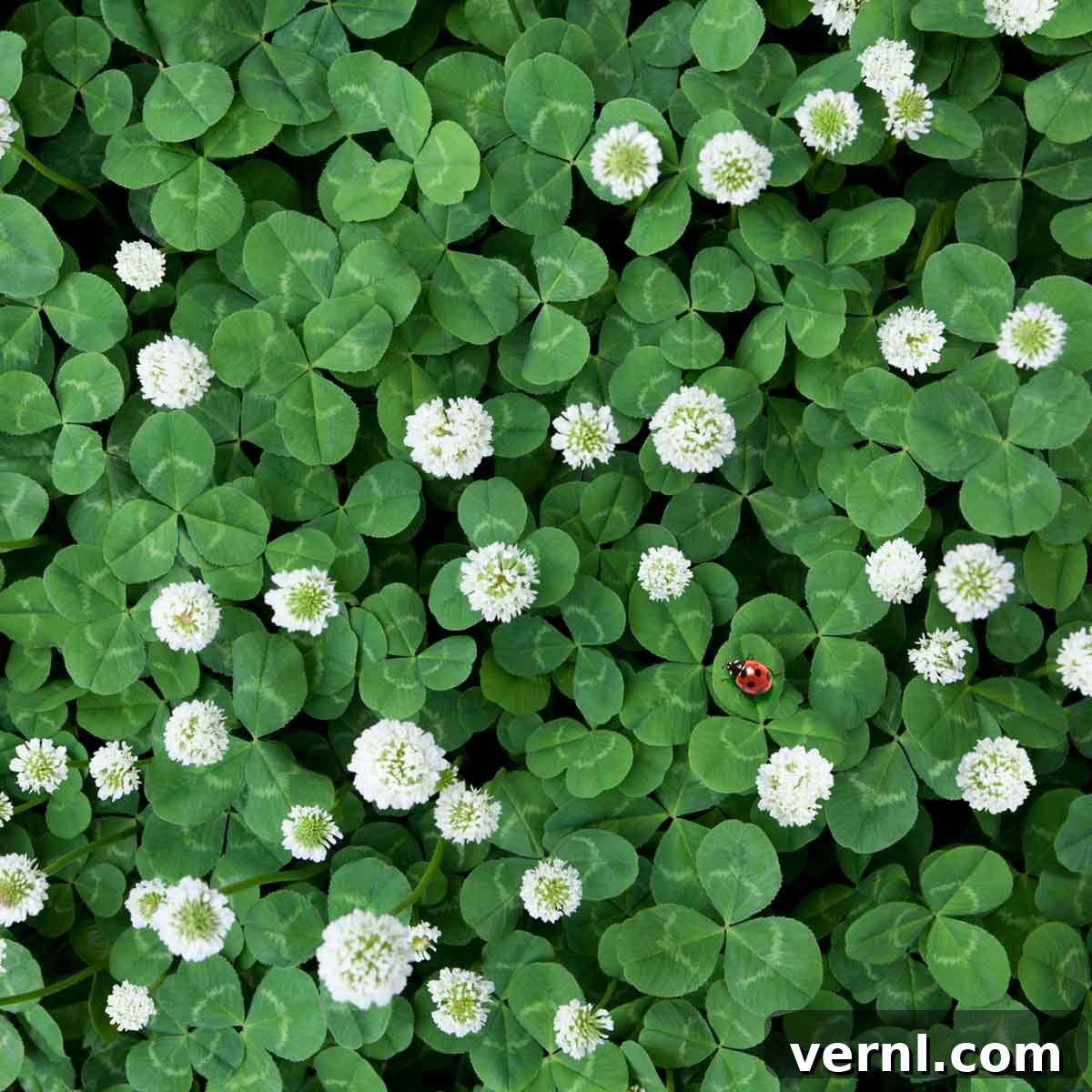
Clover, scientifically known as Trifolium, is a fascinating flowering plant characterized by its distinctive three small leaves. While the elusive four-leaf clover is a symbol of luck, the three-leaf varieties are far more common and serve as the backbone of a vibrant clover lawn. With over 300 different species existing worldwide, clover is incredibly diverse.
Historically, clover was often dismissed as a mere weed, an unwelcome guest in pristine grass lawns. Yet, it is actually a member of the legume family, a botanical classification that also includes familiar crops like beans, peas, and peanuts. What sets legumes apart, and makes clover particularly special for lawns, is their unique ability to form a symbiotic relationship with nitrogen-fixing bacteria in the soil. This natural process allows clover to convert atmospheric nitrogen into a usable form, essentially fertilizing itself and enriching the surrounding soil. Today, a rapidly increasing number of homeowners are purposefully cultivating clover grass lawns, either as a pure clover stand or thoughtfully integrated into a mix with traditional turf grass.
Why the Resurgence? Unpacking the Benefits of Clover Grass
The return of clover to our lawns is not just a trend; it’s a testament to its practical and environmental advantages. Homeowners are discovering that embracing clover can lead to a healthier yard, a lighter workload, and a happier planet. Here’s an in-depth look at the compelling pros of choosing clover for your lawn:
-
Remarkable Water Conservation and Drought Tolerance
In an era of increasing water scarcity and rising utility bills, clover stands out. It naturally requires significantly less watering than most traditional turf grasses. Its deep root system allows it to tap into moisture reserves deeper in the soil, making it exceptionally drought-tolerant. This means your lawn will stay green and vibrant even during dry spells, without the need for constant irrigation, saving precious water resources and reducing your environmental footprint.
-
Minimal Mowing Requirements
Imagine spending less time pushing a mower under the hot sun. Clover only grows two to eight inches tall, depending on the variety, and maintains a neat appearance without frequent trimming. This low growth habit means you can significantly reduce or even eliminate mowing, saving you time, effort, and fuel costs, while still enjoying a tidy lawn.
-
Natural Soil Fertilization: A Game Changer
One of clover’s most powerful attributes is its ability to create its own nitrogen through a process called nitrogen fixation. This natural fertilizing capability means your clover lawn will thrive without the need for synthetic chemical fertilizers. This not only saves you money but also prevents harmful chemical runoff into waterways, promoting a healthier local ecosystem and improving the overall health of your soil naturally.
-
Enhanced Soil Health and Structure
Beyond providing nitrogen, clover actively improves the health and structure of your soil. Its extensive root system helps to aerate compacted soil, enhancing water penetration and nutrient absorption. As clover leaves and stems decompose, they contribute organic matter, which further enriches the soil, making it a more hospitable environment for all plant life, whether it’s pure clover or a mix with grass.
-
Superior Weed Suppression
Tired of battling stubborn weeds? Clover offers a natural solution. Its dense growth habit and broad leaves effectively crowd out undesirable weeds, leaving little room for them to establish and flourish. This natural weed control means you can significantly reduce or entirely eliminate the need for harsh chemical herbicides, fostering a safer environment for children, pets, and beneficial wildlife.
-
Adaptability to Diverse Soil Conditions
Unlike many demanding grass species, clover is incredibly resilient. It can grow well and establish itself quickly in a wide range of soil types, including those considered poor-quality or less fertile. This adaptability makes it an excellent choice for challenging areas where traditional grass struggles to thrive, offering a reliable green cover with minimal fuss.
-
Rapid Establishment and Growth
When you plant clover seeds, you won’t have to wait long to see results. Clover takes root and establishes itself relatively quickly, providing a visible green carpet in a short amount of time. This fast growth is particularly appealing for new lawns or for overseeding existing ones to achieve a fuller, healthier look sooner.
-
Soft, Cool, and Inviting Underfoot
Beyond its ecological benefits, a clover lawn offers a delightful sensory experience. It feels remarkably soft and cool underfoot, making it a pleasant surface for walking barefoot or for children to play on. Its lush texture and vibrant green color create an inviting and comfortable outdoor space.
-
Cost-Effective Landscaping Solution
From initial planting to ongoing maintenance, clover offers significant cost savings. Clover seeds are typically inexpensive, with costs often around $4 per 4,000 sq. ft., making it an affordable option for covering large areas. Coupled with reduced expenses for water, fertilizer, and herbicides, a clover lawn proves to be an economically smart choice over its lifespan.
-
Pet-Friendly and Stain Resistant
Pet owners rejoice! Clover lawns are highly resistant to the browning and yellowing caused by pet urine, a common problem with traditional grass. This means fewer unsightly spots and a consistently green lawn, making it an excellent choice for homes with furry friends.
-
Natural Resistance to Pests and Diseases
Clover is generally a robust plant, displaying strong resistance to common lawn diseases such as blight and mildew damage. Its natural vigor contributes to a healthier lawn that requires less intervention and fewer chemical treatments to keep it looking its best.
-
Support for Local Ecosystems: Attracting Pollinators
One of the most celebrated ecological benefits of clover is its role in supporting biodiversity. Its small, attractive flowers are a magnet for bees, butterflies, and other beneficial insects, which are crucial for pollinating nearby plants and maintaining a healthy garden ecosystem. For those concerned about bee activity, specifically cultivated microclover varieties are available that bloom less or have smaller, less noticeable flowers, making them less attractive to bees. Alternatively, mowing your clover lawn periodically when it blooms can also manage bee visits.
Considering the Downsides: Potential Cons of Clover Grass
While the advantages of clover are numerous, it’s also important to understand its potential drawbacks to make an informed decision for your landscape. No plant is perfect for every situation, and clover has its specific characteristics that may not align with all preferences:
-
Shorter Perennial Lifespan and Potential Reseeding
Clover is a short-lived perennial, meaning individual plants typically live for two to three years. If your lawn is composed entirely of clover, you may find that it requires reseeding every couple of years to maintain its density and coverage. While not overly burdensome, it is a consideration for long-term maintenance, particularly compared to some longer-lived turf grasses.
-
Higher Potential for Staining Clothes
Clover, especially when wet or crushed, can be more prone to staining clothing than traditional grass. Its chlorophyll-rich leaves can leave green marks on fabric, which might be a concern for active children or for those who frequently sit or lie on the lawn.
-
Lower Tolerance for Heavy Foot Traffic
Compared to robust, high-traffic turf grasses, clover doesn’t hold up as well under constant, heavy foot traffic. Areas that experience frequent trampling may show wear and tear more quickly. For high-traffic pathways or play areas, a mix of clover and more resilient grass varieties, or alternative hardscaping solutions, might be a more suitable approach.
-
Impact on Home Resale Value (Evolving Perceptions)
While attitudes are shifting, traditional turf grass remains the conventional expectation for many homebuyers. A pure clover lawn, or even a mixed one, might still be perceived negatively by some potential buyers, potentially impacting your home’s resale value in certain markets. However, as awareness of sustainable landscaping grows, this perception is likely to evolve.
-
Attraction of Pollinators (A Double-Edged Sword)
As mentioned in the pros, clover flowers attract bees and other pollinators. While this is a significant ecological benefit, it can be a concern for individuals with bee allergies or for households with young children playing barefoot. Mitigation strategies, such as opting for microclover or mowing during peak bloom, can help manage this, but it remains a consideration for some.
Cultivating Your Green Oasis: How to Build a Clover Lawn
Creating a beautiful and beneficial clover lawn is a straightforward process that can transform your outdoor space. Follow these steps to establish a thriving clover patch:
-
Selecting the Right Clover Variety
The first crucial step is to choose a clover variety best suited for your climate and desired aesthetic. Popular choices include low-growing and incredibly hardy white clover (Trifolium repens), which is excellent for blending with grass and tolerates moderate traffic. Pollinator-friendly strawberry clover (Trifolium fragiferum) offers charming pink blooms. For a truly discreet and uniform look, consider the newer small-leaf microclover, which blends almost seamlessly with lawn grasses and has a reduced flowering habit. Research local varieties that perform well in your specific region.
-
Preparing Your Lawn for Seeding
Proper preparation is key to successful establishment. Begin by mowing your existing lawn to its lowest possible setting. This reduces competition for sunlight and nutrients. Next, use a thatch rake or a dethatching machine to remove any accumulated thatch and thin out the lawn. This step creates better seed-to-soil contact, which is essential for germination. For optimal results, consider aerating your lawn to improve soil structure and further aid seed establishment.
-
Spreading the Clover Seed Evenly
Once your lawn is prepared, it’s time to sow the seeds. For smaller areas, you can effectively spread the clover seed by hand, ensuring even distribution. For larger lawns, a broadcast spreader is highly recommended for consistent coverage. Tools like the Agri-Fab Push Broadcast Spreader make the task much easier and more efficient. If you’re overseeding an existing grass lawn, consider mixing clover seeds with sand or fine soil to help with even dispersal and prevent clumping.
-
Post-Seeding Care: The Establishment Phase
The first two weeks after seeding are critical for clover establishment. Your newly seeded lawn will need consistent moisture to encourage germination and root development. Water daily, or even twice a day in very dry conditions, if there isn’t natural rainfall. Keep the top inch of soil consistently moist but not waterlogged. You can typically expect to see the first delicate sprouts emerge in about one week, a rewarding sign that your clover lawn is taking root.
Maintaining Your Flourishing Clover Lawn
One of the primary appeals of clover is its low-maintenance nature. However, a few simple practices will ensure your clover lawn remains healthy and vibrant:
-
Watering
Once established, clover is remarkably drought-tolerant and requires far less water than traditional grass. Water deeply but infrequently, allowing the soil to dry out slightly between waterings. This encourages deeper root growth and enhances drought resistance. During prolonged dry spells, occasional deep watering will keep your clover looking its best.
-
Mowing
While clover tolerates mowing, it often doesn’t need it. If you prefer a very tidy look or want to manage flowering (and thus bee activity), you can mow your clover lawn every few weeks to a height of about 2-3 inches. This infrequent mowing is still a significant reduction compared to weekly grass mowing.
-
Weed Control
Clover’s dense growth habit naturally suppresses most weeds. If stubborn weeds do appear, particularly during the establishment phase, manual removal is often the best approach for small patches. Avoid broadleaf herbicides, as they will likely harm your clover as well.
-
Reseeding
As a short-lived perennial, pure clover lawns may benefit from overseeding every 2-3 years to maintain density, especially in areas with heavy wear or where it has naturally thinned. This simple process involves scattering new seeds over the existing lawn, much like the initial seeding.
-
Fertilization
Thanks to its nitrogen-fixing capabilities, clover rarely, if ever, needs supplemental fertilization. In fact, applying nitrogen-rich fertilizers can favor competing grass species and reduce clover’s presence. Focus on soil health through natural methods if needed.
Addressing Clover as a “Weed”: How to Remove It
For some, despite its many benefits, clover may still be viewed as an undesirable plant that needs to be controlled. If you fall into this category and prefer to rid it from your lawn, several effective steps can be taken:
-
Manual Removal for Small Infestations
If you only have a few scattered patches of clover, hand-pulling is a highly effective and environmentally friendly method. Ensure you pull the entire plant, including its extensive root system, to prevent regrowth. This is best done when the soil is moist, making extraction easier.
-
Improving Turf Health to Outcompete Clover
Clover often thrives in nutrient-poor or compacted soil where grass struggles. Improving your traditional lawn’s health can naturally suppress clover. This includes aerating your lawn, consistent fertilization (which clover doesn’t necessarily need but grass does), and regular watering to encourage dense grass growth that can outcompete clover for space and sunlight.
-
Targeted Herbicide Application
For more extensive clover spread, a selective broadleaf herbicide can be used. Many products are formulated to kill broadleaf weeds like clover without harming turf grass. Look for products that specifically list clover on their labels. A popular choice is a combined herbicide and fertilizer such as Scotts Turf Builder Triple Action. This type of product serves a dual purpose: it effectively kills the clover while simultaneously feeding and fertilizing your lawn, encouraging the grass to grow in thick and strong enough to crowd out any future clover growth. Always follow product instructions carefully for safe and effective application.
Conclusion: The Future is Green, and It Might Be Clover
The shift towards clover lawns represents more than just a change in aesthetics; it’s a move towards a more sustainable, resilient, and eco-conscious approach to landscaping. From its incredible drought tolerance and natural fertilizing capabilities to its low-maintenance requirements and support for vital pollinators, clover offers a compelling package of benefits that address many of the challenges associated with traditional turf. Whether you choose a pure clover lawn, a microclover blend, or simply incorporate clover into your existing grass, embracing this versatile legume can lead to a healthier, more vibrant, and undeniably greener outdoor space. As we collectively seek ways to lessen our environmental impact and simplify our lives, the humble clover stands ready to reclaim its rightful place in our yards, offering a beautiful, beneficial, and effortlessly green solution.