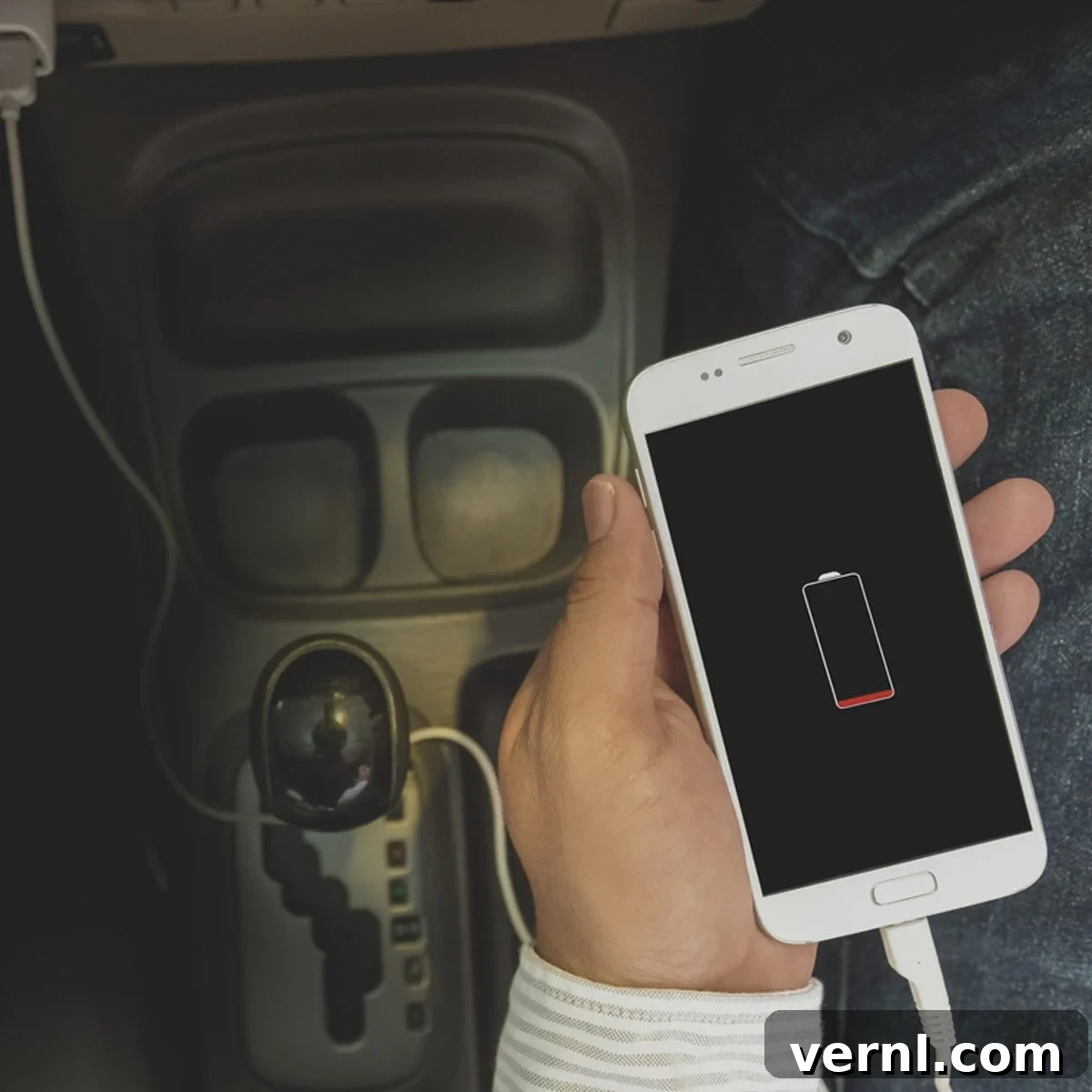
In our increasingly connected world, the sight of a smartphone’s battery dipping into the red zone can trigger a mild panic. For many, the daily car commute or a long road trip seems like the ideal opportunity to top up a phone’s charge using the vehicle’s built-in USB port. After all, it’s convenient, readily available, and appears to be a free source of power. However, what initially seems like a simple and efficient solution for battery woes might actually be detrimental to your smartphone’s long-term health, your car’s electrical system, and even your personal safety. While the temptation to plug in is strong, there are several compelling reasons to reconsider relying solely on your car’s native charging capabilities for your mobile devices.
This article will delve into the often-overlooked aspects of in-car phone charging, exploring why this common practice warrants caution. From the fundamental inefficiencies of many vehicle USB ports and the impact of inconsistent power delivery on phone battery health, to the hidden drain on your car’s own battery and the paramount issue of distracted driving, we’ll uncover the potential pitfalls. Understanding these nuances can empower you to make more informed decisions about how and when to charge your smartphone, ensuring both its longevity and your peace of mind on the road.
The Inefficiency and Insufficiency of Your Car’s USB Port
One of the primary reasons to think twice about plugging your smartphone directly into your car’s built-in USB port is the simple fact that it often doesn’t provide enough power. Modern smartphones are sophisticated, power-hungry devices, designed to draw significant amperage and wattage for efficient charging, especially with the prevalence of fast-charging technologies. Unfortunately, many vehicle USB ports, particularly those in older car models, were not engineered with these contemporary demands in mind.
“A lot of those ports just don’t provide enough power,” explains Alex Black, Chief Marketing Officer at EpicVIN, an expert in vehicle history. “You might notice it’s struggling to keep up, especially if you’re using GPS navigation or listening to streamed music simultaneously.” Most older car USB ports conform to older USB standards like USB 1.0 or 2.0, which typically deliver a mere 0.5 amps (500mA) or, at best, 1 amp of current. In stark contrast, many contemporary smartphones require 2.1 amps, 2.4 amps, or even higher for optimal charging speeds and effective power transfer. If your phone is concurrently running power-intensive applications such as navigation, Bluetooth connectivity, or streaming media, the minimal power supplied by an underpowered car USB port might barely maintain its current charge level, or worse, cause it to slowly drain even while supposedly “charging.”
Brad Nichols, a seasoned technician at Staymobile, reinforces this point, observing, “Many people may notice that on their drive home from work their phone charged very little (if at all) during their 30 to 60 minute commute. This is mostly due to the fact that the phone is using more power than the car charger is supplying it.” This frustrating scenario means you might spend valuable commuting time with your phone plugged in, only to discover your battery level has barely budged, effectively negating the entire purpose of attempting to charge it in the first place. For optimal performance and battery health, your smartphone requires a consistent and adequate power supply, which standard car USB ports frequently fail to provide.
Impact on Smartphone Battery Health and Lifespan
Beyond the inconvenience of slow charging, the inconsistent and often insufficient power delivery from car USB ports can have a detrimental effect on your smartphone’s battery health over time. While the archaic concept of a “charging memory” for modern lithium-ion batteries is largely a myth, it remains true that these advanced batteries perform best with consistent, optimized charging cycles rather than frequent, brief, and underpowered boosts. Such inconsistent power input can contribute to accelerated battery degradation and reduced overall lifespan.
Chris “Moose” Pyle, a master-certified automotive technician with over two decades of experience and an expert with JustAnswer, issues a clear warning: “Charging it briefly for 10 to 15 minutes can eventually result in premature battery failure.” Modern smartphone batteries are engineered to perform efficiently within specific charging parameters, often optimized for full or near-full cycles rather than constant, brief topping-off with insufficient power. When a phone continuously struggles to charge due to low power input, it can lead to increased internal resistance within the battery and elevated heat generation, both of which are significant contributors to battery degradation. This perpetual struggle to maintain or gain charge can stress the battery, diminishing its maximum capacity and overall lifespan prematurely.
Furthermore, the physical integrity of your car’s USB ports themselves is a concern. Pyle adds, “USB port terminal pins fail very often, so if you keep plugging something in and unplugging it or tugging on the connector, the USB will eventually fail and have to be replaced.” The constant mechanical stress from daily plugging and unplugging, exacerbated by the inevitable jostling and movement within a vehicle, can lead to loose connections, bent pins, or outright damage to the port. A compromised USB port not only becomes useless for charging but can also potentially cause intermittent short circuits or even damage to the connected device.
The Risks of Excessive or Unregulated Power from 12V Sockets
While standard car USB ports often under-deliver, utilizing the traditional 12V “cigarette lighter” socket with an adapter introduces a different set of challenges, predominantly related to the potential for excessive or inconsistent power delivery. Although many newer car models have phased out actual cigarette lighters, most vehicles still come equipped with one or two of these versatile 12V accessory sockets. These sockets are designed to supply a much higher current—often up to ten amps—compared to the mere one to three amps typically required by most smartphone chargers.
The inherent danger here lies not in the 12V socket itself, but rather in the quality and regulatory mechanisms of the car charger adapter you choose to use. A cheap, uncertified, or malfunctioning car charger adapter plugged into a 12V socket can fail to properly regulate the high current available from the car, leading to sudden and damaging power spikes or surges. As Nichols highlights, your phone could receive too much power, especially when using low-quality or generic adapters that lack robust overcurrent and overvoltage protection.
Such unregulated and inconsistent power delivery can have severe consequences for your smartphone. It can cause the device to overheat significantly, which is a major enemy of battery health and internal electronic components. In rare but serious instances, these power surges can inflict permanent damage to the phone’s delicate charging circuitry, render the device completely inoperable, or even lead to internal short circuits and pose a minor risk of fire. It is absolutely crucial to invest in high-quality, reputable 12V USB adapters that incorporate proper voltage and current regulation, along with essential safety features, to protect your valuable electronic devices from irreparable harm.
The Hidden Drain on Your Car’s Battery
Beyond the potential harm to your phone, charging your device in the car can also place an unexpected burden on your vehicle’s own battery. This is particularly true if you are charging your smartphone while the car’s engine is off, even if the vehicle is in “accessory” mode. In accessory mode, systems like the radio, interior lights, and 12V sockets are active, but the engine’s alternator—which is responsible for generating electricity and recharging the car battery—is not running. Consequently, any power drawn by your phone charger comes directly from your car’s 12V battery.
While charging a single smartphone might seem like a negligible drain, especially for a short period, the cumulative effect can be significant. Nichols points out that while this might not be a major concern for newer cars equipped with healthy, robust batteries, it can become a serious problem for older vehicles that have aging or weaker batteries. An older car battery might already be operating at reduced capacity due to age and wear, and even a relatively minor continuous draw for phone charging can push it over the edge. This risk is amplified in cold weather conditions, which inherently reduce battery performance.
The last thing any driver wants is to return to their car after a brief stop or an extended period in accessory mode, only to find a completely dead battery that prevents the engine from starting. This inconvenient scenario often goes unnoticed until it’s too late, potentially leaving you stranded and in need of a jump start or roadside assistance. To prevent this, it’s advisable to avoid charging devices when the engine is off, especially if your car battery is showing signs of age or weakness.
Safety First: Distracted Driving Is Dangerous Driving
Perhaps the most critical reason to exercise extreme caution when dealing with smartphone charging in your vehicle has nothing to do with electronics or battery health, but everything to do with personal and public safety. Using your phone for any purpose—including plugging it in, checking its charging status, or interacting with it—while operating a vehicle is a significant source of distraction and dramatically increases the risk of serious accidents.
Nichols emphatically states, “Anytime a person’s hands leave the wheel or eyes leave the road, it becomes incredibly dangerous for them and the other people around them.” Distracted driving can manifest in several dangerous ways: visually (taking your eyes off the road), manually (taking your hands off the wheel), and cognitively (taking your mind off the task of driving). The seemingly simple act of plugging in a charger or glancing at your device to check its battery status often combines all three forms of distraction, even if only for a few fleeting seconds. These brief moments of inattention can have catastrophic consequences, as a car traveling at highway speeds can cover a significant distance in just a few seconds, making an accident almost unavoidable if an unexpected event or obstacle appears.
Many jurisdictions worldwide have implemented strict laws and penalties against handheld device use while driving, precisely because of these undeniable risks. The perceived convenience of having a fully charged phone is simply not worth the immense risk to your own life, the lives of your passengers, and the lives of other innocent road users. The safest and most responsible practice is to ensure your phone is adequately charged before you embark on your journey, or to wait until you have safely reached your destination and parked your vehicle to plug it in and interact with it.
Optimizing In-Car Charging: Best Practices and Alternatives
Given the potential drawbacks of relying on built-in car USB ports and the risks associated with improper charging, what are the most effective and safest ways to keep your devices powered up on the road? The key lies in investing in quality alternatives and adopting smart, mindful charging habits.
High-Quality 12V Car Chargers
Instead of the car’s native USB port, consider purchasing a high-quality car charger that plugs into your vehicle’s 12V accessory socket. Look specifically for chargers that explicitly support modern fast-charging standards such as USB Power Delivery (USB-PD) or Qualcomm Quick Charge (QC 3.0/4.0). These advanced adapters are meticulously designed to safely convert your car’s 12V power into the precise voltage and amperage your smartphone needs for efficient and rapid charging, often matching or even exceeding the speed of your standard wall charger.
- USB-C PD: This is the ideal standard for newer iPhones, most modern Android phones, and even some smaller laptops or tablets, offering robust and fast power delivery.
- Quick Charge: Primarily designed for Android devices, Quick Charge technology provides significantly faster charging capabilities compared to conventional USB ports.
- Multiple Ports: Many reputable adapters offer multiple USB ports (both Type-A and the newer Type-C) to allow you to charge several devices simultaneously without compromising speed or safety.
Always opt for car chargers from well-known, reputable brands that comply with recognized safety standards. Cheap, unbranded, or generic chargers are far more likely to malfunction, deliver inconsistent power, and pose a higher risk to your device and potentially your vehicle’s electrical system.
Portable Power Banks
For ultimate flexibility and to completely decouple your phone charging from your car’s electrical system, a high-capacity portable power bank is an excellent and highly recommended solution. You can fully charge the power bank at home before your journey and then use it to charge your phone multiple times while on the go, without affecting your car’s battery or relying on its potentially inadequate ports. Many modern power banks also support various fast-charging protocols, making them a versatile, safe, and independent option for long journeys, camping trips, or any situation where consistent power is uncertain.
Wireless Car Chargers (with Important Caveats)
Wireless car chargers, often designed to mount to your dashboard or air vent, offer unparalleled convenience by eliminating the need for fumbling with cables. However, they come with their own set of considerations that users should be aware of:
- Efficiency: Wireless charging is generally less efficient than wired charging, meaning a greater proportion of energy is lost as heat during the transfer process. This can lead to slower charging speeds compared to a high-quality wired connection.
- Heat Management: As Chris “Moose” Pyle sagely advises, “Charging the battery does make the phone hotter, so make sure not to place it on the dash in the sunlight, or it can shut down and need to cool off before it becomes active again.” Ensuring your wireless charger has good ventilation and avoiding direct sunlight exposure is crucial to prevent overheating, which is highly detrimental to battery longevity and device performance.
- Power Source: Even wireless chargers require a power source, typically through a USB port or a 12V adapter. It’s vital to ensure that this underlying power source can provide sufficient amperage and wattage to enable effective and reasonably fast wireless charging. An underpowered source will result in very slow or ineffective wireless charging.
General Charging Tips for Device Longevity
- Charge Before You Go: The simplest and most stress-free solution is to ensure your phone is fully charged before you even step into your car.
- Avoid Deep Discharges: Try not to let your phone’s battery consistently drop below 20% before initiating a charge cycle, as frequent deep discharges can reduce overall battery lifespan.
- Monitor Temperature: Extreme heat (from direct sunlight, poor ventilation, or intensive use while charging) is a major enemy of battery life. If your phone feels excessively warm to the touch, disconnect it and allow it to cool down before resuming charging.
- Use Original or Certified Cables: A high-quality car charger is only as good as the cable connecting it to your device. Always use the original cable that came with your phone or a certified, high-quality third-party cable to ensure efficient and safe power delivery.
Frequently Asked Questions About Car Phone Charging
What should I do if my car’s USB port isn’t working?
If you find that your car’s built-in USB port is no longer charging your phone, the first and most common culprit to investigate is the charging cable itself. “Half of the time that is what is wrong,” confirms Alex Black. USB cables endure significant wear and tear; they can fray, develop internal breaks, or simply lose their conductive efficiency over time. Try using a brand-new, high-quality cable with the port. If a new cable doesn’t resolve the issue, the next step is to check your car’s fuses. A blown fuse can cut power to the USB port. Consult your car’s owner’s manual for the precise location of the fuse box and specific instructions on how to identify, check, and safely replace relevant fuses. If the problem persists after meticulously checking both cables and fuses, the USB port unit itself might be faulty or disconnected internally, and would then require professional inspection or replacement by a qualified auto technician.
Do I need a special charger for fast charging in my car?
Yes, for true fast charging capabilities that match modern smartphone speeds, you will almost certainly need a specialized car charger. Whether your car supports fast charging directly depends on its integrated ports. Some newer vehicles are indeed equipped with advanced USB-C Power Delivery (PD) or Qualcomm Quick Charge ports built into the dashboard or console. However, if your car doesn’t offer these high-speed ports natively, you can easily purchase a high-quality 12V adapter specifically designed with one of these fast-charging technologies. These adapters are engineered to efficiently convert your car’s 12V power into the specific high-wattage output required for rapidly charging your smartphone. To ensure optimal results and avoid potential damage, always verify that the adapter’s fast-charging specifications (e.g., PD 3.0, QC 4.0) are compatible with your phone’s fast-charging capabilities.
Is it safe to leave a car charger plugged into the 12V socket all the time?
Most modern, reputable car chargers are designed with intelligent circuitry that allows them to be left plugged into the 12V socket without significant issues. They typically draw a very small, negligible amount of “standby” power when not actively charging a device, usually insufficient to drain a healthy car battery overnight or even over several days. However, there are nuances to consider: if your car has an older, weaker, or less reliable battery, or if you anticipate leaving your vehicle parked for an extended period (e.g., weeks or months), it might be prudent to unplug the charger to eliminate any potential parasitic drain, no matter how minute. Additionally, if you are using a cheap, uncertified, or generic charger, it might not adhere to strict power draw standards, potentially having a higher standby consumption or even posing a slight risk of overheating. In such cases, it’s always best to err on the side of caution and remove it when not in use.
Can extreme temperatures affect car charging and phone battery health?
Absolutely, extreme temperatures, both hot and cold, can significantly impact charging efficiency and severely compromise your phone’s battery health. As Chris “Moose” Pyle aptly cautions, “Charging the battery does make the phone hotter, so make sure not to place it on the dash in the sunlight, or it can shut down and need to cool off before it becomes active again.” High temperatures, particularly direct sunlight exposure on the dashboard, can cause your phone to overheat excessively. This overheating not only leads to significantly slower charging speeds but can also cause irreversible damage to the battery’s internal chemistry, reducing its capacity and lifespan. In severe cases, your phone may even trigger a complete shutdown as a safety measure to prevent damage. Conversely, very cold temperatures can also temporarily reduce charging efficiency and markedly decrease the battery’s apparent capacity. For optimal battery health and charging performance, always charge your phone in a cool, shaded area within the car, ensuring good air circulation and avoiding direct exposure to extreme heat or cold.
About the Experts
- Alex Black is the Chief Marketing Officer at EpicVIN. With over 15 years of extensive automotive expertise, he has garnered invaluable experience working across various sectors of the car industry, including car auctions, vehicle history providers, and automotive technology firms. His profound insights are instrumental in understanding complex vehicle performance and technological advancements.
- Chris “Moose” Pyle is a highly respected master-certified automotive technician boasting more than two decades of hands-on experience in the automotive repair and service industry. Since 2006, he has also served as a trusted expert for JustAnswer, the leading expert-on-demand platform, where he consistently provides reliable diagnostic solutions and in-depth technical advice to a vast user base.
In conclusion, while the immediate convenience of charging your phone in the car is undeniable, it’s essential to be thoroughly aware of the potential drawbacks and risks involved. Prioritizing your smartphone’s long-term device health, ensuring the longevity of your car battery, and, most importantly, upholding paramount road safety, should collectively guide your charging choices. By understanding the inherent limitations of standard built-in car USB ports and thoughtfully investing in appropriate, high-quality, and certified charging solutions, you can effectively keep your mobile devices powered up efficiently and safely, thereby ensuring a smooth, connected, and worry-free journey every time you hit the road.