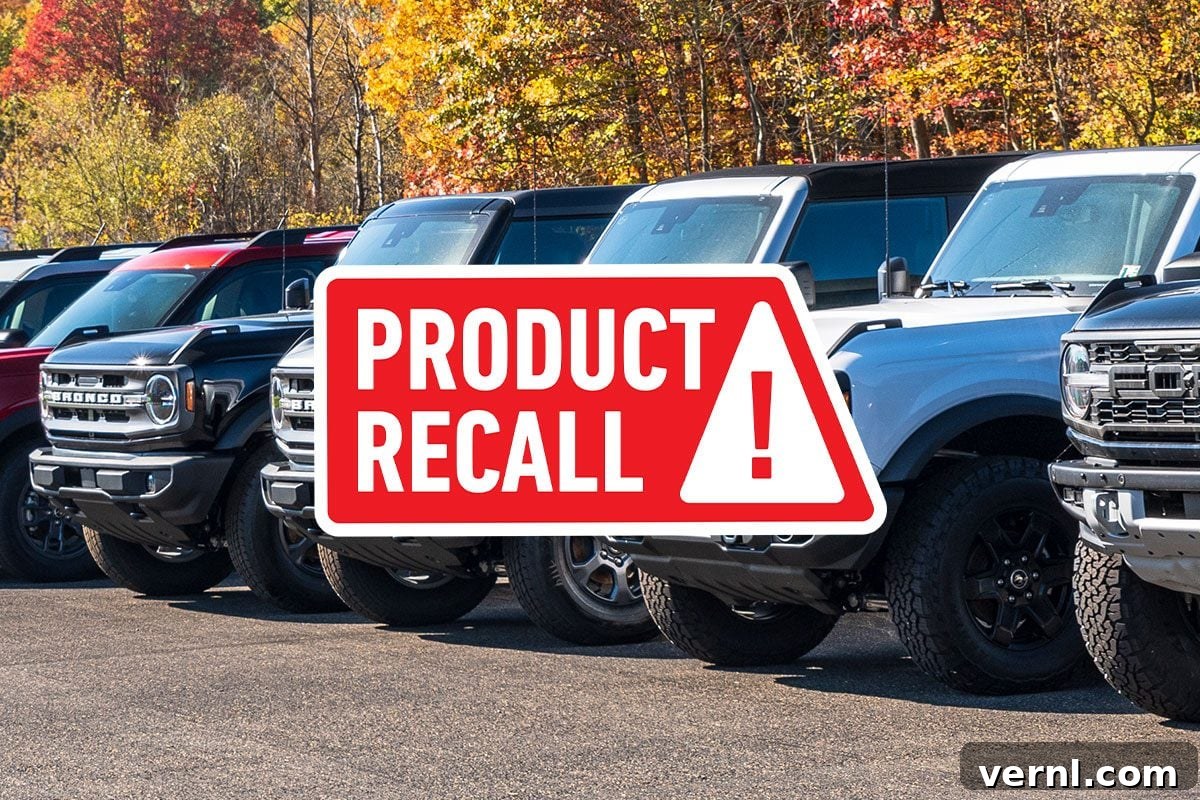
Ford Motor Company, a colossal name in the automotive industry, has millions of vehicles traversing American roads daily. Given this immense volume, it’s not uncommon for the automaker to issue Ford recalls to ensure the safety and reliability of its fleet. However, the latest recall, impacting nearly a million vehicles, demands immediate attention due to a potentially critical fuel pump defect. This widespread issue raises serious safety concerns, prompting authorities and Ford itself to warn affected owners about the inherent dangers of driving these vehicles.
The National Highway Traffic Safety Administration (NHTSA) recently highlighted the severity of this defect in a public brief. The issue is sufficiently hazardous to necessitate an urgent recall, yet a definitive repair solution from Ford is still under development. Therefore, if your vehicle is identified as one of the faulty units, it is strongly advised to significantly reduce its use until Ford announces and implements an approved remedy. Prioritizing safety over convenience is paramount in this situation.
Understanding the Critical Ford Fuel Pump Recall: Why So Many Vehicles Are Affected
At the heart of this extensive recall is a critical mechanical failure: the low-pressure fuel pump. According to the detailed brief released by the NHTSA, Ford is recalling a staggering number of vehicles—over 850,000 units—because “the low-pressure fuel pump may fail.” This isn’t merely an inconvenience; it’s a significant safety hazard. The fuel pump is a vital component in your vehicle’s engine system, responsible for delivering fuel from the tank to the engine at the appropriate pressure. A malfunctioning or failing fuel pump can disrupt this crucial flow, leading to severe operational problems.
The most alarming consequence of a low-pressure fuel pump failure, as articulated by the NHTSA, is the potential for “an engine stall while driving.” Imagine navigating busy highways, navigating complex intersections, or simply cruising at speed, only for your engine to unexpectedly cut out. An engine stall in such scenarios is far more than just a momentary inconvenience. Unlike a stall that might occur when you’re attempting to start your vehicle, an engine stall mid-drive can lead to a sudden and complete loss of critical functions, including power steering and power braking. This immediate loss of control drastically “increases the risk of a crash,” potentially endangering not only the driver and passengers but also other motorists on the road.
The implications of an unexpected engine stall are profound. Drivers may struggle to steer the vehicle effectively or apply sufficient braking force, especially if caught off guard in heavy traffic or at high speeds. This creates a terrifying and dangerous situation where the driver’s ability to avoid obstacles or maintain control is severely compromised. Given the gravity of these potential outcomes, Ford and safety regulators are urging owners of affected vehicles to take the recall seriously. It is a stark reminder of how a seemingly minor component failure can escalate into a life-threatening scenario.
Identifying Affected Models: Which Ford and Lincoln Vehicles are Included?
The scope of this particular Ford recall is notably broad, encompassing a wide range of popular models across different segments, from rugged trucks and SUVs to luxury vehicles and even a beloved sports car. Ford has confirmed that over 850,000 vehicles are part of this safety campaign. This extensive list underscores the widespread nature of the manufacturing defect and highlights the importance for a vast number of owners to check if their vehicle is impacted. The affected model years are primarily 2021, 2022, and 2023, reflecting recent production batches.
Owners of the following Ford and Lincoln models should pay close attention:
- Ford Bronco: 2021, 2022, 2023 models
- Ford Explorer: 2021, 2022, 2023 models
- Lincoln Aviator: 2021, 2022, 2023 models
- Ford F-250 Super Duty: 2021, 2022, 2023 models
- Ford F-350 Super Duty: 2021, 2022, 2023 models
- Ford F-450 Super Duty: 2021, 2022, 2023 models
- Ford F-550 Super Duty: 2021, 2022, 2023 models
- Lincoln Navigator: 2021, 2022 models
- Ford Mustang: 2021, 2022 models
- Ford F-150: 2021, 2022 models
- Ford Expedition: 2022 model
This comprehensive list means that a significant portion of Ford’s recent production across its most popular and highest-selling lines is under scrutiny. Whether you own a family-friendly Explorer, a robust F-Series pickup truck, an adventurous Bronco, or a luxurious Lincoln Aviator, it is crucial to verify your vehicle’s status. The sheer diversity of models involved emphasizes that this is not an isolated incident affecting a niche product but a systemic issue impacting a large segment of Ford’s vehicle offerings. Owners are encouraged to use their vehicle identification number (VIN) to check the NHTSA recall website or contact Ford directly to confirm if their specific vehicle is part of this urgent recall.
What Should Affected Owners Do? Steps and Precautions
The immediate safety warning from both Ford and the NHTSA is unequivocal: if your vehicle is affected by this fuel pump defect, it is strongly advised to minimize its use. The inherent risk of an engine stall while driving presents a clear and present danger to occupants and others on the road. Until a permanent solution is developed and implemented, exercising extreme caution is the only responsible course of action. This means avoiding long trips, high-speed driving, or situations where an unexpected stall could be particularly hazardous, such as heavy traffic or adverse weather conditions.
Here are crucial steps affected vehicle owners should take:
- Verify Your Vehicle’s Status: The first and most important step is to confirm if your specific vehicle is included in the recall. You can easily do this by visiting the NHTSA recalls website and entering your 17-character Vehicle Identification Number (VIN). Alternatively, you can visit Ford’s official recall website or contact a local Ford or Lincoln dealership for assistance.
- Minimize Driving: If your vehicle is affected, heed the warning to minimize driving. This might involve arranging for alternative transportation, carpooling, or utilizing public transport until the repair is available. The inconvenience is temporary, but the risk of an accident is not.
- Stay Informed: Keep an eye out for official communications from Ford. The company will be sending out letters to affected owners with updates on the remedy and repair schedule. Ensure your contact information with Ford is up to date.
- Prepare for the Repair: Once a remedy is announced, contact your local Ford or Lincoln dealership promptly to schedule an appointment. Due to the high number of affected vehicles, there might be a waiting period, so acting quickly is advisable.
- Report Issues: If you experience any symptoms related to a failing fuel pump (such as engine sputtering, difficulty starting, or unexpected stalls) before the remedy is available, report them immediately to your dealership and, if appropriate, to the NHTSA.
Remember, prioritizing your safety and the safety of others is paramount. While waiting for a solution can be frustrating, the potential consequences of ignoring this recall are severe. Ford is actively working on a fix, and staying informed and proactive will ensure you can address the issue as soon as a resolution is available.
The Recall Process: Ford’s Solution and Timeline for the Fuel Pump Defect
As previously mentioned, Ford has openly communicated that “the remedy is under development.” This means that while the problem has been identified and the recall issued, engineers are still working to devise a definitive and effective repair strategy. Developing a reliable fix for a widespread component failure across nearly a million vehicles is a complex process, involving rigorous testing and validation to ensure the solution is robust and lasting. This development phase is critical to prevent future recurrences and guarantee customer safety.
Ford has outlined its communication plan for affected owners. Initial owner notification letters are anticipated to be mailed out in mid-July 2025. These first letters will serve to inform owners about the recall, the nature of the defect, and the advisory to minimize vehicle use. Once Ford has successfully developed and thoroughly tested an appropriate repair plan, follow-up letters will be dispatched. These subsequent communications will detail the specific repair procedure, instruct owners on how to schedule their vehicle for service at a dealership, and provide any additional necessary information.
For owners with further questions or concerns regarding this recall, Ford has established dedicated customer support channels. You can reach Ford customer service directly at 1-866-436-7332. When contacting Ford or a dealership, it is helpful to reference the specific recall numbers associated with this campaign. Ford’s internal number for this particular recall is 25S75, and the corresponding NHTSA recall number is 25V455000. Providing these numbers will help customer service representatives quickly access information pertaining to this specific issue and assist you more efficiently.
Understanding the typical recall process can help manage expectations. After a defect is discovered, automakers must report it to the NHTSA. If deemed a safety risk, a recall is issued. The development of a remedy often involves engineering teams identifying the root cause, designing new parts or software updates, and then rigorously testing these solutions. This can take weeks or even months, especially for complex mechanical issues affecting a large volume of vehicles. Once a remedy is approved, parts must be manufactured and distributed to dealerships, and technicians must be trained on the repair procedure. This entire sequence explains why there’s often a lag between a recall announcement and the availability of a fix, making owner vigilance and adherence to safety warnings even more vital during the interim period.
The Broader Impact of Vehicle Recalls on Automotive Safety
Vehicle recalls, while often a source of frustration and inconvenience for owners, are a vital component of automotive safety and consumer protection. They represent a manufacturer’s commitment, often under regulatory pressure, to address design flaws, manufacturing defects, or operational issues that could potentially endanger drivers, passengers, and the public. In the United States, the National Highway Traffic Safety Administration (NHTSA) plays a critical role in overseeing these recalls. Its mission is to save lives, prevent injuries, and reduce vehicle-related crashes by setting and enforcing safety standards, investigating defects, and facilitating recall campaigns.
Ford, like any major automaker producing millions of vehicles annually, experiences recalls periodically. This is not necessarily an indictment of the brand but rather an inherent aspect of large-scale manufacturing and the ongoing evolution of automotive technology. The more complex vehicles become, with intricate systems and components, the higher the probability of encountering unforeseen issues in real-world conditions. What truly matters is how effectively and responsibly an automaker responds to these challenges. Ford’s proactive recall of nearly a million vehicles for a critical fuel pump defect, even without an immediate fix, demonstrates a commitment to addressing safety concerns, albeit one that puts owners in a challenging temporary position.
Recalls serve several crucial functions. They remove dangerous vehicles from the road, prevent potential accidents, and ensure that vehicles meet the stringent safety standards set by regulatory bodies. Furthermore, recalls highlight the importance of consumer awareness. Owners are encouraged to regularly check for recalls related to their vehicles, not just when a major announcement is made, as some recalls may be less publicized or affect smaller batches of vehicles. Staying informed through official channels like the NHTSA website or manufacturer portals is key to ensuring ongoing vehicle safety.
Ultimately, the system of vehicle recalls is a testament to the continuous effort to enhance road safety. While no vehicle can ever be entirely free of potential issues, a robust recall process ensures that when problems arise, they are identified, communicated, and rectified to protect everyone on the road. For this specific Ford fuel pump recall, the emphasis remains on safety first, urging affected owners to take immediate precautions and await the official remedy from Ford.
Source
Low Pressure Fuel Pump May Fail, National Highway Traffic Safety Administration, 2025
Related Articles for Vehicle Owners
- Do You Know What That Little Button on Your Seat Belt Is For?
- What Those Lines on Your Backup Camera Really Tell You
- Here’s What The Small Panel On Your Car’s Front Bumper Is For