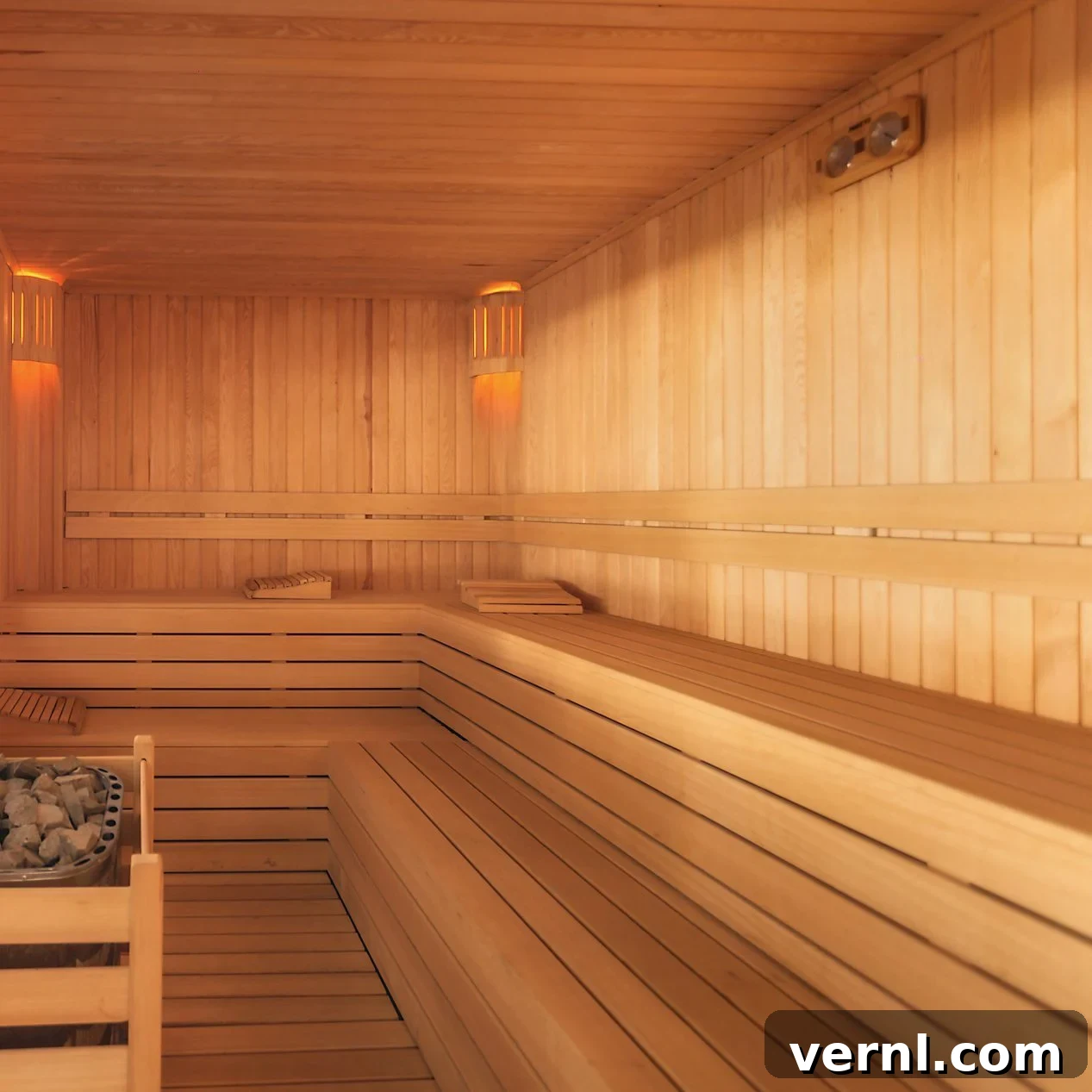
When the word “sauna” is mentioned, many immediately envision Finland, and rightly so. The term itself is of Finnish origin, and the sauna holds a profoundly significant place in Finnish culture and daily life. However, historical records and archaeological evidence suggest that the practice of heat bathing for purification and relaxation spans far beyond the Nordic borders, with similar traditions existing in various cultures across the globe for at least 2,000 years, if not longer.
From the rudimentary earth-dug shelters warmed by burning fires or piles of heated rocks, these early saunas served not only as vital refuges from the biting cold but also evolved into sacred gathering places. Much like the revered sweat lodges of First Nations in North America, these ancient heat baths held deep ceremonial and religious significance, fostering community and spiritual cleansing.
Fast forward to the present day, and the health benefits of saunas are extensively recognized and widely celebrated. The intense yet comfortable heat induces profuse perspiration, a natural process that helps cleanse the skin, open pores, and facilitate the release of toxins from the body. Beyond detoxification, the warmth deeply relaxes stiff muscles, eases joint pain, and significantly reduces stress, ultimately contributing to an overarching sense of well-being and revitalization.
The evolution of the sauna from its primitive origins to the sophisticated systems we know today is a testament to human ingenuity and our enduring desire for improved health. In the late 19th century, the innovative spirit of John Harvey Kellogg led to the invention of an electric sauna. This groundbreaking device utilized light bulbs to generate heat and was proudly showcased at the 1893 Chicago World’s Fair, marking a pivotal moment in sauna technology. Further advancements came in 1938 with the introduction of a sauna featuring a dedicated stove and a resistive heating element. These innovations liberated users from the laborious task of building a traditional fire, making the therapeutic benefits of saunas more accessible and convenient for a global audience.
The late 1970s saw another significant leap forward when a Japanese doctor introduced a new method of delivering heat: infrared lighting. This novel approach allowed for deeper tissue penetration at lower ambient air temperatures. Today, infrared saunas have become as common and popular as their resistive heat counterparts, offering a distinct experience. Despite these technological leaps, a significant number of enthusiasts still cherish and prefer the authentic, robust heat generated by classic wood-fired saunas, honoring a timeless tradition.
What Exactly Is a Dry Sauna? Exploring Different Types
When most people conjure an image of a traditional sauna, they likely picture a dry sauna: a cozy, often cedar-lined room, typically featuring multi-tiered bench seating designed to comfortably accommodate four or more individuals, with a central heater serving as the heat source. In a classic dry sauna, the heating element, often surrounded by rocks, heats the air to high temperatures, usually ranging from 160°F to 200°F (70°C to 95°C). Crucially, no moisture is intentionally added to the air, resulting in a very low relative humidity, typically maintained between a crisp 10 to 20 percent.
However, the concept of a dry sauna has expanded significantly beyond this traditional archetype. Modern innovations offer a variety of dry sauna experiences:
- Traditional Electric Saunas: These are the most common dry saunas found in homes and gyms today. An electric heater warms rocks, which then radiate heat into the room. The air temperature is high, and the humidity remains low unless water is splashed onto the rocks (which then transitions it to a wet sauna experience).
- Infrared Saunas: A distinct category of dry sauna, infrared models operate on a different principle. Instead of heating the air, infrared heaters emit electromagnetic radiation that directly penetrates and warms the body. This allows for effective heat therapy at much lower ambient air temperatures, typically between 120°F and 150°F (49°C to 65°C). Infrared saunas are often smaller, accommodating one or two people, and can even take the form of insulated boxes or pods designed for single-person use, making them ideal for those with limited space.
The appeal of dry saunas, whether traditional or infrared, lies in their ability to provide intense heat that promotes deep relaxation and detoxification without the heavy, often stifling sensation of high humidity. The dry air allows sweat to evaporate quickly, providing a cooling effect and enabling users to tolerate higher temperatures for longer periods, maximizing the therapeutic benefits.
Understanding the Wet Sauna Experience

In contrast to the arid environment of a dry sauna, a wet sauna, sometimes referred to as a Turkish sauna (though distinct from a true hammam), embraces a significantly higher humidity level. While it often retains the classic sauna appearance—a multi-person room beautifully lined with cedar and outfitted with benches built around a central stove—its defining characteristic is the introduction of moisture.
Atop the stove, a generous pile of hot rocks glows. Users engage in an interactive ritual by ladling water from a wooden bucket onto these scorching rocks. This action instantly generates a burst of steam, known as “löyly” in Finnish, which rapidly circulates throughout the entire room. This infusion of steam elevates the relative humidity, creating a more humid and enveloping heat experience. The humidity in a wet sauna can range from 20% to 60%, varying based on how frequently water is added.
It is crucial to clarify that a wet sauna, while humid, is distinctly different from a steam bath or steam room. In a steam bath, an electric generator is specifically designed to create a continuous, dense cloud of steam, resulting in near 100% relative humidity. The air in a steam room is typically saturated to such an extent that visibility can be severely limited, often making it difficult to even discern the walls. Temperatures in steam rooms are also generally lower than in traditional saunas, usually hovering around 110°F to 120°F (43°C to 49°C), because the high humidity makes higher temperatures unbearable. A wet sauna, on the other hand, maintains a balance, offering the invigorating sensation of steam within a still-hot, wood-scented environment, without the complete saturation of a dedicated steam room.
The Fundamental Differences Between Dry Saunas and Wet Saunas
While both dry and wet saunas deliver therapeutic heat, the experience and physiological effects are profoundly shaped by one primary factor: humidity. This distinction creates vastly different sensations and benefits, guiding individuals toward their preferred method of heat therapy.
Humidity Levels and Sensation
The most immediate and striking difference is, of course, the humidity. In a dry sauna, the low humidity (10-20%) mimics the parched, intense heat of a desert under a blazing sun. The air feels crisp and hot, allowing the heat to penetrate deeply into the body. Conversely, the high humidity in a wet sauna (20-60%) evokes the feeling of a tropical rainforest in the middle of a hot, muggy day. The air feels thick and heavy with moisture, creating a softer, more enveloping heat sensation.
Perspiration and Evaporation
Both types of saunas effectively promote perspiration, a key mechanism for detoxification and cooling. However, how that perspiration behaves differs significantly. In a wet sauna, the high humidity prevents sweat from evaporating efficiently. This means your perspiration tends to cling to your skin and drip off your body, much like on a humid summer day. While you still sweat profusely, the evaporative cooling effect is diminished, often making the ambient temperature feel hotter than it actually is.
In a dry sauna, due to the low humidity, perspiration evaporates readily and quickly. Although you are sweating, the rapid evaporation helps to cool your body, allowing you to tolerate higher air temperatures. After spending several minutes in the heat, you will indeed see sweat collecting on your body, but the process of evaporation is much more active and efficient.
Temperature and Perceived Heat
Another critical distinction lies in the typical operating temperatures and how the heat is perceived. Dry saunas often reach much higher temperatures, commonly between 160°F and 200°F (70°C to 95°C), and can even go higher in some traditional settings. Infrared saunas, while also dry, operate at lower ambient temperatures (120°F to 150°F or 49°C to 65°C) because their heat directly penetrates the body.
Wet saunas, despite feeling intensely hot, usually operate at lower air temperatures, typically around 120°F to 150°F (49°C to 65°C). The elevated humidity significantly amplifies the sensation of heat, making these lower temperatures feel much more intense and often less tolerable for extended periods compared to the higher temperatures in a dry environment.
Rate of Heating and Steam Blast
The way heat circulates also presents a notable difference. In a traditional dry sauna, once the heating element reaches its optimal operating temperature, it takes a few minutes for the radiant and convective heat to fully saturate and circulate throughout the room, providing a consistent, even warmth. In contrast, the experience of a wet sauna is more immediate and dramatic. When water is poured onto the hot rocks, the resulting blast of steam circulates almost instantaneously, providing a sudden, intense wave of moist heat that many find incredibly invigorating and appealing. This sudden surge of “löyly” is a hallmark of the wet sauna experience.
Which Sauna Is Better for You? Making an Informed Choice
The decision between a dry sauna and a wet sauna ultimately boils down to a matter of personal preference and what specific benefits you hope to achieve. Both types offer significant advantages for health and well-being, as heat therapy itself is beneficial, regardless of humidity levels. However, understanding the nuanced differences can help you select the ideal sauna experience.
Universal Health Benefits of Sauna Use
Regardless of whether you choose a dry or wet environment, regular sauna use provides a wealth of health benefits:
- Enhanced Cardiovascular Function: The heat elevates heart rate and dilates blood vessels, mimicking light cardiovascular exercise, which can improve circulation and overall heart health.
- Improved Lung Function: The warmth and, especially in wet saunas, the steam can help open airways and improve respiratory comfort.
- Detoxification: Profuse sweating is a highly effective way for the body to expel toxins, heavy metals, and waste products through the skin.
- Muscle Relaxation and Pain Relief: Heat penetrates deep into muscle tissues, reducing tension, alleviating soreness, and soothing aching joints.
- Stress Reduction and Mental Well-being: The quiet, warm environment promotes relaxation, reduces cortisol levels, and can lead to a sense of calm and mental clarity.
- Skin Cleansing: Sweating helps to flush pores, promoting clearer and healthier skin.
- Improved Sleep: The deep relaxation induced by a sauna session can significantly enhance sleep quality.
- Immune System Support: Some studies suggest that the increase in body temperature can stimulate white blood cell production, bolstering the immune system.
Considerations for Choosing Your Sauna Type
For Deeper Heat and Specific Therapeutic Benefits (Often Dry Sauna)
If your primary attraction to saunas is rooted in achieving profound health benefits, particularly those related to deep tissue penetration, intense detoxification, and muscular relief, a dry sauna might be your preferred choice. The lower humidity in a dry sauna allows the heat, especially in traditional high-temperature models, to sink deeper into the body’s core. This increase in core body temperature can enhance metabolic processes and facilitate a more vigorous sweat response over time. Furthermore, infrared saunas, a type of dry sauna, are particularly effective for muscle and joint pain relief because the radiant heat directly targets tissues without excessively heating the ambient air, allowing for longer, more comfortable sessions at lower temperatures.
For a Humid, Invigorating Experience (Wet Sauna)
Conversely, if you are drawn to the luxurious sensation of high humidity, the invigorating blast of steam, and a “softer” heat that can feel less intense on the respiratory system, then a wet sauna is likely for you. The added moisture can be particularly soothing for the airways, and many find the enveloping warmth extremely relaxing and refreshing. The ritual of pouring water on the stones and controlling the steam adds an interactive element to the experience that many sauna enthusiasts cherish.
Temperature vs. Sensation
It’s important to remember that while you might feel hotter in a wet sauna, this sensation is often due to the high humidity preventing sweat evaporation from cooling your skin. The actual ambient air temperature in a wet sauna is typically lower (around 120-150°F / 49-65°C) compared to a traditional dry sauna (160-200°F / 70-95°C). The low humidity of a dry sauna, paradoxically, allows for higher actual temperatures because the body’s natural cooling mechanisms (sweat evaporation) are more efficient, letting the heat penetrate more deeply and potentially increasing certain health benefits related to core body temperature elevation.
Final Recommendation
Your choice should align with your personal comfort level, desired sensory experience, and specific health goals. Many even enjoy alternating between dry and wet saunas or exploring hybrid models that offer both options. Regardless of your preference, remember to always prioritize safety: stay hydrated, limit your session times, cool down gradually, and consult with a healthcare professional, especially if you have underlying health conditions.
Important Safety Tips for Sauna Use
To ensure a safe and enjoyable sauna experience, whether dry or wet, always adhere to these guidelines:
- Hydrate Adequately: Drink plenty of water before, during (if short session), and after your sauna session to prevent dehydration due to significant fluid loss through sweating. Electrolyte-rich beverages can also be beneficial.
- Limit Session Duration: Start with shorter sessions (5-10 minutes) and gradually increase as your body adjusts, typically not exceeding 15-20 minutes. Listen to your body and exit if you feel lightheaded or uncomfortable.
- Cool Down Gradually: Avoid abrupt changes in temperature. After exiting the sauna, allow your body to cool down slowly, perhaps with a lukewarm shower, before re-entering or fully resting.
- Avoid Alcohol and Certain Medications: Do not consume alcohol before or during sauna use, as it can increase the risk of dehydration and cardiovascular strain. Consult your doctor about any medications that might interact negatively with heat exposure.
- Listen to Your Body: If you feel dizzy, nauseous, or experience any discomfort, exit the sauna immediately.
- Consult a Physician: Individuals with heart conditions, high blood pressure, pregnant women, or those with any chronic health issues should always consult their doctor before using a sauna.