
In the vast digital landscape of home improvement and lifestyle advice, countless cleaning hacks gain immense popularity, all promising to simplify daily chores and enhance efficiency. Among these viral trends, the “frozen detergent pod hack” has recently captured significant attention across social media platforms. Marketed as an innovative, low-cost alternative to expensive store-bought laundry pods, proponents of this hack claim it can dramatically reduce plastic waste and even improve laundry results. Videos demonstrating this simple DIY method often show users creating their own detergent pods at home using readily available ingredients and a freezer. In an era where living costs are continually on the rise, the allure of saving money and embracing sustainable practices through such a trick is undeniable. But is this viral sensation a genuinely clever way to cut costs and clean clothes effectively, or could it be a recipe for laundry troubles and wasted effort? To uncover the scientific truth behind this intriguing trend, we turn to the expert insights of chemist Dr. Bill Carroll from Indiana University.
Understanding the Frozen Detergent Pod Hack: Claims and Process
The primary appeal of the frozen detergent pod hack lies in its advertised convenience and cost-effectiveness. Users are told that each frozen pod conveniently delivers the precise amount of detergent required for a single load of laundry, eliminating the need to purchase costly commercial pods, which are often perceived as overpriced. Beyond the financial savings, another significant motivator for many embracing this hack is the desire to reduce plastic waste, as traditional pods come encased in soluble plastic film or packaged in plastic containers. The frozen DIY version seemingly offers a more environmentally friendly alternative by minimizing packaging.
While various interpretations of this laundry hack exist online, most variations adhere to a straightforward and consistent process. The method typically involves taking a standard silicone ice cube tray and filling each individual compartment with your preferred liquid laundry detergent. Once filled, the tray is then placed into the freezer. Some enthusiasts of the hack go a step further, adding other laundry-enhancing ingredients such as scent booster beads, liquid fabric softener, or even baking soda to each pod before the freezing process begins. Once thoroughly frozen, these homemade ‘pods’ are then popped out of the tray and stored in the freezer until laundry day arrives. When it’s time to wash clothes, a single frozen pod is simply tossed into the washing machine along with the garments, and the wash cycle is initiated as usual. The promise is a convenient, pre-portioned, and cost-saving solution for everyday laundry needs.
Does the Frozen Detergent Pod Hack Truly Work? An Expert’s Perspective
The effectiveness of the frozen detergent pod hack presents a nuanced answer: yes, and no. While using frozen detergent may still impart some level of cleanliness to your clothes, it’s crucial to question whether this method represents the optimal use of your valuable time and hard-earned money. According to Bill Carroll, Ph.D., an adjunct professor of chemistry at Indiana University, “Your washer isn’t going to blow up if you do this.” This reassuring statement confirms that the hack won’t cause catastrophic damage to your appliance. However, Dr. Carroll quickly adds a critical caveat: “But you may not be getting the cleaning quality you paid for.” This highlights the core issue: while clothes might appear clean, the detergent’s full potential is likely compromised.
The act of freezing liquid laundry detergent significantly diminishes its inherent cleaning capabilities. This degradation occurs because the carefully balanced chemical formulation of commercial detergents is disrupted by extreme cold. Moreover, a major practical drawback is that the frozen pod may not fully thaw and dissolve throughout the entire wash cycle. This incomplete dissolution means that the detergent cannot effectively disperse its active ingredients—such as surfactants, enzymes, and builders—across all the clothes and throughout the wash water. The result is often clothes that are less clean than you’re accustomed to, potentially leaving behind residues or lingering dirt and stains. Dr. Carroll emphasizes the depth of scientific expertise involved in detergent formulation, stating, “People who work in detergents have deep and specific expertise. If there were any advantage to freezing laundry detergent, I can guarantee you the major brands would offer it that way.” This expert perspective strongly suggests that if freezing truly enhanced performance, it would already be a mainstream feature of commercial laundry products.
Why Freezing Laundry Detergent Is Not Recommended
Liquid laundry detergent is a sophisticated chemical product, meticulously engineered to perform optimally under specific conditions, primarily at room temperature. It is simply not designed to withstand the freezing process, and attempting to do so can fundamentally alter its composition and efficacy. “You don’t know whether all the ingredients are cold-stable in themselves, nor do you know what freezing does to the formulation,” explains Dr. Carroll. This uncertainty is critical because detergents contain a complex blend of active ingredients, each with its own stability requirements. Freezing can cause these ingredients to separate, crystallize, or become inactive, leading to a compromised product.
The Delicate Balance of Chemical Stability
Modern laundry detergents are a marvel of chemical engineering, containing a harmonious blend of surfactants, enzymes, builders, polymers, optical brighteners, and fragrances. Surfactants, for instance, are crucial for reducing water surface tension and lifting dirt, but their molecular structure can be sensitive to extreme temperature shifts. Freezing can cause these vital components to undergo phase separation or precipitation, meaning they no longer remain uniformly mixed. This separation leads to an uneven distribution of active ingredients, diminishing the detergent’s ability to clean effectively and uniformly across your laundry load. When these ingredients separate, they cannot perform their intended functions as designed by chemists.
Inactivation of Enzymes: The Stain-Fighting Powerhouse
Many high-performance detergents incorporate enzymes – naturally occurring proteins that are incredibly effective at targeting and breaking down specific types of stains, such as proteases for protein-based stains (blood, grass), amylases for starch-based stains (food), and lipases for fat and oil stains. While highly efficient, these enzymes are acutely sensitive to extreme temperatures. When frozen, enzymes can undergo denaturation, a process where their complex three-dimensional structure is altered, rendering them inactive or significantly less effective. Once denatured, they lose their ability to break down stains, severely reducing the detergent’s overall cleaning power and leaving your clothes less clean than expected. Manufacturers invest heavily in creating stable enzyme formulations that thrive within a specific temperature range, which typically excludes freezing.
Concentration and Formulation: A Recipe for a “Gooey Mess”
Another significant issue with freezing liquid detergent, particularly modern formulations, is its highly concentrated nature. “Most modern products are highly concentrated so don’t freeze very well and will wind up as a gooey mess,” Dr. Carroll points out. These concentrated formulas rely on a precise balance of solvents, thickeners, and active ingredients to maintain their liquid consistency and ensure even dispersion. Freezing can disrupt this delicate balance, causing the concentrated ingredients to solidify unevenly, separate into different phases, or become exceptionally viscous. The result is often a gloopy, non-homogenous substance that is difficult to portion, slow to dissolve, and ultimately ineffective. This “gooey mess” can also leave unwanted residues on your clothes or, worse, inside your washing machine, potentially leading to clogs or buildup over time.
Manufacturer Warnings and Recommendations
Virtually all reputable laundry detergent manufacturers explicitly advise against freezing their products. They extensively test their formulations for stability and performance across a range of conditions. Their recommendation is consistent: store liquid detergent at room temperature, away from extreme heat or cold. This advisory isn’t arbitrary; it’s based on extensive research and development aimed at ensuring their product delivers consistent, optimal cleaning performance. Disregarding these instructions risks not only poor cleaning results but potentially compromising the integrity of the detergent itself.
The Science Behind Laundry Detergents: A Brief Overview
To fully appreciate why freezing compromises laundry detergent, it’s helpful to understand the basic science behind how these products work. Laundry detergents are intricate chemical mixtures designed to tackle a variety of cleaning challenges. At their core are **surfactants** (surface-active agents), which are molecules with a hydrophilic (water-loving) head and a hydrophobic (water-hating) tail. They work by lowering the surface tension of water, allowing it to penetrate fabrics more easily. The hydrophobic tails attach to oily dirt and grime, lifting them from the fabric, while the hydrophilic heads allow the dirt-encapsulated particles to be suspended in the wash water and rinsed away.
Beyond surfactants, detergents often include **builders**, which soften hard water by sequestering minerals like calcium and magnesium, preventing them from interfering with surfactant performance. **Enzymes**, as previously discussed, break down specific stains into smaller, water-soluble components. Other common additives include **bleaching agents** (or their activators) for whitening and stain removal, **optical brighteners** to make fabrics appear whiter and brighter by converting UV light into visible blue light, **fragrances** for a fresh smell, and **preservatives** to prevent microbial growth in the liquid formula. Each of these components is crucial, and their interaction is carefully calibrated. Freezing disrupts this delicate chemical harmony, leading to an unstable mixture where each component can no longer function optimally, thus degrading the detergent’s overall performance.
Effective and Practical Alternatives That Make More Sense
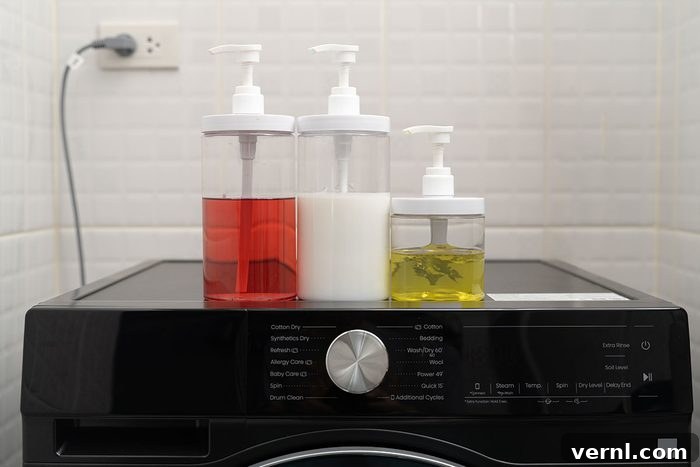
While the viral frozen laundry pod hack proves to be an inefficient and potentially counterproductive trend, there are numerous scientifically sound and genuinely effective alternatives available for those seeking low-cost, convenient, or environmentally friendly laundry solutions. These options provide real benefits without compromising cleaning performance or risking damage to your clothes and washing machine.
DIY Dry Ingredient Laundry Pods: Stability and Control
If you are committed to the idea of making your own laundry pods at home, opting for dry ingredients is a far more stable and reliable approach than freezing liquid detergent. Dry ingredients remain stable during storage and do not undergo the detrimental chemical alterations that liquid detergents experience when frozen. A popular recipe often involves combining ingredients like washing soda (sodium carbonate), borax (sodium borate), and finely grated Castile soap. To form the pods, a small amount of water or white vinegar is lightly spritzed onto the mixture until it reaches a consistency that clumps together. This mixture is then pressed firmly into molds (such as ice cube trays or silicone baking molds) and allowed to air dry completely. Once dry and solid, these homemade pods can be stored in an airtight container in a dry place, away from humidity, until they are needed for laundry. This method gives you full control over the ingredients, often resulting in a more natural and cost-effective cleaning solution while avoiding the stability issues of liquid formulations. Always handle borax and washing soda with care, wearing gloves and ensuring good ventilation.
Laundry Sheets: The Ultimate in Convenience and Portability
For individuals whose primary motivators are convenience and ease of use, laundry sheets or strips represent an excellent modern alternative to traditional liquid or powdered detergents. These innovative products consist of ultra-concentrated detergent infused into small, dissolvable sheets. They are incredibly lightweight, compact, and precisely pre-portioned, eliminating the need for measuring or messy pouring. To use, simply place one sheet directly into your washing machine along with your clothes and run the cycle as usual. Laundry sheets dissolve quickly in both hot and cold water, leaving no residue. Their minimalist packaging often means significantly less plastic waste compared to bulky plastic jugs, making them an attractive choice for eco-conscious consumers, travelers, and those living in small spaces where storage is at a premium.
Refillable Pump Dispensers and Bulk Detergent: Sustainable and Practical
For those prioritizing reduced waste and a more eco-friendly laundry routine, investing in refillable pump dispensers in conjunction with bulk detergent purchases is an ideal solution. These dispensers, often crafted from durable materials like glass, plastic, or stainless steel, offer an aesthetically pleasing and practical way to store and dispense laundry detergent. Instead of buying new plastic bottles every time, you can purchase large, economical refills (often available in concentrated pouches or larger bulk containers) or utilize local refill stations found in many zero-waste stores. This significantly cuts down on single-use plastic waste over time. The pump mechanism also provides an easy and precise way to dispense the exact amount of detergent needed, preventing overuse and ensuring optimal cleaning while minimizing environmental impact. Many brands now offer subscription services for eco-friendly detergent refills, making this option both convenient and sustainable.
Powdered Laundry Detergent: A Reliable and Cost-Effective Choice
Another often overlooked but highly effective alternative is traditional powdered laundry detergent. Powdered detergents are typically more stable than their liquid counterparts, as they do not contain water and thus avoid issues related to freezing or enzyme deactivation through liquid interactions. They are generally more concentrated and cost-effective per load, and their packaging often uses less plastic, or recyclable cardboard boxes. Modern powdered detergents dissolve well, especially when added to the dispenser or directly to the water before adding clothes, ensuring efficient cleaning without the pitfalls of the frozen pod hack.
Conclusion: Trust Science Over Social Media Trends
While the frozen detergent pod hack may seem like an appealing solution for saving money and reducing plastic waste, the scientific evidence, strongly supported by expert insights from chemist Dr. Bill Carroll, unequivocally demonstrates its flaws. Freezing liquid laundry detergent disrupts its meticulously formulated chemical balance, inactivates vital stain-fighting enzymes, and can lead to inefficient cleaning and undesirable residues. The allure of viral trends often overshadows the practical and scientific realities of product design and performance.
Instead of risking compromised laundry results and potentially wasting detergent, consumers have a wealth of genuinely effective and environmentally conscious alternatives. Whether it’s the stable and customizable DIY dry ingredient pods, the convenient and low-waste laundry sheets, the sustainable practice of using refillable dispensers with bulk detergent, or the reliable performance of powdered detergents, there are proven methods to achieve clean clothes efficiently and responsibly. Ultimately, prioritizing scientifically sound solutions over fleeting social media trends ensures that your laundry routine is both effective and truly beneficial in the long run.
About the Expert
- Bill Carroll, Ph.D., is an adjunct professor of chemistry at Indiana University. The former vice president of industry issues for Occidental Chemical Corporation, he’s currently principal of Carroll Applied Science in Dallas, Texas. His expertise provides invaluable insights into the chemistry of everyday products.
Related Articles You Might Find Interesting
- The Real Reason Aluminum Foil Has a Shiny Side and a Dull Side
- Think Adirondack Chairs Are Uncomfortable? You’re Using Them Wrong
- Why You Shouldn’t Crush Aluminum Cans Before Recycling