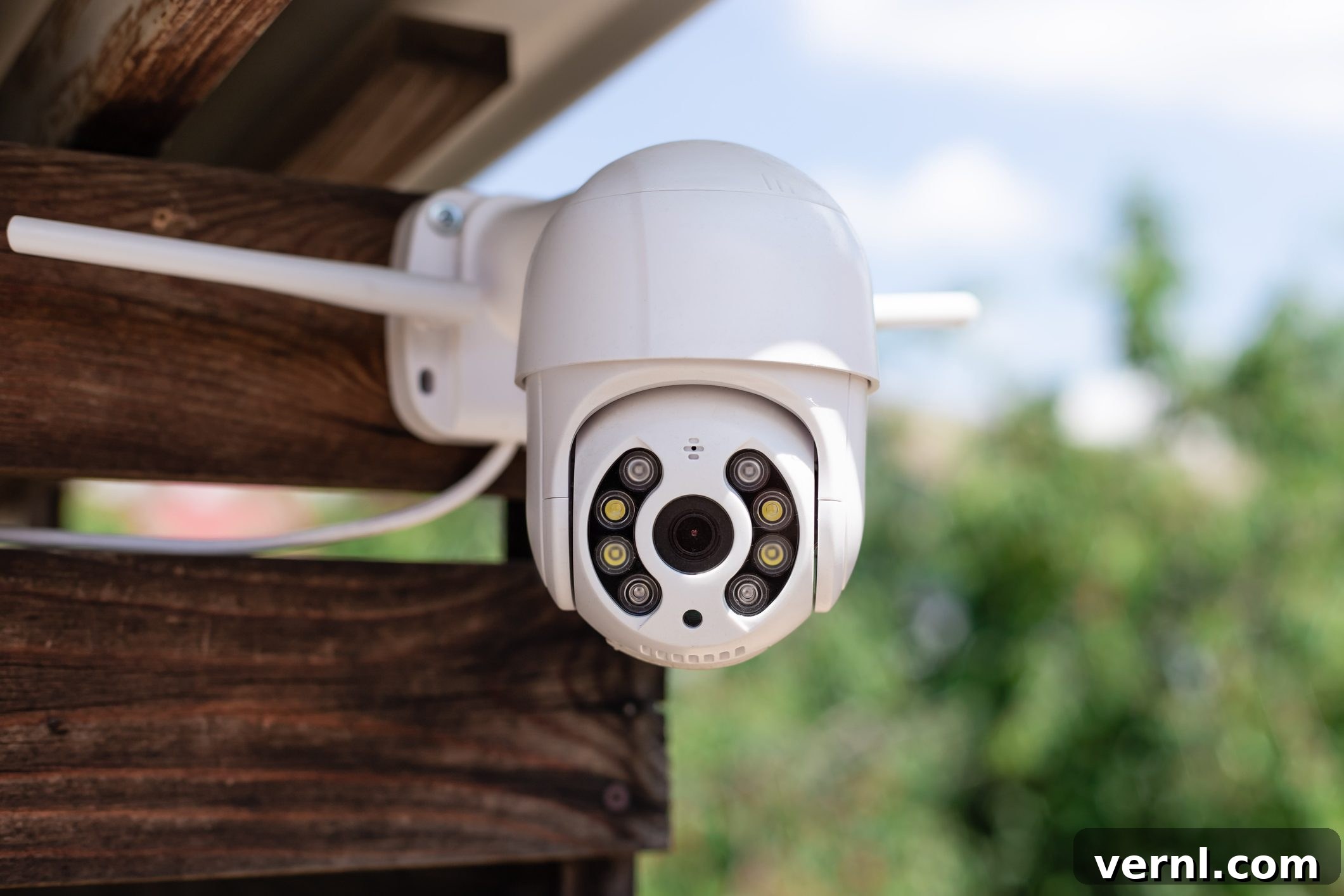
The landscape of home security has dramatically shifted in recent years with the ubiquitous rise of smart doorbell cameras and outdoor surveillance systems. Brands like Ring, Arlo, Nest, and countless others have made advanced security technology accessible and affordable for the average homeowner. While these devices offer a comforting layer of protection against package theft, vandalism, and other property crimes, their growing presence has simultaneously ignited a complex debate surrounding personal privacy – especially when neighbors are involved.
This tension was recently thrust into the spotlight with Amazon’s new television show, Ring Nation, which features “funny footage” captured by Ring doorbell cameras. Almost immediately upon its announcement, a petition was launched and swiftly signed by thousands of privacy rights advocates, vehemently demanding the show’s cancellation. The controversy highlights a broader societal unease: where do we draw the line between public security and individual privacy in an increasingly monitored world?
Beyond the realm of television, social media platforms like TikTok are brimming with viral videos showcasing everything from hilarious mishaps to startling encounters, all captured by residential security cameras. This constant stream of shared footage inevitably leads many homeowners to ponder: can my neighbor legally point their security camera at my backyard, potentially capturing embarrassing or private moments? To demystify these concerns, we sought insights from Justin Lovely, an attorney with extensive experience in privacy law, to clarify the legal boundaries and practical advice surrounding neighbor surveillance.
Understanding the Legality: Can a Neighbor Point a Security Camera at Your Backyard?
The straightforward answer, according to attorney Justin Lovely, is generally yes. “Generally speaking, a person has no expectation of privacy in public,” he explains. This foundational legal principle is central to understanding surveillance in residential settings. If an area of your property is readily visible from a public street, a neighbor’s yard, or another vantage point where a reasonable person would not expect privacy, then filming that area typically falls within legal parameters.
In a typical neighborhood, a homeowner is well within their rights to install outdoor security cameras on their property. These cameras can be positioned to monitor their own home, driveway, and even parts of their neighbor’s property that are openly visible. “A homeowner can add a security camera to his house and place a security camera pointing in whatever direction he pleases, as long as it adheres to the intent and reasonable expectation of privacy clauses,” Lovely states. The primary purpose of these cameras is usually legitimate home security – deterring crime, identifying trespassers, or monitoring property while away. When cameras are placed for these genuine security reasons, capturing footage of adjacent properties that are in plain view is generally permissible, as you would have no reasonable expectation of privacy in such areas.
When is it Permissible for a Neighbor to Point a Security Camera at Your Property?
In most cases, your neighbor is permitted to point a security camera towards your property whenever they deem it necessary for their own security, provided their intentions are legitimate and not malicious. If a camera is installed with the sole aim of protecting their home from theft or vandalism, or to monitor their own property, then its incidental capture of your backyard or driveway is usually legally acceptable. Modern security cameras, including the best outdoor security cameras, are designed to offer broad coverage, and it’s often difficult to aim them precisely without overlapping onto a neighbor’s visible areas.
The key distinction lies in the concept of “plain view.” If a certain area of your yard or the exterior of your house is visible to anyone passing by on the street or looking over a fence from a neighbor’s property, then you typically do not have a strong legal claim to privacy in that specific area. This includes front yards, driveways, exterior walls, and even portions of backyards that can be seen from an adjacent property without any extraordinary measures. The law generally permits surveillance of areas that are already exposed to public observation, making it crucial for homeowners to understand what constitutes a truly private space on their property.
Critical Boundaries: When a Neighbor’s Security Camera Becomes Unacceptable
While the general rule leans towards permissibility, there are crucial situations where a neighbor’s security camera placement crosses the line from acceptable surveillance to an invasion of privacy or even a legal offense. The legality often hinges on two main factors: the “reasonable expectation of privacy” and the intent behind the camera’s placement. It is absolutely vital for homeowners to investigate their specific state and even local security camera laws, as regulations can vary significantly.
“All states will have some sort of statute to answer this question,” Lovely emphasizes. “It really depends on the particular facts of the camera placement and the proof or lack thereof that there is bad intent in gathering the footage.” This means that simply having a camera pointed in a certain direction isn’t always enough to determine legality; the context and purpose are paramount.
A “reasonable expectation of privacy” applies to areas where an individual would legitimately expect to be free from public scrutiny and surveillance. This almost universally includes the interior of your home, especially through windows, as well as highly private spaces like bathrooms, bedrooms, and changing areas. Even in an outdoor setting, secluded areas of a backyard that are intentionally shielded by tall fences or dense landscaping might fall under this protection, particularly if they are not visible from any public vantage point or from a neighbor’s property without deliberate effort to intrude.
Consider specific state examples, illustrating the nuances of privacy laws:
- Texas: In Texas, it is illegal to film or photograph certain intimate parts of other people’s anatomy without their consent, particularly if the person has a reasonable expectation of privacy. So, if a camera were deliberately positioned to capture someone in a private act, such as skinny dipping in a secluded pool area not visible from public view, that could constitute illegal voyeurism or invasion of privacy. The law aims to protect individuals in situations where they have a legitimate expectation of being unobserved.
- South Carolina: South Carolina law generally prohibits cameras from pointing into a “place where a person would have a reasonable expectation of privacy.” This broad definition underscores the need for careful consideration. While a public street is not such a place, an enclosed dressing room, a private bathroom, or perhaps a deeply recessed, fully enclosed patio where a person is sunbathing in privacy would certainly qualify. The standard here is whether a typical person would consider the space private.
The intent of the person operating the camera is a critical factor. If the camera is clearly set up for malicious purposes, such as harassment, voyeurism, or to gather embarrassing material, then regardless of what it records, the act itself can be illegal. This is distinct from a camera that incidentally captures a neighbor’s yard while legitimately monitoring one’s own property for security. Malicious intent transforms a simple act of surveillance into a potential legal liability, potentially leading to criminal charges or civil lawsuits for invasion of privacy.
Beyond Video: The Intricacies of Audio Recording and Privacy
It’s important to note that while video surveillance has relatively broad allowances in “plain view” scenarios, audio recording carries much stricter legal implications. Many security cameras today come equipped with microphones, capable of capturing conversations in addition to visual footage. The legality of audio recording is governed by federal and state wiretapping laws, which are far more stringent than video surveillance laws.
Federal law and the laws of most states operate under a “one-party consent” rule, meaning that as long as one person involved in a conversation consents to its recording, it is generally legal. However, some states, known as “two-party consent” states (or “all-party consent”), require that every individual involved in a conversation must consent to it being recorded. Unknowingly recording a neighbor’s private conversation, even if it occurs in their own backyard, could lead to significant legal trouble, regardless of where the camera is physically pointed. Homeowners should be extremely cautious about activating audio recording features on outdoor cameras if they are concerned about capturing sound from neighboring properties, as the potential for violating privacy laws is much higher with audio than with video.
Proactive Measures: Protecting Your Own Privacy in a Monitored World
Before an issue even arises, homeowners can take several proactive steps to enhance their own privacy and reduce potential conflicts with neighbors regarding camera placement. Investing in privacy solutions for your outdoor spaces can significantly mitigate concerns about surveillance from adjacent properties or public areas.
Options include installing tall privacy fences, strategically planting dense hedges or trees, or erecting pergolas with privacy screens. These physical barriers not only enhance the aesthetic appeal of your property but also legally strengthen your claim to a “reasonable expectation of privacy” for the areas they enclose. By making certain areas less visible from adjacent properties or public spaces, you create a more private environment that is less susceptible to accidental or intentional surveillance, thereby reducing the likelihood of disputes.
Furthermore, when installing your own security cameras, practice good neighborly etiquette. Be mindful of where your cameras are pointing. While you have the right to protect your property, aiming cameras directly into a neighbor’s bedroom window or secluded patio might be legal in some contexts but is certainly not conducive to good neighborly relations. A little consideration can prevent many disputes and maintain harmony within your community.
What To Do If a Neighbor Points an Intrusive Security Camera at Your House
Discovering a neighbor’s security camera pointed directly at your property can be unsettling. If you suspect the camera is intrusive or violates your privacy, Lovely recommends starting with direct communication.
“The first step will be to have a reasonable conversation about the placement of the security camera if you feel it is intrusive,” advises Lovely. Approach your neighbor calmly and politely, explaining your concerns without accusation. Many neighbors, surprisingly, are unaware their camera is causing distress or might be aimed inappropriately. They may be willing to reposition the camera, adjust its field of view, or implement privacy settings on the device itself. “Most neighbors are friendly, believe it or not, and this will solve 99 percent of issues between property owners.” This initial, low-stakes conversation can often resolve the matter amicably and preserve neighborly relations, saving both parties from unnecessary stress and potential legal entanglements.
If direct communication proves unsuccessful, or if you firmly believe your privacy is being invaded with malicious intent, the next steps involve more formal action:
- Document the Issue: Keep a detailed log of dates, times, and specific instances when you noticed the camera. Take photographs from your property showing the camera’s angle if possible. Note any specific concerns, such as the camera pointing directly into a private window or an enclosed area. This documentation will be crucial if further action is required.
- Review Local and State Laws: Reiterate the importance of researching your specific local ordinances and state laws regarding surveillance and privacy. Understanding these legal frameworks will help you determine your standing and whether a true violation has occurred, guiding your subsequent actions.
- Consider Mediation: Before involving law enforcement, explore community mediation services if available in your area. A neutral third party can often facilitate a discussion and help both neighbors reach a mutually agreeable solution without immediate legal confrontation, often leading to more sustainable resolutions.
- File a Complaint with Law Enforcement: If all other avenues fail, and you have substantial evidence of actual privacy invasion, harassment, or malicious intent, filing a complaint with local law enforcement is the appropriate next step. This is particularly relevant in cases involving voyeurism, explicit recording of private areas where there’s a strong expectation of privacy, or clear evidence of harassment. Law enforcement can investigate and determine if criminal charges are warranted or if the camera setup violates specific statutes.
- Consult a Privacy Law Attorney: For complex cases, especially if you’re considering civil action for invasion of privacy, consulting an attorney specializing in privacy law is crucial. An attorney can provide legal advice tailored to your specific situation, inform you of your rights, and guide you through the process of pursuing legal recourse if necessary, ensuring your rights are fully protected.
In conclusion, while home security cameras offer undeniable benefits, their use necessitates a careful balance between safety and privacy. Understanding the legal framework, practicing good neighborly etiquette, and knowing the appropriate steps to take when concerns arise are essential for navigating the evolving landscape of residential surveillance. By prioritizing clear communication and being informed, homeowners can foster secure environments while respecting the privacy of those around them, promoting a more harmonious community for all.