The Ultimate Guide to Disinfecting Your Mattress: What You Need to Know
We routinely clean our homes, wiping down countertops, scrubbing floors, and doing laundry. But what about the largest piece of furniture in your bedroom—your mattress? Unlike hard, non-porous surfaces that can be easily disinfected with store-bought or homemade disinfecting wipes, mattresses present a unique challenge. They are huge repositories for dead skin cells, body oils, sweat, and other organic materials, creating a perfect feast for microorganisms and dust mites. In fact, it’s often said that mattresses gain weight over time due to the accumulation of these unwanted inhabitants.
While the thought of sharing your bed with countless microscopic organisms might sound unsettling, it doesn’t necessarily mean you’re destined to get sick, nor does it warrant immediately dousing your mattress in harsh chemicals. Your risk of illness from any environmental hazard largely depends on your personal vulnerability and exposure levels. However, maintaining a clean and hygienic sleep environment is crucial for overall health and well-being. This guide delves into the effectiveness of common disinfectants like isopropyl alcohol on mattresses, explores practical cleaning strategies, and offers expert advice to ensure your sleeping space is as clean and healthy as possible.
To get a clearer picture of what truly works, we spoke with Allen Rathey, director of the Indoor Health Council, an authority on the connection between effective cleaning and public health.
Understanding Disinfection: Hard vs. Soft Surfaces
What Does “Disinfectant” Really Mean?
The term “disinfectant” is often used broadly, but its precise meaning is important, especially when it comes to different types of surfaces. According to the Environmental Protection Agency (EPA), disinfectants are chemical products designed to kill viruses and bacteria on non-porous surfaces. This “on surfaces” distinction is critical; it primarily refers to hard, impervious materials like countertops, sinks, and door handles, not soft, absorbent items such as mattresses, pillows, or bedding.
Allen Rathey explains that while some products registered by the EPA as disinfectants may reduce germs on soft surfaces, they don’t necessarily achieve the same level of efficacy as they do on non-porous materials. In casual conversation, people often use “disinfecting” to mean reducing bacterial load and improving overall hygiene. In this broader sense, substances like alcohol can be used on mattresses, but it’s vital to keep the scientific and practical distinctions in mind.
The Challenge of Porous Materials
Mattresses are inherently porous, meaning they have tiny open spaces that allow liquids and particles to penetrate deeply. This characteristic makes them incredibly difficult to disinfect thoroughly using conventional methods. When you spray a disinfectant onto a porous surface, the liquid tends to soak into the material rather than remaining on the surface where it can effectively kill germs. This absorption complicates the necessary “dwell time” (the amount of time a disinfectant needs to remain wet and in contact with the surface to be effective) and makes it challenging to achieve uniform coverage and penetration.
Isopropyl Alcohol (Rubbing Alcohol) as a Disinfectant: The Real Scoop
Can Rubbing Alcohol Kill Germs?
Yes, isopropyl alcohol, commonly known as rubbing alcohol, can certainly act as a disinfectant. It works by denaturing the proteins of microorganisms, effectively destroying their cells. The Centers for Disease Control and Prevention (CDC) recommends using a 60% to 90% alcohol solution for the most effective disinfection. Curiously, higher concentrations (like 99%) are often less effective because the alcohol evaporates too quickly, not allowing sufficient contact time to kill germs properly.
Can You Spray Alcohol on Your Mattress to Disinfect It?
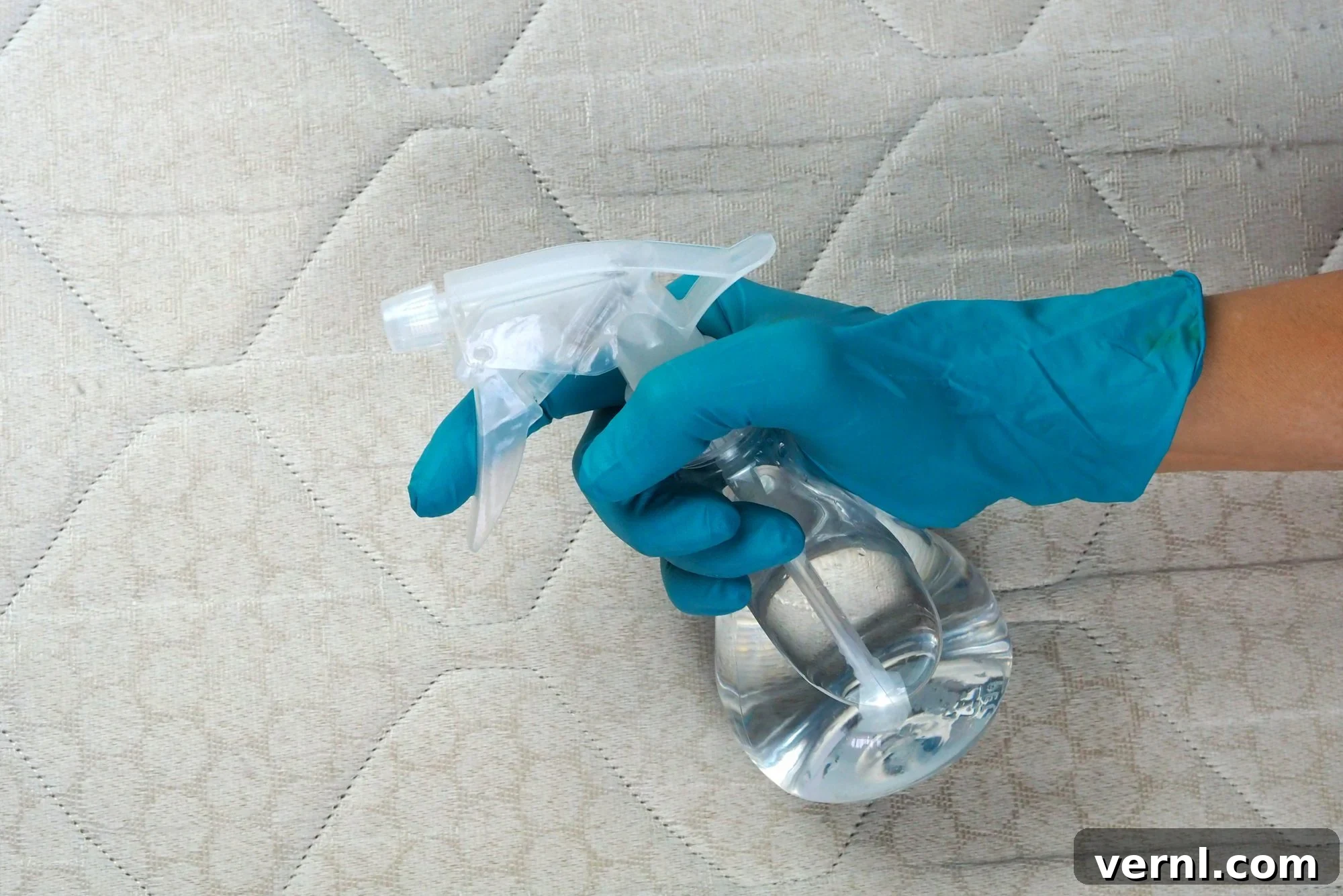
While you can technically spray alcohol on your mattress, whether you should or would want to is highly debatable due to several practical limitations and potential downsides:
- Volume Needed: For alcohol to effectively disinfect, it needs to thoroughly saturate the surface and remain wet for a specific dwell time. Given the porous nature and sheer size of a mattress, you would need an enormous quantity of alcohol to achieve proper saturation, making this approach extremely impractical and costly.
- Insufficient Dwell Time: Alcohol evaporates very quickly, especially at the optimal 60-90% concentrations. This rapid evaporation makes it difficult to achieve the required dwell time—the duration the disinfectant must remain on the surface or within the material’s fibers to be effective against specific pathogens. Often, this dwell time can be several minutes, which is hard to maintain with quickly evaporating alcohol.
- Strong, Lingering Odor: Alcohol has a potent, distinctive smell. Soaking a mattress would leave a strong, pervasive odor that could linger for days, making your sleeping environment unpleasant and potentially irritating for sensitive individuals.
- Potential for Damage: While generally safe, alcohol can potentially cause discoloration or damage to certain mattress materials, especially if applied excessively or left to sit. Always test on an inconspicuous spot first.
- Flammability Risk: Alcohol is highly flammable. Applying large quantities to a mattress introduces a significant fire hazard until it has completely dried and dissipated.
For your removable bedding like sheets, pillowcases, and duvet covers, sticking to the washing machine and dryer is by far the most effective, safest, and easiest method. “Due to their porous nature, hot water laundry and hot drying is the best approach for sheets,” Rathey confirms.
If you’re still considering using a disinfectant directly on your mattress, Allen Rathey suggests exploring EPA-registered disinfectants that are specified for soft surfaces. However, even then, he strongly advises testing the product on an inconspicuous area first for colorfastness and material compatibility, especially with expensive pillow-top mattresses. Always adhere strictly to the label directions regarding application, dwell time, and any dilution requirements.
Practical Strategies for a Hygienic Mattress
Given the limitations of alcohol and other spray disinfectants on mattresses, a multi-faceted approach focusing on prevention and regular cleaning is far more effective for maintaining a healthy sleep environment.
1. Regular Cleaning is Key
According to the Sleep Foundation, you should clean your mattress thoroughly every six months or so. This deep cleaning is distinct from disinfection, but it significantly reduces the organic material that feeds dust mites and bacteria.
- Vacuuming: Regular vacuuming is your first line of defense. Use the upholstery attachment of your vacuum cleaner to thoroughly vacuum the entire mattress surface, including the sides and crevices. This removes dead skin cells, dust mites, and their allergens. Aim to do this monthly, or more frequently if you suffer from allergies.
- Spot Cleaning: Accidents happen. For spills and stains, address them immediately to prevent them from setting. Blot the liquid with a clean cloth, avoiding rubbing, which can spread the stain. Then, use a gentle cleaner. A good general DIY mattress cleaner consists of: 1/2-cup warm water, 1/2-cup white vinegar, and about a teaspoon of mild dish soap. Spray this solution lightly onto the stained area, let it sit for a few minutes, then blot thoroughly with a clean, damp cloth until the stain is gone. Ensure the area dries completely afterward.
- Deodorizing with Baking Soda: To absorb odors and moisture, generously sprinkle baking soda over the entire mattress surface. Let it sit for several hours (ideally 8-24 hours) to allow it to draw out odors and moisture, then vacuum it up thoroughly. This is an excellent step to include during your bi-annual deep clean.
2. Harness the Power of Sunlight
If feasible, take your mattress outside on a sunny day. UV rays from sunlight can naturally sanitize and deodorize, helping to kill surface bacteria and dry out any lingering moisture. Just a few hours of direct sunlight can make a noticeable difference.
3. Consider Steam Cleaning (with Caution)
A steam cleaner can kill dust mites and bacteria through heat. However, use it very sparingly and ensure the mattress dries completely afterward. Excessive moisture can lead to mold and mildew growth, which is a far worse problem than surface germs. If you use a steam cleaner, follow up with fans and open windows to ensure rapid and thorough drying.
4. Implement Protective Measures
Prevention is truly the best defense against germs and allergens in your mattress:
- Mattress Protectors: Always use a high-quality, waterproof, and allergen-proof mattress protector. This creates a physical barrier that shields your mattress from spills, sweat, dead skin cells, and dust mites, significantly extending its life and cleanliness. Wash your mattress protector regularly, as per the manufacturer’s instructions.
- Launder Bedding Regularly: Wash sheets, pillowcases, and duvet covers weekly in hot water (if fabric allows) to kill dust mites and remove skin cells and oils. For white pillows and blankets, you can use bleach as a disinfectant during the wash cycle. For colored linens, pine oil products can serve as an effective alternative disinfectant.
- Pillow Care: Most pillows can be washed and dried. Check care labels for specific instructions. Washing pillows every 3-6 months helps remove allergens and keep them fresh.
- Maintain General Home Cleanliness: Small habits like removing shoes at the front door and providing an entry mat can significantly reduce the amount of dirt and dust tracked into your home and eventually onto your bed.
5. Addressing Specific Concerns
While regular cleaning is usually sufficient, Rathey suggests that disinfection might be necessary on an “as-needed” basis, such as after someone has been sick in bed or if the mattress becomes heavily soiled with bodily fluids. In such cases, professional cleaning services specializing in mattress hygiene might be a more effective and safer option than DIY methods.
When to Consider Professional Mattress Disinfection or Replacement
There are situations where your mattress might be beyond the scope of home cleaning, or professional help is warranted:
- Severe Stains and Odors: If your mattress has deep-seated stains or persistent odors that you can’t eliminate, a professional mattress cleaning service might be able to tackle them with specialized equipment and solutions.
- Allergy or Asthma flare-ups: If you or a family member experience increased allergy or asthma symptoms, a professional deep clean designed to remove allergens like dust mites and pet dander could be beneficial.
- Age and Wear: Mattresses have a lifespan. Most manufacturers recommend replacing your mattress every 6 to 8 years. Beyond this age, mattresses can lose their supportive qualities, accumulate too many allergens and microbes, and become difficult to truly clean. Persistent sagging, lumps, or waking up with aches are clear signs it’s time for a new one.
Beyond Your Mattress: Disinfecting Other Bedding Items
Can I Disinfect Blankets and Pillows?
Absolutely, and it’s much easier than disinfecting a mattress. To disinfect blankets and pillows, wash them on the highest temperature setting possible with your regular laundry detergent and an appropriate disinfectant. For white pillows and blankets, you can safely use bleach. Add it to your washing machine’s built-in bleach dispenser, or dilute 3/4-cup of bleach with one quart of water and add it five minutes into the wash cycle. For colored linens, pine oil-based disinfectants are an excellent alternative.
Expert Insights on Indoor Health
Our expert, Allen Rathey, director of the Indoor Health Council, emphasizes the proactive role of cleanliness in public health. His insights reinforce that while disinfection has its place, particularly on non-porous surfaces, a consistent and preventive cleaning regimen is paramount for items like mattresses. His recommendations consistently lean towards practical, sustainable methods that prioritize long-term hygiene and health over quick, often ineffective, chemical fixes.
Frequently Asked Questions (FAQs)
Can I use bleach on my mattress?
No, generally it’s not recommended to use bleach directly on your mattress. Bleach is a harsh chemical that can damage mattress materials, cause discoloration, and leave behind residues that could be irritating. Furthermore, it’s difficult to rinse thoroughly from porous materials, potentially leading to lingering chemical odors and moisture issues.
How often should I clean my mattress?
A deep clean (vacuuming, spot cleaning, deodorizing with baking soda) should be performed every six months. However, daily and weekly habits like washing bedding regularly, using a mattress protector, and promptly addressing spills will maintain its hygiene between deep cleans.
What about essential oils for disinfection?
While some essential oils (like tea tree oil or eucalyptus oil) have antimicrobial properties, there is limited scientific evidence to support their effectiveness as primary disinfectants on porous surfaces like mattresses, especially for serious pathogens. They can certainly help with deodorizing and creating a fresh scent, but they should not be relied upon for true disinfection.
Is it safe to sleep on a recently cleaned or disinfected mattress?
It is crucial to ensure your mattress is completely dry before placing bedding back on it and sleeping on it. Any residual moisture can lead to mold and mildew growth, which can cause significant health problems and damage to your mattress. Use fans, open windows, and allow ample time for drying after any cleaning or treatment.
Conclusion
Maintaining a truly hygienic mattress involves more than just a quick spray. While isopropyl alcohol can kill germs, its practical application for disinfecting a large, porous item like a mattress is highly questionable due to the volume required, rapid evaporation, and lingering odors. The most effective approach combines preventive measures like using a high-quality mattress protector and regular, thorough cleaning practices. By understanding the distinction between cleaning and disinfecting, and adopting a holistic approach to bed hygiene, you can ensure your sleep environment remains fresh, clean, and conducive to good health.