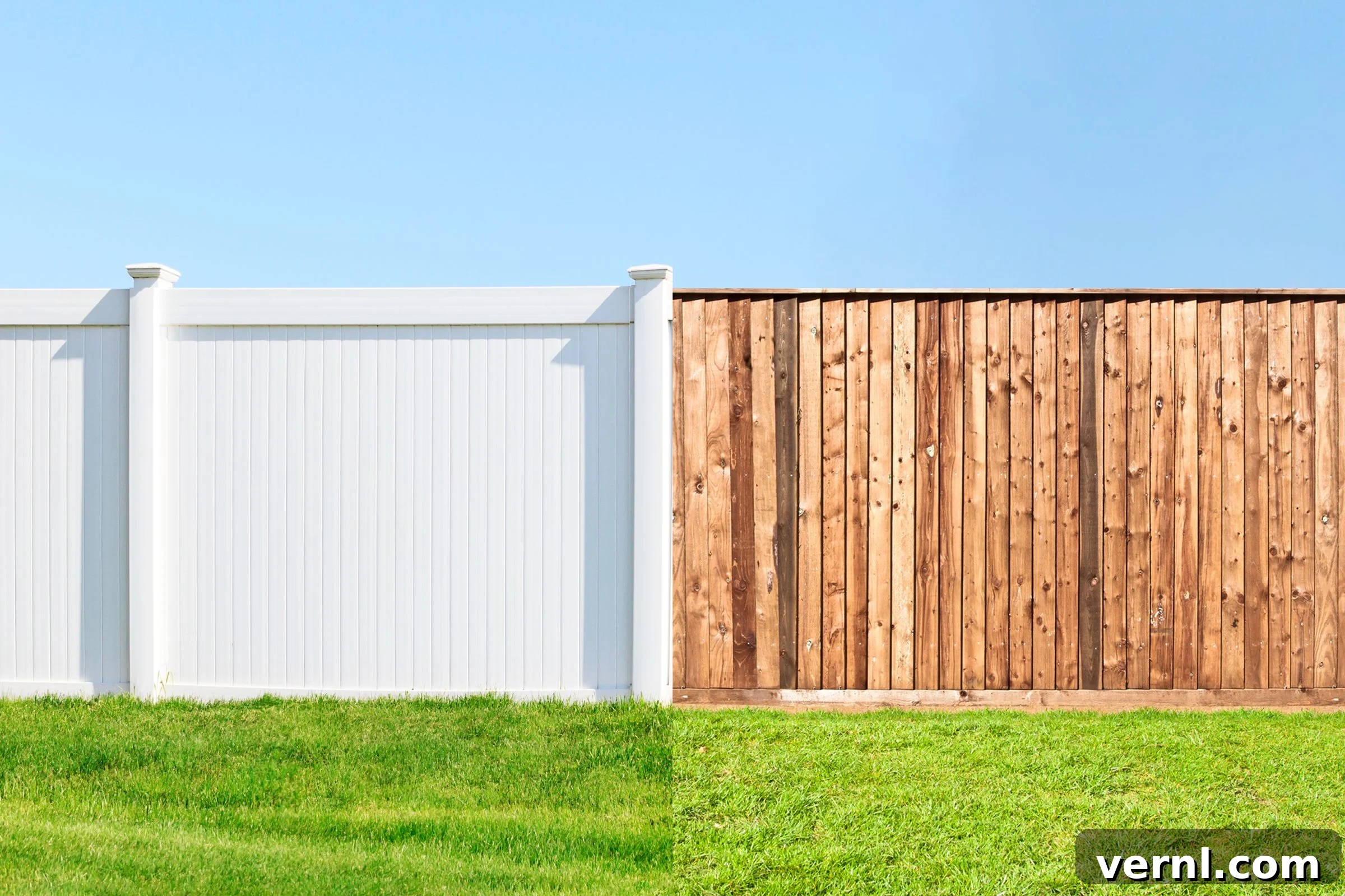
Vinyl vs. Wood Fence: Choosing the Right Material for Your Property
Embarking on a homeownership journey often involves several crucial decisions, and one of the earliest for many is securing their property. Whether it’s to provide a safe haven for adventurous pets, enhance privacy, boost curb appeal, or simply delineate boundaries, installing a fence is a fundamental step. When my family bought our house, our playful pup’s penchant for neighborhood excursions made a secure perimeter a top priority. A well-chosen fence isn’t just a barrier; it’s an investment in peace of mind, property value, and aesthetic appeal.
The quest for the perfect fence often begins with a balancing act between style and budget. We faced the classic dilemma: vinyl vs. wood. Each material presented compelling arguments, making the decision challenging. Ultimately, we opted for a hybrid approach: elegant vinyl for the front of the house to complement its modern facade, and classic wood for the backyard, blending seamlessly with our garden and offering a more natural feel. This decision taught us invaluable lessons about the distinct characteristics of these two popular fencing materials.
Over the years, we’ve gained a deep understanding of the differences between vinyl and wood fences – from their durability and maintenance requirements to their aesthetic impact and long-term costs. This comprehensive guide aims to share that knowledge, helping you navigate the complexities of fence selection. We’ll delve into the pros and cons of each, compare their key features, discuss installation nuances, and break down the costs, empowering you to make an informed choice that perfectly suits your home and lifestyle. Keep reading to discover whether a vinyl or wood fence is the ideal solution for your property.
Vinyl Fence Pros and Cons: A Modern Fencing Solution
Vinyl fences, crafted from PVC (polyvinyl chloride), are a relatively recent innovation in the fencing world, yet they have rapidly ascended to immense popularity. Their sleek appearance and practical benefits appeal to a wide range of homeowners seeking a contemporary and efficient boundary solution.
Pros of Vinyl Fences
- Superior Security and Privacy: Vinyl fences are excellent at providing robust security and privacy. Available in a variety of styles, including solid privacy panels, semi-privacy designs, and classic picket fences, they create a strong, continuous barrier that deters intruders and keeps pets and children safely within your yard. The smooth, non-porous surface also makes them difficult to climb.
- Remarkably Low Maintenance: This is arguably the most significant advantage of vinyl fencing. Unlike organic materials, vinyl does not require painting, staining, or sealing. It is impervious to rot, rust, and insect infestations like termites and carpenter ants. This translates to substantial savings in time, effort, and money over the fence’s lifespan.
- Effortless Cleaning: Keeping a vinyl fence looking pristine is incredibly simple. Most dirt, grime, and mildew can be easily washed away with a garden hose. For stubborn stains, a mild soap and water solution or a power washer set to a low pressure can quickly restore its original luster.
- Flexible and Impact Resistant: Vinyl is a naturally flexible material, allowing it to withstand impacts better than many rigid fence types. It tends to flex rather than break under pressure from wind gusts, stray sports balls, or accidental bumps, making it a durable choice for active households and areas prone to moderate weather events.
- Lightweight and Relatively Easy to Install: The lightweight nature of vinyl components simplifies the installation process. Panels and posts are easier to transport and maneuver, potentially reducing labor costs if you hire professionals, or making it a more manageable DIY project for homeowners with basic construction skills.
- Exceptional Longevity: With proper installation and minimal care, a high-quality vinyl fence can last 20 to 30 years or even longer. Its inherent resistance to weathering, fading (especially with UV-stabilized formulations), and deterioration means it maintains its appearance and structural integrity for decades.
- Consistent Appearance: Vinyl fences offer a uniform and consistent look across all panels, ensuring a neat and polished aesthetic. The colors are integrated throughout the material, meaning they won’t chip, peel, or fade unevenly.
Cons of Vinyl Fences
- Higher Initial Cost: One of the primary drawbacks of vinyl fencing is its higher upfront cost compared to many wood options. While its low maintenance often leads to greater long-term value, the initial investment can be a significant barrier for some budgets.
- Requires Special Hardware: Installing vinyl fences often necessitates specific brackets, caps, and fasteners designed for the material. These specialized components can add to the overall material cost and might not be as readily available as generic wood fencing hardware.
- Challenging to Customize or Repair: Vinyl fence panels and rails are typically manufactured with hollow interiors. While this contributes to their lightweight nature, it can make customization difficult; cutting or reshaping often exposes these unsightly hollow spaces. Repairing a damaged section often means replacing an entire panel or a large component, which can be more expensive and complex than replacing a single wood picket.
- Can Become Brittle in Cold Temperatures: In extremely cold climates, vinyl can become less flexible and more brittle. This increases its susceptibility to cracking or shattering upon impact during freezing conditions, which is an important consideration for homeowners in colder regions.
- Limited Aesthetic Versatility After Installation: While vinyl comes in various colors and styles from the manufacturer, you cannot paint or stain it to change its look after installation. What you choose initially is what you have for its lifespan.
- Non-Recyclable Nature of PVC: Vinyl (PVC) is a plastic that is not easily biodegradable or widely recyclable in most residential recycling programs, raising environmental concerns for some consumers.
Wood Fence Pros and Cons: The Timeless Classic
Wood fences have been an integral part of property demarcation and beautification for millennia, evolving from simple functional barriers to sophisticated design elements. Their enduring appeal lies in their natural beauty and versatility, yet they come with their own set of considerations.
Pros of Wood Fences
- Reliable Security and Privacy: Like vinyl, wood fences effectively provide security and privacy. A solid wood privacy fence can create an excellent visual and physical barrier, offering seclusion for your backyard activities. Various designs, from traditional picket to shadow box, cater to different levels of openness and privacy.
- Exceptional Aesthetic Versatility and Natural Charm: Wood fences come in an astonishing array of styles, wood types, and finishes. Whether you prefer the rustic appeal of cedar, the robust strength of pressure-treated pine, or the rich hues of redwood, there’s a wood fence to match any architectural style and landscape design. Its natural material blends harmoniously with outdoor environments, adding warmth and character that vinyl often struggles to replicate.
- More Affordable Initial Options: For many homeowners, the initial cost of a wood fence, especially common varieties like pine or spruce, is significantly lower than that of vinyl. This makes it an attractive option for those working with a tighter upfront budget, offering a cost-effective way to establish property boundaries.
- Highly Customizable: Wood is incredibly easy to customize. You can cut, carve, paint, stain, or treat it to achieve almost any desired look. This flexibility extends to repairs as well, as individual pickets or panels can often be replaced without affecting the entire fence section, offering both aesthetic and practical customization.
- Simple, Basic Installation Techniques and Hardware: Installing a wood fence typically requires common tools and basic carpentry skills. The hardware (screws, nails, post caps) is standard and widely available, making it a more accessible DIY project for many homeowners and potentially reducing labor costs for professional installation.
- Environmentally-Friendly When Sourced Sustainably: When wood is harvested from sustainably managed forests, it is a renewable resource. It is also biodegradable and has a lower carbon footprint compared to synthetic materials like vinyl. Choosing sustainably sourced wood supports responsible forestry practices and appeals to eco-conscious consumers.
- Adds Value and Curb Appeal: A well-maintained wood fence significantly enhances a property’s curb appeal and can increase its resale value, particularly if it complements the home’s architectural style and the surrounding landscape.
Cons of Wood Fences
- Demanding Regular Maintenance: The primary downside of wood fencing is its substantial maintenance requirements. To prevent rot, warping, fading, and insect damage, wood fences need periodic cleaning, staining, sealing, or painting, typically every few years. Neglecting this maintenance drastically shortens its lifespan and compromises its appearance.
- Heavy Panels Require More Effort for Installation: Wood panels are considerably heavier than their vinyl counterparts. This increased weight makes installation more physically demanding, potentially requiring more labor or specialized equipment, which can drive up installation costs.
- Susceptible to Warping, Rotting, and Pest Infestations: As an organic material, wood is vulnerable to moisture damage, leading to warping, splitting, and dry rot. It is also a target for wood-boring insects such as termites and carpenter ants, which can severely compromise the fence’s structural integrity over time.
- Shorter Lifespan: Even with diligent maintenance, a typical wood fence usually lasts 10 to 15 years, though some premium woods like cedar can last 20-25 years. This is generally shorter than the lifespan of a vinyl fence, meaning eventual replacement is often needed sooner.
- Vulnerable to Fire: Wood is combustible, making it susceptible to fire damage, which is a significant consideration in wildfire-prone areas.
- Splintering: Over time, especially without proper sealing, wood can splinter, posing a hazard, particularly in areas where children or pets play.
Vinyl vs. Wood Fence: What’s the Key Difference?
While both vinyl and wood fences serve the essential purpose of defining property lines, providing security, and enhancing aesthetics, they differ significantly in several critical aspects. Understanding these distinctions is crucial for making the best choice for your home.
Maintenance Requirements
This is arguably the most pronounced difference. Vinyl fences are renowned for their low maintenance. Beyond a simple pressure washing once or twice a year to remove dirt and mildew, they require little else. There’s no need for sanding, painting, staining, or sealing, ever. Vinyl’s synthetic composition makes it impervious to rot, rust, and insect damage, significantly reducing the ongoing time and financial commitment.
Wood fences, conversely, demand a consistent and rigorous maintenance schedule. To preserve their appearance and prevent deterioration, they need a fresh coat of sealer or stain every few years. This protective layer guards against moisture, UV radiation, and pests. Neglecting this crucial step will lead to warping, splintering, fading, and ultimately, premature rot and structural failure. The long-term cost of maintenance for wood fences can quickly accumulate, potentially negating their initial price advantage.
Customization and Repair Flexibility
When it comes to customization and repair, wood offers far greater flexibility. Wood is a solid, natural material that can be easily cut, shaped, painted, or stained to match specific aesthetic preferences or architectural styles. If a single picket or board gets damaged, it’s often a straightforward process to remove and replace just that piece, allowing for localized repairs that save time and money.
Vinyl fences, on the other hand, are typically manufactured with hollow rails and slats, a design feature that contributes to their lightweight nature. While this makes them easier to handle, it severely limits post-installation customization; cutting or reshaping a vinyl panel often exposes these hollow interiors, creating an unfinished and unappealing look. Repairing vinyl can also be more cumbersome. Because panels are often interconnected or glued, a crack in a single slat might necessitate replacing an entire section or panel, which can be a more involved and costly repair.
Installation Process
The installation processes for vinyl and wood fences present distinct challenges and requirements. Installing a wood fence is generally considered more straightforward in terms of basic techniques. It typically involves digging holes for posts, setting them in concrete for stability, and then attaching the fence panels or individual pickets to the posts using standard screws or nails. The main physical challenge often comes from the weight of the wood panels, which can be quite substantial.
Vinyl fencing, while lightweight, often requires specialized installation techniques and hardware. It typically uses unique bracket systems that attach to the fence posts, into which the panels slide and lock. These brackets usually have decorative caps that snap on to conceal the hardware, providing a clean, finished look. While the process itself might be faster due to lighter components, the specialized nature of the hardware can add to the material cost, as each bracket and cap set can be significantly more expensive than the basic screws needed for a wood panel.
Appearance and Aesthetic Impact
Even an untrained eye can usually spot the difference between a vinyl and a wood fence. Wood fences exude a natural, organic, and often rugged charm. The distinct grain patterns, knots, and variations in color inherent to timber give each wood fence a unique character that can enhance traditional, rustic, or natural landscape designs. Over time, wood naturally weathers, developing a beautiful patina if left unstained, or maintaining its rich color with regular treatment.
Vinyl fences, conversely, offer a more uniform, consistent, and often smoother appearance. Even textured vinyl designed to mimic wood grain tends to have a more artificial look. Some homeowners appreciate this pristine, clean aesthetic, especially for modern homes or those seeking a perfectly uniform boundary. However, others may dislike the “plastic” feel and the lack of natural character that vinyl presents. While vinyl comes in various colors, its appearance is fixed once installed, whereas wood offers endless possibilities through painting and staining to adapt to changing tastes or property aesthetics.
Durability and Lifespan
Vinyl fences generally boast a longer lifespan, often exceeding 20-30 years with minimal maintenance, thanks to their resistance to rot, rust, and pests. They are engineered to withstand various weather conditions without significant degradation. Wood fences, while durable in their own right, typically last 10-15 years, even with diligent maintenance, although premium woods like cedar can extend this to 20-25 years. Their organic nature makes them vulnerable to environmental factors that accelerate deterioration.
Environmental Impact
For environmentally conscious homeowners, the material choice has implications. Sustainably sourced wood is a renewable resource, biodegradable, and sequesters carbon, making it a more eco-friendly option. Vinyl (PVC), on the other hand, is a petroleum-based product that is not biodegradable and difficult to recycle, raising concerns about its end-of-life impact.
Pest Resistance
Vinyl is impervious to common fence pests such as termites, carpenter ants, and wood-boring beetles, offering complete peace of mind in this regard. Wood fences, especially untreated varieties, are highly susceptible to these pests, requiring chemical treatments or vigilant monitoring to prevent infestations that can compromise structural integrity.
How Much Does Vinyl and Wood Fencing Cost?
Beyond the aesthetic and maintenance considerations, the financial investment is often a deciding factor for homeowners. While initial costs can vary significantly, it’s also important to consider the total cost of ownership over the fence’s lifespan.
How Much Does Vinyl Fencing Cost?
Generally, the upfront cost of vinyl fencing is higher than that of most wood options. For standard vinyl fencing, typically between four and six feet tall, you can expect materials alone to cost around $25 to $35 per linear foot for a DIY installation. This figure can fluctuate based on the style (e.g., privacy panels are usually more expensive than picket styles) and the quality of the vinyl. If you opt for professional installation, the cost can increase substantially, ranging from $35 to $45 per linear foot, and often higher for complex designs or challenging terrains. Factors such as the ground being particularly rocky, uneven, or requiring extensive grading can drive labor rates up, potentially adding $50 or more per hour to the project duration. Gates, corner posts, and end posts will also add to the overall material cost.
How Much Does Wood Fencing Cost?
Wood fencing typically offers a more budget-friendly entry point. The materials for a four- to six-foot privacy fence can cost anywhere from $7 to $15 per linear foot for common woods like pressure-treated pine or spruce. Premium woods such as cedar or redwood will naturally push these material costs higher, often into the $20-$40 per linear foot range. When hiring a contractor, the cost increases to account for labor. Basic pine fence installation might cost around $27 to $40 per linear foot, while high-end hardwoods or intricate custom designs could reach $60 to $80 per linear foot or more. While the materials are often cheaper, the weight and complexity of working with wood, especially for larger installations, can create considerably more labor than vinyl. As with vinyl, challenging terrain will increase installation costs due to the extra effort required for digging post holes and leveling. Don’t forget to factor in the cost of stains, sealers, and any ongoing maintenance supplies for wood over its lifetime.
When comparing costs, it’s vital to consider the “total cost of ownership.” While vinyl has a higher initial price tag, its virtually nonexistent maintenance costs often make it more economical over its 20-30 year lifespan. Wood, with its lower initial cost, requires significant ongoing investment in maintenance, potentially making its long-term cost comparable to or even higher than vinyl, especially if professional maintenance services are utilized.
Vinyl vs. Wood Fence: Which Is Better for Your Property?
Ultimately, the “better” fence material isn’t universally fixed; it truly depends on your specific circumstances, priorities, and lifestyle. Both vinyl and wood fences excel in certain scenarios, making them the superior choice for different homeowners.
Choose Vinyl if:
- You prioritize low maintenance above all else. If you desire a fence that requires minimal effort beyond occasional cleaning, vinyl is the undisputed champion. It’s ideal for busy homeowners who prefer to spend their weekends on activities other than fence upkeep.
- You seek maximum longevity and durability. Vinyl’s resistance to rot, rust, pests, and severe weathering ensures a fence that will stand strong and look good for decades, often outlasting wood by a significant margin.
- You prefer a consistent, uniform aesthetic. Vinyl provides a clean, modern, and perfectly uniform look that doesn’t fade, chip, or warp. It’s excellent for properties where a pristine and predictable appearance is desired.
- You live in a region prone to pests or harsh moisture. Vinyl is impervious to termites and moisture-related damage, making it a robust choice for humid climates or areas with significant insect activity.
- You are comfortable with a higher upfront investment for long-term savings. While more expensive initially, vinyl’s lack of maintenance costs often makes it a more cost-effective solution over its extended lifespan.
Choose Wood if:
- You prefer a natural, classic aesthetic. The timeless beauty, organic texture, and warmth of wood are unmatched. It blends seamlessly with natural landscapes and complements a wide range of architectural styles, from traditional to rustic.
- You value customization and DIY flexibility. Wood can be cut, painted, stained, or personalized in countless ways to achieve a unique look. It’s also generally easier for homeowners to repair or replace individual components.
- You have a tighter initial budget. Wood fences, particularly those made from common species like pressure-treated pine, typically have a lower upfront material cost, making them a more accessible option for immediate fencing needs.
- You are willing and able to commit to regular maintenance. If you enjoy outdoor projects or don’t mind the routine of cleaning, staining, or sealing, wood can be a rewarding choice that allows you to actively care for and personalize your property’s boundary.
- You prioritize an environmentally friendly option. When sustainably sourced, wood is a renewable, biodegradable material with a lower environmental impact during its lifecycle compared to synthetic alternatives.
Some homeowners, like us, even find a hybrid approach beneficial, combining the best of both worlds – perhaps using vinyl for high-traffic or high-visibility areas for its low maintenance, and wood in more private or garden areas where its natural aesthetic is cherished. Consider your budget, lifestyle, desired aesthetic, local climate, and your willingness to commit to maintenance when making this important decision. By carefully weighing these factors, you can confidently choose the fence material that will best serve your property for years to come.