Solar energy systems represent a significant investment in a sustainable future, offering substantial savings on electricity bills and reducing carbon footprint. Modern solar panels are renowned for their robustness and resilience. Take, for instance, the experience in Denver, Colorado, where a historic hail storm unleashed golf-ball-sized ice, leaving over 150,000 vehicles severely damaged. Yet, the National Renewable Energy Laboratory’s extensive 3,000-panel array emerged with only a single cracked panel, a testament to the remarkable durability of these photovoltaic (PV) units.
However, despite their inherent strength, residential solar panels are not entirely impervious to damage and the rigors of the environment. They can occasionally sustain breakage, and crucially, they demand consistent attention through regular maintenance. This proactive approach is essential for sustaining their peak solar power efficiency throughout their operational life and for maximizing their overall lifespan. Understanding the best practices for solar panel care is paramount for homeowners looking to protect their investment and ensure their system performs optimally year after year.
Understanding Solar Panel Maintenance: A Comprehensive Overview
Solar panel maintenance encompasses a range of activities designed to preserve the functionality and efficiency of your solar energy system. Primarily, it involves the periodic cleaning of the glass surfaces and a thorough inspection of the wiring and electrical components. This diligent oversight helps identify and address potential issues before they escalate into costly repairs or significant efficiency losses. Key environmental factors and conditions that necessitate regular maintenance include:
- Accumulation of Dust and Stains: Over time, solar panel glass can develop a film of dust, pollen, bird droppings, and other environmental residues. This layer acts as a barrier, reducing the amount of sunlight reaching the PV cells and directly diminishing the system’s energy output.
- Debris from Nature: Storms can deposit leaves, twigs, and other natural debris onto your panels. Beyond merely blocking sunlight, as Yi Li, founder and CEO of Renogy, a prominent renewable energy company, points out, “After a while, those can also create hotspots, causing panels to overheat.” These localized areas of excessive heat can permanently damage individual cells and negatively impact the entire panel’s performance.
- Snow and Ice Accumulation: While solar panels are designed to withstand varying weather conditions, heavy snow and ice buildup can present unique challenges. Prolonged coverage by snow or ice not only blocks sunlight entirely but can also lead to issues like under-cooling. This condition can stress the panel materials, potentially leading to the formation of microscopic cracks (micro-cracks) within the solar cells, which compromise their efficiency and longevity.
- Wiring and Connection Integrity: Beyond the panel surfaces, the electrical wiring and connections are critical components of your solar array. Regular inspections are vital to ensure that wires are not exposed, frayed, or deteriorating due to weather, UV radiation, or pest activity. Loose or damaged connections can lead to system inefficiencies, intermittent power production, or even safety hazards like electrical arcing.
The Imperative of Regular Maintenance: Maximizing Your Solar Investment
Investing in a solar energy system is a commitment to long-term savings and environmental responsibility. Regular maintenance is not merely a chore; it’s a strategic practice that safeguards this investment and ensures you reap its full benefits. The advantages of a well-maintained solar array extend beyond just clean panels:
- Optimized Energy Production: The most immediate benefit is the consistent maximization of your system’s energy output. Clean, well-functioning panels absorb more sunlight, translating directly into higher electricity generation and greater savings on your utility bills.
- Extended System Lifespan: Proactive cleaning and inspection help prevent the premature degradation of components. By addressing minor issues like debris buildup or loose wires early, you significantly prolong the operational life of your entire solar power system, pushing it closer to its maximum 25-30 year expected performance window.
- Prevention of Costly Repairs: Routine checks can identify small problems, such as a developing hotspot or a partially corroded connection, before they escalate into major failures requiring expensive professional repairs or panel replacements. Early detection saves money and minimizes downtime.
- Maintaining Warranty Validity: Many solar panel warranties stipulate regular maintenance as a condition for coverage. Neglecting your system could inadvertently void parts of your warranty, leaving you financially exposed if a major component fails.
- Enhanced Safety: Damaged wiring or improperly functioning electrical components can pose significant safety risks, including fire hazards. Regular professional inspections help ensure all electrical elements are secure and operating safely, protecting your home and family.
How Often Do Solar Panels Require Maintenance?
The frequency of solar panel cleaning and maintenance is not a one-size-fits-all answer; it’s influenced by several environmental and geographical factors. Key determinants include the panel’s tilt angle, the typical amount of dust and pollution in your area, and the frequency of rainfall. While some solar panel companies suggest cleaning anywhere from one to four times annually, your specific circumstances might allow for less frequent intervention.
Carson Toews, general manager of SolarSet in Center, Colorado, shares a pragmatic perspective: “Really, the only thing I’ve done with my solar panels over the past five to six years is weed control around them.” He attributes this minimal effort to his panels’ installation: “They are angled at about 35 degrees, so the snow sheds pretty well. And even in our driest months, I don’t bother cleaning the dust off of them because it doesn’t seem to accumulate.” This anecdotal evidence highlights that the optimal angle for snow shedding and self-cleaning by rain can significantly reduce hands-on maintenance.
Regardless of your hands-on approach, it’s crucial to periodically check your system’s performance through your monitoring system. Most modern solar installations come with an app or online portal that allows you to track energy production in real-time. If you notice a sudden or consistent drop in output, it’s a clear signal to run a system diagnostic or perform a visual inspection. Such a decline could indicate anything from excessive dust buildup to a more serious electrical fault, necessitating immediate attention to restore efficiency.
DIY Solar Panel Cleaning: Addressing Dust and Debris
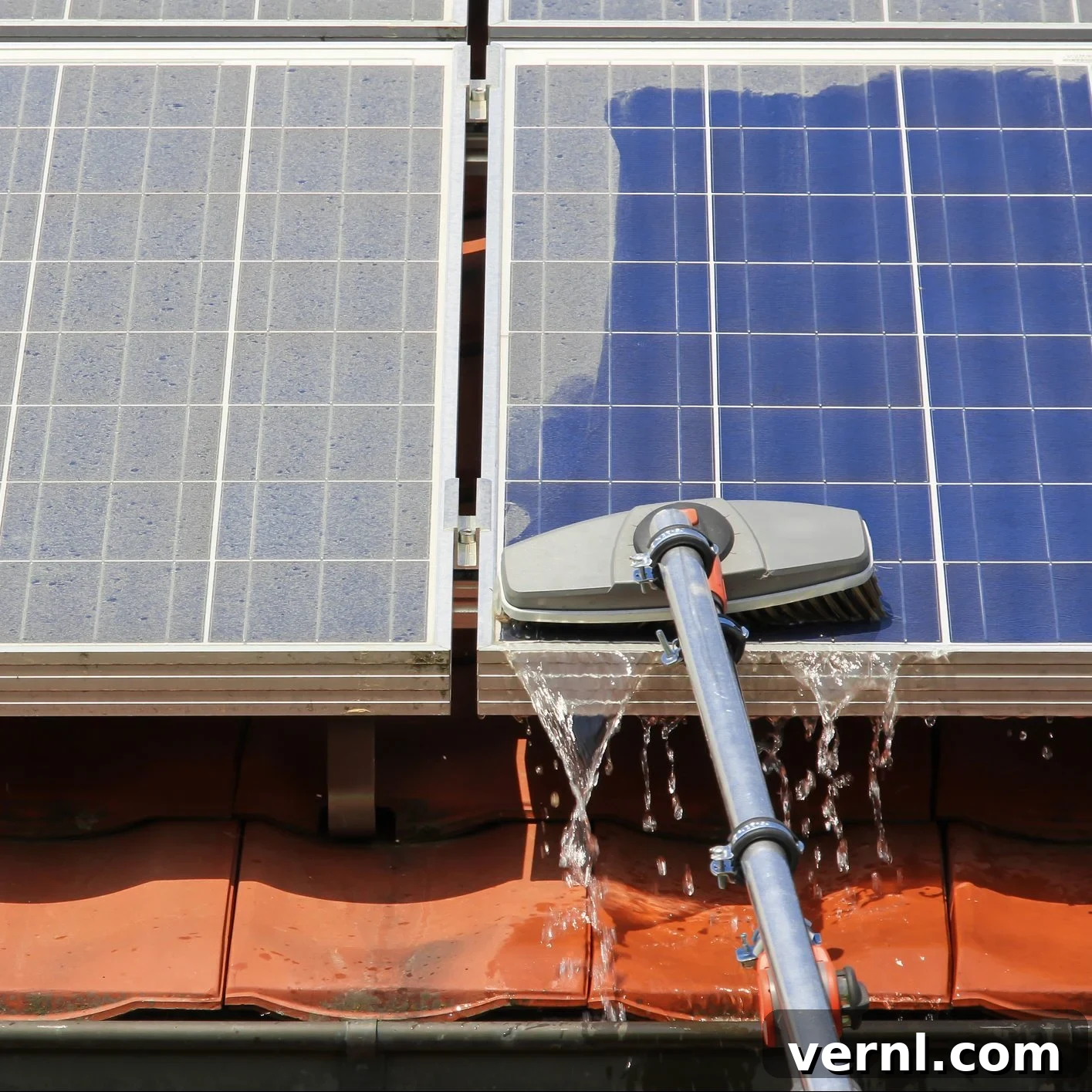
For most homeowners, tackling dust and debris is the most common form of solar panel maintenance. This process can often be managed with readily available tools, but safety and technique are paramount. Always prioritize safety, especially when working at height or with electrical components. Choose a cloudy day or early morning/late evening when panels are cool to avoid thermal shock from cold water on hot glass, which could potentially cause cracking.
- Initial Loose Debris Removal: Begin by using a leaf blower or a standard garden hose with a gentle nozzle to dislodge and rinse away loose debris like leaves, twigs, and a significant portion of the surface dust. This initial step prevents scratching the glass when you proceed to manual cleaning.
- Avoid High-Pressure Washing: Crucially, never use a high-pressure nozzle or a pressure washer directly on your solar panels. The intense force of the water can damage the panel’s sealing, compromise the integrity of the glass coating, or even force water into the internal components, leading to electrical faults and voiding warranties.
- Gentle Cleaning for Stubborn Grime: If panels still appear dusty or stained after the initial rinse, prepare a solution of plain water with a small amount of mild, biodegradable glass cleaner or dish soap. Apply this solution using a soft-bristled brush specifically designed for solar panels or a microfiber cloth attached to an extension pole. Gently scrub the panel surfaces to remove stubborn grime.
- Rinsing and Drying: After scrubbing, thoroughly rinse the panels with clean water from your garden hose. Ensure all soap residue is removed, as dried soap can leave streaks that impede sunlight. Allow the panels to air dry, or for a spot-free finish, use a rubber squeegee carefully.
- Materials to Avoid: Never use abrasive cleaners, scouring pads, steel wool, or any harsh chemicals that could scratch the tempered glass or damage the anti-reflective coatings on your panels. These coatings are vital for maximizing light absorption and protecting the cells.
Managing Snow and Ice on Solar Panels
Winter conditions, particularly heavy snow and ice, can significantly impact solar panel performance. While many panels are installed at an angle designed to encourage self-shedding, substantial accumulation can still occur.
- Steep Angle Advantage: If your panels are installed at a relatively steep angle (typically 30-45 degrees or more), they are generally efficient at shedding snow naturally as temperatures rise or wind picks up. However, prolonged periods of heavy snowfall or freezing rain can still create thick layers that resist shedding.
- Manual Snow Removal (When Necessary): In cases of significant snow accumulation, especially if you rely heavily on your solar system for power, manual removal might be necessary. This can be particularly challenging due to cold and slippery conditions on rooftops. Consider using a specialized solar panel snow rake with a soft head or a telescopic brush. Always work safely, ideally with a spotter, and use appropriate fall protection if accessing the roof. Avoid using metal tools that could scratch the panels.
- Lukewarm Water Method: Yi Li from Renogy recommends pouring lukewarm water onto your panels to melt snow and ice. It is critically important that the water is NOT hot. Applying hot water to freezing cold glass can cause severe thermal shock, leading to cracks or shattering of the panel glass. Slowly rinse away the snow buildup, then use a squeegee to remove any remaining water residue. This prevents it from refreezing and forming a new layer of ice.
- Impact of Frost: Li notes, “While a thin frost won’t block out sunlight, it will diminish the system’s efficiency.” Even a thin layer can diffuse sunlight, reducing the direct energy hitting the cells. While often not worth the risk of manual removal, awareness of its impact is important.
Common Solar Panel Repairs and Troubleshooting Signs
While solar panels are built to last, they can occasionally suffer damage or malfunction. Understanding common issues can help homeowners identify when professional intervention is required. According to Carson Toews, significant issues are quite rare: “SolarSet has only had to replace one broken panel, and it was caused by the customer hitting it with something and cracking it.” This highlights that external forces are often the culprits.
- Cracked Glass: This is often caused by severe weather events (like large hail) or impact from flying debris. A cracked panel can allow moisture ingress, leading to internal cell damage or electrical faults.
- Panel Electronics Failure: Though rare, internal circuitry can fail due to power surges, lightning strikes, or chronic issues like arc and ground faults. This can result in a dead panel or reduced output.
- Inverter Malfunctions: The inverter is the brain of your solar system, converting DC electricity from panels to AC for your home. Signs of inverter failure include error codes on the display, a complete shutdown of power production, or flickering lights in your home.
- Wiring Issues: Loose connections, frayed wires, or damage from pests (like rodents chewing insulation) can lead to reduced efficiency, intermittent power, or safety hazards.
- Hotspots: As mentioned, debris or partial shading can create “hotspots” where certain cells overheat, reducing efficiency and potentially causing permanent damage to the panel. These can sometimes be identified by thermal imaging during professional inspections.
Monitoring your system’s performance is the best way to detect problems. A sudden, unexplained drop in energy production, even on a sunny day, is a strong indicator that something is amiss and warrants investigation.
Can Broken Solar Panels Be Fixed?
The repairability of a broken solar panel depends heavily on the nature and extent of the damage. In many scenarios, particularly when the damage is internal or widespread, paying the cost of a new solar panel often proves to be the most economical and reliable solution. This is because specialized equipment and expertise are usually required for repairs, which are typically performed off-site in a controlled environment by manufacturers or specialized repair centers.
For most problems encountered by homeowners, attempting DIY repairs is strongly discouraged. As Yi Li advises, “I’ve seen homeowners try to re-seal cracked glass on panels. But if water still sneaks in, it can cause electrical problems that lead to bigger issues down the line.” DIY repairs can lead to several complications:
- Voiding Warranties: Many manufacturers’ warranties become void if unauthorized repairs are attempted.
- Safety Hazards: Working with electrical components, especially at height, carries significant risks of electric shock or falls.
- Further Damage: Improper repairs can exacerbate the original problem, leading to more extensive and costly damage to the panel or even the entire system.
- Ineffective Solutions: Without the right tools and knowledge, DIY fixes may not effectively resolve the problem, leaving the panel underperforming or vulnerable to future issues.
It’s always best to consult with your original installer or a qualified solar technician to assess damage and recommend the most appropriate course of action, whether it’s repair or replacement. Homeowners interested in the broader concept of DIY solar panels should focus on ground-mount arrays or small-scale projects, leaving roof-mounted system repairs to professionals.
The Cost of Maintaining and Repairing Solar Panels
Understanding the financial aspects of solar panel upkeep is crucial for comprehensive financial planning of your system. Fortunately, routine maintenance can be remarkably affordable.
- Maintenance Costs: Basic cleaning, if undertaken by the homeowner, is essentially free, assuming you possess a garden hose, a soft brush, and perhaps a leaf blower. For those who prefer to delegate, hiring a professional solar panel cleaning service typically costs around $150 per visit, though this can vary based on your geographic location, the size of your array, and ease of access to your roof.
- Annual Inspections: Beyond cleaning, an annual professional inspection is highly recommended. These inspections assess the structural integrity of your mounting system, verify electrical connections, check for signs of wear and tear, and ensure the inverter is functioning correctly. The cost for an annual inspection is also generally around $150, but can range from $100 to $300 depending on the provider and location.
- Repair Costs: Repair expenses are far less predictable and can range dramatically, from less than $100 for minor adjustments to thousands of dollars for significant component replacements. As Yi Li explains, “There’s a lot of uncertainty, as this mostly depends on whether there’s damage from a storm or other incident.” Replacing a single damaged panel, for example, can cost several hundred dollars, including parts and labor. More complex issues, like inverter replacement, can run into thousands.
- Insurance Coverage: It’s important to note that homeowners insurance often covers damage to solar panels caused by storms, accidents, or other covered perils. When you install a solar system, it’s prudent to contact your insurance carrier to confirm your existing policy provides adequate coverage or if you need to add a specific rider. Understanding your deductible and the claims process beforehand can save significant stress and expense.
How Long Do Solar Panels Last? Maximizing Lifespan and Efficiency
Solar panels are engineered for remarkable longevity. Technically, the individual photovoltaic cells and durable construction can allow panels to continue producing electricity for up to 50 years or even longer. However, their practical, economically viable lifespan is generally considered to be 25 to 30 years. This distinction arises because, while panels continue to function, their performance gradually diminishes over time.
This phenomenon is known as degradation. On average, solar panels degrade at a rate of about 0.5% to 1% per year. This means that after 25 to 30 years, a panel will likely be operating at approximately 70% to 80% of its initial efficiency. While still producing power, this reduced output often makes it more economically sensible to replace the array with newer, more efficient technology that has become available over the decades. Regular maintenance, including keeping panels clean and ensuring all components are functioning correctly, plays a critical role in slowing this degradation rate and ensuring your panels maintain optimal output for as long as possible within their expected lifespan.
Navigating Solar Panel Warranties: Protection for Your Investment
Understanding the warranties that accompany your solar panels is a critical part of protecting your investment. Most reputable solar panel manufacturers offer two primary types of warranties:
- Materials and Workmanship Warranty (Product Warranty): This warranty typically lasts between five to ten years, though some premium brands may offer longer periods. It covers defects in the physical construction of the panel, such as faulty wiring, delamination, or issues with the frame. This ensures that the panel is free from manufacturing defects that could compromise its integrity or performance.
- Performance Warranty (Power Output Warranty): This is arguably the more significant warranty, reflecting the manufacturer’s confidence in the panel’s long-term energy production. It guarantees a certain level of power output over an extended period, most commonly for 25 years. A standard performance warranty will guarantee at least 80% of the original power output at the 25-year mark. For example, if a 300-watt panel is rated at 80% output after 25 years, it should still produce at least 240 watts under standard test conditions. Selecting panels with a strong performance warranty is a good indicator of quality and reliability.
Carson Toews offers insight into the practical application of these warranties: “I have never seen a performance warranty get used. And even if it was to be, the warranty process would likely be very cumbersome to go through. But seeing that a solar panel manufacturer is willing to warranty their product for 25 years is a sign of quality.” This perspective suggests that while the warranty might be difficult to invoke, its very existence serves as a benchmark for product quality.
A common question among prospective solar owners is whether warranties cover hail damage. Toews clarifies, “No, they don’t.” Solar panel warranties typically exclude damage caused by acts of nature or external forces. However, this is where your homeowner’s insurance policy becomes vital. When you install a solar system, it’s imperative to contact your insurance carrier to inquire about adding specific coverage for it. Many policies can be updated with a rider to protect your solar array against hail, wind, and other accidental damage, providing a crucial safety net for unforeseen events.
The Future of Solar Panels: Environmental Impact and Recycling Solutions
As solar energy adoption continues to surge globally, the question of what happens to panels at the end of their operational life becomes increasingly important. While solar power is inherently clean during operation, the disposal of old panels presents an environmental challenge. Many components of solar panels are indeed recyclable, offering a sustainable end-of-life pathway. These include the aluminum frames, the glass sheets, and even some of the silicon cells and copper wiring.
For homeowners, the first step is to check with local recycling centers to see what types of materials they accept and whether any pre-disassembly of the panels is required. However, solar panels can contain small quantities of toxic heavy metals, such as lead, cadmium, and selenium, which necessitate careful handling. If local recycling facilities cannot process them, or if the panels contain these hazardous materials, they should be disposed of at a specialized hazardous waste disposal center to prevent environmental contamination.
The Environmental Protection Agency (EPA) provides additional recommendations for solar panel recycling, outlining best practices and available resources. As Carson Toews observes, “Recycling is a big topic with solar panels, but it isn’t a matured industry.” He expresses optimism for the future: “I believe in the future we will see better provisions for proper disposal on a small scale that homeowners can use.” This sentiment underscores the ongoing evolution of the solar industry, not just in production and efficiency, but also in developing robust, accessible, and environmentally responsible end-of-life solutions for photovoltaic technology. As the industry matures, we can anticipate more standardized and convenient recycling programs that will further enhance solar power’s overall sustainability profile.