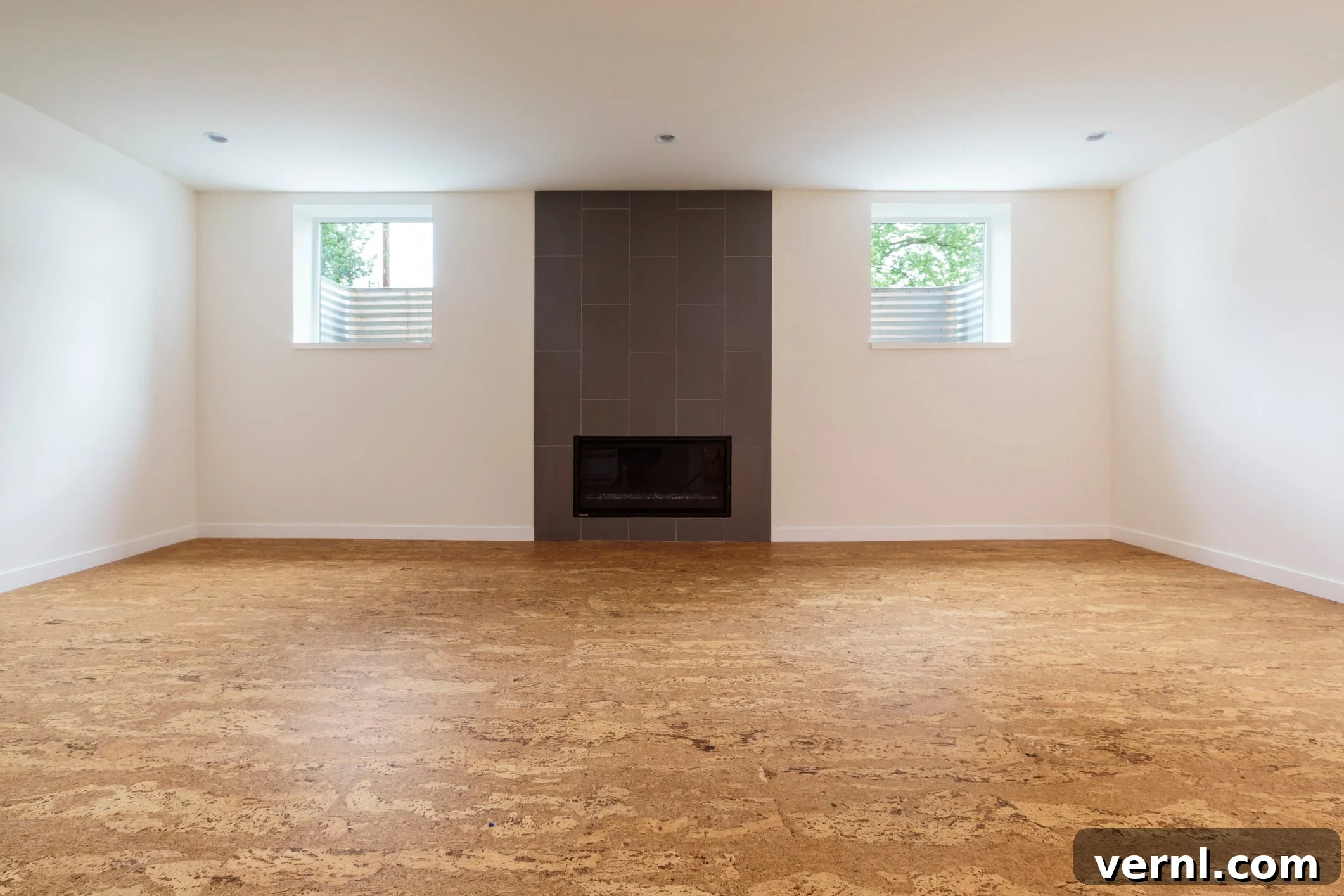
Cork Flooring: The Ultimate Sustainable and Comfortable Choice for Your Home, Especially Basements
When I first acquired the house I now call home, it came with a recently constructed addition whose interior remained unfinished. The foundation, a robust on-grade concrete slab, presented a blank canvas for our design aspirations. After extensive deliberation with my business partner, we made a pivotal decision: to install cork flooring throughout the space. Looking back, this was undeniably the Best. Decision. Ever.
As someone deeply familiar with flooring installations, I took on the task myself. The process of installing the cork planks proved remarkably straightforward, comparable to installing a laminate floor, thanks to their cleverly engineered locking mechanism. The warm, natural tones of the cork beautifully complemented the dramatic orange color scheme we had chosen for the walls and ceiling, creating a cohesive and visually striking environment.
This thoughtful combination resulted in a space that felt exceptionally warm, inviting, and brimming with visual interest. What’s even more impressive is the floor’s enduring performance. After 17 years, it shows virtually no signs of wear, maintaining its pristine condition even in the most high-traffic areas. This personal experience serves as a testament to the remarkable durability and aesthetic appeal of cork, prompting a deeper dive into why this natural material stands out as an exceptional flooring choice, particularly for challenging environments like basements.
Where Does Cork Flooring Work Best? Unveiling Its Ideal Applications
My successful experience was in an on-grade installation. One might wonder if we would have been as fortunate with a below-grade installation, such as a basement. Given that our house is situated in a semi-arid region with a naturally low water table, it’s certainly plausible. However, the suitability of cork in a basement hinges significantly on environmental conditions and proper preparation.
Derived from the bark of the Cork Oak tree, cork naturally absorbs moisture. This inherent property means it typically wouldn’t fare well in consistently wet conditions or areas prone to active leaks. Nevertheless, if you are diligent in adequately waterproofing and preparing your subfloor, cork flooring can transform a humid basement into a comfortable and healthy living space. Why is this possible? Because cork possesses a remarkable natural resistance to mold and mildew growth, a crucial advantage in the often damp conditions of a basement.
For homeowners contemplating basement flooring options, cork presents a compelling case. Here are seven compelling reasons to consider this versatile and sustainable material for your lower level:
Hypoallergenic and Antimicrobial: A Breath of Fresh Air for Your Home
Maintaining good air quality is paramount in any living space, and basements often present unique challenges due to limited ventilation. Even a seemingly watertight basement can struggle with moisture problems. Humid air, when it comes into contact with colder surfaces like a concrete floor, readily condenses, creating an environment ripe for microbial growth. This is where cork truly shines.
Believe it or not, cork performs exceptionally well under these conditions, largely due to a remarkable natural substance called suberin. Suberin is a waxy, hydrophobic (water-repelling) organic polymer that gives cork its distinctive appearance and unique properties. In the bark of the Cork Oak tree (Quercus Suber), suberin plays a vital role in protecting it from insect infestations and rot damage. This natural defense mechanism remains effective when the bark is processed into flooring.
Cork’s inherent resistance to microbial growth, including mold, mildew, and bacteria, makes it an outstanding choice for allergy sufferers. Unlike carpet, which can trap dust mites, pet dander, and other allergens, cork provides a smooth, non-porous surface that doesn’t harbor these irritants. This contributes significantly to improved indoor air quality, making your basement a healthier and more comfortable environment for everyone in the household, especially those prone to respiratory issues or allergies.
Eco-Friendly and Sustainable: A Choice That Benefits the Planet
In an era where environmental consciousness is increasingly important, cork stands out as one of the most eco-friendly and sustainable flooring materials available. Cork is derived from the outer layer of the Cork Oak tree, a magnificent species that grows predominantly in southwestern Europe (with Portugal and Spain being major producers) and parts of northern Africa. What makes cork truly exceptional is its harvesting process.
The bark of the Cork Oak can be harvested without causing any damage to the tree itself. This remarkable process involves carefully stripping the outer bark every 9 to 12 years, allowing the tree to regenerate and produce new bark. An average Cork Oak tree, which can live for up to 200 years, can be harvested up to 15 times over its lifespan, making it a truly renewable resource. The harvesting process is traditionally performed by skilled artisans using hand tools, ensuring minimal impact on the trees and the surrounding ecosystem.
Thanks to recent reforestation programs and sustainable forestry practices, the world’s supply of cork is actually increasing, ensuring its availability for generations to come. Furthermore, cork is a carbon-negative material; the Cork Oak forests play a crucial role in absorbing CO2 from the atmosphere, and the production process itself has a minimal environmental footprint. When a cork floor eventually reaches the end of its exceptionally long life and needs to be replaced, it naturally biodegrades, returning to the earth without leaving harmful residues. Choosing cork flooring is not just a decision for your home; it’s a decision for the planet.
Affordable and Easy to Install: DIY-Friendly and Budget-Conscious
Beyond its environmental credentials, cork flooring offers practical advantages in terms of cost and installation ease. Depending on the quality, thickness, and design, cork flooring typically ranges from $2 to $12 per square foot. While our specific installation in 2006 cost $3.25 per square foot, this broad price spectrum provides ample flexibility for budget-conscious homeowners. For basement installations, where top-grade aesthetic perfection might not be the primary concern, more affordable options within this range can deliver excellent value without compromising on performance or durability.
Cork floorboards generally come in two primary formats: glue-down tiles and snap-together planks. Both options are well within the capabilities of an enthusiastic DIYer. For basement applications, snap-together boards are often the preferred choice. These planks, engineered with an interlocking system similar to laminate flooring, create a floating floor that doesn’t need to be glued directly to the subfloor. This floating installation is advantageous for basements because it allows for the incorporation of water-resistant underlayments and moisture barriers, providing an essential layer of protection against potential dampness.
The installation process for snap-together cork planks is remarkably simple. They can be precisely cut using standard power saws, and their interlocking design means they click together effortlessly, reducing installation time and complexity. This DIY-friendly approach can significantly reduce overall project costs, making cork an even more attractive and accessible flooring solution for your basement renovation.
Provides Cushion and Insulation: Comfort and Energy Efficiency Combined
One of the most immediate and appreciated benefits of cork flooring is the unparalleled comfort it provides underfoot. The cork floorboards in our house, for example, are 5/8-inch thick, incorporating a 3/16-inch cork design layer, a high-density fiberboard core, and a cushioning underlayment, also crafted from cork. The design layer and the cork underlayment are inherently compressible, creating a soft, resilient surface that makes the floor incredibly comfortable to walk on, stand on for long periods, and even play on. While product specifications may vary slightly between brands, most cork flooring options share these crucial characteristics.
This natural resilience not only provides exceptional comfort but also offers significant thermal insulation, which is particularly beneficial for basements. Concrete basement floors are notoriously cold, but cork’s cellular structure, filled with millions of microscopic air pockets, acts as a natural insulator. This helps to maintain a more consistent and warmer temperature in the basement, reducing heat loss through the floor and potentially lowering your heating bills. Beyond thermal benefits, cork also excels in sound insulation. While its sound-dampening properties are often highlighted for reducing noise transfer between upper floors, they are equally valuable within the basement itself. Cork’s ability to absorb impact noise creates a quieter, more serene space by minimizing echoes and footfall sounds, enhancing the overall tranquility of your home.
Lots of Design Choices: Unleash Your Interior Design Creativity
Far from being a monolithic material, cork flooring offers a surprisingly wide array of design possibilities to suit virtually any aesthetic preference. When we installed our floor, we opted for a product featuring a dramatic burl pattern, which added a rich, organic texture to the room. However, the versatility of cork extends far beyond a single look.
It’s possible to find cork floors with patterns so subtle they appear almost monochromatic, offering a minimalist and contemporary feel. On the other end of the spectrum, some manufacturers expertly craft cork to mimic the appearance of traditional wood planks, complete with realistic grain patterns and textures. The natural reddish-brown wood tones of cork typically predominate, exuding warmth and authenticity. Yet, for those seeking a different palette, many manufacturers now incorporate dyes to produce cork flooring in sophisticated shades of gray, pristine white, or even vibrant custom colors. This extensive range means cork can seamlessly integrate into modern, rustic, traditional, or eclectic interior design schemes, providing both beauty and functionality. If you’re exploring other natural options, you might also want to check out the benefits of basement wood flooring to compare your choices.
Long Lasting: Decades of Durable Performance
One of the most compelling arguments for choosing cork flooring, especially for a high-traffic area like a basement, is its exceptional longevity. Thanks to its natural rot resistance and inherent durability, cork flooring has been known to last 40 years or more under ideal conditions. While manufacturer warranties typically offer a more conservative estimate, often around ten years, personal experiences like mine attest to cork’s potential for significantly longer lifespans. Our floor, now 17 years old, shows remarkably few signs of age, strongly suggesting it will endure for at least twice its warranty period.
It is crucial to emphasize, however, that the long-term performance of any flooring material in a basement environment is inextricably linked to moisture control. No flooring, regardless of its inherent durability, will last long in a consistently damp or actively leaking basement. Therefore, to truly maximize the lifespan and benefits of cork in your basement, maintaining a dry, well-ventilated space is absolutely imperative. Proper subfloor preparation, including effective waterproofing and a reliable moisture barrier, forms the bedrock of a long-lasting cork floor installation.
Easy to Keep Clean: Low Maintenance for Busy Lifestyles
Cork flooring is not only beautiful and durable but also remarkably easy to maintain, making it an ideal choice for busy households. Typically, cork flooring is factory-finished with a durable urethane coating that provides a protective barrier against daily wear and tear. Once installed, routine maintenance requires little more than occasional sweeping or vacuuming to remove dust and debris. This simple regimen helps preserve the floor’s appearance and extend the life of its finish.
While cork is generally resilient, spills should always be wiped up immediately to prevent staining, as cork is an absorbent material at its core. However, depending on the pattern and coloration of your cork floor, some minor stains or blemishes might not even be noticeable. Variegated or patterned cork designs are particularly effective at masking scuff marks, minor defects, and everyday dirt, keeping your floor looking pristine with minimal effort.
Unlike some wood floors, you generally cannot sand down a cork floor to bare material and refinish it completely. However, you can effectively restore its original luster and protective qualities by applying a new coat of polyurethane. Before doing so, it is essential to perform a thorough cleaning of the existing finish to remove all dirt and grime. Following cleaning, a light scuffing of the old finish with fine-grit (150-grit) sandpaper will create the necessary adhesion for the new polyurethane coat, ensuring a smooth, durable, and renewed surface that will protect your cork floor for many more years to come.