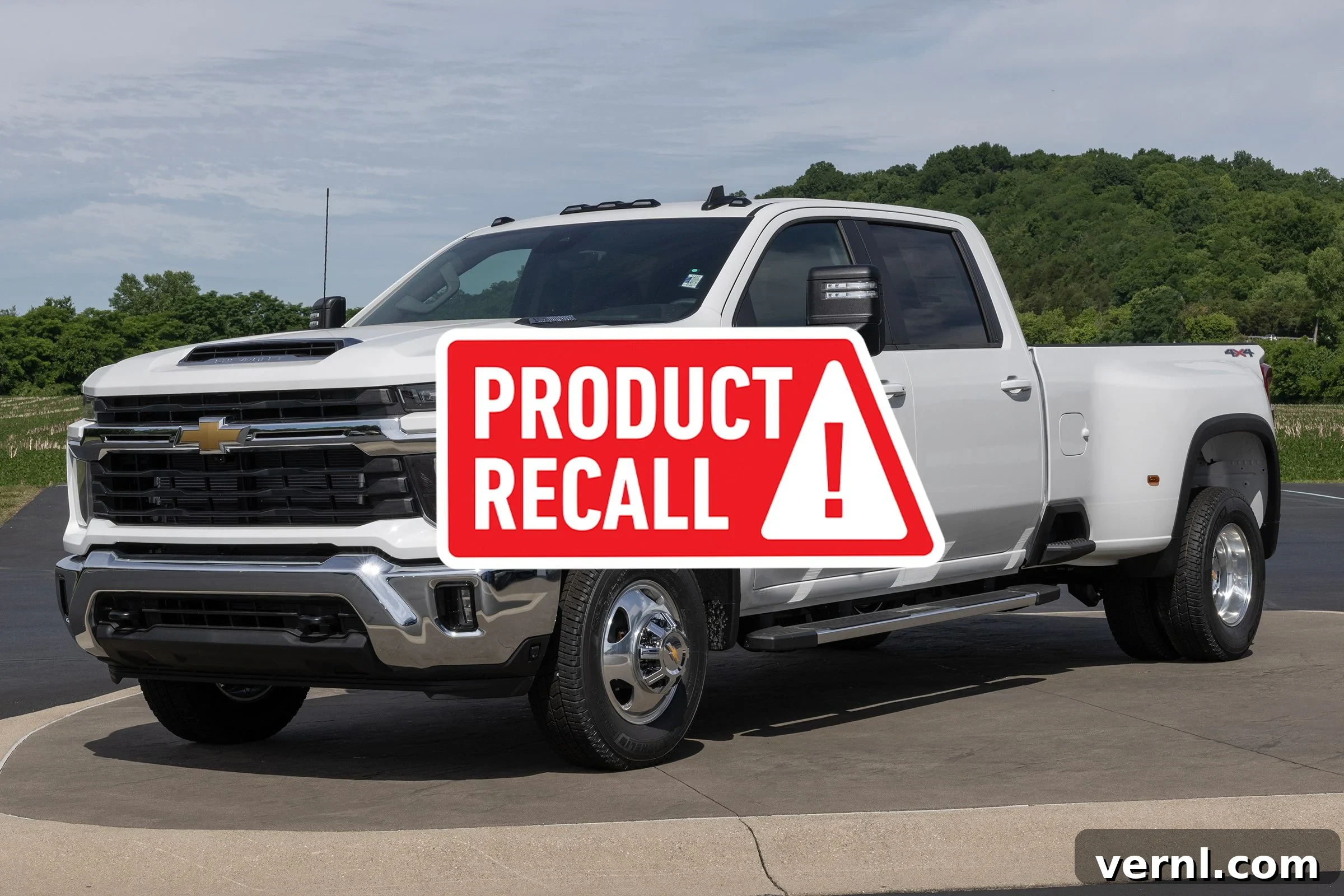
In an era where automotive innovation is constantly pushing boundaries, the importance of vehicle safety remains paramount. Unfortunately, instances of car recalls are a persistent reminder that even the most advanced engineering can encounter unforeseen challenges. Recent headlines underscore this reality, with General Motors (GM) announcing a significant recall affecting thousands of its heavy-duty trucks. This proactive measure addresses a critical safety concern related to the vehicle’s tailgate mechanism, emphasizing the manufacturer’s commitment to consumer well-being and regulatory compliance.
The National Highway Traffic Safety Administration (NHTSA), the leading federal agency dedicated to achieving the highest standards of safety on the nation’s roads, issued a detailed safety brief on this matter towards the end of November 2024. Their comprehensive report outlines the specific defect, the vehicles involved, and the potential risks posed to drivers and other road users. Understanding these details is crucial for affected owners to take prompt action and ensure their safety. This guide aims to demystify the recall process, providing clarity on why this recall has been initiated, precisely which vehicles are impacted by the faulty tailgate issue, and the essential steps owners should take to mitigate any risks.
Vehicle recalls, while sometimes unsettling, are a vital component of the automotive safety ecosystem. They represent a manufacturer’s identification of a defect that could compromise safety, followed by a commitment to rectify it at no cost to the consumer. For GM truck owners, this specific recall highlights a potential malfunction that, if left unaddressed, could lead to hazardous situations on public roads. Our breakdown below will equip you with all the necessary information to navigate this recall with confidence, ensuring peace of mind and continued safety.
Why Is GM Recalling Some of Its Vehicles? Understanding the Tailgate Defect
The core of the General Motors recall centers around a critical defect within the tailgate’s electronic gate-release switch. As detailed in the NHTSA safety brief, this particular component is susceptible to malfunction primarily due to “water intrusion.” In practical terms, this means that moisture, whether from rain, snow, car washes, or even high humidity, can seep into the switch mechanism. Once water infiltrates, it creates an environment conducive to a short circuit within the electrical system of the switch.
The Mechanics of the Malfunction and Its Immediate Consequences
When this electronic switch experiences a short circuit, it can erroneously trigger the tailgate’s release mechanism. The most concerning aspect of this defect is its potential to cause the tailgate to unlatch while the vehicle is in a parked position. While the immediate thought might be that the tailgate would only swing open if the vehicle were in motion, the risk begins even before you drive off. An unlatched tailgate, even when stationary, presents an inherent vulnerability. It negates the fundamental purpose of a secure tailgate: to safely contain cargo and provide a structural closure to the vehicle’s bed.
Unpacking the Safety Hazards: From Lost Cargo to Increased Crash Risk
The implications of an unlatched or unexpectedly opening tailgate extend far beyond mere inconvenience. NHTSA’s safety brief explicitly outlines the severe dangers associated with this defect:
- Loss of Unsecured Cargo: The most immediate and tangible risk is the potential for unsecured items in the truck bed to fall out. Heavy-duty trucks, like those affected by this recall, are frequently used to transport tools, equipment, materials, and personal belongings. If the tailgate unexpectedly opens while driving, these items can spill onto the roadway. This not only results in financial loss for the owner but also creates significant hazards for other drivers.
- Creation of a Road Hazard: Debris on the highway, whether a toolbox, construction material, or even luggage, poses an immediate and unpredictable danger. Other vehicles might have to swerve suddenly to avoid hitting the scattered cargo, potentially leading to multi-vehicle collisions. Such situations can cause chain reactions, especially at high speeds, escalating a minor incident into a major accident with severe injuries or fatalities.
- Increased Risk of a Crash: The ultimate concern highlighted by the NHTSA is the heightened risk of a crash. This risk isn’t limited to other drivers avoiding fallen cargo. An open tailgate can also affect the aerodynamics and handling of the truck itself, particularly at higher speeds. Furthermore, the driver of the affected truck might be startled or distracted by the sudden opening of the tailgate, losing focus on the road and increasing the likelihood of an accident. In certain scenarios, an unlatched tailgate could even interfere with trailer connections if the vehicle is towing, leading to dangerous detachments.
General Motors, in conjunction with the NHTSA, initiated this recall out of an abundance of caution and a steadfast commitment to preventing these potential hazards from materializing. It underscores the rigorous safety standards expected in modern vehicle manufacturing and the continuous monitoring required to address defects promptly.
Which GM Vehicles Have These Tailgate Issues? Identifying Affected Models
This widespread safety recall impacts a significant number of vehicles within General Motors’ heavy-duty truck lineup, specifically targeting models from the 2024 production year. With over 130,000 GM vehicles identified as potentially suffering from this electronic tailgate-release switch malfunction, the scope of this recall is substantial. It is crucial for owners of these robust workhorses and personal trucks to be aware and vigilant.
The Specific Models Under Recall
The recall primarily affects the 2024 model year of GM’s popular heavy-duty pickup trucks, renowned for their power, towing capabilities, and durability. The affected models include:
- 2024 Chevrolet Silverado HD 2500: A cornerstone of the heavy-duty truck market, popular for both commercial and personal use.
- 2024 Chevrolet Silverado HD 3500: The even more capable sibling, often used for demanding towing and hauling tasks.
- 2024 GMC Sierra HD 2500: GMC’s premium heavy-duty offering, sharing much of its architecture with the Silverado but with distinct styling and features.
- 2024 GMC Sierra HD 3500: The top-tier GMC heavy-duty truck, favored by those requiring maximum capability and refinement.
Owners of these specific 2024 model year trucks should pay close attention to the unfolding details of this recall. The sheer volume of vehicles impacted underscores the seriousness of the defect and the potential for widespread safety implications if not addressed promptly. These trucks are often the backbone of many businesses and a critical asset for families who rely on their utility for recreation and work. Ensuring their safe operation is paramount.
Notification Process for Owners
General Motors has outlined a clear plan for notifying affected vehicle owners. Official recall notification letters are scheduled to be mailed to registered owners beginning in mid-January 2025. These letters are not merely informative; they will serve as your primary official communication regarding the recall. They will contain detailed instructions on how to proceed, including information on scheduling the necessary repair at an authorized dealership, what documentation to bring, and any interim safety precautions GM recommends.
If you are an owner of one of the vehicles listed above, it is imperative to keep a close watch on your mailbox during this period. The owner’s letter will provide comprehensive guidance and specific instructions tailored to your situation. Even if you believe your tailgate is functioning correctly, receiving this letter confirms your vehicle’s inclusion in the recall and the need for inspection and potential repair. Do not dismiss it as junk mail; it is a critical safety notice that directly impacts your vehicle and your safety on the road.
What To Do If You Have a Recalled GM Truck: Your Action Plan for Safety
Receiving a recall notice can be concerning, but it’s crucial to understand that it also provides a clear pathway to ensure your vehicle’s safety and reliability. For owners of the affected 2024 Chevrolet Silverado HD and GMC Sierra HD trucks, taking prompt action regarding the tailgate recall is paramount. General Motors, in collaboration with NHTSA, has established a straightforward and cost-free remediation process.
The Repair Process: Free of Charge and Essential
According to the NHTSA brief, General Motors dealerships are fully equipped and prepared to address this tailgate issue. The directive is clear: “dealers will replace the exterior touchpad switch assemblies, free of charge.” This means you will not incur any cost for the parts or labor associated with this repair. This commitment from the manufacturer is standard practice for safety recalls, ensuring that all affected vehicle owners can have the defect corrected without financial burden. It is an investment in your safety and the safety of everyone on the road.
The repair involves replacing the potentially faulty exterior touchpad switch assembly with a new, redesigned component that is impervious to water intrusion and the subsequent short-circuiting issue. This permanent fix is designed to eliminate the risk of the tailgate unlatching unexpectedly. Therefore, do not delay in scheduling your service appointment once you receive your official notification or if you choose to act proactively.
Proactive Steps: Don’t Wait for the Letter
While GM plans to mail official recall letters in mid-January 2025, you do not necessarily have to wait for this letter to take action. If you own one of the recalled models, you can be proactive in addressing this safety concern. Here’s how:
- Contact Customer Service: Reach out to the dedicated customer service lines for Chevrolet or GMC.
- For Chevrolet owners, call: 1-800-222-1020
- For GMC owners, call: 1-800-462-8782
When you call, it is vital to have your Vehicle Identification Number (VIN) ready. This 17-character code uniquely identifies your vehicle and will allow customer service representatives to confirm if your specific truck is included in the recall.
- Specify the Recall Number: To expedite the process and ensure you are inquiring about the correct issue, clearly state that you are calling about recall number N242469160. This is General Motors’ internal reference number for this specific tailgate recall. It’s also helpful to note that this recall is an expansion of the broader NHTSA Recall 24V-060, which might be another way to reference it. Providing these numbers helps the service representative quickly identify the correct service bulletin and repair procedure for your vehicle.
- Schedule Your Repair: Once your vehicle’s inclusion in the recall is confirmed, you can typically schedule a service appointment directly through the customer service line or by contacting your preferred authorized GM dealership. Be prepared for potentially longer wait times for appointments due to the high volume of affected vehicles.
Interim Safety Measures: Until the Fix is Applied
Given the safety risks associated with an unlatched tailgate, it is highly advisable to implement interim safety measures until the permanent repair is completed. Your vigilance can prevent potentially dangerous situations:
- Double-Check Your Tailgate: Make it a routine to physically inspect and double-check that your tailgate is securely latched every single time you get into your truck and before you drive off. A quick tug or visual confirmation can provide immediate peace of mind.
- Limit Cargo and Secure Items: If you must transport items in the bed, ensure they are absolutely necessary and are meticulously secured. Avoid carrying unsecured cargo, especially items that could easily roll or slide out if the tailgate were to open. Consider alternative methods of transport for sensitive or valuable items.
- Reduce Vehicle Use: If possible, limit your use of the affected vehicle as much as you can until the issue has been remedied. Minimizing driving time reduces the exposure to risk. If unavoidable, drive cautiously and be extra aware of your surroundings, especially when making turns or encountering bumps that could jostle the tailgate.
- Avoid Highways and High Speeds: While the recall mentions the tailgate unlatching “in park,” an unlatched tailgate could still swing open at speed, or items could fall out more easily. If you must drive, try to avoid highways or routes where high speeds are necessary, as the consequences of lost cargo or a sudden opening tailgate are far more severe at velocity.
The phrase “You don’t want to be the reason for a pileup on the highway or a crash on the way home from the hardware store” is not an exaggeration. The consequences of an overlooked safety defect can be dire, affecting not only you but also innocent fellow motorists. Taking these interim steps demonstrates responsible vehicle ownership and contributes to overall road safety.
The Broader Impact of Automotive Recalls
This GM recall, like many others, serves as a critical reminder of the ongoing commitment required from both manufacturers and consumers to maintain vehicle safety standards. Recalls are not an admission of overall poor quality but rather a testament to the rigorous testing and monitoring processes that identify potential defects before they lead to widespread harm. They are a crucial mechanism for protecting public safety and reinforcing consumer confidence in the automotive industry.
Manufacturers proactively issue recalls to prevent accidents, injuries, and fatalities. For consumers, responding promptly to a recall notice is not just about protecting their investment; it’s about fulfilling their responsibility as road users. Staying informed through official channels like NHTSA and manufacturer websites, and acting decisively when a recall affects your vehicle, are key aspects of modern vehicle ownership. This GM tailgate recall is another instance where active participation from owners is essential to resolve a safety concern and maintain the integrity of our transportation network.