The Enduring Elegance and Versatility of Tambour: A Comprehensive Guide
When the word “tambour” comes to mind, many might instinctively picture a tambourine – and historically, that association would be quite accurate. As noted by award-winning Brooklyn architect Eugene Colberg of Colberg Architecture, “The word comes from tambourine, and refers to a circle, drum or frame.” This deep-rooted etymology links the flexible, slatted material we know today directly to its musical origins, specifically to an elongated type of drum known as a “tamborin de Provençe” used throughout medieval times. This drum itself was often referred to simply as a tambour, suggesting a historical interchangeability between the terms from their very inception, highlighting its ancient roots and cultural significance.
With such a rich and ancient pedigree, it’s hardly surprising that tambour has not only survived the test of time but flourished, evolving into a highly sought-after material in contemporary design and architecture. Revered for its lightweight nature and remarkable ease of manipulation, tambour brings the inherent richness, warmth, and texture of natural wood to an array of applications. From sophisticated wall coverings that add dynamic depth to a room, to elegant cabinet faces that conceal clutter with grace, and even bespoke coffee tables, tambour effortlessly enhances countless home components with its unique blend of innovative functionality and compelling aesthetic appeal.
While procuring custom or professionally installed tambour can sometimes represent a significant investment, its growing accessibility for the DIY enthusiast offers a compelling alternative. For those willing to embark on a do-it-yourself project, the cost of incorporating this distinctive and luxurious material into their home can be substantially reduced, thereby making its unique charm attainable for a wider audience. This guide delves into everything you need to know about tambour, from its historical origins to its modern applications and the practicalities of making it yourself.
What Exactly is Tambour? Unpacking Its Modern Usage and Construction
In its contemporary application, tambour transcends its musical heritage to describe a specific and ingenious construction method: the precise fastening of numerous closely-spaced, narrow pieces of material – typically wood slats – onto a flexible backing. This linear arrangement of wooden slats bears a striking resemblance to the cords on the side of a drum that secure its head, which serves as a poetic and practical link to its etymological roots and perhaps explains the enduring crossover usage of the word to describe this unique material.
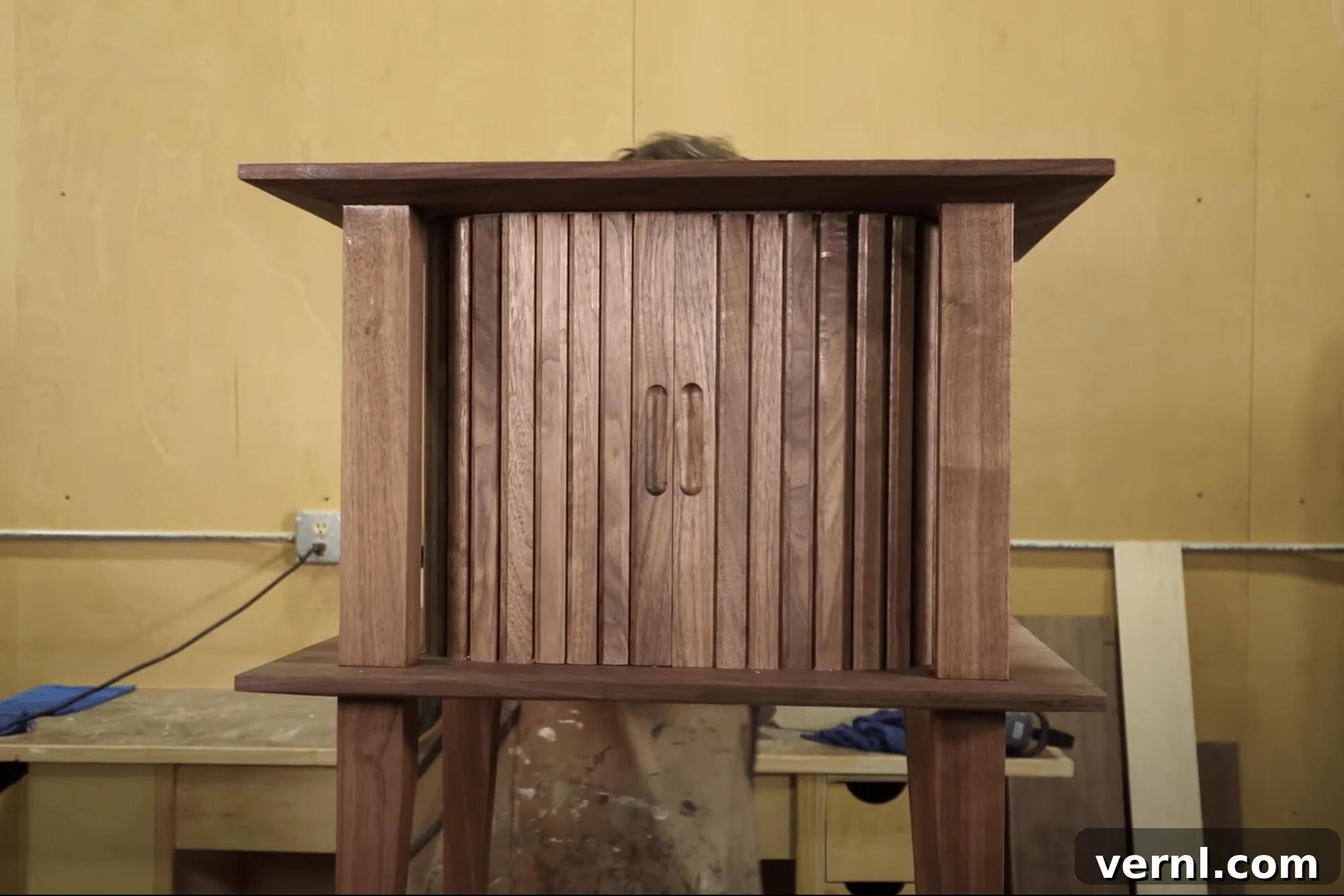
Historically, tambour has been extensively utilized in the creation of sliding doors. The ingenious design allows these doors to gracefully disappear into a recessed cavity when opened, thereby saving valuable space and creating a clean, uncluttered look. A key characteristic that enables this functionality is the flexible backing, which allows the individual slats to bend and slide effortlessly along curved tracks. This unique property has cemented tambour’s status as the material of choice for iconic pieces such as the classic roll-top desk covers, elegant vintage wine cabinets, bespoke bookshelves, and precision-engineered humidors, where both functionality and aesthetic fluidity are paramount.
Beyond its traditional role in doors, tambour’s compelling decorative appeal has led to its popular integration into various architectural and interior design elements. It’s frequently incorporated into statement wall coverings, adding a dynamic texture and a sense of sophisticated movement to an otherwise flat surface. It also shines as a sophisticated choice for cabinet facings, kitchen island fronts, and furniture accents, introducing an element of handcrafted luxury and visual interest. A common design feature, the wood slats often boast a semicircular cross-section, which not only contributes to their visual elegance but also provides excellent sound absorption properties. This makes tambour an increasingly attractive option for spaces where acoustic comfort is desired, such as home offices, studies, or entertainment rooms where controlling sound reflection is beneficial. However, as architect Colberg highlights, this acoustical benefit often comes with a premium, estimating that tambour panels with these properties can be roughly twice the cost of standard acoustical panels, reflecting their dual functionality, intricate craftsmanship, and high-quality materials.
Exploring the Diverse Types and Classifications of Tambour
The versatility of tambour is further highlighted by its various classifications, primarily based on its intended application and construction. Eugene Colberg provides a useful distinction between two fundamental types that define its primary functions:
- Dynamic Tambour: This type is specifically engineered for flexible applications, predominantly sliding door mechanisms. Its defining characteristic is the highly flexible backing, which enables the material to bend, curve, and seamlessly conform to a multitude of track shapes – be they straight, subtly curved, or even intricately serpentine. Dynamic tambour is the secret behind the smooth, gliding action of roll-top desks, disappearing cabinet doors, and integrated storage solutions, offering both exceptional aesthetic appeal and practical space-saving benefits in areas with limited clearance.
- Static Tambour: In contrast to its dynamic counterpart, static tambour is designed for fixed applications where rigidity and decorative appeal are paramount. It is the preferred choice for permanent installations such as wall panels, decorative cabinet facings, and furniture embellishments that do not require movement. Colberg particularly favors static tambour for the facing of kitchen cabinets, where the inherent luxury, natural beauty, and tactile quality of the chosen wood species dramatically enhances the overall decor, adding warmth, texture, and a bespoke, high-end feel to the heart of the home.
Colberg further refines the classification of tambour by considering its profile, the specific species of wood used, and the dimensions of its individual slats. The profile of the slats typically falls into two main categories: semicircular or rectangular. Semicircular slats are celebrated for their ability to introduce a refined elegance, a soft, undulating texture, and a distinct shadow play to any surface. However, their intricate curved shape makes them considerably more challenging to manufacture with precision, especially for DIY enthusiasts working in a home workshop setting without specialized machinery. For those planning to construct a tambour door or panel themselves, Colberg strongly advises opting for a rectangular cross-section. This profile is significantly easier to work with, as these slats can be precisely and repeatedly cut using common workshop tools like a table saw or a band saw, thereby simplifying the fabrication process without compromising on the material’s fundamental appeal or structural integrity.
Furthermore, while wood is undoubtedly the most traditional and prevalent material for tambour, the slats are not exclusively limited to timber. Contemporary designs and functional requirements have led to the innovative use of other materials, including various metals (like aluminum or stainless steel) and PVC. Metal tambour, often seen in industrial or ultra-modern aesthetics, offers unparalleled durability, a sleek, sophisticated look, and excellent resistance to wear and tear. PVC tambour, on the other hand, provides a lightweight, moisture-resistant, and often more cost-effective alternative, suitable for applications where environmental factors, humidity, or budget constraints are primary considerations. The size of the slats, primarily referring to their width, can also vary considerably, typically ranging from a slender one-half inch for delicate applications to a more substantial two or three inches for bolder statements. Narrower slats inherently offer greater flexibility, making them ideal for smaller doors or intricate curves where tight radii are required. Conversely, while wider slats might be quicker to produce in bulk, cutting a sufficient number of them for expansive applications like large closet doors or entire wall coverings can prove to be quite impractical and labor-intensive, necessitating careful planning and consideration based on the project’s scale, desired aesthetic, and practical manufacturing capabilities.
The Advantages and Disadvantages of Tambour Doors and Panels
Tambour stands out as an exceptional, often unparalleled, choice for doors that operate on curved tracks. The inherent rigidity provided by the individual wood slats, coupled with the flexibility of the backing material, creates a harmonious synergy that allows the door to bend and glide seamlessly. This unique combination offers both robust structural integrity and graceful movement, making tambour doors a prime solution for spaces where conventional hinged or standard sliding doors are impractical or undesirable due to space limitations or design preferences.
Pros of Incorporating Tambour
- Unrivaled Elegance and Aesthetic Appeal: Tambour doors and panels possess an inherent sophistication and a distinctive visual texture. By carefully selecting exotic wood species, such as rich mahogany, striking walnut, vibrant cherry, or even sustainable bamboo, any project can be transformed into a true conversation piece. The natural grain patterns, coupled with the rhythmic undulation of the slats, create a luxurious focal point in any room, elevating the overall design.
- Superior Durability and Enhanced Security: When fully closed and properly locked, tambour doors offer impressive security and structural integrity. The interlocking nature of the slats, especially when backed by a sturdy material and guided by robust tracks, forms a solid and resilient barrier. This makes them suitable for securing valuable contents in cabinets, providing privacy for alcoves, or safeguarding sensitive items in a home office.
- Remarkably Space-Saving Functionality: Unlike traditional swinging doors that demand a significant clearance arc, or even standard sliding doors that require adjacent wall space for retraction, tambour doors gracefully retract into a compact, often hidden recess. This ingenious mechanism makes them an ideal solution for tight spaces, small rooms, or any area where maximizing usable floor and wall space is a priority, offering full access without obstruction.
- Relatively Straightforward to Fabricate (DIY-Friendly): For the eager do-it-yourselfer with basic woodworking skills, rectangular slats are surprisingly easy to produce with precision. They can be ripped accurately on a table saw with minimal fuss. The subsequent step of gluing these prepared slats to a flexible backing, such as canvas or heavy fabric, is equally straightforward, making tambour a rewarding and achievable DIY project for those looking to add a custom touch to their home.
- Enhanced Acoustic Properties: As previously mentioned, the undulating surface and often semicircular profile of tambour slats can contribute significantly to better sound absorption. When applied to wall panels or large cabinet faces, this unique surface helps to mitigate echoes, reduce sound reverberation, and improve the overall acoustic comfort of a space, creating a calmer and more serene environment.
- Versatile Design Integration: Tambour’s adaptability allows it to blend seamlessly with various interior design styles, from mid-century modern and minimalist to contemporary and even traditional aesthetics. Its texture and material can soften harsh lines, add warmth to industrial spaces, or provide a subtle yet sophisticated backdrop.
Cons and Considerations for Tambour
- Potential for Slat Separation: A critical consideration during tambour construction is the adhesive used. If the wrong type of glue is employed to attach the individual slats to the backing material (most commonly canvas or a synthetic fabric), they can eventually work themselves loose, leading to an unsightly appearance and compromised functionality. Professional craftsmen often opt for hide glue due to its unique properties; it remains flexible over time while maintaining exceptional adhesion, thereby accommodating the natural movement of the wood and the bending action of the tambour without becoming brittle or cracking.
- Susceptibility of Individual Slats to Warping: Wood is a natural, hygroscopic material that reacts to changes in humidity and temperature by expanding and contracting. To prevent individual slats from warping, twisting, or cupping, it is absolutely crucial that they are meticulously sealed on all sides with a protective finish like polyurethane or lacquer. This thorough sealing creates a moisture barrier, stabilizing the wood and minimizing its moisture exchange with the environment, thus ensuring the long-term integrity and smooth operation of the tambour.
- Challenges in Cleaning and Maintenance: Due to the closely spaced nature of the slats and the often-enclosed tracks, dusting and cleaning the edges of the individual slats can prove difficult and time-consuming. These edges are typically only fully exposed when the door is on a curved part of the track or deep within the recess of its enclosure, making routine cleaning a more intricate task compared to flat surfaces. Regular gentle dusting with a soft brush, a narrow vacuum attachment, or compressed air is often required to prevent dust accumulation and maintain its pristine appearance.
- Higher Material and Labor Cost (for professional installation): While DIY offers cost savings, procuring high-quality tambour or commissioning custom tambour features from professional artisans can be more expensive than standard cabinet doors or flat panels. The intricate assembly process, the precision required for specialized tracking systems, and the craftsmanship involved all contribute to potentially higher labor costs and premium material expenses.
- Risk of Damage to Track System: If the tracks are not properly installed or if debris accumulates within them, the tambour door’s movement can become stiff, jerky, or even completely jammed. This requires careful and regular maintenance of the track system to ensure smooth operation.
Diverse Applications: Tambour Door and Panel Uses Around the Home
Tambour offers immense flexibility in design and functionality, capable of sliding both vertically and horizontally, or serving as static decorative elements. Its ability to retract and disappear, or simply add texture, makes it an ingenious solution for various spaces where traditional doors or flat panels are not ideal. Here are some of the most popular and creative ways tambour doors and panels are incorporated into modern homes:
- Kitchen Cupboards and Pantry Units: Vertical sliding tambour doors present an elegant and highly practical alternative to conventional swinging cabinet doors in kitchens. They eliminate the need for clearance space, allowing for seamless integration into compact layouts or busy cooking zones. They are perfect for concealing small appliance garages, spice racks, pantry shelves, or even integrated waste bins, keeping the countertop clutter-free while providing easy and ergonomic access.
- Designer Cabinets and Bespoke Furniture: The aesthetic versatility of tambour allows for its use in custom-designed cabinets, whether featuring sleek, straight door openings or graceful, curved profiles. These bespoke pieces can range from entertainment units to sophisticated bar cabinets, unique sideboards, or even integrated wall units, adding a touch of architectural interest and refined craftsmanship to living spaces.
- Alcove Shelves and Nooks: In situations where room is at a premium and there isn’t sufficient space for a swinging door, a tambour door provides an ingenious and aesthetically pleasing solution for enclosing alcove shelves or small storage nooks. It allows full access without impeding traffic flow or interfering with other furniture arrangements, creating a tidy and organized appearance.
- Oversized Closet Doors: Imagine the seamless look of large, custom-made tambour doors for bedroom closets. Not only do they offer a unique design statement that can elevate a room’s aesthetic, but their smooth sliding mechanism means no valuable floor space is lost to opening doors, providing full, unobstructed access to the closet interior. This is particularly advantageous in smaller bedrooms where every inch of functional space counts.
- Home Office Storage and Desks: Tambour is an excellent choice for concealing office supplies, files, printers, or even computer monitors in a home office, maintaining a tidy and professional environment when not in use. Roll-top desks, the classic application, remain popular for their functional elegance. Its potential sound-absorbing qualities also contribute to a calmer, more focused workspace.
- Kitchen Island Facings and Bar Counters: Static tambour panels can dramatically enhance the aesthetic of kitchen islands or bar counters, adding texture, warmth, and a custom-designed look. The vertical slats create a visual rhythm that is both sophisticated and inviting.
- Retail Displays and Commercial Spaces: Beyond the home, tambour is also widely utilized in commercial settings for elegant product displays, reception desks, boutique shelving, and storage solutions where a sophisticated and space-efficient closure or decorative accent is desired, reflecting a brand’s commitment to quality and design.
A Step-by-Step Guide: How to Make a Tambour Door for Your Home
Constructing a tambour door from scratch is a rewarding woodworking project that involves precision, patience, and a few fundamental skills. The process can be broken down into three primary stages, each critical to the successful creation of a functional and beautiful tambour door, offering both aesthetic satisfaction and practical utility.
Step 1: Preparing the Slats with Precision
The journey begins with the meticulous preparation of the individual slats that will form the core of your tambour door. This involves cutting your chosen wood species (or other material, if using metal or PVC) into uniform strips. For beginners, rectangular profiles are highly recommended as they are much easier to cut accurately and consistently using standard workshop equipment like a table saw or band saw. Achieving consistency in width and thickness is paramount for a smooth-operating door, so careful measurement, precise cuts, and possibly the use of a stop block are essential. Once cut, each slat should be thoroughly sanded to achieve a smooth finish, removing any splinters or rough edges. This attention to detail will ensure the slats move freely and prevent snagging. Following sanding, it’s absolutely crucial to apply a sealant, such as polyurethane, lacquer, or a natural oil finish, to all sides of each slat. This not only enhances the wood’s natural beauty and protects it from daily wear but, more importantly, creates a protective barrier against moisture absorption, which can lead to warping, twisting, or cupping over time and compromise the door’s integrity and aesthetic.
Step 2: Assembling the Tambour Panel with Care
After the individual slats are perfectly cut, sanded, and finished, the next pivotal step is to assemble them into a cohesive and flexible panel. A highly recommended technique for this stage is to construct a temporary assembly jig. This jig can be a simple wooden frame, screwed securely to a workbench, designed to hold the slats tightly together in perfect alignment, ensuring uniform spacing and a straight edge. Arrange the finished slats side-by-side within this frame, ensuring they are flush, tightly packed, and their reverse sides (the side that will receive the backing) are facing upwards. Before applying glue, it’s a wise and crucial precaution to cover the edges of the slats that will eventually fit into the tracks with painter’s tape or a similar removable masking tape. This prevents excess glue from inadvertently covering these critical movement areas, which could hinder the door’s smooth operation. Now, liberally spread a suitable adhesive – professionals often recommend traditional hide glue for its flexibility, strong adhesion, and reversibility – over the exposed reverse sides of the tightly arranged slats. Immediately and carefully lay your chosen flexible backing material (typically heavy-duty canvas, durable fabric, or a specialized flexible veneer designed for tambour) onto the glue-covered slats, pressing it down firmly and evenly to ensure full contact and eliminate any trapped air bubbles. Allow the glue to set completely according to the manufacturer’s instructions, ensuring a strong bond before trimming any excess backing material for a neat and professional finish.
Step 3: Crafting and Installing the Track System for Smooth Operation
The final and equally vital stage involves creating or installing the tracks upon which your newly assembled tambour door will smoothly slide. For professional cabinetmakers and experienced woodworkers aiming for custom curves and seamless integration, utilizing a router with a specialized bit is the preferred method for precisely cutting the necessary grooves into the cabinet or enclosure frame. This allows for bespoke designs and a perfect fit. However, for larger projects, particularly if you’re building substantial closet doors, or simply prefer a simpler, more accessible approach, purchasing pre-fabricated metal or plastic tracks is often a more practical and user-friendly solution. These tracks are readily available and designed for straightforward installation. Once the tracks are securely installed within your cabinet, cupboard, or closet opening, your tambour door is ready for its final installation. Carefully insert the edges of the flexible panel into the prepared tracks, guiding it gently. Test its movement by sliding it open and closed multiple times to ensure a smooth, unhindered glide and make any necessary minor adjustments. With these steps successfully completed, you will have skillfully crafted a functional and beautiful tambour door, adding a unique and elegant feature to your home that combines historical charm with modern practicality.