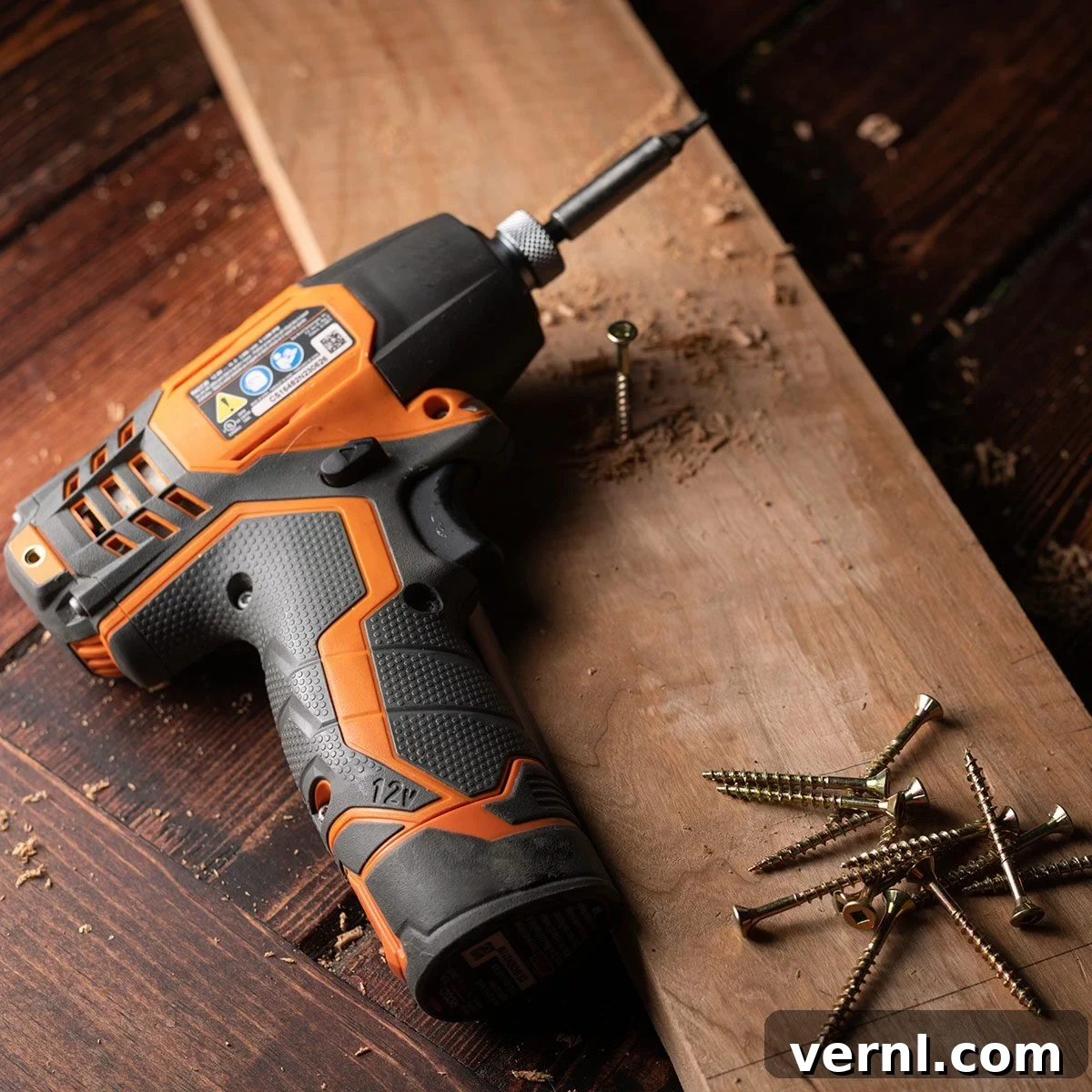
Are you frequently left scratching your head when trying to distinguish between an impact driver and a traditional drill? While both are indispensable power tools in any workshop or toolkit, they operate on fundamentally different principles and are optimized for distinct tasks. Understanding these differences is crucial for any DIY enthusiast or professional looking to maximize efficiency and achieve superior results.
At a glance, both tools are handheld and designed to spin when you press the trigger, often featuring variable speed settings. However, their core functionalities diverge significantly. Impact drivers are engineered with a singular, powerful purpose: driving screws and fasteners with unparalleled efficiency. Drills, often referred to as drill drivers, are incredibly versatile and can indeed drive screws, but their true strength lies in boring precise holes. This guide will delve deep into the mechanics, applications, and unique advantages of each tool, empowering you to make an informed decision on whether you need one, or both, for your projects.
What Is an Impact Driver? Unlocking Unrivaled Fastening Power
As its name boldly suggests, an impact driver is a specialized power tool meticulously designed for driving screws, lag bolts, and other fasteners into even the most challenging and dense materials. Unlike a standard drill, which relies solely on rotational force, an impact driver incorporates an additional, concussive impact mechanism. This innovative system, comprising an internal hammer and anvil, delivers powerful, rapid bursts of tangential force, or torque, directly to the fastener. These impacts occur at incredibly high frequencies—sometimes up to 50 times per second—allowing the tool to install fasteners effectively into tough surfaces like thick hardwoods, treated lumber, or metal without bogging down.
One of the most remarkable characteristics that set an impact driver apart from a traditional drill is its exceptional power-to-weight ratio and compact design. Impact drivers are typically smaller and lighter than many drills, making them incredibly maneuverable and comfortable for extended use in tight spaces or overhead tasks. This compact size, combined with its high torque output, means you get significant power without the bulk. Furthermore, the concussive action of an impact driver absorbs much of the rotational resistance, significantly reducing the "kickback" or wrist fatigue often experienced with drills when driving long or stubborn fasteners. This not only enhances user comfort but also minimizes the risk of stripping screw heads (cam-out) as the driver bit remains firmly engaged.
While impact drivers are phenomenal at their primary function, they are not a one-size-fits-all solution. They excel at repetitive, high-volume fastening tasks, making them indispensable for projects like deck building, framing, or installing subfloors. They can handle short drilling applications, particularly with specialized hex-shanked drill bits. However, if your project demands utmost precision in hole drilling, especially in delicate materials, or requires fine control over torque settings, a traditional drill might be a more suitable choice. Understanding these nuances is key to selecting the right tool for the job.
What Is a Drill? The Versatile Workhorse of Your Workshop
Among the most iconic and widely recognized power tools, the drill stands as a testament to versatility and fundamental utility. Its primary function is to bore holes into a vast array of materials and surfaces, relying solely on rotational force. Drills spin various attachments, known as bits, at high speeds to efficiently create holes in everything from softwoods and plastics to hard metals, masonry, and even concrete, depending on the drill type and bit used.
Modern drills are available in both corded and cordless variants, offering users flexibility based on power needs and portability. While hole boring is their core strength, drills are far from one-trick ponies. When paired with appropriate screwdriver bits, they can effectively drive screws and other fasteners, although not with the same ease and power as an impact driver, especially in tough materials. Their adjustable clutch settings allow users to control the amount of torque applied, preventing over-tightening or stripping of screws, which is crucial for delicate work or assembling furniture.
The world of drills is diverse, ranging from basic, lightweight models perfect for household tasks to robust hammer drills and rotary hammers designed to tackle the toughest masonry and concrete applications. Many drills feature variable speed triggers and multiple gear settings, enabling users to match the tool's performance to the specific material and task. Unlike impact drivers, which apply concussive force, traditional drills rely on the operator to apply consistent pressure to overcome resistance. This can lead to increased user fatigue during prolonged or challenging fastening tasks, highlighting a key difference in their ergonomic profiles and power delivery.
Key Differences Between an Impact Driver and a Drill: A Detailed Comparison
While both power tools are rotational and serve crucial roles in construction and DIY, their fundamental designs and operational principles lead to significant distinctions. Understanding these disparities is essential for choosing the optimal tool for any given task.
1. Power Delivery and Mechanism
- Impact Driver: The defining characteristic is its unique internal hammer and anvil mechanism. This system delivers rotational force augmented by concussive impacts. When the driver encounters resistance, the internal hammer begins to strike the anvil, providing short, powerful bursts of rotational force (torque). These impacts, occurring dozens of times per second, allow the impact driver to drive fasteners with far greater torque than a drill, particularly into dense materials, without transferring much of the rotational kickback to the user's wrist. This makes them exceptionally efficient for driving long or large screws.
- Drill: Operates purely on continuous rotational force. The motor spins the chuck, which in turn spins the bit. While drills can generate significant torque, it's delivered consistently rather than in bursts. When a drill encounters high resistance, it tends to twist in the user's hand (kickback), or stall, requiring the operator to apply more physical force.
2. Chuck System and Bit Compatibility
- Impact Driver: Almost exclusively features a quick-release 1/4-inch hex shank chuck. This specialized chuck is designed to rapidly accept 1/4-inch hex driver bits and impact-rated drill bits. The quick-release mechanism allows for swift bit changes, which is highly convenient for tasks requiring multiple bit types. However, this also limits the types and sizes of bits it can accept.
- Drill: Employs a three-jaw chuck that can securely grip a wide variety of bits with round, hex, or even triangular shanks, ranging in size typically from 1/16-inch to 1/2-inch or larger. This versatility in bit acceptance makes drills suitable for an extensive range of drilling tasks, from tiny pilot holes to large hole saws, as well as driving screws with appropriate attachments.
3. Torque and Application Efficiency
- Impact Driver: Excels at generating high torque in short, powerful bursts. This makes it incredibly efficient for driving large, stubborn fasteners like lag bolts or deck screws, often completing the task in seconds. The impact mechanism also significantly reduces cam-out, keeping the bit firmly engaged with the screw head and minimizing damage to fasteners.
- Drill: While capable of driving screws, especially with an adjustable clutch, it's less efficient for high-volume or heavy-duty fastening. The continuous torque delivery can lead to kickback and increased user fatigue when encountering significant resistance. Its strength lies in its ability to bore precise holes, with adjustable torque settings preventing damage to delicate materials or fasteners.
4. Size, Weight, and Ergonomics
- Impact Driver: Generally more compact and lighter than most drills, offering superior maneuverability in confined spaces. The impact mechanism absorbs much of the reactionary torque, significantly reducing strain on the user's wrist and arm, even during prolonged use. This makes them more ergonomic for repetitive fastening tasks.
- Drill: Can vary significantly in size and weight, with more powerful models often being heavier. While comfortable for general use, sustained high-torque fastening can cause wrist fatigue due to the continuous rotational force and potential kickback. Precision drilling often benefits from the drill's more balanced weight distribution.
Despite the impact driver's remarkable advantages in fastening, it's crucial to understand that it is not a direct replacement for a drill. The drill's adaptability for precise hole boring, consistent torque requirements (as in metalwork or furniture assembly), and its broader range of bit compatibility solidifies its position as an essential tool in its own right.
Are Impact Drivers and Hammer Drills the Same? Dispelling Common Misconceptions
A common point of confusion arises when comparing impact drivers with hammer drills. While both tools incorporate a "hammering" action, their mechanisms and intended applications are distinctly different.
- Impact Driver: As discussed, the hammering action in an impact driver is rotational. An internal hammer strikes an anvil tangentially, providing bursts of powerful rotational force to drive fasteners. The impacts occur along the axis of rotation, enhancing torque. It does not provide an in-and-out, percussive motion along the bit's axis.
- Hammer Drill: Essentially a traditional drill with an added percussive mechanism. While spinning, a hammer drill simultaneously vibrates the drill bit rapidly back and forth along its axis. This rapid "hammering" motion, combined with rotation, is specifically designed to pulverize hard materials like concrete, brick, stone, and mortar, making for much quicker and easier drilling in concrete than a standard drill. The hammering action is linear, in line with the drill bit, not rotational.
In summary, an impact driver helps drive screws by adding rotational impact, while a hammer drill helps bore holes in masonry by adding linear impact. Both are powerful, but their "impact" functions are fundamentally different and specialized for distinct tasks. It's imperative to use safety glasses, keep hands, clothes, and hair clear of the tool during use, and maintain a clutter-free workspace regardless of the power tool you're operating.
How to Choose Between a Drill and an Impact Driver: Making the Right Decision
Deciding between an impact driver and a drill, or whether to invest in both, ultimately depends on the nature and scope of your projects. Each tool offers distinct advantages that cater to different needs.
When a Drill is Your Best Choice: Versatility and Precision
If your projects primarily involve boring holes, especially those requiring precision, or if you only occasionally drive medium-sized screws, a standard drill is likely your ideal companion. Drills are incredibly versatile and can handle a vast array of tasks, making them a cornerstone for any general DIYer. Key scenarios where a drill shines include:
- Precision Drilling: For tasks that demand clean, accurate holes in wood, metal, plastic, or even delicate materials.
- Varying Bit Sizes: Its adjustable chuck accommodates a wide range of bit diameters, from tiny pilot bits to large spade bits or hole saws.
- Consistent Torque Needs: Ideal for applications like assembling furniture, light metalworking, or any task where consistent, controlled torque is needed to prevent over-tightening or damage.
- Mixing Tasks: With specialized attachments, drills can also be used for sanding, polishing, or even mixing paint.
When an Impact Driver is Indispensable: Power and Speed for Fastening
Conversely, if your workload frequently involves repetitive, high-torque fastening tasks—where numerous screws or other fasteners need to be driven quickly and securely—an impact driver will dramatically boost your efficiency and reduce fatigue. Consider an impact driver for projects such as:
- Deck Building: Driving countless deck screws into treated lumber is where impact drivers truly excel, making quick work of demanding tasks.
- Framing and Construction: Ideal for attaching plywood subfloors, securing framing members, or any job involving a high volume of wood screws or lag bolts.
- Heavy-Duty Fastening: Driving large fasteners into dense materials like hardwood, engineered wood, or metal where a drill would likely struggle, stall, or cause significant wrist strain.
- Repetitive Tasks: The speed and ease with which an impact driver handles fastening make it perfect for assembly lines or production work.
The consistent bursts of power and high torque provided by an impact driver make any form of heavy-duty fastening a breeze. Beyond power, impact drivers are typically smaller, lighter, and more ergonomic compared to drills, further reducing user fatigue and enhancing control, making them invaluable for these specific applications.
Key Considerations When Choosing an Impact Driver (or a Drill)
Once you've determined which tool suits your primary needs, consider these factors to select the best model:
- Power Source: Most modern impact drivers (and many drills) are battery-powered. Cordless models offer unparalleled portability. Battery voltages typically range from 12V to 20V (or 18V in some systems). Higher voltage generally means more power and torque, ideal for driving lots of large fasteners. However, remember that higher voltage batteries are also larger and heavier, which can impact maneuverability and balance. Always consider the balance between power, weight, and ease of use for your specific projects.
- Motor Type: A crucial distinction is between brushed and brushless motors. While tools with brushless motors might carry a slightly higher upfront cost, they offer significant advantages. Brushless motors are more efficient, delivering more power and torque while generating less heat. This translates to longer battery run times between charges and a considerably longer tool lifespan due to reduced wear and tear. They also require less maintenance, making them an excellent long-term investment for frequent users.
- Variable Speed Control: Look for models with variable speed triggers. This feature allows you to precisely control the rotational speed and, consequently, the torque by how hard you squeeze the trigger. Variable speed enhances precision, especially when starting a screw or working with delicate materials, reducing the risk of damaging the workpiece or overdriving fasteners.
- Ergonomics and Features: Consider the tool's balance, grip comfort, and additional features like LED work lights (invaluable for dimly lit areas), belt clips, and battery fuel gauges. Brands such as DeWalt, Milwaukee, and Makita are renowned for producing high-quality, durable impact drivers and drills, often with advanced brushless motors and ergonomic designs.
Can you bore holes with an impact driver? Yes, it's possible! Many manufacturers offer collections of impact-rated drill bits that feature the standard 1/4-inch hex shank compatible with impact driver chucks. This allows you to quickly switch from drilling a pilot hole to driving a screw without changing tools, adding a layer of convenience for light drilling tasks.
FAQ: Your Top Questions Answered
Can an impact driver truly replace a drill?
No, an impact driver cannot fully replace a drill. While impact drivers are exceptionally powerful for driving fasteners and excel at tasks like building decks or installing subfloors, they often lack the adjustable torque control and precision required for delicate operations. For example, assembling electronics, fine woodworking, or putting together pre-made furniture often demands the nuanced control and consistent torque that a traditional drill with a clutch mechanism provides. A drill's versatility in boring holes of various sizes and its ability to handle a broader range of bits make it an irreplaceable tool for many projects.
What are the primary advantages of using an impact driver?
Impact drivers offer several significant advantages, particularly for fastening tasks. Firstly, they possess an outstanding power-to-weight ratio, delivering immense torque in a compact and lightweight package. This reduces user fatigue and allows for work in confined spaces. Secondly, their unique concussive mechanism drastically reduces wrist strain and the risk of "cam-out" (when the bit slips from the screw head), ensuring screws are driven efficiently and securely. The high torque bursts also allow for rapid completion of demanding fastening jobs, making them incredibly time-efficient for repetitive tasks.
Which tool is better for general DIY projects: a drill or an impact driver?
For general DIY projects that encompass a wide array of tasks, a traditional drill is often the better starting point due to its superior versatility. Its ability to bore precise holes, drive various types of screws with adjustable clutch control, and accept a broad range of accessories makes it a true all-rounder. However, if your DIY projects frequently involve heavy-duty fastening, such as building large structures, installing decking, or working with dense materials, an impact driver will deliver unmatched speed and ease. For the most comprehensive capabilities and to tackle nearly any project with confidence, owning both a drill and an impact driver is the ideal setup, allowing you to leverage the specific strengths of each tool.
Sources
- Extol Tools: “What Are Portable Power Tools: Your Essential Guide to Handheld Equipment”
- Popular Mechanics: “Cutaway View Shows the Clever Innards That Make an Impact Driver Work”
- Bosch DIY: “The Bosch hammer drills for do-it-yourselfers”
- Eastern Illinois University: “Rotational Force (Torque)”
- Home Depot: “MAKITA 1/4-inch Cordless Impact Driver with Brushless Motor”
- Home Depot: “Milwaukee Tool M18 FUEL 18V Li-Ion Brushless Cordless Mid Torque 1/2 -inch Impact Wrench W/ Pin Detent (Tool Only)”
- DeWalt: “20V MAX* 1/4 in. Impact Driver Kit”