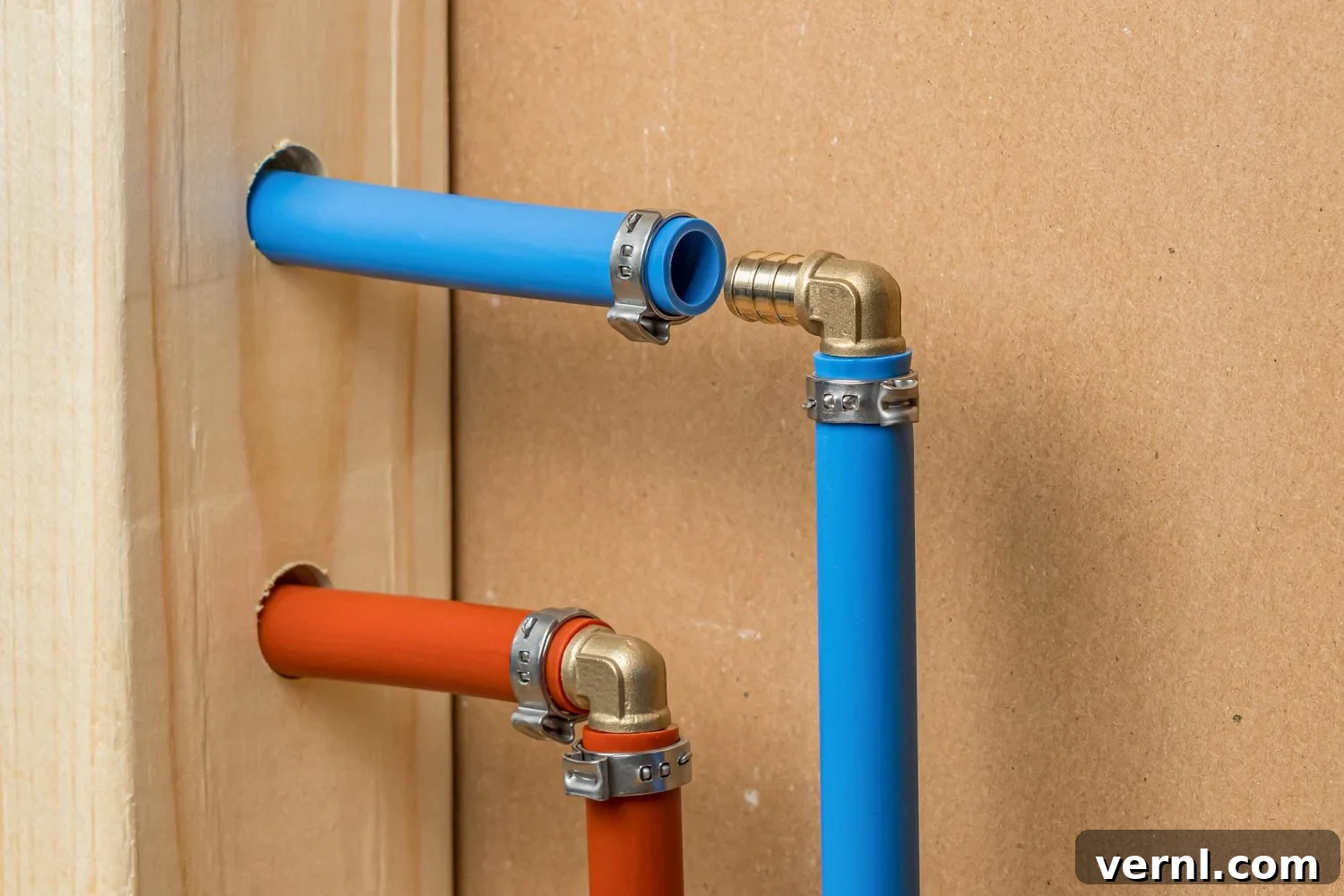
Embarking on the ambitious journey of building my own home from scratch was a monumental undertaking. I braced myself for the inevitable challenges that come with such a project, anticipating certain stages of construction to be particularly demanding. What genuinely surprised me, however, was how refreshingly straightforward and even enjoyable some tasks turned out to be.
A prime example of this unexpected ease was the installation of my home’s PEX pipe plumbing system. Initially, my plans leaned heavily towards traditional copper water pipes, a choice influenced by my existing soldering skills and a certain skepticism regarding the longevity of plastic alternatives. I had heard whispers of PEX tubing but harbored reservations, questioning whether a plastic material could truly withstand the test of time in a critical application like a home’s water supply.
My preconceived notions couldn’t have been more mistaken. PEX, or cross-linked polyethylene, proved to be not only remarkably durable but also significantly simpler to install than its copper counterpart. The secret to this simplified installation lies primarily in the innovative and efficient PEX pipe connections. Join me as we delve into everything you need to know about joining PEX pipe, uncovering why it has become a game-changer for both professional plumbers and enthusiastic DIYers.
What Is PEX Pipe?
PEX pipe, an acronym for cross-linked polyethylene, is a flexible plastic tubing specifically engineered to contain and transport water within plumbing systems. Its surge in popularity among plumbers and homeowners alike is attributed to several compelling advantages it offers over other traditional pipe materials. These benefits encompass superior durability, exceptional resistance to corrosion, and an installation process that dramatically reduces labor and complexity.
The Science Behind PEX: Cross-Linked Polyethylene
The “cross-linked” aspect of PEX is crucial to its performance. It refers to a manufacturing process that creates bonds between the polyethylene molecules, forming a three-dimensional network. This molecular restructuring significantly enhances the material’s strength, flexibility, and resistance to extreme temperatures, chemicals, and creep deformation. Unlike standard polyethylene, PEX retains its shape and integrity under higher pressures and temperatures, making it ideal for potable water applications.
Key Advantages of PEX Plumbing Systems
- Unmatched Durability: PEX pipes are designed for longevity, often boasting a lifespan comparable to or even exceeding traditional materials like copper. They are resistant to freezing and bursting, as their inherent flexibility allows them to expand and contract with temperature changes without sustaining damage. This flexibility also contributes to their resistance against impacts and abrasions.
- Superior Corrosion Resistance: One of the most significant drawbacks of metal piping is its susceptibility to corrosion, both internally and externally. PEX, being a non-metallic material, is completely immune to rust, scale buildup, and pitting caused by acidic water or aggressive soil conditions. This ensures a clean water supply and maintains consistent flow rates over decades.
- Exceptional Flexibility: PEX tubing can be snaked through walls, floors, and ceilings with relative ease, bending around corners and obstacles. This flexibility drastically reduces the number of fittings required in a typical plumbing system compared to rigid pipes like copper or CPVC. Fewer fittings translate to fewer potential leak points and a faster, more efficient installation.
- Cost-Effectiveness: PEX typically has a lower material cost per foot than copper. More importantly, the reduced labor time due to its flexibility and simpler connection methods significantly lowers overall installation costs. The absence of soldering also eliminates the need for expensive torches, solder, and flux, further contributing to savings.
- Health and Safety Benefits: Unlike copper, PEX does not pose risks of lead contamination from solder joints, nor does it leach metallic ions into the water. Its installation process eliminates the use of open flames (as required for soldering copper), greatly enhancing job site safety and reducing fire hazards.
- Reduced Water Noise: The flexible nature of PEX tubing, combined with its ability to absorb pressure fluctuations, helps to minimize the “water hammer” effect and other plumbing noises commonly associated with rigid piping systems.
Types of PEX Pipe
While all PEX pipe is manufactured from cross-linked polyethylene, there are three distinct types, each offering specific characteristics tailored to different plumbing applications. These are creatively named PEX Type A, Type B, and Type C. Understanding the subtle differences between them is crucial for both professional plumbers and DIYers in selecting the optimal choice for a particular installation.
PEX Type A
PEX Type A is widely recognized as the most flexible of the three types, thanks to its unique manufacturing process (typically the Engel method, which involves heating and cross-linking the polyethylene while it’s still molten). This superior flexibility allows it to be bent into tighter radii and even kinked without compromising its structural integrity. If a kink does occur during installation, Type A’s “thermal memory” allows it to be repaired using a heat gun. A few careful minutes of applying heat will cause the PEX to return to its original shape, effectively making the kink disappear.
I personally opted for Type A in my home’s plumbing system due to its exceptional workability. Its pliability meant I could easily route the pipe through studs and joists, navigating corners and obstacles without feeling like I was in a wrestling match with rigid material. Type A is primarily designed for use with the ProPEX expansion connection system, which leverages the pipe’s memory effect for secure, full-flow joints.
PEX Type B
PEX Type B, manufactured using the Silane method (a post-extrusion cross-linking process), offers a good balance between stiffness and flexibility. While it’s less flexible than Type A, it is also significantly less prone to kinking during installation. This makes it a preferred choice for many situations where the extreme flexibility of Type A might lead to frequent, albeit fixable, kinks.
For some, the trade-off of slightly less flexibility for increased kink resistance is a welcome compromise. Unlike Type A, kinks in Type B are generally not repairable with a heat gun, so care must still be taken during handling. Type B is primarily designed for use with metal crimp rings or stainless steel clamp rings, which compress the pipe onto fittings to create a watertight seal.
PEX Type C
PEX Type C, produced using the electron-beam method (another post-extrusion process), is the stiffest of the three types. Its enhanced rigidity makes it an excellent choice for applications where maintaining a straight run or a specific shape is critical. This includes specialized uses such as radiant heating systems, where the pipe needs to hold its position within a slab or under flooring, or for certain commercial plumbing installations.
Type C is extremely tough and resilient, making it highly resistant to kinking. Like Type A, it can also be joined using the ProPEX expansion tool, leveraging its molecular structure for strong, reliable connections.
Understanding PEX Pipe Connections: The Heart of Easy Installation
The true genius of PEX plumbing lies in its versatile and straightforward connection methods. Unlike copper, which requires precise soldering skills and open flames, PEX offers several tool-based solutions that are both efficient and highly reliable. As far as common residential plumbing applications are concerned, the primary methods for making connections with PEX typically involve expansion tools, crimp rings, or clamp rings. We’ll also touch upon push-to-connect fittings, which offer unparalleled ease for DIY enthusiasts.
ProPEX Expanding Tools (Expansion Method)
The ProPEX expansion method is a revolutionary way to create incredibly strong and full-flow PEX connections, predominantly used with PEX Types A and C. This system capitalizes on the unique “memory” characteristic of PEX A and C tubing.
How it Works:
A specialized ProPEX expanding tool, available in both hand-operated and electric versions, is used to temporarily stretch the end of the PEX pipe. The tool features a segmented expansion head that is inserted into the pipe’s end and then repeatedly opened, gradually widening the pipe’s diameter. Once sufficiently expanded, a fitting (which has a slightly larger diameter than the unexpanded pipe) is quickly inserted into the stretched opening. As the PEX pipe naturally attempts to return to its original, smaller diameter due to its thermal memory, it tightly constricts around the fitting, creating an incredibly strong, watertight, and permanent seal.
Advantages:
- Full Flow: Expansion fittings have an internal diameter (ID) that is the same as the PEX pipe, meaning there’s no restriction of water flow at the connection point.
- Extremely Reliable: When properly installed, expansion connections are among the most robust and leak-proof in plumbing. The pipe’s natural contraction creates a seal that actually strengthens over time.
- Visual Confirmation: It’s easy to visually confirm a proper connection.
- Less Susceptible to Error: Compared to crimping, there’s less room for error in achieving a good seal.
Disadvantages:
- Higher Tool Cost: Electric ProPEX tools can be a significant investment, especially for a single DIY project. Manual tools are more affordable but require more effort.
- PEX Type Specific: Only works with PEX Type A and C.
- Cold Weather Limitations: PEX becomes stiffer in cold temperatures, making expansion more difficult. Workarounds like warming the pipe are often necessary.
Crimp Rings (Crimp Method)
Crimp rings, typically made of copper or stainless steel, are a widely used and economical method for joining PEX pipe, especially with PEX Type B. This method relies on mechanical compression to create a seal.
How it Works:
First, a crimp ring is slid over the cut end of the PEX pipe. Then, a PEX fitting is inserted into the pipe. Finally, a specialized PEX crimping tool is used to compress the crimp ring tightly over the pipe and the fitting. This compression forms a secure, watertight seal. After crimping, a “go/no-go” gauge is often used to ensure the crimp is within specification, indicating a proper seal.
Advantages:
- Lower Tool Cost: Crimp tools are generally less expensive than electric expansion tools, making them more accessible for DIYers.
- Widely Available: Crimp rings and tools are readily found at most hardware stores.
- Versatile: Can be used with all types of PEX, though most commonly associated with Type B.
Disadvantages:
- Reduced Flow: Crimp fittings have a slightly smaller internal diameter than the PEX pipe, which can cause a minimal reduction in water flow at each connection.
- Potential for Error: It can be challenging to achieve the perfect crimp. An under-crimped connection will leak, while an over-crimped connection can damage the pipe or fitting.
- Not Visually Verifiable: Unlike expansion, you can’t always visually confirm a perfect crimp without a go/no-go gauge. A faulty crimp might only reveal itself as a leak later.
Clamp Rings (Cinch Method)
Similar to crimp rings, clamp rings (also known as cinch rings) offer another reliable mechanical connection method for PEX. They are often made of stainless steel and are a popular alternative to crimp rings, compatible with all PEX types.
How it Works:
A stainless steel clamp ring is placed over the PEX pipe, and a fitting is inserted. A specialized cinch tool is then used to tighten the clamp ring, compressing the pipe onto the fitting. The tool typically has a ratcheting mechanism that ensures consistent tension and an audible click when the connection is secure.
Advantages:
- Visual Confirmation: The cinched clamp provides clear visual confirmation of a secure connection.
- Versatile: Can be used with all PEX types (A, B, C).
- Easier to Use: Many DIYers find cinch tools easier to operate than crimp tools, especially in tight spaces.
- Lower Tool Cost: Cinch tools are generally affordable.
Disadvantages:
- Reduced Flow: Like crimp fittings, clamp fittings also feature a slightly reduced internal diameter, which can restrict flow.
- Bulkier Fittings: Clamp rings can sometimes be bulkier than crimp rings, potentially making them less suitable for extremely tight spaces.
Push-to-Connect Fittings (e.g., SharkBite)
While not a traditional PEX connection method in the same vein as expansion or crimping, push-to-connect fittings have revolutionized DIY plumbing due to their incredible ease of use. These fittings don’t require any special tools for installation and can be used with PEX, copper, and CPVC pipes.
How it Works:
Simply cut the PEX pipe squarely, ensuring it’s free of burrs. Then, push the pipe firmly into the fitting until it clicks into place. An internal grab ring and O-ring within the fitting create an instant watertight seal.
Advantages:
- Ultimate Ease of Use: No specialized tools are required, making them incredibly user-friendly for beginners or quick repairs.
- Versatility: Connects various pipe materials (PEX, copper, CPVC).
- Reusable: Many push-to-connect fittings can be disconnected and reused.
Disadvantages:
- Highest Cost: Push-to-connect fittings are significantly more expensive than PEX expansion, crimp, or clamp fittings.
- Potential for Leaks: While generally reliable, improper insertion (not pushing the pipe in far enough) can lead to leaks. They are also not typically recommended for inaccessible, long-term installations behind walls.
Choosing the Right PEX Connection Method
Selecting the ideal PEX connection method depends on several factors, including your budget, desired tool investment, skill level, the type of PEX pipe you’re using, and the specific application:
- For PEX Type A and C (and best flow): ProPEX expansion is often the preferred choice, especially for whole-house installations where tool cost can be amortized.
- For PEX Type B (and budget-friendly tools): Crimp or clamp rings are excellent, cost-effective options. Clamp rings often offer easier visual confirmation.
- For DIYers and Quick Repairs (with higher fitting cost): Push-to-connect fittings provide the simplest and fastest solution.
Essential Tips for Making Flawless PEX Pipe Connections
Regardless of the connection method you choose, a few fundamental principles will ensure the integrity and longevity of your PEX plumbing system:
- Choose the Right Type of PEX for the Job: As discussed, PEX types A, B, and C each have their strengths. For most residential water supply lines, Type A offers superior flexibility and the benefits of expansion fittings. If you require more rigidity (e.g., for certain radiant heating layouts) or prefer crimp/clamp methods, Types B or C might be more suitable.
- Always Use Reinforcing Connector Rings with Your ProPEX Expanding Tool: These are often called “expansion collars” and are PEX rings slightly larger in diameter than the pipe you’re working with. They fit over the end of the PEX pipe and are expanded simultaneously with the main pipe using the expansion tool. These collars significantly enhance the strength and seal of the connection, providing a tighter, more robust joint than the pipe alone. While it might be tempting to skip them to save a step, don’t—they are crucial for optimal performance.
- Make Impeccably Square Cuts: The success of any PEX connection hinges on a clean, square cut. An uneven or ragged cut can prevent the pipe from seating properly into the fitting or being uniformly compressed by a crimp/clamp ring, leading to leaks. Always use a dedicated PEX cutting tool to achieve a perfectly perpendicular and burr-free edge.
- Pressure Test Your Installation Thoroughly for Leaks: Even if you are meticulously confident in every connection, a comprehensive pressure test is non-negotiable before concealing any plumbing. After completing your installation, cap off all open ends and use a pressure gauge to pressurize the system (usually to 50-100 PSI, depending on local codes) and hold it for several hours, or even overnight. A drop in pressure or visible drips will indicate a faulty connection that needs immediate attention. Doing so could easily save you a whole lot of trouble and expensive water damage down the line.
- Ensure Tool Calibration and Maintenance (for Crimp/Clamp Tools): If you’re using crimp or cinch tools, it’s vital to ensure they are properly calibrated and maintained. An improperly calibrated tool can lead to consistently bad connections. Regularly check the tool for wear and tear, and use a go/no-go gauge for crimp connections to verify proper compression.
- Verify Fitting Compatibility: Always ensure that your PEX pipe and fittings adhere to the same ASTM standards (e.g., F876/F877 for PEX tubing, F1807 for brass crimp fittings, F1960 for expansion fittings). Mixing incompatible standards can lead to leaks or system failure.
- Mind the Temperature: PEX becomes stiffer in colder temperatures, making it harder to expand or even crimp. If working in a cold environment, consider warming the pipe slightly (e.g., with a heat gun or by bringing it indoors) to restore its flexibility.
The Lasting Benefits of a Well-Installed PEX System
A PEX plumbing system, meticulously installed with reliable connections, offers long-term peace of mind. You’ll benefit from consistent water flow, freedom from corrosion, reduced noise, and a highly durable infrastructure that will serve your home for decades. The initial investment in the right tools and a bit of learning will pay dividends through reduced maintenance and the assurance of a leak-free home.
My journey from skepticism to advocacy for PEX plumbing is a testament to its effectiveness and user-friendliness. What I once considered a potentially inferior alternative to copper has proven itself to be a superior, more forgiving, and ultimately easier solution for home plumbing. Embracing PEX for your plumbing needs means choosing a reliable, efficient, and DIY-friendly path to a robust water system.