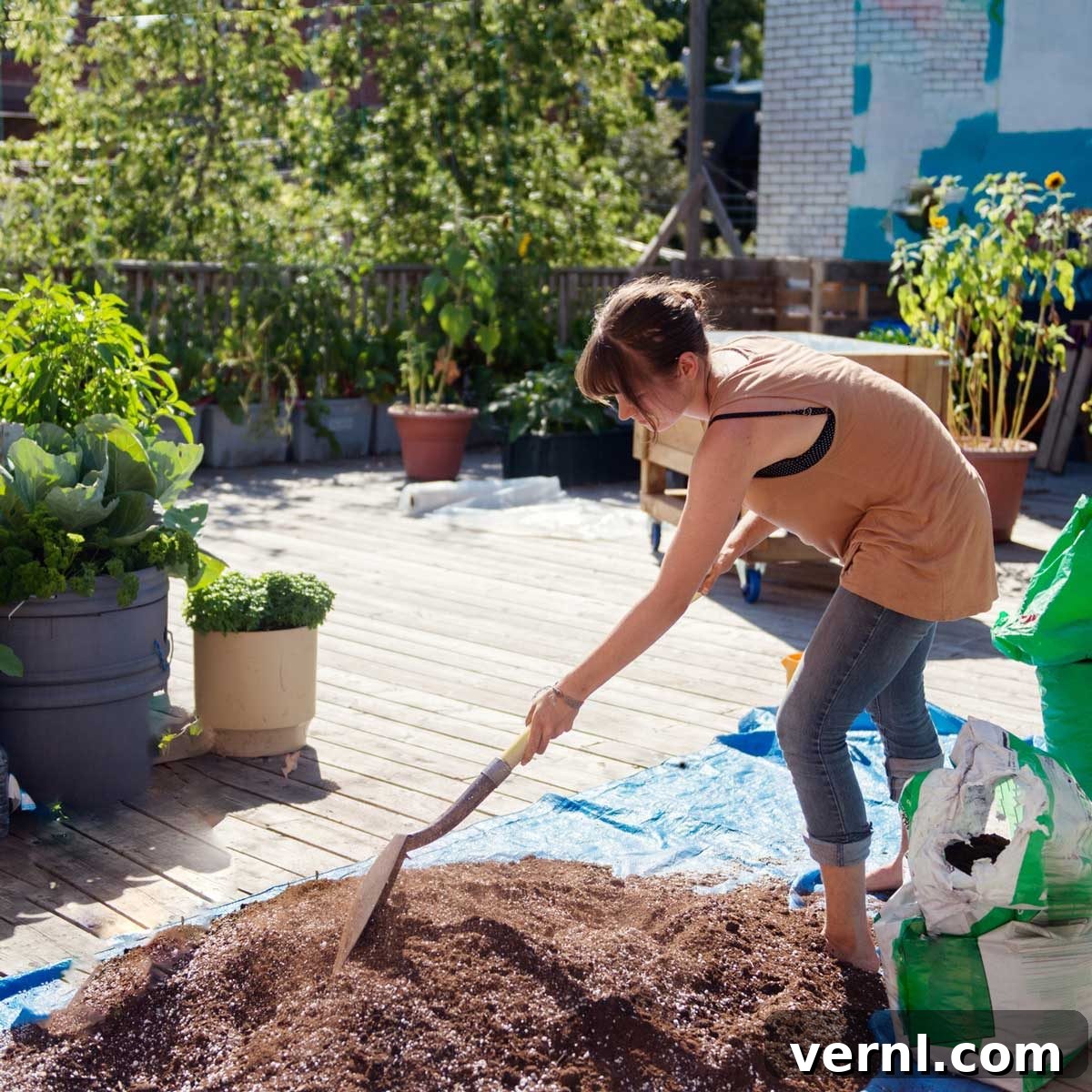
Cultivating Success: The Essential Guide to Building Healthy Garden Soil
As the last vestiges of winter fade, an irresistible urge takes hold of many a gardener – the longing to dig, plant, and nurture a vibrant oasis. Spring fever brings with it dreams of bountiful harvests and stunning floral displays, inspiring us to fill our trunks and truck beds with promising seedlings and saplings. Yet, before the first shovel breaks ground, there’s a crucial pause every aspiring and seasoned gardener must take: a moment to truly understand and appreciate the foundation of all garden success. Because, as Master Gardener volunteer and renowned garden expert Erin Schanen wisely states, “Soil is everything.”
Often overlooked in the excitement of choosing plants, the quality of your garden’s soil is the single most important factor determining its health and productivity. It’s not merely dirt; it’s a dynamic, living ecosystem, a complex blend of minerals, organic materials, air, and water. Achieving the right balance within these components – in terms of texture, structure, and nutrient availability – is absolutely essential for plants to thrive, producing lush foliage, vibrant blooms, and abundant fruits.
Imagine your garden as a thriving metropolis, and the soil as its infrastructure. Without sturdy foundations, proper plumbing, and accessible resources, even the most beautiful buildings would crumble. Similarly, without healthy soil, even the most carefully selected plants will struggle to reach their full potential, leaving gardeners frustrated and dreams unfulfilled. This comprehensive guide will walk you through the vital steps to assess, amend, and maintain your soil, transforming it into the fertile bedrock your garden deserves.
Unlock Your Garden’s Potential: The Indispensable Soil Test
The journey to cultivating exceptional soil begins not with guesswork, but with accurate information. A soil test is the most fundamental and impactful step you can take. Far from being a complicated procedure, soil testing has become incredibly accessible. You can easily order testing kits online or pick one up from your local hardware store. These DIY kits provide quick results for basic parameters like pH, offering an immediate snapshot of your soil’s general acidity or alkalinity.
However, for a truly comprehensive understanding of your soil’s composition and specific needs, we highly recommend leveraging the invaluable resources offered by your local Cooperative Extension service or a nearby land-grant university. These institutions often provide highly detailed and professional laboratory analyses for a nominal fee. A professional soil test typically checks for critical macronutrients such as potassium, phosphorus, and nitrogen (N-P-K), as well as essential micronutrients like calcium and magnesium. Crucially, it will accurately measure your soil’s pH level and even analyze its texture, distinguishing between sandy, silty, and clay components. Beyond just reporting the data, the laboratory results often include tailored recommendations on how to amend your soil to best suit the specific plants you intend to grow. This scientific approach eliminates guesswork, prevents the wasteful application of unnecessary amendments, and ensures you provide precisely what your garden needs.
The process for submitting a sample to these services is usually straightforward. You’ll typically collect several small samples from various parts of your garden, mix them together to create a composite representation, and then mail or drop off a portion to the lab. Specific instructions are always provided by the service, ensuring accuracy in the testing process. This small investment of time and money yields invaluable insights that will guide your gardening decisions for the entire season and beyond, paving the way for healthier plants and a more successful garden.
Balancing the Scale: Adjusting Your Soil’s pH Level
One of the most critical insights a soil test provides is your soil’s pH level. pH is a measure of how acidic or alkaline your soil is, expressed on a scale from 0 to 14. A pH of 7 is neutral, anything below 7 is acidic, and anything above 7 is alkaline (or basic). Why is this important? The pH level directly influences the availability of nutrients to your plants. Even if your soil contains all the necessary nutrients, an imbalanced pH can lock them up, making them inaccessible to plant roots, much like a key that won’t fit the lock.
Most garden plants thrive in a slightly acidic to neutral pH range, typically between 6.0 and 7.0. Within this range, essential nutrients like nitrogen, phosphorus, and potassium, along with crucial micronutrients, are most readily available for absorption. If your soil test indicates a pH that is either too acidic or too alkaline, corrective action is necessary.
To raise the pH of acidic soil, making it more alkaline, the most common amendment is lime. Agricultural lime, available in various forms like calcitic or dolomitic lime, works to neutralize soil acidity gradually. Dolomitic lime offers the added benefit of supplying magnesium, an essential nutrient. Conversely, if your soil is too alkaline, you’ll need to lower its pH to make it more acidic. Granulated sulfur is a widely used and effective amendment for this purpose. Other organic materials like peat moss can also contribute to lowering pH over time. It’s vital to follow the recommendations from your soil test precisely, as over-application of any amendment can cause further imbalance. Adjusting pH is not an instant fix; it’s a gradual process that can take several weeks or even months for the soil chemistry to stabilize, so patience is key.
It’s also important to remember that not all plants prefer a neutral pH. Some beloved garden favorites, such as blueberries, azaleas, rhododendrons, and hydrangeas, are acid-loving plants and will flourish in soil with a lower pH (typically 4.5 to 5.5). Understanding the specific needs of your chosen plants, alongside your soil test results, empowers you to create the perfect growing environment for everything you cultivate.
Building the Ideal Home: Improving Soil Texture and Structure
Beyond its chemical composition, the physical structure and texture of your soil are paramount for plant health. Soil texture refers to the proportion of sand, silt, and clay particles it contains. Each particle type has distinct properties: sand particles are large and gritty, clay particles are tiny and sticky, and silt particles fall somewhere in between. The ideal garden soil, often referred to as loam, achieves a balanced mix of these particles, offering the best of all worlds.
Problems arise when there’s an imbalance. Soil with too much sand, for instance, is often described as “light” or “gritty.” While it drains exceptionally quickly, this rapid drainage also means water and essential nutrients leach away before plant roots can absorb them, leading to drought stress and nutrient deficiencies. On the other end of the spectrum, soil with excessive clay is “heavy” and dense. Its tiny, tightly packed particles create poor drainage, leading to waterlogging that can suffocate roots by depriving them of vital oxygen. Clay soil also becomes compacted easily, making it difficult for roots to penetrate and spread effectively.
The universal solution to improving both sandy and clay soils, as Erin Schanen aptly notes, is “compost improves almost every soil.” Compost is decomposed organic matter, and its benefits are truly transformative. In sandy soil, compost acts like a sponge, increasing the soil’s water-holding capacity and preventing nutrients from washing away. It helps bind the loose sand particles together, creating a more stable structure. In heavy clay soil, compost works to break up the dense structure, adding bulk and creating air pockets. This improves drainage, enhances aeration, and makes the soil easier to work. Beyond texture, compost provides a slow, steady release of nutrients and fosters a thriving community of beneficial microorganisms, which are crucial for nutrient cycling and disease suppression.
Incorporating organic matter through compost also improves soil structure, which refers to how soil particles clump together. Good soil structure creates stable aggregates, allowing for optimal air and water movement, robust root growth, and a hospitable environment for earthworms and other soil life. Whether your soil is too sandy, too clayey, or simply lacking vitality, the consistent addition of well-rotted organic matter is the single most effective way to improve its long-term health and productivity.
The Gardener’s Gold: Tilling in Chopped Leaves
Gardening sustainably often means looking at what you already have before buying new products. One of the most readily available and beneficial resources for improving your soil is right in your own yard: fallen leaves. Instead of bagging them for disposal, you can reuse yard waste, particularly finely chopped leaves, as an exceptional soil additive. These leafy remnants are often referred to as “gardener’s gold” for good reason.
When finely chopped, leaves provide a rich source of organic matter that slowly breaks down, releasing valuable nutrients and steadily improving soil texture. You can easily achieve this by running your lawnmower over the leaves several times, ideally with a bagging attachment to collect the finely shredded material. Once chopped, these leaves can be directly tilled or hoed into your garden beds. As they decompose, they act much like compost, enhancing water retention in sandy soils and loosening the density of clay soils. They also feed the soil’s microbial population, which in turn makes nutrients more available to your plants.
It is important, however, to differentiate between fully decomposed organic matter (compost) and fresh organic matter. While chopped leaves are excellent, avoid mixing other uncomposted organics directly into your garden beds. Items such as fresh eggshells, fireplace ash, coffee grounds, and raw vegetable and fruit peelings should first be added to a compost pile. Raw kitchen scraps can attract pests, introduce pathogens, and decompose unevenly, potentially tying up nitrogen in the soil as they break down, temporarily robbing your plants of this essential nutrient. Fireplace ash, while containing some nutrients, can significantly raise soil pH and should be used sparingly and only after a soil test confirms the need for an alkaline amendment. By allowing these materials to fully compost first, you ensure they are transformed into a stable, nutrient-rich amendment that benefits your soil without any drawbacks.
Nourishing the Roots: Strategic Fertilizer Application
Once your soil’s physical structure and pH are optimized, the next step is to ensure it has an adequate supply of essential nutrients. This is where your soil test results become invaluable. If the test reveals low levels of key elements like nitrogen (N), phosphorus (P), and potassium (K) – the three primary macronutrients vital for plant growth – or significant deficiencies in micronutrients, commercial fertilizers or targeted organic amendments may be necessary.
Nitrogen is crucial for vigorous leafy growth and vibrant green foliage. Phosphorus supports strong root development, flowering, and fruit production. Potassium is essential for overall plant health, disease resistance, and water regulation. Commercial fertilizers, such as Milorganite (a slow-release nitrogen fertilizer), provide these nutrients in readily available forms. They come in various formulations, often indicated by a series of numbers (e.g., 5-10-5), representing the percentage of N-P-K by weight. Choosing the right formulation depends entirely on what your soil test indicates is lacking.
For gardeners preferring organic methods, there are numerous natural sources of nutrients. Blood meal is rich in nitrogen, bone meal provides phosphorus, and kelp meal offers potassium and a host of micronutrients. Cover crops, or “green manure,” can also be planted and then tilled into the soil to add organic matter and nutrients. In addition to N-P-K, your soil test might identify deficiencies in secondary macronutrients like calcium and magnesium, or micronutrients like iron or boron. Specific garden soil amendments containing these minerals can be added to correct deficiencies, helping vegetables and other plants thrive optimally. Always follow application rates precisely to avoid over-fertilization, which can burn plants, harm soil microorganisms, and contribute to nutrient runoff into waterways.
Sustaining the Cycle: Replenishing Soil Annually
Soil is a living entity, constantly undergoing change and nutrient cycling. Even with initial improvements, continuous care is essential to maintain its vitality and productivity. For an established garden, think of annual replenishment as a vital part of its ongoing health regimen. The simplest and most effective way to achieve this is by adding a fresh layer of organic matter each year.
Applying an inch or two of high-quality compost to the surface of your garden beds each spring or fall works wonders. This top dressing slowly leaches nutrients into the soil with each watering, continually improving its structure, feeding beneficial microorganisms, and enhancing moisture retention. It’s a continuous investment in your soil’s long-term fertility and resilience. The compost also helps suppress weeds by creating a physical barrier that makes it harder for unwanted seeds to germinate and take root, thus reducing your weeding efforts significantly.
Beyond compost, consider adding a layer of leaves as a mulch. A thick layer of shredded leaves around your plants provides multiple benefits. It acts as an excellent insulator, keeping soil temperatures more consistent by protecting roots from extreme heat in summer and harsh cold in winter. More importantly, it helps the soil retain moisture, significantly reducing the need for frequent watering. As the leaves slowly break down, they contribute valuable organic matter and nutrients back into the soil, mirroring the natural processes found in healthy forest ecosystems. This protective layer acts as a “super shield” against invading weed seeds, making your garden beds less hospitable for unwelcome growth. Other organic mulches like straw, wood chips, or pine needles can also serve similar purposes, each offering unique advantages depending on your garden’s specific needs and aesthetic preferences.
By consistently nourishing your soil through annual amendments and mulching, you create a self-sustaining system that becomes more fertile and vibrant with each passing year. This proactive approach not only leads to healthier, more productive plants but also fosters a more resilient and beautiful garden ecosystem that will bring joy for seasons to come. Remember, a thriving garden begins from the ground up, with rich, living soil as its ultimate foundation.