
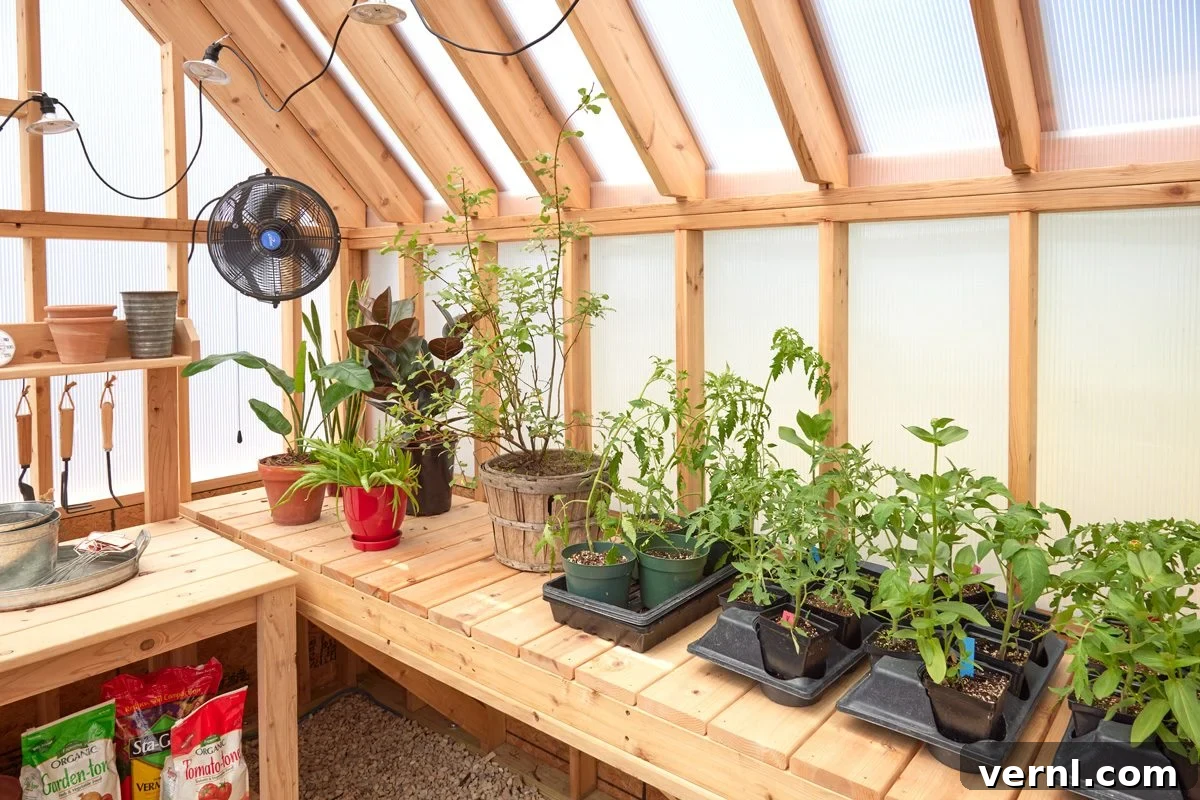
Have you ever admired a gardener with a home greenhouse and found yourself wishing for one of your own? If so, you’re certainly not alone. The allure of year-round cultivation and thriving plants is a powerful draw for many enthusiasts.
“Greenhouses are the dream of many gardeners,” notes Marc Hachadourian, director of glasshouse horticulture and senior curator of orchids at the New York Botanical Garden. He adds, “Traditionally, only the more advanced gardeners took the significant step of investing in a greenhouse for their property.”
However, this trend appears to be shifting. Katie Russo from Bootstrap Farmer reports a consistent increase in sales of greenhouse gardening supplies. “Greenhouse gardening is rapidly gaining popularity among backyard gardeners, hobbyists, and market growers alike,” she explains. “Unpredictable weather patterns are prompting more people to consider this valuable investment. Additionally, there’s a growing desire for self-sufficiency in food production and a surge in home-based businesses, such as flower farming and niche plant cultivation.”
So, is the gardening truly greener inside a greenhouse? If you’re an enthusiastic home gardener curious about the possibilities of greenhouse gardening, you’ve come to the right place. Read on to uncover everything you need to know about transforming your gardening experience.
What Exactly Is Greenhouse Gardening?
Greenhouse gardening involves cultivating vegetables, fruits, herbs, or flowering plants within a controlled, enclosed environment. This innovative approach allows gardeners to significantly extend their growing season, protect delicate plants from adverse weather conditions, and safeguard them against common pests and diseases.
While massive industrial facilities utilize greenhouses to grow fruits, vegetables, and even grains on an enormous scale (some spanning dozens of acres, like a 60-acre tomato greenhouse in Kentucky producing millions of tomatoes annually), for homeowners, greenhouse gardening typically means installing a smaller, personal greenhouse structure in their backyard or garden area.
Marc Hachadourian wisely suggests, “I have always found it more accurate to consider a greenhouse as a sophisticated machine for cultivating plants rather than merely an architectural structure. A greenhouse actively creates an environment, meticulously separated from the external climate, which is then regulated and controlled by the gardener to optimize the growth of the plants within. It’s far more than just a plastic or glass tent for growing plants.” When planning your purchase, remember to explore our top recommendations for the best greenhouse heaters to ensure optimal conditions.
Why Greenhouse Gardening is a Smart Choice for Serious Gardeners
Greenhouses offer a multitude of advantages that empower gardeners to achieve unparalleled success and control over their cultivation efforts. Here’s why investing in a greenhouse is a brilliant move for dedicated gardeners:
- Extended Growing Season: One of the most significant benefits is the ability to stretch your growing season far beyond traditional limits. “An unheated greenhouse can easily add several weeks of extra growing time in both fall and spring,” explains Justin Hancock, a horticulturist at Costa Farms. “At its best, with proper heating, it allows you to grow year-round, even if you reside in a freezing climate. Imagine growing fresh citrus in Minnesota? With a well-equipped greenhouse, it’s entirely possible!” This means earlier starts for seedlings, longer harvests for vegetables, and continuous bloom for flowers.
- Optimal Environmental Control: Greenhouses provide unparalleled control over crucial environmental factors like temperature, humidity, and ventilation. This tailored environment ensures your plants receive ideal conditions for vigorous growth, leading to healthier plants and potentially higher yields.
- Protection from Pests and Diseases: The enclosed nature of a greenhouse acts as a physical barrier against many common garden pests like aphids, slugs, and deer, as well as airborne diseases. While not entirely foolproof, managing pests and diseases becomes significantly easier in a contained space, often requiring fewer chemical interventions.
- Shelter from Harsh Weather: Unpredictable weather patterns, including late frosts, heavy rains, strong winds, hail, and extreme heat, can devastate outdoor gardens. A greenhouse provides a secure sanctuary, protecting your precious plants from these destructive elements and ensuring their survival.
- Cultivating Exotic and Diverse Plants: With a controlled environment, you’re no longer limited by your local climate. Greenhouses open up the possibility of growing a vast array of plants, from tropical fruits and orchids to specific herbs and vegetables that would never thrive outdoors in your region.
- Increased Yields and Quality: By maintaining consistent, optimal growing conditions and extending the growing period, greenhouse gardeners often experience larger, healthier harvests of superior quality produce and blooms.
Understanding How a Greenhouse Works
At its core, a greenhouse is an ingeniously designed structure, typically built from transparent or semi-transparent materials like plastic film, plexiglass, or glass. Its primary function is to harness sunlight, convert it into heat, and then trap that warmth inside, creating a microclimate that is separate from the external environment. This phenomenon is commonly known as the greenhouse effect.
In this controlled sanctuary, the gardener assumes the role of an environmental architect, meticulously crafting the ideal conditions for their plants. They have the power to precisely adjust the temperature, regulate humidity levels, provide necessary shade during intense sunlight, and experiment with various soil compositions and specialized fertilizers. This level of customization is simply unattainable in an outdoor garden.
As Marc Hachadourian explains, “Depending on the specific types of plants you intend to grow, greenhouses offer incredible versatility. They can be used to significantly extend or modify the traditional gardening season, cultivate a wide range of edible plants and herbs, provide an ideal environment for starting seedlings or transplants for an outdoor garden, safely overwinter delicate tropical plants, or even allow for the cultivation of a diverse range of plants from climates vastly different from your own.”
Beyond the technical aspects, greenhouse gardening also means you can indulge your passion regardless of what Mother Nature throws your way. You can garden comfortably on a rainy, windy, or even snowy day, and enjoy the satisfaction of harvesting homegrown fruits and vegetables year-round. Hachadourian reiterates, “The exacting control over the environment within a greenhouse enables the growth of an enormous variety of plants, far beyond what would ever be possible in your natural climate.”
Essential Considerations When Embarking on Greenhouse Gardening
Greenhouse gardening, while incredibly rewarding, is rarely as simple as merely erecting a structure and introducing plants. To ensure success and longevity, careful planning and ongoing commitment are paramount. “In most climates,” advises Hachadourian, “a greenhouse will necessitate essential utilities such as electricity, a reliable water source, and often a heat source, especially if the plants you cultivate require warmth to survive cold winters.”
While harnessing and cultivating heat within a glass or plastic enclosure might seem straightforward, the equipment you choose and install will dictate how effectively you can control and fine-tune the environment. Here are crucial factors to consider:
- Commitment Level: Before investing, honestly assess your commitment to the year-round responsibilities of greenhouse gardening. Hachadourian highlights a key distinction: “One major difference between seasonal outdoor gardening and greenhouse cultivation is that Mother Nature is no longer solely responsible for the plants inside a greenhouse. The gardener now assumes full responsibility for their watering, daily care, and financial support!” This implies a consistent, often daily, dedication.
- Space Requirements and Local Permits: Evaluate how much backyard space you can realistically dedicate to your greenhouse. Remember that a larger structure will naturally require more supporting equipment, from extensive shelving and benches to more powerful heaters and comprehensive watering systems. Additionally, it is critical to investigate local zoning laws and building codes; you may require a permit to install a greenhouse, particularly if it’s a permanent fixture that exceeds certain size or height specifications.
- Types of Plants You Wish to Grow: Your choice of flora is fundamental in dictating your greenhouse design and operational settings. “Whether you are growing delicate tropical plants, robust vegetables, or starting countless seedlings,” says Hachadourian, “the specific greenhouse design, its materials, and the environmental settings you implement will be directly determined by the type of plants you wish to cultivate.” Different plants have unique needs for temperature, light, and humidity.
- Heating Solutions: If you’re fortunate enough to live in a climate where year-round sunshine provides sufficient warmth, minimal heating may be needed. For most regions, however, you will need to install one or more efficient heaters to maintain healthy temperatures for your plants, especially during colder months. To avoid constant manual adjustments and the risk of forgetting, an automated heating system with thermostats is highly recommended to control temperatures on a set schedule.
- Air Circulation and Ventilation: Proper air movement is non-negotiable within a greenhouse. Stagnant air is a breeding ground for excessive heat buildup, fungal diseases, and pest infestations. This necessitates effective ventilation, which can involve manually opening and closing windows or roof vents, or more commonly, installing automatic vents that open and close based on temperature, or even using electric exhaust fans for forced air circulation.
- Watering and Humidity Management: You will need a reliable system for watering your greenhouse plants. This could be as simple as regularly dragging a garden hose into the structure. However, for convenience and efficiency, many gardeners opt to install a dedicated spigot inside, set up a drip irrigation system for targeted watering, or even an overhead sprinkler system for broader coverage. Managing humidity is equally important; this might involve misting systems to increase humidity or increased ventilation to reduce it, depending on your plants’ needs.
- Lighting Optimization: While greenhouses are designed to maximize natural sunlight, supplemental lighting may be necessary, especially during short winter days or for specific plants with high light requirements. Grow lights can fill this gap, ensuring plants receive adequate light intensity and duration.
- Pest and Disease Management: Although greenhouses offer protection, they are not immune to pests and diseases. The enclosed environment means any infestation can spread rapidly. Developing an integrated pest management (IPM) strategy, which includes vigilant monitoring, good hygiene, beneficial insects, and organic treatments, is crucial.
“Always remember that despite their numerous advantages, greenhouses definitely require work and are not entirely self-sufficient,” cautions Hachadourian. “They demand significant investments of time, physical space, and technology for their ultimate success. However, for those willing to make these commitments, the rewards can be truly fantastic, witnessing plants thrive and grow in ways that would simply not be possible without the unique environment a greenhouse provides.”
Diverse Types of Greenhouses to Suit Every Gardener
The world of greenhouses is rich with variety, offering shapes and designs tailored for specific plants and purposes, ranging from the very basic to highly elaborate systems. They can generally be categorized into several key types, each with its own advantages:
- Cold Frames and Mini Greenhouses: These are typically unheated, compact structures ideal for small spaces and beginner gardeners. They excel at protecting plants early and late in the growing season. “They can be innovatively crafted from repurposed old windows, simple EMT conduit, or be as straightforward as greenhouse plastic draped over a wire rack,” notes Katie Russo. They’re perfect for hardening off seedlings or extending the harvest of cold-hardy crops.
- Hoop Houses: Essentially a series of arching hoops covered with a durable plastic sheeting, hoop houses are popular with small-scale farmers and home gardeners alike. They are primarily used for season extension, are generally easy and economical to set up, and rely on passive solar heating for warmth. Their flexible design allows for various sizes and configurations.
- Traditional Glass or Polycarbonate Greenhouses: These represent the classic image of a greenhouse. They are permanent, often aesthetically pleasing structures, typically equipped with sophisticated heating, cooling, and ventilation systems. “Homeowners frequently gravitate towards wooden greenhouse structures for a more natural, cottage, or rustic aesthetic, as they offer extensive customization options to beautifully complement their existing outdoor space,” Russo adds. They provide excellent insulation and durability.
- High Tunnels: Similar in concept to hoop houses but significantly larger and more permanent, high tunnels allow for direct in-ground planting. They typically provide ample space for a wide variety of crops and are often used in commercial farming to boost yields and extend the growing season substantially.
- Cat Tunnels and Low Tunnels: These are small, hoop-shaped structures that sit low to the ground. They are designed with open ends and sides for easy ventilation and access for working with plants. Russo considers them “a fantastic first step for gardeners who wish to introduce some season extension infrastructure into their garden but aren’t quite ready to fully commit to a larger greenhouse growing setup.” They protect individual rows or beds.
Beyond these main categories, greenhouses also vary significantly in their structural components:
- Framing Materials: The skeletal structure of most greenhouses is made from lightweight yet robust frames designed to withstand normal weather conditions and general wear and tear. Common frame materials include wood (offering natural aesthetics and good insulation), metal (such as aluminum or galvanized steel for durability and low maintenance), or plastic PVC pipe (an economical and easy-to-assemble option, often for temporary or DIY structures).
- Covering Materials: This transparent or semi-transparent insulating material forms the walls and roof of the greenhouse. Choices vary widely, each with distinct properties:
- Glass: Offers superior light transmission and aesthetic appeal but is heavier, more expensive, and fragile.
- Polycarbonate: A popular choice for its excellent insulation, impact resistance, and light diffusion properties. It’s lighter and safer than glass.
- Acrylic: Provides good light transmission and rigidity, often clearer than polycarbonate but can be more prone to scratching.
- Fiberglass: Durable and diffusing, but can yellow over time.
- Polyethylene Film: The most economical and flexible option, widely used for hoop houses, though it requires periodic replacement.
- Foundation: A proper foundation is crucial. It should be constructed from an impermeable material to keep out water, pests, and anchor the greenhouse walls securely. Poured concrete slabs or sturdy wooden bases are among the best options, providing stability and insulation. Many pre-made greenhouse kits may include metal bases. For a more budget-friendly and effective solution, spreading gravel over a porous ground cover can block weeds while allowing for excellent drainage.
- Shape: The architectural shape of a greenhouse can be optimized for specific climates and purposes. Tall, pointed structures like A-frames and Gothic arch designs are particularly effective at shedding snow and perform exceptionally well in northern climes. In contrast, rounded hoop houses are generally more economical to build and perform admirably in more temperate zones, according to Russo.
Architecturally, you also have the choice between a freestanding greenhouse, which is an independent structure, or an attached greenhouse (often called a “lean-to”). Lean-tos are built directly onto an existing building, such as your home or a garage.
“Traditional freestanding greenhouses provide abundant space for a vast variety of plants, making them ideal for individuals with larger yards,” explains Manny Barra, a master gardener at TeachMe.To. “Conversely, lean-tos are perfect for those with limited space who still desire the enriching greenhouse experience.” An added benefit of lean-to greenhouses is their ability to contribute extra warmth and insulation to your adjacent home, potentially reducing energy costs.
Portable greenhouses offer yet another flexible option. Constructed with lightweight materials, they are easy to assemble, disassemble, and move, allowing you to reposition your plants to optimize sunlight exposure throughout the day or season. For the creatively inclined DIY enthusiast, Barra points out, “there’s a wealth of creative upcycled options, such as greenhouses ingeniously crafted from recycled windows or plastic bottles, offering both sustainability and unique charm.”
Professional vs. DIY Greenhouse Installation: Making the Right Choice
The journey to owning a greenhouse presents a significant decision: will you build it yourself or enlist professional help? Can you truly construct your own greenhouse from the ground up? Absolutely, especially if you possess at least intermediate DIY skills, access to the right tools, and a good dose of patience. Resources like this comprehensive guide to building a greenhouse can walk you through the construction of a basic structure step-by-step, providing detailed instructions for a successful project.
If your DIY skills are still developing, or if you prefer a less intensive construction process without the high cost of a professionally built greenhouse, then considering a greenhouse kit is an excellent middle-ground option. These kits are readily available from large home improvement stores and specialized gardening suppliers. They span a wide range of complexity and price points, from simple, inexpensive mini-greenhouses perfect for beginners to elaborate, multi-chambered models designed for advanced gardeners, with pricing to match the features and materials.
Regardless of whether you’re designing a custom greenhouse from scratch or assembling an existing kit, thorough research and planning are indispensable. “Conducting diligent research and meticulously matching the greenhouse technology and style to the specific types of plants you intend to cultivate is absolutely crucial for long-term success,” emphasizes Hachadourian. He adds a vital reminder: “Not all greenhouses are created equal. It is always best to dedicate time to research and planning to ensure that you build a greenhouse that is perfectly suitable for your budget, your local climate, and your ultimate gardening purpose.”
Opting for professional installation offers distinct advantages. You’ll typically work with knowledgeable experts who can provide invaluable guidance in selecting the best greenhouse size, style, and features to align with your specific budget and gardening aspirations. Moreover, professional installers ensure proper construction, adherence to building codes, and often provide warranties. Should any issues arise down the line, you have a reliable team to call upon for troubleshooting and repairs, offering peace of mind.
How Much Does It Cost To Install a Greenhouse?
The cost of installing a greenhouse is incredibly varied, extending across a broad spectrum of possibilities that can fit nearly any budget – or indeed, encompass a significant investment! At the entry level, home improvement centers sell small, lightweight, self-assembled greenhouses for less than $100. These are often pop-up or temporary structures, perfect for beginners or minimal season extension.
Prices steadily rise for more substantial and durable models, often reaching several thousand dollars. For instance, a deluxe, feature-rich greenhouse kit can easily sell for more than $16,000, offering advanced materials, larger footprints, and sometimes integrated systems.
For those undertaking a DIY greenhouse project, the cost generally falls within a range of $10 to $20 per square foot. However, this is a highly variable estimate, depending heavily on the specific materials chosen (e.g., PVC vs. aluminum frame, polyethylene film vs. polycarbonate panels), the overall size and complexity of the greenhouse, and fluctuations in the raw materials market.
To provide a more concrete example, we found several options at Greenhouse Megastore:
- A basic 6 ft. x 8 ft. polycarbonate greenhouse kit without a base was priced at about $21 per square foot.
- A more robust 94-square-foot model with a galvanized steel base commanded approximately $48 per square foot.
- At the higher end, a luxurious nearly 300-square-foot Victorian-style model was listed at $41,000, which calculates to an impressive $143 per square foot!
Professionally installed greenhouses also exhibit significant price variations, influenced by factors such as location, labor costs, complexity of the design, and integrated systems (e.g., automated heating, cooling, and irrigation). It is generally safe to assume that you will spend a minimum of several thousand dollars for a basic, professionally installed model, with costs quickly escalating for larger, more customized, or feature-rich structures. As you explore these options, consider how greenhouse gardening can integrate with sustainable permaculture gardening principles for a truly holistic approach.
Essential Tools and Materials for Successful Greenhouse Gardening
While the greenhouse itself is the primary “tool” for this unique gardening method, the specific gardening tools you’ll need won’t drastically differ from those used in traditional outdoor gardening. However, the context of an enclosed, controlled environment often refines the selection and utility of these items.
Here’s a comprehensive list of tools and materials that will facilitate your greenhouse gardening journey:
- Basic Hand Tools: Essential items include hand trowels for potting and transplanting, cultivators for working with soil, and robust pruners or snips for maintenance and harvesting.
- Watering Equipment: While hoses remain practical, watering wands or specialized greenhouse spray nozzles provide gentle and precise watering for delicate seedlings and established plants. Consider a drip irrigation system or soaker hoses for efficiency, especially in larger setups. Misting bottles are crucial for increasing humidity around specific plants or during propagation.
- Pots and Containers: A diverse range of pots, seedling trays, and propagation domes will be needed for starting seeds, growing individual plants, and transplanting.
- Soil and Amendments: High-quality potting mix, seed-starting mix, compost, and various soil amendments (like perlite or vermiculite) are fundamental for healthy plant growth.
- Environmental Monitoring Tools: A reliable thermometer and hygrometer (for measuring humidity) are vital for consistently monitoring and adjusting your greenhouse environment. A soil thermometer can also be beneficial for seed germination.
- Plant Supports: Stakes, trellises, and plant clips are often necessary to support the vertical growth of vegetables like tomatoes, cucumbers, or vining flowers, maximizing space and light.
- Pest Management Supplies: Even in a greenhouse, vigilance is key. Keep organic pest control sprays, sticky traps, or beneficial insects on hand.
- Potting Bench or Worksurface: A dedicated area for potting, mixing soil, and organizing tools will make your greenhouse work much more efficient and enjoyable.
- Grow Lights (Optional but Recommended): For supplemental lighting during shorter days or for plants with high light requirements, various types of grow lights (LED, fluorescent) can be invaluable.
- Heat Mats: Especially useful for germinating seeds and rooting cuttings, heat mats provide bottom warmth, accelerating growth.
- Ventilation Aids: While some greenhouses have automatic vents, manual crank openers or small clip-on fans can assist with air circulation and hot spots.
- Shade Cloth: During intense summer sun, a shade cloth can be draped over the greenhouse to prevent scorching and reduce internal temperatures.
- Cleaning Supplies: Regular cleaning is essential to prevent pests and diseases. Keep sponges, brushes, and mild disinfectants for cleaning surfaces and containers.
As Marc Hachadourian aptly summarizes, “The truly distinctive ‘tool’ of greenhouse gardening isn’t just a collection of hand implements; it is the greenhouse itself, coupled with the sophisticated types of technology employed within it to meticulously control the environment for the thriving of your plants.” It’s an integrated system where the structure and its mechanisms work in concert to unlock gardening potential.
Meet Our Esteemed Greenhouse Gardening Experts
- Manny Barra serves as the community garden coordinator for the City of Oakland and is a distinguished master gardener at TeachMe.To. He possesses a profound passion for sustainable gardening practices, soil health, innovative aquaponics systems, and fostering robust community food systems.
- Katie Russo is the content operations manager at Bootstrap Farmer, a premier company specializing in greenhouse and farming supplies. A dedicated advocate for sustainable farming, Katie previously worked as a full-time greenhouse grower and currently manages a thriving native tree farm alongside her husband.
- Justin Hancock is a highly experienced horticulturist at Costa Farms, recognized as the world’s largest houseplant grower. With over 25 years of expertise in the horticulture industry, his extensive background includes roles as a garden editor, operator of a retail garden center, and a specialist in plant tag information.