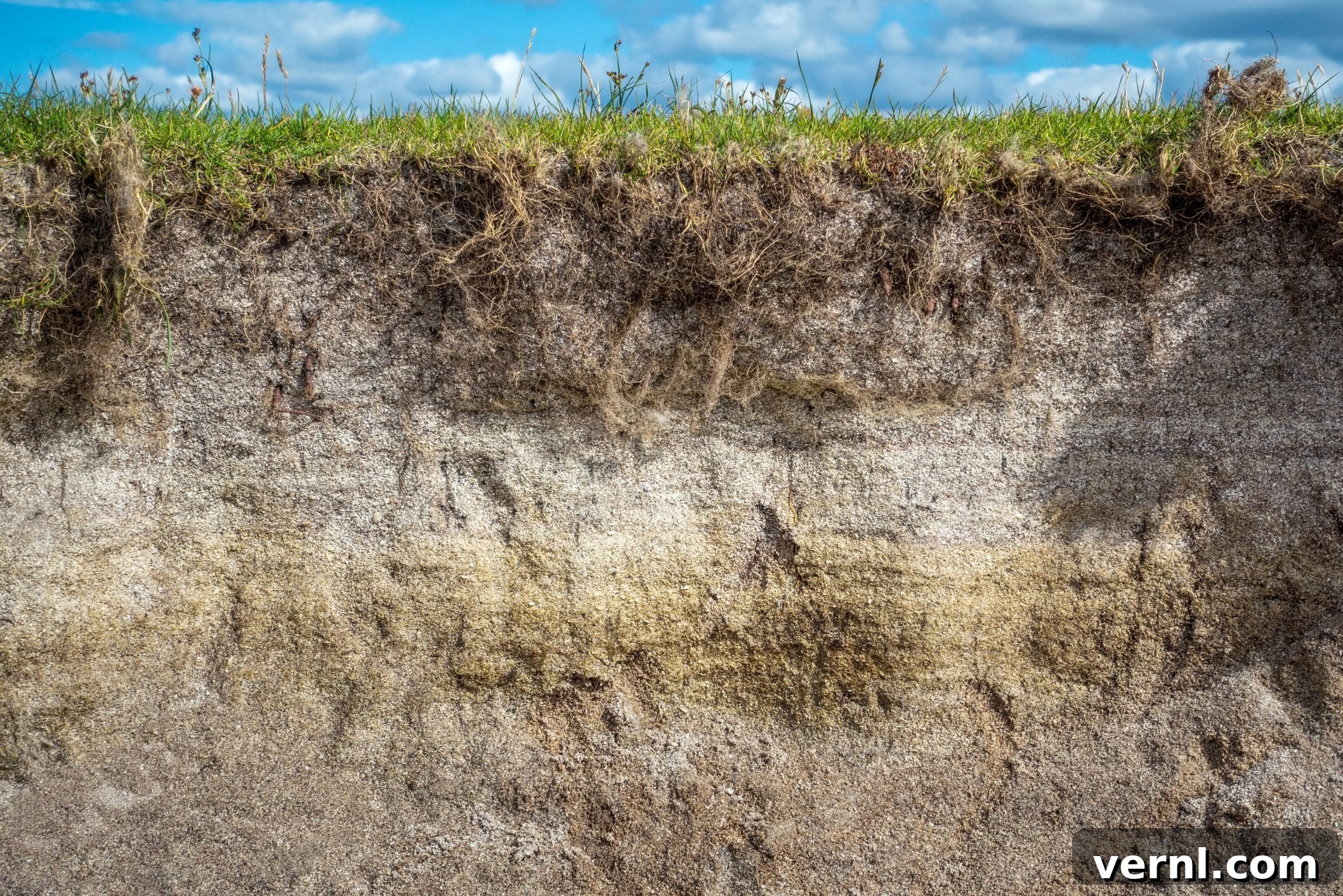
Beneath the rich, fertile topsoil and above the solid bedrock lies a fascinating and often-overlooked layer: the subsoil. This vital stratum, sometimes referred to as the “B horizon,” is far more than just inert filler; it is an unsung hero of the soil profile, playing an indispensable role in the overall health and resilience of our gardens and ecosystems. While it might appear denser and less fertile than its surface counterpart, the subsoil acts as a critical reservoir for deep water reserves during drought periods and an essential drainage system for excess moisture during heavy rainfall. Understanding the intricacies of this subterranean world is key to cultivating robust plants and fostering a truly healthy garden.
Far from barren, the subsoil is a bustling ecosystem, home to an array of diligent creatures like earthworms, beetles, and grubs. Their ceaseless tunneling activities are crucial for breaking up compacted soil, significantly enhancing water filtration, and allowing plant roots to penetrate deeper into the earth in search of essential moisture. Furthermore, this often-dense layer stores vital nutrients such as iron, calcium, and magnesium, making them accessible to deeper-rooted plants. Despite its humble, often less glamorous appearance, the subsoil is a fundamental component in maintaining the delicate balance and long-term health of the entire soil ecosystem. This comprehensive guide will delve into everything you need to know about subsoil, exploring its definition, composition, benefits, and practical strategies for maintaining its health, with insights from leading gardening experts, ensuring your garden thrives from the ground up.
What Is Subsoil? Defining the B Horizon and Its Role
Subsoil, technically known as the “B soil horizon” or sometimes simply “undersoil,” represents the layer of soil situated directly beneath the topsoil (the A horizon) and above the C horizon (parent material) or bedrock. This crucial layer is primarily characterized by the accumulation of minerals, clay particles, and sometimes organic compounds that have leached downwards from the surface layers through processes like eluviation and illuviation. Unlike the topsoil, which is rich in decomposed organic matter and teeming with microbial life, the subsoil’s fertility is generally lower, but its importance for structural integrity, water regulation, and nutrient storage cannot be overstated.
The depth at which you encounter subsoil can vary significantly depending on several factors, including your specific garden’s history, the local climate, the type of parent material, and the extent to which the soil has been disturbed over time. In some gardens or agricultural fields, it might be found just a few inches below the surface, particularly in areas with thin topsoil. In other, more developed soil profiles, you might need to dig more than a foot deep to reach this distinct layer. This variability underscores the unique characteristics of different soil profiles across various landscapes and highlights the need for site-specific understanding.
Carmen Eldridge, a respected gardening expert and manager of Arden Farm, emphasizes the subsoil’s critical role as a vital storehouse for moisture. “It serves as an important storehouse for moisture due to its thicker composition and presence of clay, which has a high water-holding capacity,” Eldridge explains. She further adds, “This rougher layer acts as a supporting base providing additional strength to the topsoil above it.” This highlights its dual function: providing essential water during dry spells, acting as a buffer against drought conditions, and offering crucial structural support to the more biologically active and often lighter topsoil above.
The Composition of Subsoil: Unveiling What Lies Beneath
The composition of subsoil typically differs markedly from that of topsoil, offering distinct advantages and challenges. It often contains a higher proportion of smaller rocks, gravel, and various clay minerals, which contribute significantly to its characteristic denser, more compact nature. Conversely, subsoil usually has a significantly lower content of organic matter, fewer active microbial populations, and a reduced concentration of immediately available nutrients compared to the surface layer. This distinction is vital for understanding its functional role in the soil profile and how it interacts with plant roots.
The three major textural components of subsoil, just like topsoil, are sand, silt, and clay. However, their proportions in the subsoil can have profound implications for water retention, drainage, and root penetration. A higher clay content, for instance, means greater water-holding capacity due to the small particle size and large surface area of clay, allowing it to hold water molecules more tightly. However, a high clay content can also lead to increased compaction and poor aeration if the soil structure is not well maintained. Sandier subsoils, while draining quickly and often having better aeration, may struggle to retain enough moisture for deep-rooted plants during dry periods, requiring plants to adapt or seek alternative water sources.
Dr. Anthony Fulford, a nutrient management and soil quality advisor at the University of California Cooperative Extension, points out a critical aspect: “The subsoil is indirectly influenced by the activities that occur at or near the soil surface.” This means that substances introduced to the topsoil, such as excess fertilizers, herbicides, pesticides, and other dissolved salts, can eventually leach downwards and accumulate in the subsoil. This accumulation is particularly pronounced in regions experiencing heavy rainfall or extensive irrigation, as water carries these dissolved compounds deeper into the soil profile. This highlights the interconnectedness of soil layers and the long-term impact of surface-level practices on the entire soil ecosystem, including potential environmental concerns.
Visual and Textural Cues: Identifying Subsoil in Your Garden
While subsoil can occasionally bear a superficial resemblance to topsoil, its appearance and texture are typically quite distinct upon closer inspection. One of the most common and reliable indicators of subsoil is its lighter color. Unlike the dark brown or black hues characteristic of organic matter-rich topsoil, subsoil often displays lighter shades of gray, pale brown, yellow, or even reddish tones, depending on the predominant mineral content and local drainage patterns. This lighter coloration is primarily due to its significantly lower organic matter content, which is the main contributor to dark soil colors.
Furthermore, subsoil is noticeably more compact and can feel somewhat sticky or plastic, especially if it has a high clay content. This stickiness and increased density are a direct result of the accumulation of clay particles, finer soil fractions, and the reduced presence of organic matter and biological activity that help create a loose, crumbly, and well-structured topsoil. Because it generally has fewer active plant roots and less animal activity compared to the topsoil, the subsoil also exhibits less structural aggregation and pore space, making it noticeably harder to dig through. You might encounter larger clods that are difficult to break apart.
Dr. Fulford offers practical advice for identifying this transition layer as you dig: “Therefore, as you dig deeper in the soil profile, if you see the soil color begin to fade from a dark brown or black to lighter shades of gray or brown, you notice it becomes harder to dig deeper into the soil.” He further elaborates on the textural shift, stating, “When you notice the soil is no longer loose and crumbly but becomes denser and lacks obvious plant roots and worm channels, it is very likely you have reached the subsoil layer.” These visual and textural cues are invaluable for any gardener or land manager seeking to understand their specific soil profile better and make informed decisions about cultivation and care.
The Multifaceted Uses and Benefits of Healthy Subsoil
While subsoil on its own is generally not considered ideal for directly growing plants due to its lower fertility and denser nature, it provides a critical, indispensable layer in the overall health of plants and the soil ecosystem. Its benefits extend far beyond direct plant growth, underpinning the stability and functionality of the entire soil profile. Beyond gardening and agricultural applications, subsoil also finds practical uses as fill soil in various construction projects, as a source of clay for building materials like bricks and pottery, and for its absorptive properties in on-site wastewater disposal systems, such as septic drain fields.
For thriving gardens and resilient lawns, the benefits of healthy subsoil are profound and numerous, playing a supportive yet crucial role in plant vitality:
- Structural Support for Topsoil: Subsoil provides essential physical support, acting as a stable and firm foundation for the more active and nutrient-rich topsoil above. This foundational role is crucial in preventing erosion, especially on slopes or in areas prone to heavy rainfall, by helping to maintain the integrity and stability of the surface layers.
- Exceptional Water Regulation: One of subsoil’s most critical functions is its role in water management. Its denser composition, often with a higher clay content, allows it to absorb and store significant amounts of water during wet periods, preventing waterlogging and ensuring adequate moisture for topsoil. Equally important, it facilitates drainage, guiding excess water deeper into the earth, thus protecting plant roots from suffocating in saturated conditions. This dual action makes it a natural buffer against both drought and excessive moisture.
- Reservoir of Essential Minerals: Although lower in readily available organic nutrients, subsoil is a valuable long-term reservoir of essential inorganic minerals like iron, calcium, magnesium, potassium, and other micronutrients. These minerals have gradually leached down from the topsoil over time. Deep-rooted plants, such as trees, shrubs, and certain vegetables, can tap into these deeper reserves, accessing nutrients that may be less available in the shallower topsoil, which is crucial for their long-term health, vigor, and stress tolerance.
- Anchoring Tall Plants and Trees: The compact and stable nature of subsoil provides a firm and extensive anchor for the deep and sprawling root systems of taller plants, shrubs, and large trees. This deep anchorage is vital for plant stability and resilience, especially during strong winds, heavy storms, or seismic activity, ensuring that larger plants remain upright and well-supported, thereby preventing damage and promoting healthy, robust growth.
- Temperature and Moisture Moderation: The subsoil acts as an insulating layer, helping to moderate extreme soil temperatures. It keeps plant roots cooler during hot summer months, reducing heat stress, and provides some protection against freezing in colder climates, shielding roots from severe frost damage. Its moisture-holding capacity also helps maintain a more consistent soil moisture profile throughout the year, reducing drastic fluctuations that can stress plants and hinder growth.
- Habitat for Specialized Biodiversity: While less biologically active than topsoil, subsoil still harbors a unique community of specialized microorganisms, fungi, and macro-organisms adapted to its specific conditions (e.g., lower oxygen, different nutrient availability). These creatures contribute to deeper nutrient cycling, the slow decomposition of deeply buried organic matter (like old roots), and the ongoing development of soil aggregation and structure.
Effective Strategies for Maintaining Healthy Subsoil in Your Garden
Maintaining a healthy subsoil is not an isolated task but an integral part of nurturing an entire, interconnected soil ecosystem. As Kathy Glassey, director of renewable resources for Monster Tree Service, aptly puts it, “Maintaining a healthy soil profile isn’t about addressing one horizon, but rather viewing our soils as a viable ecosystem beneath our feet. We should never forget the biology that makes all of this remarkable growth occur.” This holistic perspective is crucial, as practices applied to the topsoil inevitably influence the subsoil below, creating a ripple effect throughout the entire profile.
Given this intrinsic interconnectedness, proper soil care must extend to considering the long-term health and functionality of the subsoil. Here are key strategies and sustainable practices to promote and maintain a thriving subsoil environment, leading to a more resilient garden:
- Regularly Incorporate Organic Matter into Topsoil: While organic matter primarily enriches the topsoil, its regular and generous incorporation profoundly benefits subsoil indirectly. As organic matter decomposes, it improves topsoil structure, increases biological activity, and encourages deeper, healthier root penetration. These robust roots, along with enhanced earthworm activity, create vital channels that extend deep into the subsoil, significantly improving aeration, water infiltration, and facilitating nutrient movement to deeper layers.
- Practice Responsible and Balanced Fertilization: Over-fertilizing is detrimental not only to topsoil but especially to subsoil health and the wider environment. Excess fertilizers, particularly soluble nitrogen and phosphorus compounds, can easily leach downwards, accumulating in the subsoil. This accumulation can lead to nutrient imbalances, potential groundwater contamination, and can harm beneficial microorganisms adapted to the unique subsoil environment. Always apply fertilizers sparingly, precisely, and based on professional soil test recommendations to meet actual plant needs.
- Strictly Prevent Soil Compaction: Compaction is arguably one of the most significant threats to subsoil health and overall soil functionality. Heavy loads, repeated foot traffic, and the use of machinery—especially when the soil is wet and vulnerable—can severely compress soil particles, drastically reducing vital pore space. This leads to poor aeration, decreased water infiltration, and creates a dense physical barrier that restricts essential root growth. Always avoid walking or driving on wet garden beds and establish dedicated pathways to minimize compaction.
- Encourage Robust Surface Growing Conditions and Plant Cover: A healthy topsoil teeming with life and robust, diverse plant cover provides the optimal environment for subsoil health. Good surface conditions promote beneficial microbial activity, prevent surface erosion by cushioning the impact of rainfall, and contribute to the overall structural resilience of the soil. All these factors indirectly improve the subsoil’s structure, water infiltration, and overall function.
- Plant Deep-Rooted Species: Incorporating plants with naturally deep and extensive root systems, such as certain legumes (e.g., alfalfa, clover), native grasses, or tap-rooted vegetables (e.g., carrots, parsnips), is an excellent natural way to significantly improve subsoil structure. These strong roots physically break through compacted layers, create stable channels for water and air penetration, and deposit valuable organic matter deep within the soil profile when they naturally decompose.
- Cultivate Plants with Varying Root Depths: Beyond just deep-rooted plants, cultivating a diverse range of plants with varying root depths (shallow, medium, and deep) encourages the development of a complex, three-dimensional network of rooting channels throughout the entire soil profile, from topsoil to subsoil. This diversity enhances overall soil biodiversity, encourages microbial activity at different depths, and ensures better resource utilization.
- Keep Earthworms Happy and Thriving: Earthworms are truly the unsung engineers of the soil. They tirelessly burrow deep into the earth, creating essential channels that vastly improve aeration, water penetration, and nutrient cycling throughout both topsoil and subsoil. These biologically active channels are also often followed by plant roots, allowing them easier access to the subsoil’s vital resources. Maintaining a healthy, undisturbed topsoil rich in organic matter will naturally encourage a thriving and industrious earthworm population.
- Resist the Urge to Till Deeply or Frequently: While tilling your soil might appear beneficial for breaking up compacted layers in the short term, deep or frequent tilling can be highly disruptive, especially to the fragile structure of the subsoil and its delicate microbial life. Glassey warns, “Disrupting soil biology can alter our plant health. Tilling destroys much of the soil biology and interrupts soil biodiversity. While this has been a common practice for hundreds of years, we now know how damaging that practice really can be.” Embracing no-till or minimum-till practices preserves existing soil structure, protects beneficial microbial networks, and allows natural processes to improve subsoil health and resilience over time.
Subsoil vs. Topsoil: A Comparative Analysis for Gardeners
To fully appreciate the crucial and distinct role of subsoil in a healthy garden ecosystem, it’s highly beneficial to understand how it contrasts with the more familiar topsoil. While both are integral components of a thriving soil profile, they serve distinct functions and possess different characteristics that impact plant growth and soil management strategies:
- Organic Matter Content: Topsoil (A horizon) is the richest in organic matter, consisting of decomposed plant and animal material, which gives it its characteristic dark color, crumbly texture, and high fertility. Subsoil (B horizon) has significantly less organic matter, resulting in lighter colors and a denser, more compact consistency.
- Nutrient Availability: Topsoil is where the majority of readily available plant nutrients are found, constantly replenished by the breakdown of organic matter and vigorous microbial activity. Subsoil, while lower in these immediate nutrients, acts as a long-term reservoir for leached inorganic minerals like iron, calcium, magnesium, and other micronutrients, which are slowly made available to deep-rooted plants.
- Structure and Texture: Topsoil is typically loose, friable, and boasts a well-developed granular or blocky structure due to its high organic content, earthworm activity, and robust microbial life. Subsoil is generally denser, more compact, and can be stickier or more plastic due to a higher clay content. Its structure is less pronounced, often appearing massive or angular blocky, making it harder to penetrate.
- Biological Activity: Topsoil teems with a vast and diverse array of microorganisms (bacteria, fungi, protozoa) and macro-organisms (earthworms, insects), all crucial for rapid nutrient cycling, soil aeration, and organic matter decomposition. While subsoil does host life, the diversity and density of organisms are much lower, adapted to conditions with less oxygen, less organic food sources, and higher compaction.
- Color: Topsoil is typically dark brown to black due to its high organic matter content. Subsoil tends to be lighter in color, ranging from pale brown to gray, yellow, or reddish, with hues influenced by its specific mineral composition and the prevailing drainage patterns.
- Primary Function: Topsoil is the primary zone for seed germination, initial plant growth, and vigorous biological activity, focusing on immediate nutrient availability. Subsoil’s primary functions include efficient water regulation (both storage and drainage), providing crucial structural support for the entire soil profile, and serving as a long-term mineral storage facility for deep-rooted plants.
Understanding these distinct differences empowers gardeners to tailor their practices to benefit each layer effectively, recognizing that a healthy, vibrant topsoil often translates to a healthier, more functional subsoil through indirect yet profound interactions.
The Deeper Ecosystem: Microbes and Comprehensive Soil Health
While decades of traditional soil science often focused on distinct soil horizons and their physical and chemical properties, modern understanding, as highlighted by experts like Kathy Glassey, increasingly emphasizes the intricate biological interactions occurring throughout the entire soil profile. “Decades of information focus solely on the horizons, and so much more is being learned and proven about soil microbes — like bacteria, fungi, nematodes, and micro-arthropods — and how they work together to create healthy conditions and keep soils functioning as they should,” she says.
This biological perspective is paramount, extending its relevance deeply into the subsoil. Even though the subsoil contains less organic matter and typically has a reduced population of microorganisms compared to topsoil, the microbial communities present play a crucial, albeit distinct, role. These specialized microbes, adapted to lower oxygen levels and different nutrient compositions, are vital for processes such as nutrient cycling, the slow decomposition of deeper organic matter (from decaying roots), and contributing to the formation of soil aggregates, which improve subsoil structure. Fungal networks, particularly beneficial mycorrhizal fungi, can extend remarkably deep into the subsoil, forming symbiotic relationships with plant roots to significantly enhance nutrient and water uptake from these deeper, often untapped, reserves.
A healthy subsoil, therefore, isn’t just about its physical and chemical attributes; it’s fundamentally about fostering an environment where these deeper microbial communities can thrive and contribute to the overall health of the soil. Practices that improve subsoil health – such as reducing compaction, planting diverse deep-rooted species, and encouraging earthworm activity – directly support this subterranean biodiversity and its vital functions. By viewing the soil as a living, interconnected ecosystem, from the surface to the bedrock, we can implement more effective, holistic, and sustainable gardening and land management strategies that benefit all layers, including the invaluable and often underestimated subsoil.
Frequently Asked Questions About Subsoil
How do I determine the quality of my subsoil?
Assessing the quality of your subsoil involves a combination of visual inspection, textural analysis, and professional laboratory testing. To get started, collect several subsoil samples from various areas of your yard or garden, ensuring you dig below the topsoil layer (typically identifiable by a change in color and texture, as described earlier). Combine these samples thoroughly to create a representative mix for analysis. For a comprehensive chemical analysis, you can either use a readily available soil-test home kit, or for more precise and detailed results, send your combined sample to a professional soil testing laboratory. These tests will typically provide crucial information on your subsoil’s pH level, current nutrient availability (including essential micronutrients often stored in subsoil), and organic compound content, offering valuable insights into its fertility and overall health.
For a quick, hands-on determination of your subsoil’s physical composition – specifically the proportions of sand, silt, and clay – perform a simple jar test. Fill a clear mason jar approximately halfway with your subsoil sample. Add clean water until the jar is nearly full, then seal it tightly and shake vigorously for several minutes to break up all soil aggregates and ensure particles are suspended. Let the jar settle undisturbed overnight, or for several hours. Over time, the different soil particles will layer out according to their density: sand, being the heaviest and largest, will settle rapidly at the bottom; silt will form the next layer; and clay, consisting of the smallest and lightest particles, will remain suspended longer and eventually settle as the top layer. The clarity of the water at the top can also indicate the presence of very fine suspended organic matter. This visual stratification will give you a good indication of your subsoil’s textural class and its inherent potential for water retention, drainage, and susceptibility to compaction.
What are cover crops, and how do they benefit subsoil?
Cover crops are fast-growing plants, such as clover, vetch, rye, oats, or buckwheat, that are intentionally grown during fallow seasons (when the main cash crop is not in cultivation) to protect and enrich the soil rather than for direct harvest. They are often referred to as “green manures” and are invaluable tools in sustainable agriculture and gardening practices, offering a multitude of benefits for the entire soil profile. Critically, many of these benefits extend deep into the subsoil, contributing significantly to its health and functionality.
Firstly, cover crops significantly improve soil structure. Their extensive and fibrous root systems penetrate deep into the soil, physically breaking up compacted layers, including hardpans that can form in the subsoil. This direct action creates numerous channels and pore spaces that enhance aeration and water infiltration throughout the soil profile. This helps to alleviate existing subsoil compaction, a common issue that severely hinders deep root growth and efficient water movement. Secondly, by actively covering the soil surface, cover crops protect the soil from the erosive forces of wind and heavy rain, preventing the loss of valuable topsoil and the subsequent silting or compaction of lower layers due to displaced particles. Thirdly, when cover crops are terminated and tilled into the soil (or left to decompose on the surface in no-till systems), they add substantial amounts of organic matter, which, over time, can indirectly improve subsoil health by promoting deeper microbial activity, encouraging earthworm burrowing, and fostering deeper root growth from subsequent cash crops.
Specifically for subsoil, cover crops are beneficial in several profound ways: they reduce compaction by breaking up dense layers with their powerful roots, significantly increase water retention capacity by improving the overall soil structure and creating more stable pore spaces, and enhance aeration by forming persistent root channels that allow air and water to penetrate deeper. Additionally, some cover crops, especially nitrogen-fixing legumes, can contribute to the fertility of deeper soil layers by making atmospheric nitrogen available, some of which can eventually become available to deeper roots, further contributing to the health and sustained productivity of the entire soil profile and supporting a more robust garden ecosystem.
About the Experts Featured
- Carmen Eldridge is a distinguished gardening expert and manager of Arden Farm, an integral part of the Arden HOA community situated in Palm Beach County, Florida. Her extensive expertise encompasses practical gardening techniques and sustainable farm management.
- Dr. Anthony Fulford serves as a nutrient management and soil quality advisor at the University of California Cooperative Extension. His research and advisory work focus on optimizing nutrient use efficiency, improving soil health practices, and promoting sustainable agricultural systems across California.
- Kathy Glassey holds the esteemed position of director of renewable resources for Monster Tree Service. Her role involves developing and implementing sustainable resource management strategies, with a particular emphasis on comprehensive soil health, arboriculture, and ecosystem resilience.