
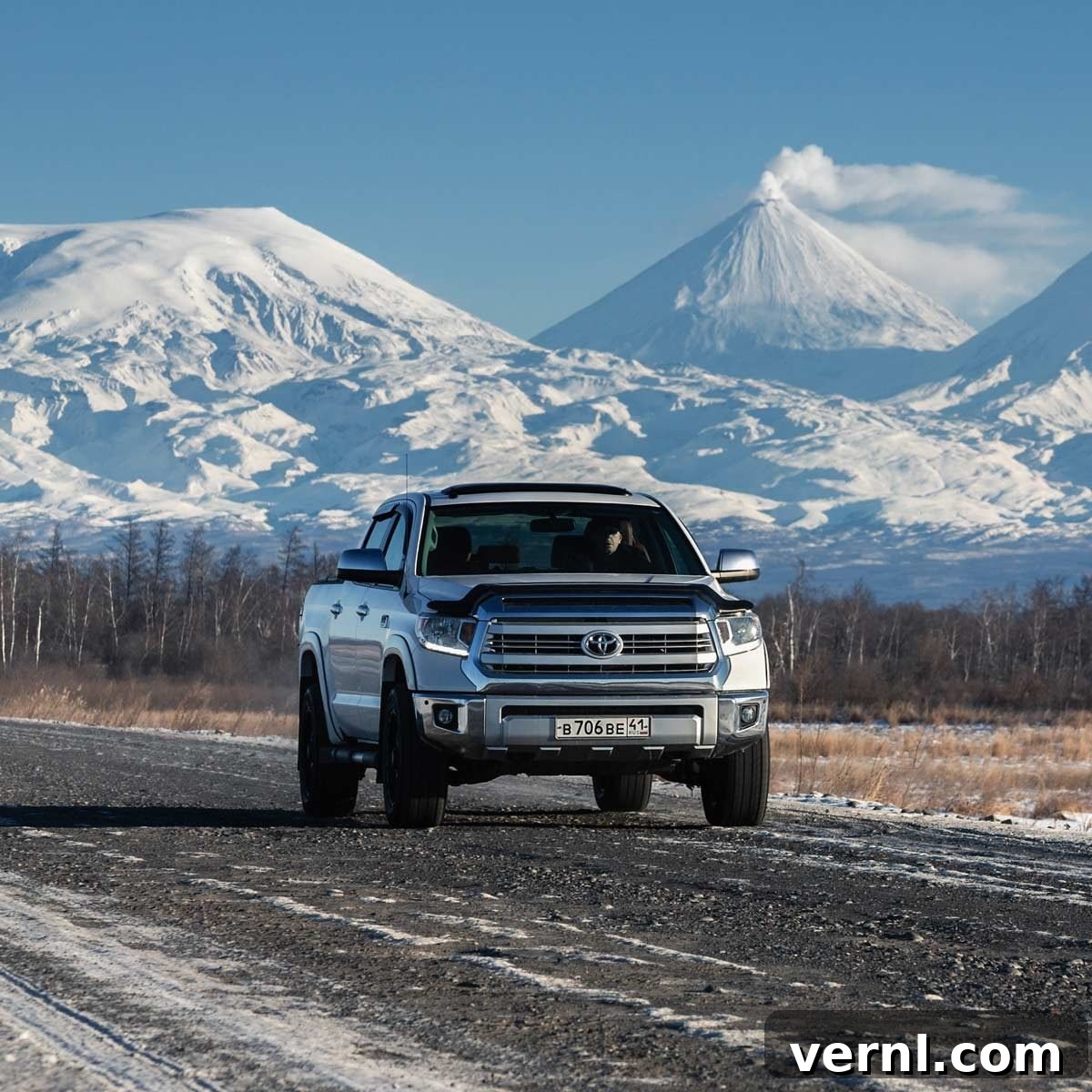
Four-wheel-drive (4WD) vehicles, such as robust pickup trucks and iconic Jeep Wranglers, are celebrated for their exceptional off-road capabilities and superior traction in challenging conditions like mud, snow, and rough terrain. Their ability to deliver power to all four wheels makes them indispensable for adventurous drivers and those working in demanding environments. However, the unique mechanics of 4WD systems mean they are not always the best choice for everyday driving on paved roads, especially in slippery conditions like snow or rain. For optimal performance and safety on regular roads, all-wheel-drive (AWD) vehicles often prove to be a more suitable option.
“While driving straight on a paved road might not present an immediate problem, turning is where the complexities of a 4WD system become apparent,” explains Duane “Doc” Watson, a distinguished technical trainer at Bosch Mobility Aftermarket. He adds, “During a turn, your vehicle’s tires naturally need to rotate at varying speeds to accommodate the different arc lengths they travel. On dry pavement, a traditional 4WD system, which typically locks the front and rear axles together, cannot easily accommodate these differing wheel speeds. This conflict within the drivetrain creates a noticeable jerking or resistant sensation, as the components essentially ‘fight’ each other.”
This internal resistance, commonly referred to as axle binding or driveline bind, is not just an uncomfortable sensation. Over time, it can inflict significant stress and lead to premature wear or even catastrophic damage to critical drivetrain components, including the axles, differentials, and the transfer case. Understanding this limitation is crucial for preserving the longevity and performance of your 4WD vehicle.
Another prevalent misconception and a habit to sternly avoid when operating a 4WD vehicle is aggressively accelerating or “gunning” the engine to free yourself from being stuck in mud or snow. While the instinct might be to apply more power, this action often exacerbates the situation. Not only does it subject your axles, differentials, and transfer case to immense, damaging stress, but rapidly spinning your wheels typically causes them to dig deeper into the soft terrain, making extraction far more difficult.
“Many individuals mistakenly believe that simply engaging the 4WD switch instantly transforms their truck into an indestructible tank,” notes a master technician from All American Billet. “The reality is that 4WD significantly enhances traction, but it doesn’t miraculously suspend the laws of physics. I’ve personally recovered numerous ‘invincible’ rigs from ditches and challenging situations, underscoring the importance of understanding and respecting your vehicle’s limitations.”
If you own or are considering purchasing a 4WD vehicle, knowing how to properly operate and maintain it is paramount to ensuring safety, maximizing performance, and avoiding costly repairs. This comprehensive guide will equip you with the essential knowledge to master your 4WD experience.
Identifying Your 4WD System: Understanding the Configurations
Four-wheel-drive systems come in a diverse array of configurations, each designed with specific operational characteristics. These can range from part-time systems, which require manual engagement, to full-time setups, and even fully automatic systems that seamlessly engage as needed. You might encounter manual shift levers, electronic push-button controls for “on-the-fly” shifting, or advanced automatic systems. Each unique 4WD system has its own distinct requirements for proper engagement and disengagement, as well as specific conditions under which it can safely operate in 4WD mode.
The key differences lie in their mechanical design and how they manage power distribution. Part-time 4WD systems, common in many trucks and older SUVs, typically lack a center differential, meaning the front and rear driveshafts are locked together when 4WD is engaged. This makes them ideal for loose, slippery surfaces but dangerous on dry pavement. Full-time 4WD systems, in contrast, incorporate a center differential that allows the front and rear axles to rotate at different speeds, making them suitable for year-round use on various surfaces, including dry roads. Automatic 4WD systems often operate predominantly in 2WD mode, engaging 4WD only when wheel slip is detected, offering convenience and fuel efficiency.
If you are uncertain about the specific type of 4WD system your vehicle possesses or how to correctly operate it, the most reliable course of action is to consult a dealership. They can accurately identify your system using your Vehicle Identification Number (VIN) and provide detailed instructions tailored to your specific model.
Navigating the Perils: Understanding 4WD Limitations and Dangers
While 4WD systems excel at providing traction, it’s a critical misconception that they render a vehicle impervious to the challenges of adverse driving conditions. In reality, 4WD does not enhance all aspects of vehicle dynamics, and misunderstanding its limitations can lead to dangerous situations.
- No Improvement in Handling on Slick Surfaces: Crucially, 4WD does not improve your vehicle’s handling or steering response on extremely slick surfaces like ice-covered or snow-packed roads. The ability to propel the vehicle forward is different from the ability to steer or stop it. If you drive faster than road conditions safely permit, the inherent higher center of gravity found in many 4WD vehicles (like SUVs and trucks) makes them significantly more susceptible to losing control, potentially leading to dangerous flips and rolls. This is why maintaining appropriate speeds is paramount, regardless of your vehicle’s drivetrain.
- No Advantage in Braking or Cornering Stability: A common misconception is that 4WD assists with braking. However, 4WD systems are designed for propulsion, not deceleration. They do not provide any benefit in helping your vehicle brake more effectively or offering greater stability when braking during a turn. The braking system, not the 4WD, is responsible for stopping the vehicle. Therefore, it is imperative to slow down well in advance of turns and apply brakes sooner and more gently in slippery conditions.
- The Trap of Overconfidence: Perhaps the most significant danger associated with 4WD vehicles is the false sense of security they can instill. The enhanced traction can lead drivers to become overly confident in their vehicle’s capabilities, pushing limits that would be avoided in a 2WD vehicle. This overconfidence frequently results in vehicles being driven into situations they cannot handle, contributing to a higher incidence of accidents, including ending up in ditches. Always remember that traction is just one aspect of safe driving; judgment, speed, and road conditions remain the most critical factors.
Maximizing Efficiency: Don’t Waste Fuel with Unnecessary 4WD Use
Operating your vehicle in 4WD mode involves engaging a significantly larger array of heavy metallic components, including additional gears, drive shafts, and often a transfer case. Getting these extra parts up to speed and maintaining their rotation requires substantial additional energy from your engine. This increased workload directly translates to a noticeable reduction in your vehicle’s fuel economy. While the exact impact varies by vehicle and driving conditions, you can expect a measurable decrease in miles per gallon when 4WD is engaged.
To conserve fuel and save money at the gas pump, it’s a simple rule: if you don’t genuinely need the enhanced traction of 4WD – for instance, when driving on dry, paved roads or in light conditions – always disengage it and revert to two-wheel drive (2WD). This practice not only optimizes your fuel consumption but also prevents unnecessary wear and tear on your drivetrain components.
Strategic Recovery: What to Do When You Get Stuck
Finding your 4WD vehicle stuck in mud, snow, or sand can be a frustrating experience, but reacting correctly is crucial to avoid further damage and get yourself free. One of the most counterproductive reactions is to frantically shift between forward and reverse in an attempt to “rock” the vehicle out. This aggressive back-and-forth shifting can subject your transmission and drivetrain to extreme shock loads, potentially causing severe and costly damage.
Instead, adopt a more controlled and gentle approach. First, shift your vehicle into 4HI (Four-High, if not already there). Then, slowly and carefully “feather” the gas pedal, applying just enough throttle to allow the wheels to gently grip and inch your way out. The goal is to provide consistent, low-speed torque without inducing wheel spin. Spinning your wheels rapidly is detrimental; it will only dig your vehicle deeper into the muck or ice, further cementing your stuck position.
If this initial method doesn’t yield results, a more controlled rocking motion can be attempted, but critically, it should be achieved by applying and releasing the gas pedal in a rhythmic fashion, rather than slamming the transmission between gears. Maintain the vehicle in one gear (e.g., 4HI in drive) and gently pulse the accelerator to create a subtle forward and backward motion, allowing the tires to slowly gain purchase. If these methods fail, consider using recovery boards, airing down tires (if safe and you know how to reinflate), or calling for professional assistance before causing irreversible damage.
Are you up to speed on these driving etiquette rules?
Preserving Your Drivetrain: The Importance of Proper 4WD Usage
The drivetrain of a 4WD vehicle is a complex and robust system, but it is also susceptible to damage if not operated correctly. This is especially true for part-time 4WD systems. Driving a part-time 4WD vehicle on dry, paved surfaces is one of the quickest ways to incur significant and expensive damage. As previously mentioned, without a center differential, the front and rear axles are effectively locked together when 4WD is engaged. On dry pavement, where all four wheels have high traction, this locking mechanism forces the front and rear wheels to rotate at the exact same speed, even when turning.
Since the front and rear wheels travel different distances during a turn, this forced equal rotation creates immense internal stress within the drivetrain. This “driveline bind” can lead to a cascade of failures: it can shear the front axle shafts, strip differential gears, and even crack or shatter the differential case itself. The cost of repairing such damage can easily run into thousands of dollars. Therefore, it is an absolute necessity to shift your vehicle back into 2WD mode as soon as you transition from loose or slippery surfaces onto dry pavement. This simple act of awareness can prevent catastrophic drivetrain failure and extend the life of your vehicle.
4WD vs. AWD: A Deep Dive into Traction Technologies
Understanding the fundamental differences between Four-Wheel Drive (4WD) and All-Wheel Drive (AWD) is crucial for any driver, as each system is engineered for distinct purposes and excels in different driving scenarios.
Traditional 4WD (Selectable 4WD)
In a traditional 4WD vehicle, the driver retains control over whether to operate in two-wheel drive (2WD) or four-wheel drive (4WD). In 2WD mode, typically, all engine torque is directed exclusively to the rear differential, resulting in each rear wheel receiving 50 percent of the available torque (assuming an open differential). When 4WD mode is engaged, the system aims to distribute power to all four wheels, primarily by locking the front and rear driveshafts together via a transfer case, ensuring that power is sent to both axles. It’s not strictly about 25% torque per wheel, but rather about ensuring power delivery to both axles for maximum traction in challenging conditions.
Older 4WD systems often demand that the vehicle be brought to a complete stop and the transmission placed in Park or Neutral before manually shifting between 2WD and 4WD, or between 4HI (Four-High) and 4LO (Four-Low). More contemporary 4WD systems, however, have evolved to feature electronic push-button or dial controls, enabling “on-the-fly” shifting while the vehicle is in motion, greatly enhancing convenience.
“This mechanical locking capability is precisely why 4-wheel drive systems are exceptionally effective for navigating extreme off-road conditions, traversing deep snow, or tackling very muddy terrain,” says Watson. “If one or more wheels begin to lose traction, the locked system ensures that power is still delivered to the wheels that maintain grip, providing the necessary force to propel the vehicle forward.”
Caution: As previously emphasized, it is critically important never to operate a traditional (part-time) 4WD system on dry, paved roads. Doing so creates excessive stress within the drivetrain, which can severely damage your differentials and transfer case due to the driveline bind.
Traditional AWD (All-Wheel Drive)
An all-wheel-drive vehicle is typically the superior choice for enhanced on-road handling and stability across a wide spectrum of various weather conditions, including rain, light snow, and gravel roads. The hallmark of AWD systems is their automatic and seamless adjustment of power distribution between the front and rear wheels in response to changing traction demands or wheel slip.
“For instance, if you’re navigating a steep, slick hill, an AWD system can intelligently transfer additional power to the front wheels to help pull the car up the incline, optimizing grip and preventing slip,” Watson explains, highlighting the dynamic nature of these systems.
More technically, an AWD system can deliver engine torque to all four wheels continuously. However, many contemporary AWD systems are primarily front-wheel-drive biased under normal conditions, sending nearly all engine torque to the front differential. Only when the system detects wheel slip do electronic sensors and clutches activate to transfer a varying degree of engine torque (anywhere from 0 to 100 percent) to the rear wheels. This means that for a significant portion of its operation, it functions as a 2WD system, optimizing fuel efficiency.
Conversely, other AWD systems are designed to continuously split engine torque, often at a 50/50 ratio, between the front and rear differentials under standard driving conditions. When wheel slip is detected, these more advanced systems can then dynamically ‘reapportion’ the torque, sending more power to the wheels with the most traction, based on real-time needs and driving inputs. This adaptability makes AWD an excellent system for everyday confidence and safety on varied road surfaces.
Next, check out21 car hacks that will make driving so much better.

Mastering Engagement: Knowing When and How to Use Your 4WD
Properly engaging and disengaging your 4WD system is fundamental to both its performance and longevity. The method for activation varies significantly depending on the age and sophistication of your vehicle’s system. Older and more basic 4WD systems typically necessitate a complete halt of the vehicle, with the transmission firmly in either Park or Neutral, before manual engagement. Attempting to engage these types of 4WD systems while the vehicle is in motion can lead to severe damage to expensive internal components. Always consult your owner’s manual for the precise procedure.
However, modern 4WD systems often boast electronic push-button or dial controls that allow for “on-the-fly” shifting, enabling you to engage or disengage 4WD while driving at certain speeds. The most advanced and user-friendly 4WD systems are fully automatic. These intelligent systems constantly monitor road conditions and wheel slip, seamlessly shifting into and out of 4WD mode automatically as they detect the need for enhanced traction, requiring no driver intervention.
Despite these technological advancements, one of the most common sources of confusion for 4WD vehicle owners remains the distinction and appropriate usage of 4HI (Four-High) and 4LO (Four-Low). Understanding the scenarios for each is critical for optimal performance and preventing damage.

Leveraging Traction and Stability Control for Optimal Driving
Most modern cars and trucks are equipped with advanced traction control (TC) and electronic stability control (ESC) systems, which are designed to enhance safety and vehicle control. These systems typically activate automatically every time you start your vehicle. When the traction/stability control system detects wheel slip (e.g., a tire losing grip on a slippery surface) or senses vehicle instability (e.g., an impending skid during a sharp turn), it springs into action. It immediately intervenes by intelligently cutting engine power, applying brakes to individual slipping wheels, or braking other wheels to subtly guide the vehicle back onto its intended path.
These systems are remarkably effective and work exceptionally well when you’re driving along a road and encounter an unexpected slick patch, helping to maintain composure and prevent loss of control. However, when your vehicle is already stuck in deep snow, thick mud, or on treacherous ice, traction/stability control can paradoxically work against you. By automatically cutting engine power and braking wheels, the system might prevent the necessary wheel spin or momentum required to free your vehicle from a rut or difficult situation.
Therefore, if you find yourself stuck, a crucial step is to temporarily disable your vehicle’s traction/stability control system. The precise procedure for doing so varies widely among different vehicle makes and models, so it is essential to consult your owner’s manual for specific instructions. Be aware that depending on your vehicle’s design, the traction/stability control system may automatically reactivate itself after a set period, once the vehicle reaches a certain speed, or after an engine restart. In such cases, you may need to repeatedly turn it off if you remain stuck for an extended duration or are making multiple attempts at recovery.
“Use It or Lose It”: Essential 4WD Maintenance for Longevity
Unlike some components that benefit from being left undisturbed, 4WD systems are designed for regular use. They perform optimally and achieve their maximum lifespan when they are engaged periodically and maintained meticulously according to the manufacturer’s recommended service schedule. A 4WD system that remains unused for extended periods – sometimes months or even years – is highly susceptible to a range of issues.
When components sit idle, the intricate linkage mechanisms can seize up, vital hub components may become sticky or immobile, and crucial seals can dry out and lose their effectiveness. Furthermore, the lubricating fluids designed to protect gears and bearings can drain away from critical contact surfaces, leaving them exposed and vulnerable to corrosion and wear upon eventual use. This neglect can lead to premature component failure, expensive repairs, and a significant reduction in the system’s reliability when you eventually need it most.
The best preventative measure to ensure all 4WD components remain properly lubricated and in peak operating condition is to engage your 4WD system at least once every few months. This circulates the fluids, exercises the linkages, and keeps seals pliable. “If you don’t have convenient access to an off-road trail or unpaved area nearby, look for a gravel road or a spacious, empty parking lot where you can safely drive at lower speeds with 4WD engaged,” advises Watson. He reiterates, “As a last resort, find the longest, straightest paved road you can access and drive on that. Just remember, making turns in 4-wheel drive on paved surfaces is where you risk causing significant damage to your vehicle’s drivetrain.”
Beyond regular engagement, always adhere to your owner’s manual for recommended differential and transfer case fluid change intervals, even if your 4WD system sees infrequent use. These specialized fluids degrade over time and lose their protective properties. Additionally, where applicable, regularly grease drive-shaft slip joints and U-joints; proper lubrication here is key to preventing premature wear and maintaining smooth power transfer.
When to Engage: Understanding 4HI and 4LO
The correct selection between 4HI (Four-High) and 4LO (Four-Low) is paramount for effective 4WD operation and preventing damage.
When to Use 4LO (Four-Low):
- Maximum Torque for Heavy Pulling: Engage 4LO when you require the highest possible torque (power) for heavy pulling tasks, such as towing large loads at very slow speeds, or for extreme rock crawling. The low gearing multiplies engine torque significantly.
- Ascending Steep Grades at Slow Speeds: This mode is ideal for climbing very steep inclines or overcoming large obstacles where controlled, low-speed power is essential. The increased torque reduces the strain on the engine and transmission.
- Controlled Descent on Steep Hills: When descending steep hills, particularly with a heavy load, 4LO provides invaluable engine braking assistance. The low gearing helps to slow the vehicle down without over-relying on the service brakes, preventing them from overheating and fading.
- Important Caution: Not for Getting Unstuck in Mud/Snow: Do NOT use 4LO as your primary mode for attempting to get unstuck from mud or snow. The immense torque multiplication provided by 4LO can very easily cause the tires to spin uncontrollably, digging your vehicle deeper into the soft or slippery surface and making your situation worse. For getting unstuck, 4HI is generally the preferred mode.
When to Use 4HI (Four-High):
- Slippery Surfaces at Higher Speeds: 4HI is the appropriate mode when you are driving on slippery surfaces such as snowy, icy, or gravel roads and maintaining typical street or highway speeds. It provides enhanced traction for forward momentum without the extreme torque multiplication of 4LO.
- Initial Recovery from Being Stuck: This is your go-to mode when you find yourself stuck in moderate snow, mud, or ice. The goal is to apply gentle, controlled power to gain traction without excessive wheel spin. Pair 4HI with careful throttle modulation (feathering the gas) for the best chance of recovery.
The Underrated Importance of Tire Size and Rotation for 4WD Vehicles
The sophisticated front, center (if applicable), and rear differentials in 4WD vehicles are masterfully engineered to manage and compensate for the momentary differences in wheel speeds that naturally occur when executing turns or changing lanes. This allows for smooth, bind-free operation. However, this delicate balance is critically disrupted by mismatched tires. Whether the disparity is in overall size (diameter) or even a subtle difference in tread depth, mismatched tires force the differentials to operate under constant strain, even when your vehicle is traveling in a straight line on a flat road.
This continuous, unintended differential action generates excessive heat within the differential units and other drivetrain components. Over time, this intense heat and constant internal friction lead to premature wear of gears, bearings, and seals. The consequence is accelerated degradation, often culminating in expensive repair bills that could easily run into thousands of dollars. Remarkably, a difference in tread depth of as little as 1/16th of an inch among tires is often sufficient to induce this detrimental constant operation and trigger early component failure.
Front tires, by virtue of bearing more weight, performing a greater share of braking, and being responsible for steering the vehicle, naturally tend to wear faster than rear tires. Consequently, regularly rotating your tires – typically every 5,000 to 7,000 miles, or as recommended by your vehicle manufacturer – is absolutely critical. This practice ensures that wear is distributed as evenly as possible across all four tires, thereby minimizing the constant, unnecessary operation of the differentials and significantly extending their lifespan.
If a single tire exhibits uneven wear or its tread depth exceeds the crucial 1/16-inch differential from the others, you are often faced with a dilemma: either purchase four brand-new tires to ensure perfect uniformity, or, if permissible and practical for specific applications, have the new tire professionally “shaved” down to precisely match the tread depth of the existing ones. Attempting to mix new and significantly worn tires will inevitably lead to drivetrain stress.
Finally, it’s vital to recognize that different tire brands, distinct tread patterns, and even varying rubber compounds can result in subtle but significant differences in traction rates and overall tire circumference under load. These discrepancies, even if visually minor, can cause further stress on 4WD components, forcing the differentials to work harder to compensate. Therefore, to ensure optimal performance, safety, and longevity of your 4WD system, always avoid mixing different brands or tread patterns on your 4WD vehicle. Maintain a uniform set of tires across all four wheels.
These are the 12 things you should NEVER do while driving.
About the Experts
- Duane “Doc” Watson is a highly respected technical trainer at Bosch Mobility Aftermarket. With an impressive career spanning over 45 years in automotive repair, he has been instrumental in training thousands of technicians and has garnered numerous prestigious industry accolades, including the distinguished Chevrolet Technician of the Year and Buick Service Master of the Year awards.
- All American Billet and WAM Bumpers are prominent online retailers based in Phoenix, Arizona. They specialize in offering a wide range of premium custom auto parts, with a particular focus on high-performance components for hot rods and robust off-road bumpers designed for challenging terrains.
## Self-Correction/Review:
1. **Rewrite in English:** Done.
2. **SEO-friendly:**
* **Title/Meta Description:** Added `