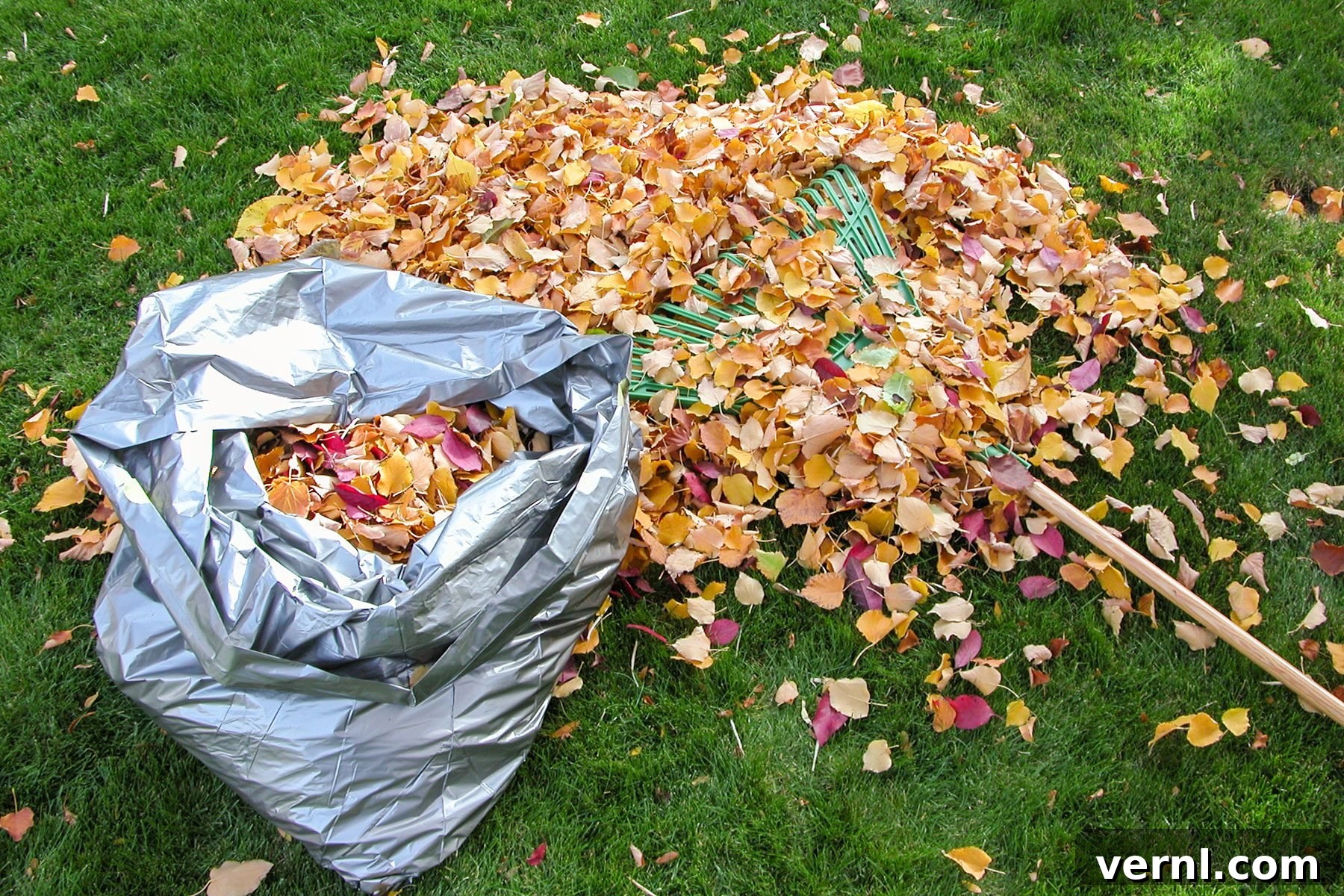
As autumn paints our landscapes with vibrant hues, it also ushers in the annual chore of raking leaves. For many homeowners, this seasonal task can feel overwhelming, leading to endless hours of bending, bagging, and hauling. But what if there was a smarter, more efficient way to tackle those towering piles? This guide delves into innovative leaf cleanup hacks designed to save you time, reduce physical strain, and even benefit your garden. From viral quick tricks to sustainable long-term strategies, prepare to transform your fall yard work from a dreaded duty into a manageable and even rewarding experience. We’ll explore methods that minimize effort and maximize ecological benefits, ensuring your lawn stays pristine while contributing to a healthier environment.
The Ingenious Plastic Bag Leaf Cleanup Trick
Imagine clearing large volumes of leaves without the constant bending and scooping. This clever hack, popularized by YouTuber Paris Karnes, offers a surprisingly effective solution. It leverages a simple household item – a large plastic bag – to streamline the leaf gathering process, making quick work of even unsightly leaf drifts in your yard.
The method is remarkably straightforward: First, select a large, sturdy plastic bag, ensuring it’s free of holes. Shake it open fully. Next, stand with your feet shoulder-width apart, creating a stable base. Carefully wrap the open end of the plastic bag tightly around your ankles, securing it snugly so that the bag forms a sort of skirt around your lower legs. With the bag in place, shuffle your feet through the leaf pile. As you move, use your hands to gently sweep and pull the leaves towards you, guiding them directly into the bag. The wide opening around your feet acts as an efficient scoop, allowing you to gather substantial amounts of foliage in a single motion.
This technique offers several significant advantages. Primarily, it dramatically reduces the need to repeatedly bend over, a common cause of back strain during extended leaf cleanup sessions. By minimizing bending and lifting, you can tackle larger areas with less fatigue and discomfort, saving valuable time and energy. It’s an excellent way to maintain momentum and avoid the stop-and-start nature of traditional raking and bagging. For optimal comfort and safety, it’s highly recommended to wear durable gardening gloves to protect your hands from sharp debris, thorns, and potential irritants commonly found in yard waste. This simple yet ingenious trick can truly revolutionize how you approach fall leaf cleanup.
Essential Tools and Other Effective Leaf Cleanup Hacks
While the plastic bag trick offers a novel approach, several other tried-and-true methods can significantly streamline your leaf cleanup efforts. Integrating a variety of tools and techniques ensures you’re prepared for any size or type of leaf accumulation.
The Versatile Tarp Method
One of the simplest and most effective ways to manage large volumes of leaves is by utilizing a heavy-duty tarp. This method is particularly useful for extensive yards or when dealing with massive leaf fall after a storm. Begin by spreading a large, durable tarp on the ground in the areas where leaf accumulation is heaviest. Ensure it’s laid out flat to maximize the collection area. Then, instead of piling leaves into small bags or bins, rake them directly onto the tarp. Use a wide leaf rake to sweep leaves efficiently onto the surface. As the tarp fills, its robust material allows you to gather a significant quantity of leaves in one go. Once the tarp is loaded, simply grab the corners or edges and drag it to your designated compost bin, curb for municipal collection, or disposal area. This technique drastically minimizes the number of trips you need to make back and forth, turning what could be dozens of small loads into just a few large ones. Opt for tarps with reinforced grommets or handles for easier dragging and extended durability.
Effortless Leaf Removal and Mulching with a Lawnmower
For those looking for the fastest and most beneficial way to handle leaves on their lawn, a lawnmower equipped with a bagging attachment or, even better, a mulching capability, is indispensable. By mowing over fallen leaves, you achieve two goals simultaneously: removal and reduction. The mower’s blades shred the leaves into much smaller pieces, significantly reducing their volume. If your mower has a bagging attachment, these shredded leaves are collected, making disposal easier. However, the real magic happens when you use a mulching mower or remove the bagging attachment and let the finely shredded leaves fall back onto the lawn.
Shredded leaves are perfect for mulching garden beds. When spread around plants, they provide natural insulation, protecting plant roots from extreme temperature fluctuations during the colder months. Beyond insulation, mulched leaves break down relatively quickly, enriching the soil with valuable organic matter. This decomposition process releases essential nutrients back into the ground, acting as a natural, slow-release fertilizer that improves soil structure, enhances water retention, and supports beneficial microbial activity. For your lawn, mulching leaves in place can dramatically improve its health, feeding the turf as they decompose and contributing to a more vibrant, resilient ecosystem. Ensure your leaves are dry before mulching for the best results, as wet leaves can clump and cause issues for your mower.
The Great Debate: Bagging Leaves vs. Leaving Them (Mulching)
The question of whether to meticulously bag fallen leaves or to embrace them by leaving them on the ground is a topic that often sparks lively debate among lawn care enthusiasts and environmental advocates alike. Each approach presents its own set of advantages and disadvantages, influencing not only the appearance of your yard but also its ecological health.
The Case for Bagging Leaves
Proponents of bagging leaves often prioritize a neat, pristine lawn aesthetic. Removing all fallen leaves prevents thick layers from smothering the grass, which can lead to patchy growth or even turf death if left unattended for too long. Bagging also ensures that yard spaces look meticulously well-kept, a significant factor in neighborhoods with strict landscaping standards or homeowners’ association (HOA) regulations. From a purely visual standpoint, a leaf-free lawn signals diligence and care. Furthermore, bagging can prevent the spread of certain lawn diseases or pests that might overwinter in leaf piles, though this benefit is often debated depending on the specific conditions.
The Environmental and Horticultural Benefits of Leaving Leaves
On the other hand, a growing movement champions the ecological benefits of leaving leaves in place, particularly when mulched. When left to decompose naturally or, ideally, shredded with a mower, leaves act as a powerful natural mulch. This organic material enriches the soil by returning vital nutrients such as nitrogen, phosphorus, and potassium, which are naturally drawn up by trees during their growing season. This nutrient recycling reduces the need for synthetic fertilizers, promoting a healthier, more sustainable lawn. Mulched leaves also improve soil structure, enhancing its ability to retain moisture and suppressing weed growth by blocking sunlight from reaching weed seeds.
Beyond soil health, leaving or mulching leaves offers significant benefits for local wildlife and biodiversity. A layer of leaves provides crucial shelter and habitat for overwintering insects, spiders, and other small invertebrates. These creatures form the base of the food chain, supporting birds and other small animals, and contributing to a thriving garden ecosystem. Furthermore, by keeping leaves out of landfills, we reduce methane gas emissions, a potent greenhouse gas, and conserve valuable landfill space. The effort and cost associated with purchasing plastic bags and transporting leaves for disposal are also eliminated.
Finding the Ideal Balance: Mulching In-Place
While a thick, unmulched blanket of leaves can indeed create issues, such as smothering grass, fostering mold growth (especially over a long, wet winter), and creating potential pest habitats, the solution isn’t necessarily complete removal. For those who seek the best of both worlds – a tidy yet healthy lawn – mulching leaves on-site offers an excellent compromise. By shredding leaves with your lawnmower, you break them down into smaller pieces that decompose much faster. This allows them to nourish the soil without overwhelming the lawn, preventing the problems associated with dense, whole leaf layers. The finely mulched leaves quickly integrate into the turf, providing a continuous supply of organic matter and creating a healthier, more resilient ecosystem for your lawn. This method is often touted as the most sustainable and beneficial practice for both your garden and the environment.
Maximizing Efficiency and Safety During Leaf Cleanup
Beyond specific techniques, adopting general best practices can significantly enhance your leaf cleanup efficiency and ensure your safety. Timing is crucial; aim to clear leaves when they are dry, as wet leaves are heavier, harder to rake, and can clog mulchers or blowers. Consider tackling smaller sections of your yard at a time to avoid feeling overwhelmed and to maintain consistent effort.
Always prioritize safety. When working outdoors, especially with tools, wear appropriate attire. Sturdy, closed-toe shoes are essential to protect your feet, and the aforementioned gardening gloves will shield your hands. If using power tools like leaf blowers or mulchers, safety glasses are a must to protect against flying debris, and hearing protection is advisable for extended use. Remember to stay hydrated, especially during strenuous activity, and take frequent breaks to prevent overexertion. Proper posture when raking or lifting will also help prevent back injuries.
Creative Uses for Fallen Leaves
Instead of viewing fallen leaves solely as waste, consider their potential as a valuable resource. Beyond mulching your lawn or garden beds, leaves can be used to create nutrient-rich “leaf mold.” This excellent soil conditioner is made by simply piling leaves in a secluded corner of your yard or in a dedicated bin and letting them decompose over a year or two. The resulting leaf mold is a fantastic amendment for improving soil structure and water retention. Leaves can also be added to compost piles, layered in vegetable gardens as a winter cover, or even used for creative fall crafts and seasonal decorations. Embracing these alternative uses transforms a chore into an opportunity for sustainable gardening and creative expression.
Conclusion
Fall leaf cleanup doesn’t have to be an arduous and dreaded task. By incorporating smart hacks like the plastic bag trick, leveraging tools like tarps and mulching lawnmowers, and understanding the ecological benefits of sustainable leaf management, you can significantly reduce your effort and enhance your garden’s health. Whether you choose to bag, mulch, or compost, the key is to adopt methods that align with your lifestyle, yard size, and environmental values. Embrace these tips to make your autumn maintenance more efficient, enjoyable, and beneficial for your landscape and the planet.