
Mastering the Nail Set: Your Essential Guide to Flawless Finishes
In the world of woodworking and carpentry, achieving a professional, clean finish is paramount. While powerful tools like nail guns and hammers handle the heavy lifting, it’s often the subtle touch of a specialized hand tool that truly elevates a project from good to exceptional. One such indispensable tool, often overlooked but crucial for meticulous craftsmanship, is the humble yet mighty nail set. Whether you’re a seasoned trim carpenter, a dedicated woodworker, or a DIY enthusiast striving for perfection, understanding and effectively utilizing a nail set is a skill that will significantly enhance the quality and aesthetic appeal of your work.
What is a Nail Set? An Indispensable Tool for Precision
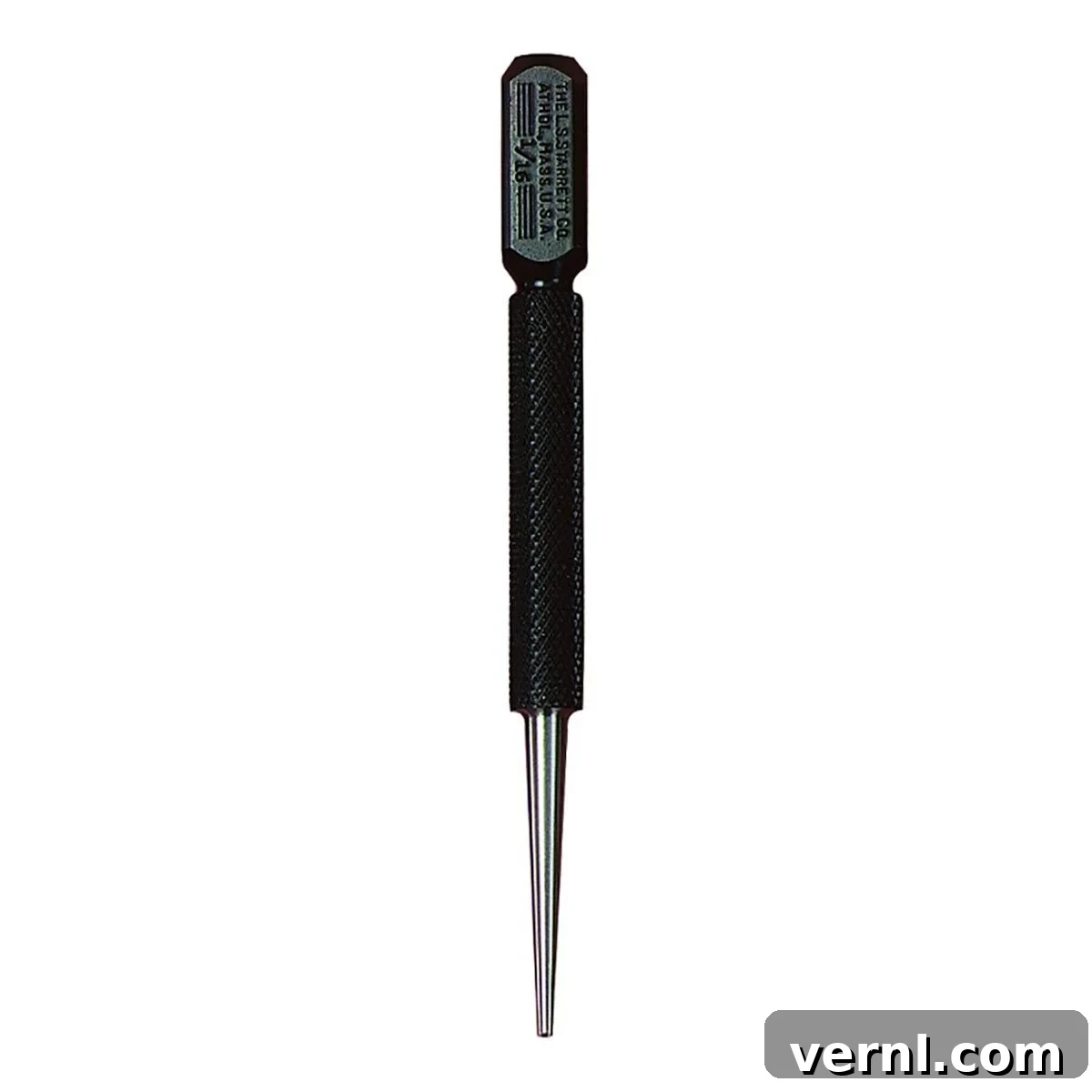
A nail set, sometimes interchangeably referred to as a nail punch, is a small, pencil-shaped hand tool specifically designed to drive nail heads slightly below the surface of wood or other materials. Its primary purpose is to ensure that fasteners are completely hidden, allowing for a smooth, unblemished surface that can then be filled with wood putty, sanded, and finished without any visible nail heads. This results in a cleaner, more professional appearance, free from the distracting glint of exposed metal or the unsightly marks left by a hammer.
For carpenters working with hand nails, the process typically involves driving the nail most of the way in with a hammer, leaving it just a fraction proud of the surface. This is where the nail set steps in. By placing the tip of the nail set onto the nail head and tapping the set with a hammer, the carpenter can precisely drive the nail the remaining distance, recessing the head without risking damage to the surrounding wood. This technique expertly prevents the accidental “hammer-shaped mark” that can easily mar delicate trim work or finely crafted woodworking projects, preserving the integrity and beauty of the material.
Beyond traditional hand nailing, nail sets also play a vital role when working with automatic nail guns. Even the most advanced nail guns can occasionally leave a fastener slightly proud of the surface due to inconsistencies in air pressure, wood density, or user technique. In such cases, a nail set provides the perfect solution to neatly “set” these proud fasteners, pushing them just below the surface for a seamless finish. Furthermore, the sharp, durable tip of a nail set can be ingeniously employed to create accurate starter holes or pilot holes for screws and drill bits in both wood and metal. This prevents splitting, improves screw driving accuracy, and ensures a clean entry point, especially in hardwoods or near the edges of a workpiece.
Understanding the Anatomy: Basic Parts of a Nail Set
Despite its simple appearance, a nail set is ingeniously designed for its specific function. Knowing its basic components helps in understanding its operation and choosing the right tool for the job:
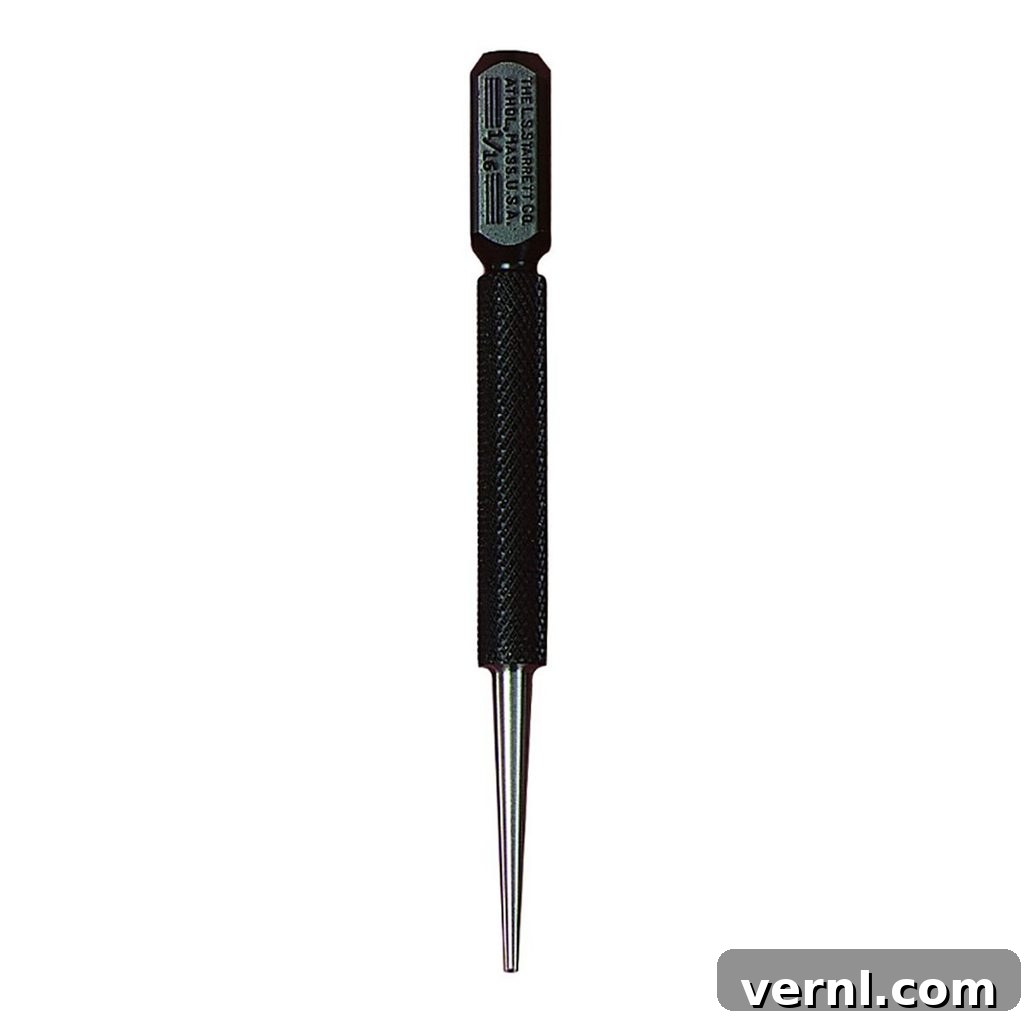
- Head: This is the blunt, typically hardened end of the nail set, designed to be struck by a hammer. The head must be durable enough to withstand repeated impacts without mushrooming or deforming, ensuring consistent and safe use over time.
- Grip/Shaft: The main body of the tool, which the user holds. This section can be smooth, knurled (textured for better grip), or coated with materials like silicone or rubber for enhanced ergonomics and comfort during extended use. A good grip is crucial for control and preventing slippage.
- Tip: The business end of the nail set, where it makes contact with the nail head. Tips come in various shapes and sizes, each optimized for different types of nails and applications. The tip is usually precisely machined and hardened to ensure it can withstand pressure and precisely engage with the nail head.
The Art of Using a Nail Set: A Step-by-Step Guide to Perfection
Operating a nail set effectively requires a combination of precision, control, and a gentle touch. While seemingly straightforward, mastering the technique ensures that nail heads are recessed uniformly and without damage to the surrounding material. Here’s a detailed breakdown of how to use this essential tool:
Preparation and Setup for Optimal Results
Before you even pick up your hammer, a few preparatory steps can significantly impact the success of your nail-setting task:
- Select the Right Nail Set Size: Match the tip of your nail set to the size of the nail head. Using a tip that’s too large can damage the surrounding wood, while one that’s too small might slip off or bend the nail. A good rule of thumb is to choose a tip that is slightly smaller than the nail head diameter.
- Ensure Nail Protrusion: Make sure the nail is already driven within approximately 3/16 to 1/8 inches (about 3-5mm) from being flush with the surface. The nail set is for the final, precise push, not for driving a nail most of the way.
- Stabilize Your Workpiece: Ensure the wood or material you’re working on is securely clamped or held in place. Any movement can lead to inaccuracy or potential injury.
Operation Basics: Achieving a Flawless Recess
With the preparation complete, follow these steps to accurately set your nails:
- Position the Tip: Carefully place the precisely machined tip of the nail set directly onto the center of the nail head. It’s crucial that the set is held perfectly vertical, at a 90-degree angle to the surface of the wood. This ensures the force is applied straight down, preventing the set from slipping off or bending the nail.
- Grip Firmly and Safely: Hold the nail set firmly but comfortably between your thumb and forefinger, or with your entire hand, depending on the tool’s size and your preference. A steady grip provides control and minimizes the chance of the set moving unexpectedly during impact. Ensure your fingers are clear of the path of the hammer.
- Gentle Tapping with a Hammer: Using a relatively light hammer (a claw hammer or a small ball-peen hammer is ideal), tap the blunt head of the nail set. Do not swing the hammer with full force. Instead, use controlled, deliberate taps. The goal is to gradually drive the nail head until it is slightly recessed below the wood surface, typically by about 1/16 to 1/8 inch (1.5-3mm). This slight recess creates a perfect cavity for wood filler.
- Check Depth and Repeat if Necessary: After a few taps, visually inspect the nail head. If it’s not sufficiently recessed, reposition the nail set and give it a few more gentle taps. Consistency in depth is key for a uniform finish across all fasteners.
- Fill the Hole: Once the nail head is recessed, fill the small hole with an appropriate wood putty or filler. Choose a filler that matches the wood species or can be stained/painted to blend seamlessly. Apply the filler with a putty knife, ensuring it’s slightly proud of the surface, then allow it to dry completely before sanding flush.
Common Mistakes and How to Avoid Them
- Slipping Off the Nail: This often happens if the nail set is not held vertically or if the tip size is incorrect. Always ensure a firm, perpendicular placement.
- Over-setting the Nail: Tapping too hard can drive the nail too deep, creating a large, unsightly divot that is harder to fill. Use gentle, controlled taps.
- Damaging the Surrounding Wood: Using a nail set with a tip too large for the nail head, or allowing the hammer to strike the wood instead of the set, can mar the surface. Precision and control are vital.
- Bending the Nail: If the nail is not driven sufficiently before using the set, or if the set slips, the nail can bend. Ensure the nail is nearly flush first.
Safety First: Essential Nail Set Practices
While a nail set is a relatively small and unassuming tool, it’s used in conjunction with a hammer, which introduces potential hazards. Adhering to fundamental safety practices is crucial to prevent injuries and ensure a productive work environment:
- Wear Proper Eye Protection: This is arguably the most critical safety measure. When striking metal on metal (hammer on nail set), small fragments of metal from the hammer, nail set, or even the nail itself can break off and become projectiles. Dust, wood chips, or splinters can also fly. Safety glasses or goggles are non-negotiable to protect your eyes from serious injury.
- Hammer Slowly and in a Controlled Manner: Avoid aggressive, forceful swings. Instead, use controlled, deliberate taps. This minimizes the risk of the hammer glancing off the nail set, potentially hitting your hand or damaging the workpiece. It also helps prevent the nail set from slipping and causing injury.
- Ensure a Stable Workpiece: Always work on a stable, non-moving surface. Clamping your workpiece securely will prevent it from shifting during hammering, which could lead to missed strikes or loss of control over the nail set.
- Maintain a Clear Workspace: Keep your work area tidy and free of clutter. Tripping hazards or distractions can lead to accidents when handling tools.
- Inspect Your Tools: Before each use, quickly inspect your nail set and hammer. Look for any signs of damage, such as a mushroomed head on the nail set (which can cause metal fragments to fly off) or a loose hammerhead. Replace or repair damaged tools immediately.
Exploring the Varieties: Different Types of Nail Sets
Nail sets, while serving a common purpose, come in various forms, each tailored to specific applications or user preferences. Understanding these distinctions helps in selecting the most effective tool for any given task:
- Standard Nail Sets (Varying Tip Sizes): The most common distinction among nail sets is the size of their tip. They are available in a range of diameters, typically from 1/32″ up to 1/8″ or even larger. Matching the tip size to the nail gauge (e.g., a smaller tip for 18-gauge brads, a larger tip for 8d finish nails) is crucial for effective recessing without damaging the wood or the nail itself. A set of multiple sizes is highly recommended for versatility.
- Ergonomic Grip Nail Sets: Some nail sets are designed with user comfort in mind, featuring silicone, rubber, or soft-touch grips. These ergonomic handles provide a more comfortable hold, reduce hand fatigue during prolonged use, and offer a better non-slip surface, enhancing control and precision.
- Automatic/Spring-Loaded Nail Punches: These innovative tools eliminate the need for a separate hammer. They feature an internal spring mechanism that, when pressed down firmly, delivers an impact to the nail head. Automatic punches offer the advantage of one-handed operation, consistent setting depth, and portability. They are particularly useful in tight spaces where swinging a hammer might be difficult.
- Specialized Tip Shapes: Beyond varying diameters, nail set tips can also come in different profiles:
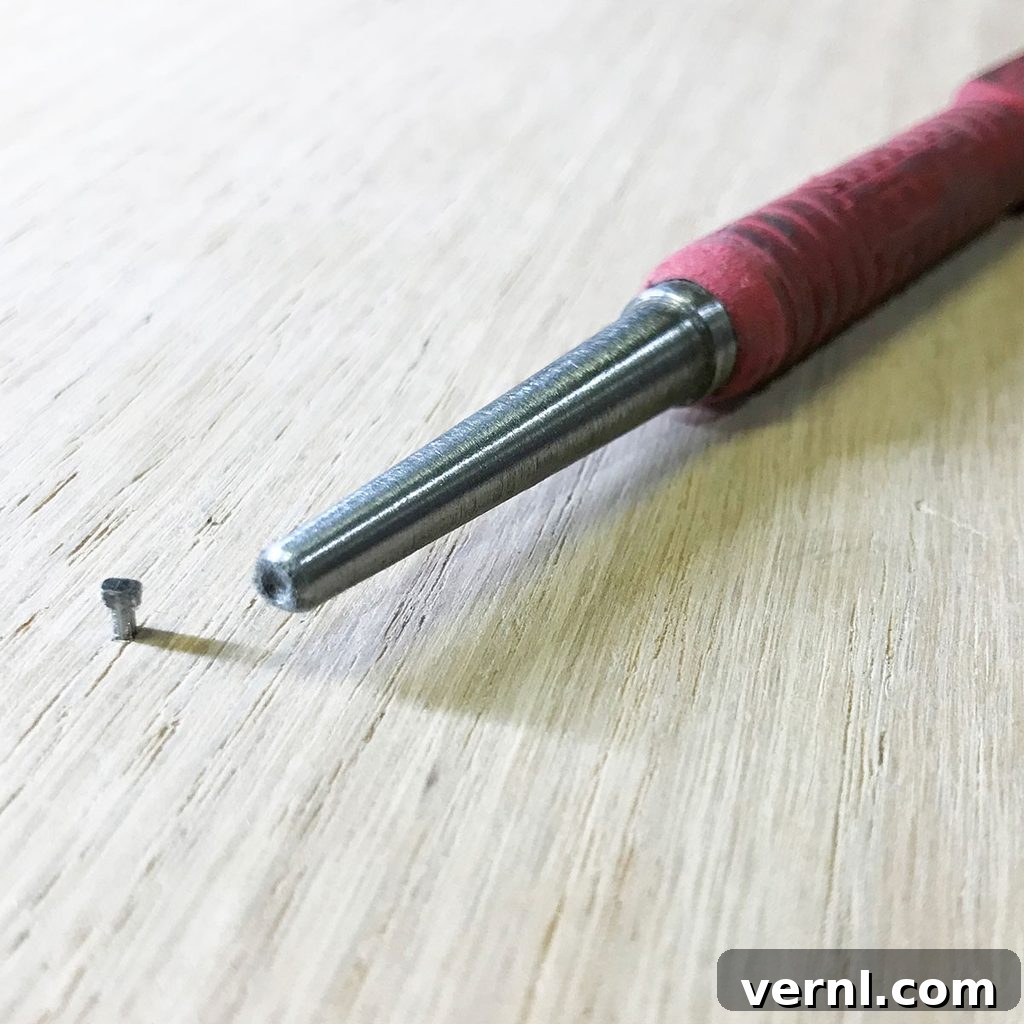
- Concave Tip: This design features a slight depression or concave shape at the very end of the tip. It’s exceptionally effective for smaller fasteners like brads and finish nails, as the concave shape cradles the nail head, significantly reducing the likelihood of the set slipping off and bending the nail or marring the surrounding surface.
- Flat Tip: A flat-tipped nail set is a general-purpose option suitable for a wide range of nail head sizes. While versatile, it might offer less grip on smaller, rounder nail heads compared to a concave tip, requiring a bit more precision from the user.
- Convex or Pointed Tip: Less common for recessing nail heads, these tips are more often used as center punches to create starter indentations for drill bits or screws, especially in metalworking or to prevent wood splitting during initial drilling.
- Nail Punches with Sleeves/Guides: Some specialized nail punches, often used in siding or fascia installation, incorporate a sliding sleeve or guide. The nail sits inside this sleeve, which protects the surrounding material as the nail is driven flush or slightly recessed. This design is particularly useful when working with delicate surfaces or when a consistent, shallow set is required across many fasteners.
Choosing the Right Nail Set: What Makes a Good Tool?
Investing in a quality nail set is a small but significant step towards achieving superior results in your woodworking and carpentry projects. Here’s what to look for when selecting this essential tool:
- Strength and Durability: The most crucial aspect of a good nail set is the quality of its material. Look for tools made from high-carbon, heat-treated, or hardened steel. This ensures the tip will withstand repeated impacts without deforming, bending, or mushrooming, providing long-lasting performance and safety.
- Superior Grip: A comfortable and secure grip is essential for control and preventing slippage. Whether it’s a finely knurled (textured) metal shaft for maximum tactile feedback or a softer, ergonomic silicone or rubberized handle for comfort during extended use, a good grip enhances precision and reduces hand fatigue.
- Visibility and Color: While seemingly minor, a brightly colored grip or shaft (e.g., yellow, orange) can significantly help prevent losing your nail set amidst wood shavings or on a cluttered workbench. This simple feature can save time and frustration on the job site.
- Precision-Machined Tips: The tip should be finely ground and precisely shaped (concave, flat, etc.) to engage effectively with nail heads. Sharp, clean edges on the tip prevent damage to the nail head itself and ensure consistent setting depth.
- Reputable Brand: Opting for a nail set from a well-known, reputable tool manufacturer often guarantees higher quality materials, better construction, and reliable performance. Brands like Stanley, for example, have a long-standing reputation for producing durable and effective hand tools.
Stanley makes a high-quality nail set, often available in convenient multi-piece sets.
Advanced Tips and Maintenance for Your Nail Set
To further enhance your nail-setting skills and ensure the longevity of your tools, consider these advanced tips and maintenance practices:
- Concave Tips for Small Fasteners: For delicate work with small fasteners like 18-gauge brads or headless pins, a nail set with a concave tip is almost essential. The unique shape of the tip provides a secure grip on the tiny head, making the set significantly less likely to slip off and bend the brad or mar the surrounding wood. This precision is crucial for achieving truly invisible fastenings in finish carpentry.
- Using a Depth Guide: For projects requiring absolute uniformity in nail depth, consider making a simple depth guide. This can be a small block of wood with a hole drilled through it, or a commercially available attachment, that ensures your nail set consistently recesses nails to the same depth every time.
- Working with Softwoods: When working with very softwoods, be extra gentle with your hammer taps. Softwoods are more prone to crushing or denting around the nail hole if too much force is applied.
- Maintenance and Care: Keep your nail sets clean and dry to prevent rust, especially if they are not made of stainless steel. Store them in a tool roll or box to protect their tips from damage. Periodically inspect the striking end for mushrooming; if the head starts to deform, it can be dressed with a file or grinding wheel to restore its flat surface, but heavy mushrooming might indicate it’s time for a replacement for safety reasons.
For those looking to deepen their expertise in crafting beautiful wood finishes, understanding the broader context of finish carpentry techniques is invaluable. A nail set is just one piece of the puzzle that contributes to the overall professional quality of your projects.
Here’s what you need to know about finish carpentry, a craft where attention to detail, aided by tools like the nail set, truly shines.
Conclusion: The Unsung Hero of Fine Woodworking
In conclusion, the nail set is far more than just a simple piece of metal; it is an unsung hero in the arsenal of any skilled craftsman. This humble tool empowers you to achieve a level of precision and finish that is otherwise unattainable, ensuring that every nail is seamlessly integrated into your project. From preventing unsightly hammer marks on delicate trim to preparing surfaces for flawless filling and finishing, the nail set plays a critical role in elevating the aesthetic and structural integrity of your work.
By understanding its purpose, mastering its use, selecting the right type for each task, and adhering to safety precautions, you unlock the full potential of this indispensable tool. Whether you’re working on intricate furniture, installing elegant moldings, or simply making repairs around the house, the nail set guarantees a professional, clean, and durable finish every time. Embrace the power of precision; embrace the nail set.