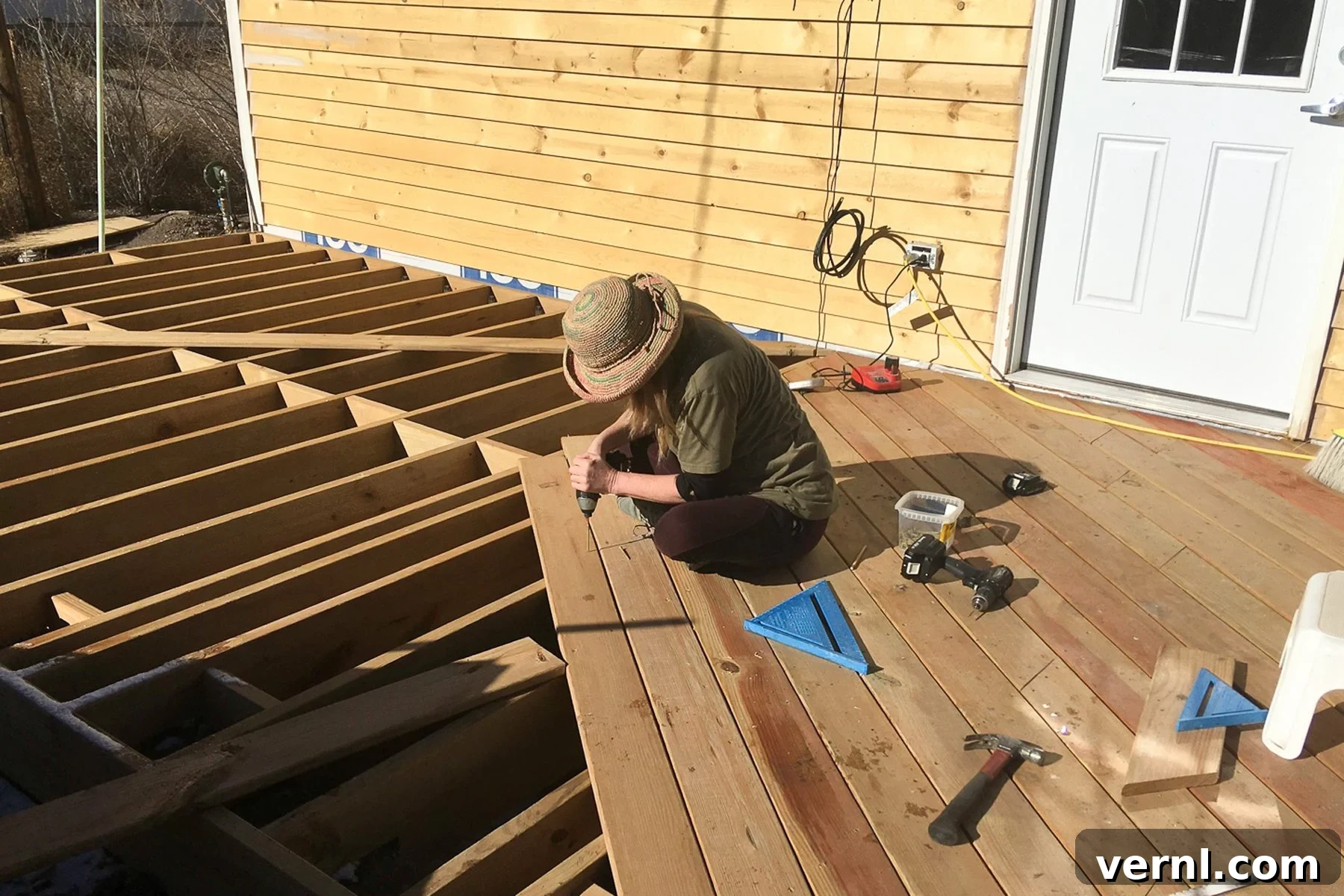
Three years ago, driven by a desire for change and a longing for a meaningful project, my partner and I embarked on a significant adventure: purchasing a century-old home nestled in a quiet, rural Colorado town. The global pandemic had introduced an unexpected void in our lives, prompting us to seek a venture that would not only occupy our time but also allow us to invest our savings wisely. We envisioned a fixer-upper as the perfect canvas – a place to cultivate equity, develop new skills, and perhaps even establish roots in a tight-knit small-town community.
Our chosen property was, quite literally, the most affordable house available in the entire state. Having languished on the market for over a year, it was clear that most potential buyers saw it as a teardown. Its condition was certainly daunting: every window was shattered, significant sections of the cedar roof shingles were missing, and the bathroom floorboards were conspicuously absent, suggesting a prior, aborted attempt to address major plumbing issues. It was far from move-in ready, and the sheer scope of work was evident from the outset.
Despite these glaring deficiencies, we approached the house with an optimistic eye. We saw beyond the decay, recognizing the inherent charm of an old home with a surprisingly solid foundation. Crucially, there was no widespread evidence of significant insect infestations, rodent damage, or chronic water intrusion – issues that often spell disaster for older properties. A bit of diligent research into state records also yielded a pleasant surprise: the property possessed a valid well permit. This critical piece of information had evidently eluded the real estate agents, saving us from a potentially higher asking price and highlighting the importance of thorough due diligence.
Neither of us are professional house flippers. While my husband had undertaken extensive renovation work on previous homes, this was my first foray into a full-scale fixer-upper project. However, we entered this endeavor with a clear understanding of the commitment required – a complete gutting of the interior down to the studs, followed by a meticulous rebuild of every system, from electrical and plumbing to HVAC and insulation.
To date, we’ve dedicated approximately eighteen months of full-time, hands-on labor to this ambitious project, largely relying on our own efforts. We minimized outside help, though we were incredibly fortunate to have my husband’s father, a retired plumber, lend his expertise. We are now navigating the final stages, meticulously working through a comprehensive list of finishing touches, eager to see our vision fully realized.
Reflecting on our journey, the experience has been overwhelmingly positive, and we harbor no regrets. We’ve gained an invaluable amount of knowledge and practical skills, pushing our boundaries and discovering capabilities we didn’t know we possessed. While the project has been a success, there are undoubtedly a few aspects we would approach differently should we embark on another renovation in the future.
For anyone contemplating the adventure of a fixer-upper, be prepared for the unexpected. Beyond the typical challenges of budgeting and timelines, we encountered several unusual hurdles that might not immediately come to mind. To provide a balanced perspective, we also sought insights from two seasoned experts in the field, who shared their professional opinions on the pros and cons of restoring a fixer-upper.
About the Experts
Samantha Pearl is a highly respected licensed residential builder based in St. John’s, Michigan. She is the proud owner of My Handyma’am, a reputable home renovation company dedicated to quality craftsmanship. Beyond her building endeavors, Samantha is passionate about empowering women with DIY skills, actively teaching through her engaging Facebook group, How to Handyma’am.
Bryan Slowick brings a wealth of experience to the table as the owner and sales manager of BDS Design Build Remodel in Libertyville, Illinois. He founded his company in 2003, building upon seven years of invaluable experience as a lead carpenter and foreman for a prominent general contracting firm in Chicago, specializing in comprehensive design-build solutions.
Tackling Uneven Floors and Non-Plumb Walls
One of the quintessential characteristics of older homes, particularly those approaching or exceeding a century in age, is the presence of floors that slope, sag, or are generally uneven, coupled with walls that rarely boast perfectly 90-degree angles. In our 100-year-old home, we had identified these issues early on and, thankfully, confirmed that they were not indicative of severe underlying foundational problems. However, what we significantly underestimated was the monumental effort and sheer volume of work required to truly rectify these seemingly minor imperfections.
Correcting the floors alone became a laborious and time-consuming process. It demanded countless bags of specialized self-leveling compound, applied meticulously over many days to achieve a truly flat and level surface. This was a critical step before any new flooring could be installed, ensuring a professional and durable finish. The work was physically demanding and surprisingly intricate. In hindsight, had we fully grasped the extensive scope and the intensive labor involved in this task earlier in the project, we would have opted for a different, potentially more efficient, approach: leveling the floors by strategically jacking them up from beneath. This method, while still requiring precision, might have saved us considerable time and material costs compared to the liquid leveling compounds.
Navigating Challenges in Accessing Building Supplies and Support Services
In the initial rush of excitement and the overwhelming focus on the renovation itself, we inadvertently overlooked a critical logistical consideration: the availability and accessibility of essential building supplies and skilled support services in our chosen rural location. This oversight would prove to be a significant challenge throughout the duration of our project.
The nearest large-scale home-improvement superstore was situated more than two hours away, a considerable round trip that consumed valuable time and fuel for every major purchase. While we always prefer to support local businesses, the independently owned construction-related stores closer to our town, though convenient, typically charged significantly higher prices for their materials. Over the course of a comprehensive, large-scale renovation, these incremental costs accumulated rapidly, significantly impacting our overall budget. Furthermore, finding qualified and available subcontractors for specialized tasks – such as specific electrical work or HVAC installations – proved to be nearly impossible. The limited pool of tradespeople in such a remote area meant long wait times or, more often, a complete lack of availability for projects of our scale.
The cumulative effect of these challenges was substantial. We found ourselves consistently paying more for materials due to limited options and higher local pricing. More significantly, the scarcity of professional help meant we had to dedicate considerably more time to learning and executing new, complex tasks ourselves, pushing the boundaries of our DIY capabilities. This self-reliance, while rewarding, also led to increased physical strain and wear-and-tear on our bodies, far beyond what we had initially anticipated for the project timeline and our personal endurance.
Managing Dumpsters and Waste Disposal
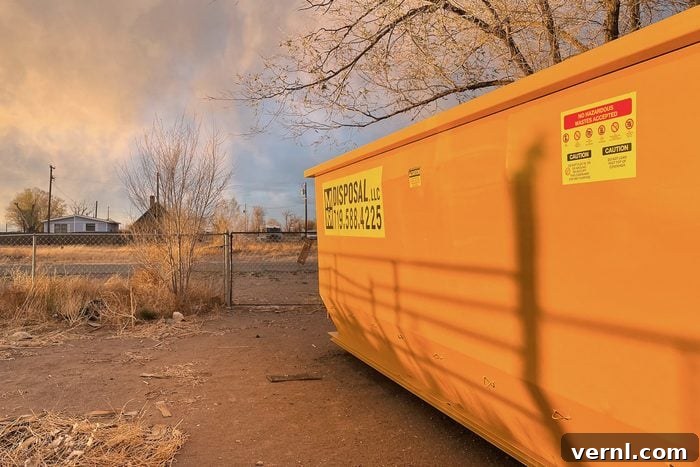
One of the unforeseen logistical nightmares of our renovation was the sheer volume and diverse nature of the waste materials we generated. Ultimately, we rented and filled no fewer than four massive 40-yard construction dumpsters. These behemoths were packed to the brim with a seemingly endless array of demolition debris: old wallboard, crumbling mortar, countless planks of wood, general yard refuse, discarded pipes, tangled wiring, and obsolete appliances. Each trip to the dumpster represented another significant step forward, yet also highlighted the extensive deconstruction phase of our project.
Among this mountain of debris, one component stood out as particularly surprising and challenging: an unexpected enclosure hidden beneath layers of paneling in a poorly constructed and illegally added room. This enclosure consisted of thirteen formidable 300-pound steel door panels, seemingly salvaged from an industrial building at some point in the home’s past. Removing these panels was a monumental task in itself, and then the challenge became how to dispose of them. We were incredibly fortunate that our dumpster company, at that specific time, was still accepting scrap metal. Just three months later, the company revised its policy and stopped accepting such materials. Had this policy change occurred sooner, disposing of those immense steel panels would have transformed into an incredibly expensive and time-consuming hassle, potentially delaying our project and significantly increasing costs. This experience underscored the critical importance of understanding waste disposal regulations and anticipating potential changes, especially when dealing with unusual or hazardous materials during a renovation.
The Realities of Living Onsite During a Renovation
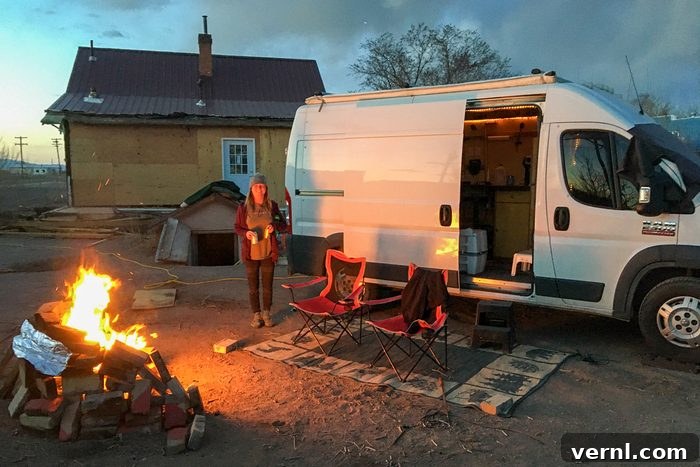
To maximize our time and supervision over the project, we made the decision to live in our camper van, parked conveniently in the backyard, during the initial four months of the renovation. This arrangement allowed us to be constantly present, tackling tasks from dawn till dusk. We endured this setup until the interior of the house was completely gutted, new windows were installed, and at least one bedroom was drywalled, making a minimal interior living space somewhat habitable.
As more rooms slowly began to take shape and gain a semblance of readiness, we gradually started moving more of our personal belongings into the house. A few pieces of essential furniture, our camping equipment, and bicycles found their way indoors. This, in hindsight, proved to be a significant mistake. Before we realized it, the house began to accumulate an increasing amount of our possessions, transforming our workspace into a cluttered obstacle course. The act of working became an arduous chore, as every task – from sanding to painting, from hauling materials to simply walking across a room – required us to constantly shift and move items out of the way. Had we fully anticipated the considerable hassle and inefficiency that would stem from this “musical belongings” scenario, we would have drastically pared down our possessions, opting for a minimalist approach and storing the vast majority of our stuff offsite until the renovation was much closer to completion. This would have undoubtedly streamlined our workflow and reduced a significant source of daily frustration.
Cultivating a Landscape with Native Plants
In the spring following our home purchase, even with the house itself far from finished, we made the decision to commence landscaping efforts. Our reasoning was practical: establishing trees and bushes early would provide them with ample time to root and mature, hopefully minimizing future maintenance. However, this decision introduced another unexpected learning curve specific to our rural Colorado environment.
Despite having some prior gardening experience in different climates, I severely underestimated the combined impact of the arid conditions and harsh, cold winters characteristic of this region on my initial plant selections. I meticulously tended to our newly planted garden throughout the summer, providing close attention and supplemental watering to help everything get established. Regrettably, the subsequent winter proved unforgiving, wiping out every single plant that wasn’t a robust, locally adapted hardy native species. It was a stark lesson in ecological suitability and the resilience of indigenous flora.
Fortunately, the plants that did manage to survive and thrive are now incredibly self-sufficient, requiring zero maintenance and no supplemental water. They are perfectly adapted to the climate and soil, adding natural beauty without effort. While these resilient natives are here to stay and continue to flourish, a significant life decision has led us to conclude that we are not. Our journey with this specific landscape, much like the house itself, is evolving towards a new chapter.
Don’t Assume a Small Town Will Unconditionally Embrace You
When we initially conceived of moving to this rural Colorado town, we harbored idyllic visions of seamlessly integrating into a new, cozy community, building strong bonds with our neighbors. Our experience, however, proved to be more complex than anticipated, leading us to a difficult but firm decision: we’ve now chosen to either sell or rent out this house, seeking a different path forward.
The town itself is remarkably small, boasting a population of approximately 48 residents, and features enough abandoned buildings to be categorized as a “ghost town” on some maps. While we, as newcomers, saw immense potential for improvement, revitalization, and growth, many long-term residents – whose families have resided here for generations – held a different perspective. They often expressed a deep-seated resistance to change, valuing the status quo and the quiet, unchanging nature of their home.
We did manage to forge genuine friendships with some residents, forming meaningful connections. However, a noticeable segment of the community remained distant, unwilling to engage or even converse with us. We realized that pressing the issue or trying to force acceptance would be counterproductive and uncomfortable for all parties involved. Ultimately, we concluded that it would be more beneficial for our well-being and sense of belonging to find a place where our aspirations and values aligned more closely with the existing community spirit. The dream of small-town integration, while still appealing, simply wasn’t destined to unfold in this particular location.
Are Fixer Uppers a Good Investment?
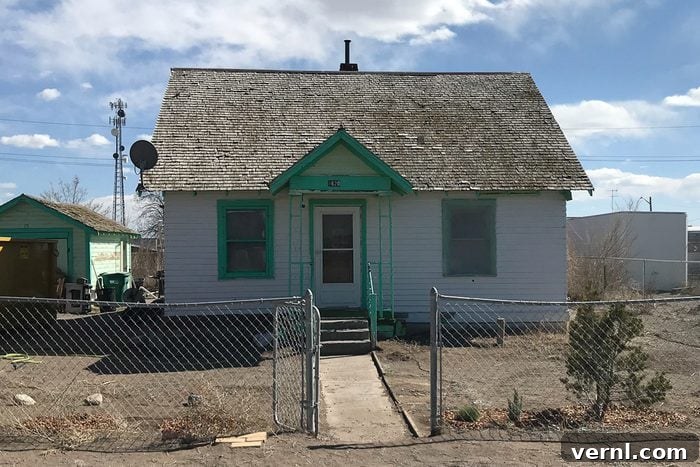
Fixer-uppers can indeed be a sound investment, particularly for individuals who possess a strong combination of project management skills, financial acumen, a healthy tolerance for risk, and the significant time required to dedicate to the renovation. The potential for substantial equity growth and a personalized living space is undoubtedly attractive. However, it’s crucial to approach them with realistic expectations.
“But they’re by no means a sure thing,” cautions Samantha Pearl, our expert residential builder. She emphasizes that for a renovation project to yield a profit, there must be a substantial margin between the initial purchase price of the property and its eventual market value after renovations. This often necessitates acquiring the home under specific, less-than-ideal sales circumstances, such as a foreclosure, short sale, or distressed property auction, where the initial cost is significantly depressed. Relying solely on a rapidly appreciating housing market to secure your profit is a risky strategy, Pearl adds. Market conditions are inherently volatile and can just as easily take an unexpected downward turn before your renovated home is ready to be listed, potentially eroding your anticipated gains.
Despite the challenges we faced, we still believe in the potential of fixer-uppers as a rewarding venture. They offer a unique opportunity for creativity and value creation. However, for a variety of compelling reasons that emerged from our experience, our next project will pivot dramatically: we plan to undertake a new build.
We’ve successfully located a suitable lot in a town where we feel a stronger sense of belonging and community alignment. Our hope is that constructing a brand-new house will prove to be a quicker, more streamlined, and less complex endeavor than wrestling with the numerous and often unpredictable quirks inherent in an old property. (We invite you to check back with us next year to see if that optimistic prediction holds true!) Furthermore, local building codes have recently undergone significant revisions in our area. Now, if more than 25% of an existing house undergoes renovation, it triggers a requirement to comply with updated energy efficiency and insulation standards. For our current old home, this would have been cost-prohibitive, necessitating substantial and expensive modifications to the existing wall structures to accommodate thicker insulation – a major factor in our decision to pursue a new build.
What Should You Look For in a Fixer-Upper?
When scouting for a promising fixer-upper, Samantha Pearl advises a strategic approach: “Ideally, buy the worst house in a nice neighborhood or a neighborhood that’s clearly showing signs of rebound and revitalization.” This recommendation is rooted in the fundamental principles of real estate economics, where current and future market values are heavily influenced by what buyers are willing to pay for properties within a specific area.
Pearl elaborates, “If it’s the least expensive house in a nice neighborhood, buyers know it will likely have good growth in value over time.” This strategy positions your investment to benefit from the desirability and stability of the surrounding homes, essentially lifting the value of your renovated property. Conversely, she warns, “If you’re selling a house on the higher end of values in the neighborhood, it has less possibility of growth in value.” In such a scenario, you might find yourself capped by the neighborhood’s ceiling, making it harder to realize significant returns. Beyond location, focus on properties with “good bones” – a solid foundation, a sturdy roof (even if it needs repair), and functional major systems, as these are the most expensive and critical elements to replace or repair.
What Should You Avoid in a Fixer-Upper?
When considering a fixer-upper, it’s paramount to understand your own limits and comfort zone. As the saying goes, “stay away from anything you feel is drastically out of your comfort zone,” even though the vast resources of platforms like YouTube can provide invaluable guidance and tutorials for many DIY tasks. However, it’s no exaggeration that a fixer-upper can quickly become a money pit, with major issues like cracked foundations or leaky roofs spiraling into financially devastating problems. Additionally, rural homes introduce their own unique set of peculiarities and potential pitfalls, often related to infrastructure, accessibility, and local regulations that differ from urban or suburban environments.
According to expert Samantha Pearl, several common mistakes frequently lead to fixer-upper woes:
- Not getting a full, comprehensive inspection: Skipping this critical step or relying on a cursory glance can leave you blindsided by expensive, hidden structural, electrical, or plumbing issues that only a professional inspector can uncover.
- Falling in love with a house’s possibilities and making an emotional decision: While vision is important, allowing emotion to override practical assessment can lead to overlooking red flags and making irrational financial commitments. A renovation should primarily be a logical investment.
- Assuming best-case scenario when calculating renovation costs and resale value: Budgeting for the absolute minimum, without accounting for unexpected delays, material price increases, or unforeseen problems, is a recipe for financial strain. Always factor in a significant contingency fund (15-20% of the total budget). Similarly, overestimating resale value can lead to disappointment.
- Taking on projects that require you to hire out everything, which drives up costs: While some tasks inherently require professionals, committing to a renovation where you lack the skills or time for any DIY work means every single aspect will incur labor costs, severely diminishing your profit margins. Understand what you can realistically do yourself versus what needs professional intervention.
Are Old/Historic Homes a Good Investment?
The investment potential of old or historic homes is nuanced; it can be positive, but Bryan Slowick highlights that there are numerous pitfalls that potential buyers should be acutely aware of. These properties often carry a unique set of challenges that differentiate them significantly from more modern constructions.
“I think a DIYer can buy a historic home for its value and charm, but I don’t think it has value to a flipper because of the extra work, craftsmanship and intellectual knowledge needed,” Slowick explains. He emphasizes that the restoration of a historic property often demands specialized skills, rare materials, and a deep understanding of historical building techniques. This “intellectual knowledge” and intricate craftsmanship translate into higher labor and material costs. Consequently, the return on investment for such specific and often bespoke work may not align with the faster, higher profit margins sought by professional house flippers focused on broad market appeal. “That cost won’t be returned at the same rate as a modern home,” he asserts, underscoring the financial reality that specialized historical renovations rarely command the same market premium relative to their input costs as modern updates do.
However, Slowick also acknowledges the intangible value of these properties. “But there are the things that are not quantifiable, like beauty, nostalgia and quaintness, and those are valued differently and treated differently for different people.” For many, the allure of owning a piece of history, preserving unique architectural details, and living in a home with character far outweighs purely financial considerations. These elements, while not easily measured in dollars and cents, contribute immensely to the homeowner’s personal satisfaction and can be the primary motivator for embarking on such a project. It’s a delicate balance between fiscal viability and emotional reward, making historic home investment a deeply personal decision.