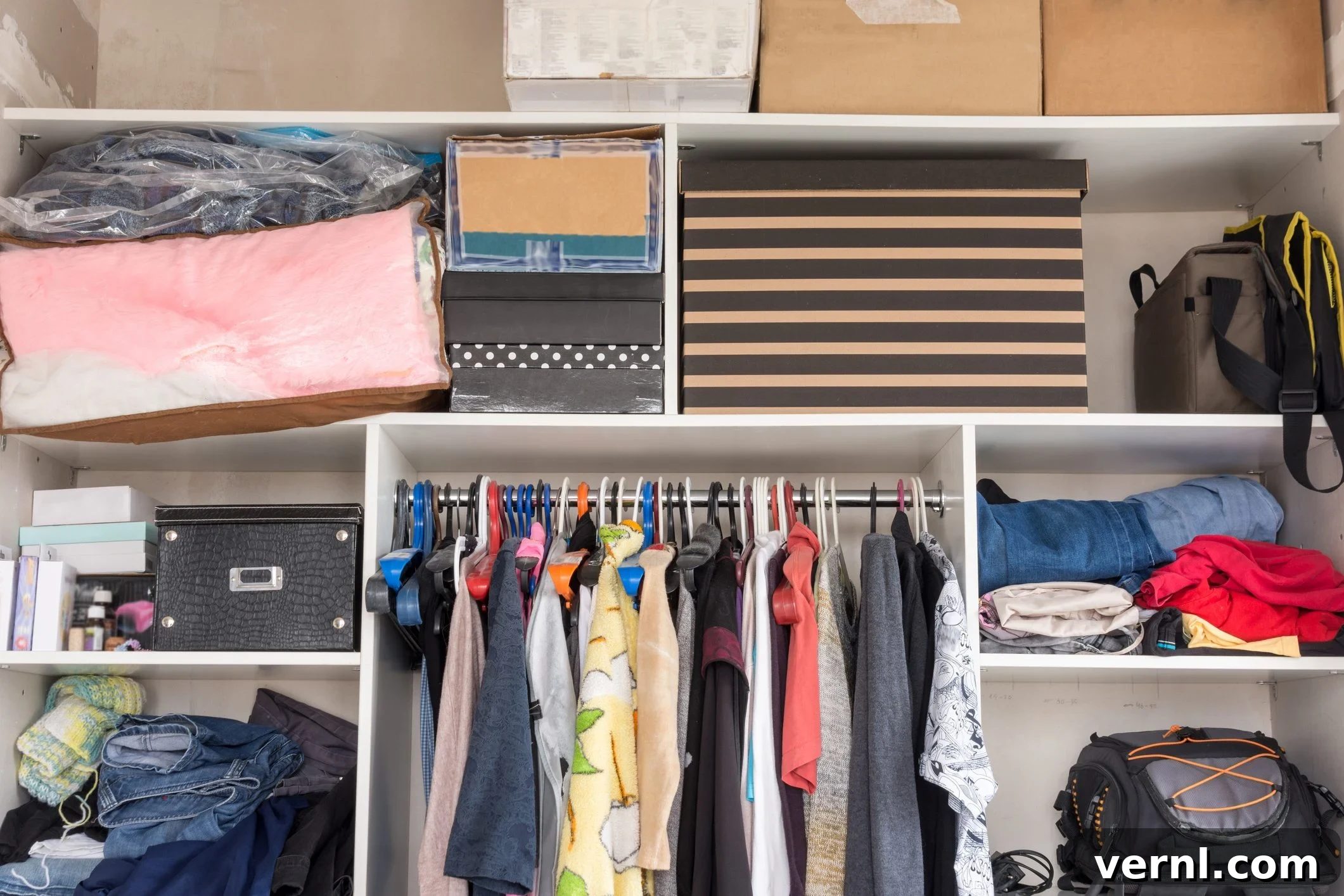
Everyone deals with clutter, regardless of how organized they may seem. Even the most meticulously tidy individuals engage in periodic decluttering, a practice likely key to maintaining their serene environments. This isn’t just about aesthetics; it’s profoundly linked to our mental well-being. A home overflowing with unused or unloved items can become a source of stress, impacting our emotional and psychological state.
“A cluttered and chaotic home often reflects a cluttered and chaotic mind,” observes Brenda Scott, owner and operator of Tidy My Space. The daily struggles of an unorganized space—the frantic search for misplaced keys, the constant shuffling of items to access another, or the rush to an appointment due to wasted time—can accumulate, leading to significant stress and frustration, as Scott points out.
Lauren Saltman, a professional organizer and owner of Living. Simplified, further emphasizes this point: “Clutter can have a negative effect on your emotional wellbeing. Looking around your home should give you a sense of peace, knowing that everything you own in your home is useful to you and your family.” A peaceful home is one where every item has a purpose, a place, and brings value to your life.
What Exactly Is Clutter?
Defining clutter is the first step toward conquering it. Saltman concisely describes clutter as “anything you are keeping in your home that doesn’t serve a purpose, that you don’t use and that doesn’t bring joy to your life.” This broad definition encompasses a wide array of items: inherited heirlooms that you don’t appreciate or use, gifts received out of obligation rather than need, clothing that no longer fits or reflects your style, books you’ve read and won’t revisit, or even items bought on sale that never found a true home.
Scott offers a complementary perspective: “Clutter is anything that doesn’t have a home. It’s the stuff that no one knows where it belongs, so it gets dropped anywhere and everywhere.” This explains the piles that accumulate on counters, floors, and chairs – items without a designated spot in your organizational system. You’ll recognize these items by the constant need to move them around simply to find what you’re genuinely searching for, a clear indicator of their lack of purpose and placement in your living space.
Beyond these definitions, clutter also includes broken items awaiting repair (often indefinitely), expired products taking up valuable space, duplicates of things you already own, and projects started but never finished. These items not only take up physical space but also mental bandwidth, contributing to a feeling of being overwhelmed and stagnant.
Clutter vs. Hoarding: Understanding the Critical Distinction
While everyone experiences clutter, it’s crucial to understand when disorganization crosses the line into a more serious issue like hoarding. Scott highlights a key distinction: whether you can still use the space for its intended purpose. If pathways are blocked, rooms are inaccessible, or furniture is buried under piles of items that haven’t moved in months or years, hindering the function of a room, you might be approaching the boundary between everyday clutter and a hoarding disorder.
To help assess the severity, Scott recommends comparing your living spaces to the images in Randy Frost’s clutter rating scale. Randy Frost, a leading expert on hoarding and a psychology professor at Smith College, is the author of many definitive books on hoarding. His scale provides visual benchmarks to help individuals and professionals evaluate the degree of accumulation and disorganization.
It is incredibly important to address and reduce clutter before it escalates into a severe problem. Hoarding is not merely extreme clutter; it’s a recognized mental health condition characterized by persistent difficulty parting with possessions, regardless of their actual value, leading to severe accumulation that compromises living spaces and causes significant distress or impairment in functioning. The consequences of unchecked hoarding can be dire, including pest infestations, severe health issues due to unsanitary conditions, fire hazards, structural damage to the home, and even eviction. Recognizing the signs early and seeking professional help—whether from a therapist specializing in hoarding or a professional organizer trained in these situations—is paramount for the well-being and safety of those affected.
The Silent Messages Your Clutter Sends
Your clutter often holds deeper meanings, acting as a mirror to certain aspects of your life, habits, or emotional state. Understanding these underlying messages can be a powerful catalyst for change and effective decluttering.
Organizational Gaps and Traffic Zones
“Clutter buildup is usually in the areas with the most traffic,” Scott explains. This commonly includes entryways, where mail, packages, keys, and coats are often dropped immediately upon entering the home. Kitchen and bathroom counters, nightstands, and even the floor are also typical hotspots. The presence of clutter in these high-traffic zones often points to an absence of efficient storage solutions or designated “homes” for items. It indicates a need for better systems that can manage the influx of daily items, prevent accumulation, and keep these crucial areas clear and functional. Investing in smart storage, such as entryway organizers, drawer dividers, or wall-mounted shelving, can significantly alleviate this type of clutter.
Emotional Attachments and Guilt
Beyond practical storage issues, clutter can also indicate a deeper emotional connection. “People tend to hold onto things because of past memories or guilt,” Scott reveals. This sentimental attachment is one of the most challenging aspects of decluttering. Items passed down by family members, gifts from loved ones, or souvenirs from significant life events can evoke strong feelings, making it difficult to part with them, even if they serve no current purpose.
Furthermore, guilt often plays a significant role. We might keep something out of obligation because it was a gift, belonged to a deceased loved one, or simply cost a lot of money (the “sunk cost fallacy”). Overcoming this emotional hurdle requires a shift in perspective. Keeping items that are genuinely useful and needed is perfectly fine. However, when an item causes more stress than joy, or takes up valuable space without contributing positively to your life, it’s time to consider letting it go. Practical tactics to ease this process include taking a photo of the item to preserve the memory, or finding it an appreciative new home through selling, re-gifting, or donating.
Mindful Living and Conscious Consumption
Ultimately, the presence of clutter often speaks to our habits of acquisition. If you’re consistently struggling with too many things, it’s vital to critically think about what you bring into your home in the first place. Adopting a more mindful approach to consumption is key to long-term clutter prevention. Before purchasing new or even used items, pause and ask yourself if you truly need it, if it has a designated place, and if it aligns with your values. During gift-giving seasons, Saltman suggests gently reminding friends and family that you prefer experiences (like concert tickets or a weekend getaway) over physical possessions. Additionally, it’s perfectly acceptable, and even healthy, to politely decline hand-me-downs from relatives if you genuinely can’t use them or don’t have space for them. Setting these boundaries ensures that your home remains a sanctuary, rather than a storage unit for unwanted items.
Your Journey to a Clutter-Free Life: Practical Decluttering Strategies
“Getting started on your decluttering journey can feel overwhelming,” Saltman acknowledges. The sheer volume of items can be paralyzing. But remember, the goal isn’t to transform your entire home in a single day or even a week. Sustainable decluttering is a marathon, not a sprint.
Scott explains that people often struggle to begin because they focus on the enormity of the problem and the perceived time commitment. The most effective approach is to break down your decluttering project into small, manageable chunks or areas. This could mean tackling one drawer, one shelf, or a small section of a counter. For those dealing with more significant accumulation, it’s beneficial to read up on these specialized decluttering tips for hoarders, as different strategies may be required.
Here are some other practical tips to help you effectively declutter and maintain an organized home:
Put It On Your Calendar
Consistency is more important than intensity when it comes to decluttering. Saltman advises scheduling several short 15-minute sessions per week. Choose days and times when you know you’ll be home and able to focus, and don’t hesitate to set reminders on your phone or calendar. The key is to start small: pick just one flat space, like a section of a countertop, a single shelf, or one drawer. This approach prevents burnout and allows you to build momentum without feeling overwhelmed. Celebrate these small victories; they add up over time to significant progress.
Sort and Process with the Four-Box Method
Once you’ve decided on the specific space you’re going to declutter, Saltman recommends bringing three boxes and a trash bag with you. Label the boxes “donate,” “recycle,” and “relocate.” The trash bag is for obvious garbage. As you go through each item in the designated area, make a quick decision and sort it into one of these categories. A fourth, implicit category is “keep,” for items that belong in that space and serve a purpose. Once everything is sorted, immediately take action: dispose of the trash, put recycling in its designated bin, pack donations into your car for the next trip to a charity, and return “relocate” items to their proper homes. Finally, organize what’s left in your “keep” pile. Over time, apply this systematic method to go through your entire house, room by room, or category by category.
Use the 20/20 Rule for Quick Decisions
Indecision is a major roadblock in decluttering. For items you’re unsure about keeping, Scott suggests applying the “20/20 rule”: “If you can replace the item within 20 minutes for less than $20, then it’s time to let it go.” This rule is incredibly effective for items that might be useful someday but aren’t essential now. It works wonderfully for multiples of small things, such as stacks of unused notepads, an abundance of hair accessories, multiple rolls of tape, or a drawer overflowing with pens. This rule helps you weigh the true cost of keeping something versus the minimal effort of replacing it if you truly needed to.
Stay On Track with the “One In, One Out” Rule
Once you’ve made progress in decluttering, the challenge shifts to preventing re-accumulation. Saltman recommends diligently following the “one in, one out” rule. This simple principle means that if you buy something new, you must get rid of whatever you’re replacing or an item of similar type. For instance, if you purchase a new pair of shoes, donate or trash an old pair. This applies to virtually everything in your home, from kitchen utensils and books to clothes, toys, and even decorative items. Implementing this rule ensures that your home’s capacity isn’t exceeded, helping you maintain your newly organized and clutter-free spaces.
Beyond the Basics: Sustainable Habits
To truly maintain a clutter-free environment, consider integrating these habits into your daily and weekly routines:
- Daily Reset: Spend 5-10 minutes each evening putting things back in their designated spots before bed. This prevents daily accumulation.
- Weekly Deep Dive: Choose one small area each week for a quick tidy-up or decluttering session, beyond your scheduled 15-minute sessions.
- Seasonal Purge: Schedule a larger decluttering session once per season to address clothes, holiday decorations, or seasonal outdoor gear.
- Designate a “Donation Box”: Keep a box or bag in an accessible spot (like a closet or garage) for items you decide to let go of throughout the week. Once it’s full, take it to a donation center.
- Limit Flat Surfaces: Be mindful of how many items accumulate on flat surfaces like tables and counters. Assign homes for everything that lands there.
By understanding the nature of clutter, its impact on your well-being, and implementing consistent, manageable strategies, you can transform your living space into a calm, functional, and peaceful sanctuary, reflecting a more organized and serene mind.