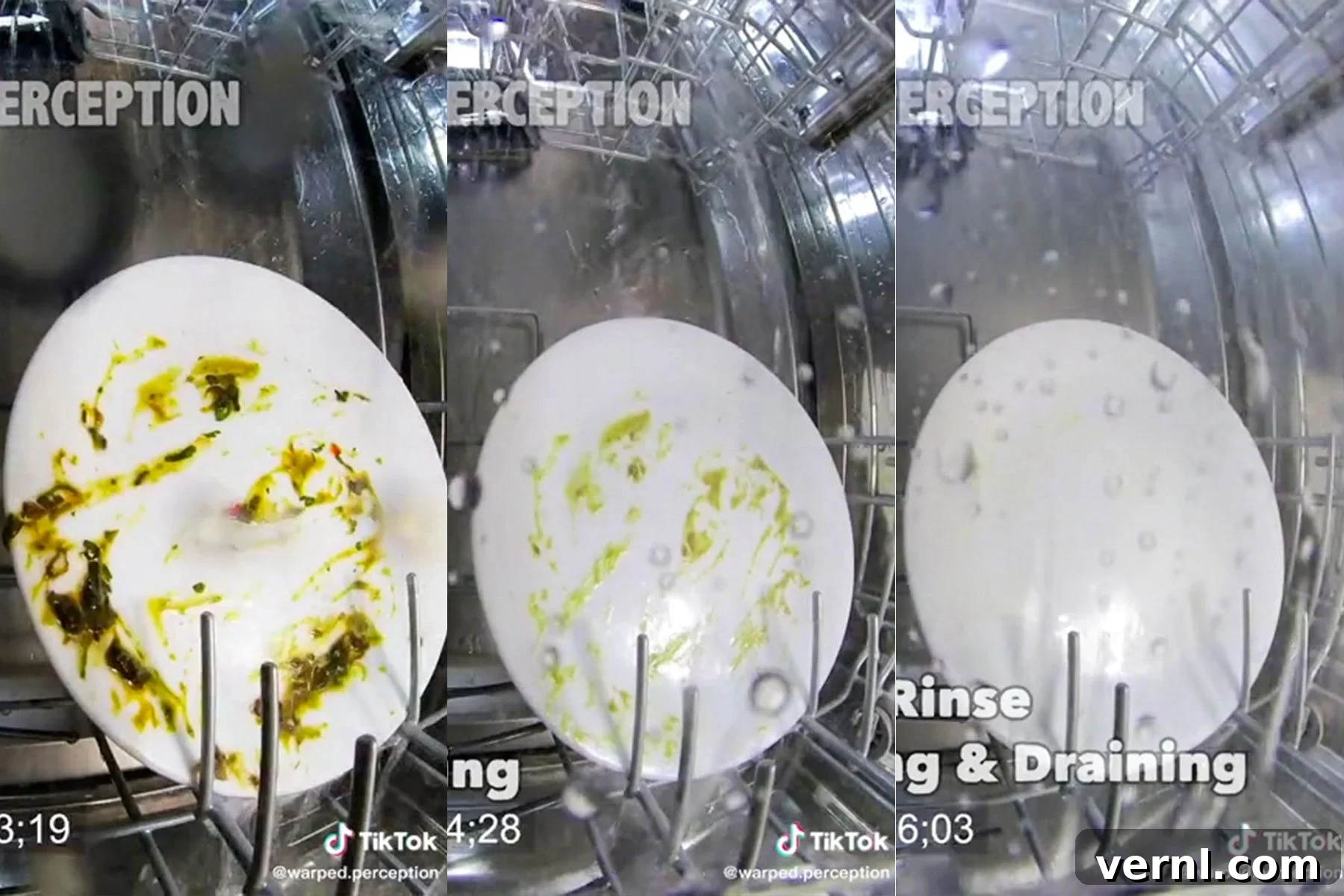
Have you ever paused to truly consider the intricate process that unfolds within your dishwasher after you seal the door and initiate a wash cycle? How does this marvel of modern engineering manage to strip away stubborn food remnants and grease, leaving your dishes sparkling clean? The creative minds at Warped, known as @warped.yt on TikTok, have brought this hidden world to light. They ingeniously placed a GoPro camera inside their dishwasher and captured the entire hour-long operation. The resulting footage, expertly sped up, offers a captivating, fraction-of-the-time glimpse into the dynamic, powerful cleaning action taking place within.
@warped.yt Gopro Inside a Dishwasher P.2 #fypシ #dishwasher #how #howitworks #whatsinside ♬ original sound – Warped
Understanding Your Dishwasher: A Journey Through the Cleaning Cycle
Modern dishwashers are sophisticated machines designed to deliver impeccable cleanliness with minimal effort. While we often take their performance for granted, the internal workings involve a carefully orchestrated sequence of events, each crucial for ensuring every dish, glass, and utensil emerges spotless. Let’s embark on a detailed exploration of the typical dishwasher cycle, revealing the science and mechanics behind its impressive capabilities.
Stage 1: The Initial Rinse – Loosening Stubborn Grime
The cleaning odyssey begins with an often-underestimated but vital step: the initial rinse. Once you press start, the dishwasher’s drain pump first activates briefly to clear any standing water in the sump. Then, it fills with a small amount of fresh water, which is rapidly heated to an optimal temperature. Powerful jets of water erupt from multiple spray arms strategically positioned throughout the appliance. These rotating spray arms, typically one above the bottom rack and another below the top rack (and sometimes a third at the very top), ensure that water reaches every corner and surface of your dishes from various angles.
This preliminary rinse serves a critical purpose: it softens and dislodges larger food particles, sauces, and dried-on residue. Think of it as the preliminary scraping you might perform when handwashing – getting rid of the obvious bulk so that the detergent can effectively target the tougher, microscopic grime that adheres to surfaces. This pre-wash cycle ensures that the main cleaning stage can operate with maximum efficiency, preventing the spread of larger food bits and preparing the dishes for a deeper clean.
Stage 2: Detergent Dispensing and Main Wash – The Deep Clean Action
Following the thorough initial rinse, the dishwasher moves into its primary cleaning phase. The detergent dispenser automatically opens at precisely the right moment, releasing the powerful cleaning agent. Whether you use a gel, powder, or a convenient pod, the detergent contains a blend of enzymes, surfactants, and other chemicals designed to break down fats, oils, and proteins. Activated by the hot water, these components go to work, emulsifying grease and dissolving food particles.
What follows is an intense spectacle of water pressure. The dishwasher refills with more hot water, and the spray arms kick into overdrive, propelled by a powerful pump. The video footage from Warped.yt dramatically illustrates this stage, resembling a furious, contained rainstorm. Water blasts with significant force across every item, scrubbing surfaces as the detergent chemically breaks down the remaining mess. This is where the bulk of the heavy lifting happens; you can visually witness the transformation as caked-on food and grease are lifted away, leaving plates and cutlery visibly cleaner. The combination of high-temperature water, potent detergent, and relentless mechanical action ensures a comprehensive and hygienic wash.
Stage 3: Intermediate Draining – Clearing Away Contaminants
A key aspect of effective dishwasher operation, often overlooked, is the strategic draining process. The dishwasher doesn’t just drain once at the end; it performs several intermediate drains throughout the cycle. After the initial rinse, and especially after the main wash with detergent, the water in the tub is heavily soiled with suspended food particles, grease, and dissolved detergent. Draining this dirty water at multiple points is crucial.
This multi-stage draining prevents the re-deposition of loosened food bits and oils back onto your dishes. Imagine if all the dirty water remained until the very end; your “clean” rinse water would be contaminated, potentially leaving a film or residue on your supposedly clean items. By clearing away the soiled water, the dishwasher ensures that subsequent rinse cycles utilize fresh, clean water, significantly contributing to the final sparkling results and preventing cross-contamination.
Stage 4: The Rinse Cycles – Washing Away Residue for a Spotless Finish
After the main wash and intermediate drain, the dishwasher embarks on one or more rinse cycles. This stage is dedicated solely to removing any lingering detergent residue and food particles that might have escaped the main wash. The tub fills with fresh, clean water, which is often heated to an even higher temperature, sometimes reaching sanitizing levels. The powerful spray arms reactivate, thoroughly rinsing all surfaces.
Many modern dishwashers include a final hot rinse, often aided by the automatic dispensing of a rinse aid. Rinse aid works by reducing the surface tension of water, causing it to sheet off dishes rather than forming droplets. This not only prevents water spots and streaks but also significantly improves the drying process, ensuring that your glassware comes out crystal clear and gleaming.
Stage 5: The Final Drain and Drying – The Finishing Touch
The cycle culminates with the final drain, efficiently removing all the rinse water from the tub. This is essential to prevent any standing water when you open the dishwasher door and helps in the drying process. Following the final drain, the dishwasher enters its drying phase. There are generally two main types of drying:
- Heated Drying: Many dishwashers use a heating element at the bottom to actively heat the air inside the tub. This accelerated evaporation ensures dishes dry quickly and thoroughly.
- Condensation Drying: More energy-efficient models rely on the residual heat from the final hot rinse. The hot dishes naturally release steam, which condenses on the cooler stainless steel interior walls of the dishwasher. This water then drains away, leaving the dishes dry. Rinse aid is particularly helpful in speeding up condensation drying.
Once the drying cycle is complete, the dishwasher signals the end of its journey, presenting you with a load of impeccably clean, dry, and often sanitized dishes, ready to be put away.
Beyond the Cycle: Optimizing Your Dishwasher’s Performance for Spotless Results
Understanding the internal workings of your dishwasher also highlights the critical importance of proper usage. Even the most advanced dishwasher can struggle if not loaded correctly or maintained properly. To truly unlock its full potential and ensure your dishes consistently come out spotless, consider these crucial factors:
The Art of Loading Your Dishwasher: Maximize Water Circulation
Watching the intense water action inside the dishwasher underscores why correct loading is paramount. If dishes are packed too tightly or positioned incorrectly, water jets can be blocked, preventing water and detergent from reaching all surfaces. This results in caked-on food and streaks, negating the dishwasher’s efficiency.
- Don’t Overcrowd: Leave space between dishes to allow water to circulate freely. Think of it as giving each item its own personal shower.
- Face Dirty Surfaces Inward: Position plates and bowls so their soiled surfaces face the spray arms, typically towards the center.
- Separate Silverware: Avoid nesting. Load forks and spoons with handles down, and knives with handles up for safety. Some models have dedicated silverware baskets with slots for each utensil.
- Tilt Bowls and Cups: Ensure bowls, cups, and glasses are placed upside down and tilted slightly to prevent water from pooling at the bottom, allowing for proper cleaning and drainage.
- Watch Out for Blockages: Tall items should be placed away from the center to avoid obstructing the rotating spray arms. Never block the detergent dispenser.
- Plastics on Top: Always place plastic items on the top rack, away from the heating element, to prevent warping.
Choosing the Right Detergent and Rinse Aid
The quality and type of detergent significantly impact cleaning performance. Use high-quality dishwasher detergent, and consider using a rinse aid. Rinse aid is especially beneficial in hard water areas, as it helps prevent mineral deposits that cause water spots and streaks, contributing to a truly spotless finish.
Basic Dishwasher Maintenance Tips
To ensure your dishwasher continues to perform optimally, a little maintenance goes a long way:
- Clean the Filter: Many dishwashers have a removable filter at the bottom. Check and clean it regularly (once a month is a good general guideline) to remove trapped food particles that can cause odors and hinder drainage.
- Inspect Spray Arms: Periodically check the holes on the spray arms for any blockages from food debris. Use a toothpick or small wire to clear them if necessary.
- Clean the Door Seal: Wipe down the rubber seal around the door with a damp cloth to remove any grime or mildew build-up.
- Run a Cleaning Cycle: Every few months, run an empty cycle with a dishwasher cleaner or a cup of white vinegar placed in a bowl on the top rack to descale and freshen the interior.
Final Takeaways: The Unseen Hero of Your Kitchen
The video showcasing the interior of a dishwasher in action is more than just entertaining; it’s an illuminating demonstration of complex engineering at work. It reveals the dynamic forces and chemical reactions tirelessly working behind a closed door to deliver the convenience we often take for granted. Understanding these stages and implementing best practices for loading and maintenance will not only prolong the life of your appliance but also ensure that every wash cycle yields the brilliant, hygienic results you expect. The dishwasher is truly an unseen hero, simplifying daily chores and contributing significantly to the cleanliness and efficiency of your modern kitchen.