The term “creosote” can often lead to confusion due to its application to various substances. As the Creosote Council thoughtfully clarifies, numerous materials are commonly referred to as “creosote.” For homeowners, understanding this distinction is crucial for both safety and effective home maintenance. This comprehensive guide will illuminate the two primary types of creosote you might encounter, detailing their origins, uses, potential hazards, and vital information to ensure your safety and that of your home.
What Exactly Is Creosote? Decoding a Complex Substance
At its core, creosote is a dark, oily, and tarry substance that results from the distillation of various organic materials. Historically, the term encompassed compounds derived from both wood and coal, leading to the diverse applications and concerns associated with it. For practical purposes, especially concerning residential life, it’s essential to differentiate between coal-tar creosote, primarily used as an industrial wood preservative, and wood-tar creosote, which forms as a residue within chimneys from burning wood in a fireplace or wood stove.
Coal-Tar Creosote: The Industrial Wood Preservative
Coal-tar creosote stands as a powerful and widely recognized wood preservative, integral to infrastructure projects worldwide. This robust substance is derived from the distillation of coal tar and is renowned for its efficacy in protecting wood from decay, insect infestation, and fungal growth. Its applications are predominantly industrial, safeguarding critical components such as railroad ties, utility poles, marine pilings, and fence posts from the ravages of time and the elements. Its long-standing use, spanning over a century, underscores its proven ability to extend the lifespan of timber in harsh outdoor conditions.
Due to its potent chemical composition and environmental considerations, coal-tar creosote is not a product homeowners typically encounter for residential applications. In the United States, it is registered as a pesticide and its use is strictly regulated by the United States Environmental Protection Agency (EPA). This stringent oversight means it is not available on the retail market for general consumer purchase or use. The EPA’s regulations are in place to manage the potential health risks associated with its handling and application, primarily for workers in industrial wood treatment facilities.
According to the EPA, “creosote is derived from the distillation of tar from wood or coal and is used as a wood preservative. Pesticide products containing creosote as the active ingredient are used to protect wood used outdoors [such as railroad ties and utility poles] against termites, fungi, mites and other pests.” While coal-tar creosote contains chemicals that may pose cancer and non-cancer health risks to individuals directly involved in its application in wood treatment facilities, the EPA has generally found no significant risks of concern to the general public under normal circumstances.
However, there are rare instances where a homeowner might indirectly encounter this industrial form of creosote. The most common scenario is the recycling of creosote-treated railroad ties for landscaping timbers in residential yards. While this practice offers an affordable and visually appealing option for garden beds or retaining walls, it introduces treated wood into a residential environment. If you have landscaping features made from such recycled materials, it’s advisable to limit direct skin contact, especially for children and pets. Furthermore, never use creosote-treated wood for indoor projects or as firewood, as burning it can release harmful fumes and residues. Should you ever need to dispose of creosote-treated wood materials, it is absolutely critical to consult with your local government or waste management authority for specific guidelines and regulations to ensure proper and safe disposal, as improper disposal can lead to environmental contamination.
Wood-Tar Creosote: The Chimney’s Hidden Hazard
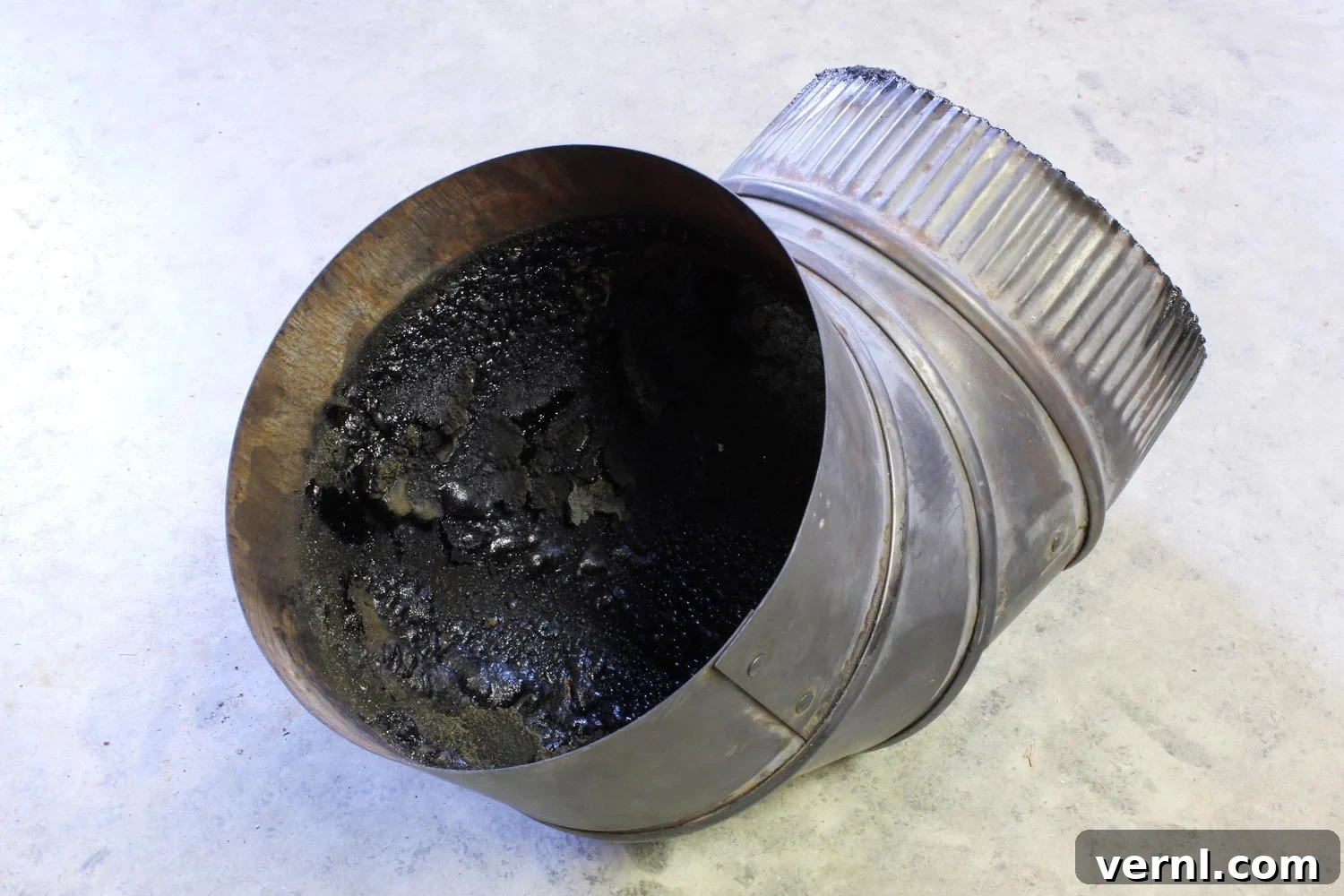
For most homeowners, the more relevant and immediate concern related to creosote lies within their own homes, specifically in their chimneys. Wood-tar creosote is a natural, albeit unwelcome, byproduct of burning wood in fireplaces and wood stoves. This substance, distinct from its industrial counterpart, is a sticky, highly flammable, and often tar-like residue that accumulates on the inner walls of your chimney flue.
Dan Morris of Fire and Saw aptly describes it: “Creosote is a sticky, tar-like residue that builds up in chimneys when wood is burned. It forms when the wood doesn’t burn completely and the smoke cools down as it goes up the chimney.” This process is fundamentally about incomplete combustion and temperature differentials. When wood burns in a fireplace or wood stove, it releases a complex mixture of gases, smoke, unburned wood particles, water vapor, hydrocarbons, tar fog, and various minerals. As this hot mixture travels up the chimney flue, it inevitably encounters cooler surfaces.
This cooling effect causes condensation to occur. The various components within the smoke, particularly the unburned volatile organic compounds and tars, condense and adhere to the cooler interior surfaces of the chimney. This condensed mixture forms the dark, usually black or brown, and often crusty or flaky material we recognize as creosote. The amount and type of creosote formed depend heavily on several factors, including the type of wood burned, its moisture content, the efficiency of the fire, and the temperature of the flue gases and chimney walls. Over time, this residue builds up, creating a potentially dangerous situation that every homeowner with a wood-burning appliance needs to understand and manage.
Should I Worry About Creosote In My Chimney? Absolutely.
The presence of creosote in your chimney is not just a cosmetic issue; it’s a significant safety concern. The primary danger associated with wood-tar creosote buildup is the risk of a chimney fire. Creosote is highly flammable, and if it accumulates in sufficient quantities and the internal flue temperature becomes high enough—often due to a particularly hot fire or embers igniting the residue—it can ignite, leading to a dangerous and potentially destructive chimney fire. These fires can reach extremely high temperatures, upwards of 2,000°F (1,093°C), which can severely damage the chimney structure, crack flue liners, and even spread to the surrounding house structure.
Several factors can significantly accelerate creosote buildup and increase the risk of a chimney fire. According to the Chimney Safety Institute of America, restricted air supply to the firebox, burning unseasoned or wet wood, and cooler than normal chimney temperatures are major contributors. A restricted air supply leads to incomplete combustion, producing more smoke and unburned particles. Wet or unseasoned wood (wood that hasn’t been properly dried) burns at a lower temperature and produces more smoke, water vapor, and tar, which are prime ingredients for creosote formation. Cooler flue temperatures, often a result of oversized flues or slow-burning fires, allow these smoke constituents to cool and condense more readily on the chimney walls.
Beyond the immediate fire hazard, creosote also poses health concerns. “Creosote is a known carcinogen, but your average homeowner won’t be exposed to enough to be harmful to any great extent,” Morris explains. While incidental contact or brief inhalation might not pose an immediate severe risk, prolonged or repeated exposure, particularly during chimney cleaning, should be avoided. Creosote can act as an irritant to the eyes, skin, and respiratory tract. When you clean a chimney flue, creosote particles can become airborne, settling on clothing, skin, and surfaces, and can be inhaled.
As Morris attests from personal experience, “I brush out our wood stove flue two or three times a year, and I’ve become sensitive to creosote on my arms. If I don’t cover up, my skin will feel itchy and irritated for several days afterward.” This highlights the importance of taking protective measures, such as wearing long sleeves, gloves, eye protection, and a dust mask or respirator, when performing any chimney maintenance that involves disturbing creosote. Adequate ventilation is also crucial to minimize inhalation of airborne particles.
Is Creosote Buildup Normal? Understanding the Inevitable
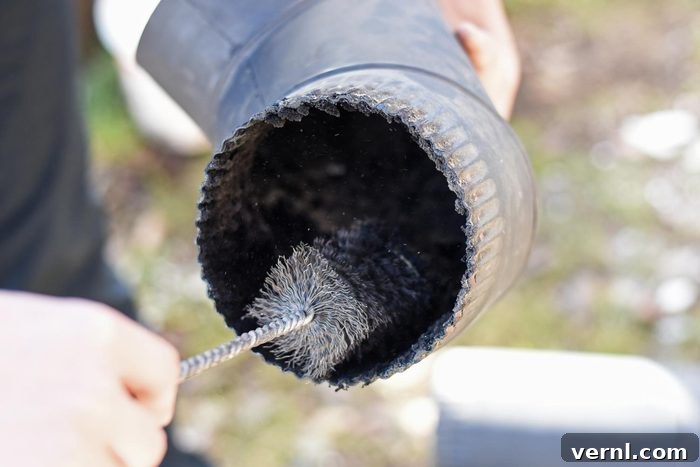
Yes, to a certain extent, creosote formation in your chimney or flue is an entirely normal and unavoidable consequence of burning wood. It is a natural byproduct of the combustion process, particularly in residential wood-burning appliances where conditions are rarely ideal for perfect, complete combustion. Even with best practices, some level of creosote will form over time.
The accumulation, however, is not uniform. Morris notes that “Most creosote formation happens high up the chimney and on the cap/exit kit, so you won’t see it forming in the firebox or near the base.” This occurs because the smoke and gases are hottest directly above the firebox. As they ascend the chimney, they gradually cool. The further they travel from the heat source, the cooler the flue walls become, leading to increased condensation and adherence of creosote. The chimney cap and narrower exit points are particularly prone to heavy buildup because these are the coolest and most constricted areas where gases slow down and condense most readily.
While some buildup is expected, excessive accumulation signals a problem and the urgent need for cleaning. A critical indicator that your chimney requires attention is a noticeable decline in its drawing performance. “When a chimney or flue stops drawing so well, this means you need to clean your chimney,” Morris advises. “Smoke will come back into the room rather than going up and out.” This backdrafting of smoke into the living space is not only an irritating nuisance but also a health hazard, exposing occupants to harmful smoke particles and carbon monoxide. It signifies that the flue passageway is becoming restricted by creosote, impeding the natural upward flow of hot gases.
Although “Creosote is unlikely to completely close off a chimney, but it can get close to doing so,” a significant blockage can drastically reduce efficiency and increase fire risk. The most vulnerable points for severe blockages are often the chimney cap and any internal baffles or constrictions within the flue system. These narrower exits can become “very gunked up by creosote,” leading to a dangerous reduction in draft and a heightened risk of chimney fire.
Proactive Management: What To Do About Creosote Buildup
Managing creosote buildup is a crucial aspect of responsible homeownership for anyone with a wood-burning fireplace or stove. To prevent serious issues like a chimney fire, understanding when to clean your chimney and regularly inspecting your fireplace for any signs of trouble are fundamental steps. Beyond regular maintenance, several proactive measures can significantly minimize creosote formation and enhance the safety and efficiency of your wood-burning appliance.
Here are effective ways to reduce creosote buildup in your chimney or flue:
- Maintain a Fully Open Damper: When using your wood stove or fireplace, ensure the damper is fully open, especially during startup and when the fire is burning strongly. A fully open damper allows for optimal airflow, which promotes hotter, more complete combustion. When combustion is complete, less unburned particulate matter and tar are released into the smoke stream, thus reducing the amount of creosote that can condense on your chimney walls. Restricting the damper too much starves the fire of oxygen, leading to smoldering and increased smoke production.
- Burn Only Seasoned Wood: This is perhaps the most critical tip. “Seasoned” wood refers to wood that has been properly dried for at least six months to a year, or even longer for denser hardwoods, until its moisture content is below 20%. Unseasoned, or “green,” wood contains a high percentage of water. Burning wet wood wastes energy (as heat is consumed to boil off the water), produces excessive smoke, and results in cooler flue temperatures—all ideal conditions for heavy creosote formation. Properly seasoned wood burns hotter and cleaner.
- Avoid Burning Wet Wood: Similar to unseasoned wood, wet wood significantly contributes to creosote. Always store firewood in a dry, elevated location with good air circulation to ensure it dries out thoroughly before use. You can often hear wet wood sizzle as it burns and see excessive smoke exiting the chimney.
- Choose Hardwoods Over Softwoods (Generally): Opt for dense hardwoods like oak, maple, ash, or hickory rather than softwoods such as pine, spruce, or fir. While softwoods can burn well, they typically contain more resin and sap, which convert into creosote more readily when burned. Hardwoods, when properly seasoned, burn longer, hotter, and produce less smoke and creosote per BTU. If you must burn softwoods, ensure they are exceptionally dry and maintain a very hot fire.
- Don’t Overload the Firebox: While it might seem efficient to pack your firebox full, overloading can actually hinder proper combustion. Too much wood restricts airflow within the firebox, leading to a smoldering, oxygen-deprived fire that produces more smoke and cooler flue temperatures, thereby increasing creosote formation. Burn smaller, more manageable fires that allow for good air circulation around the logs.
- Ensure Adequate Air Supply: Beyond keeping the damper open, ensure that your room has enough fresh air for the fire. Modern, tightly sealed homes can sometimes suffer from a lack of combustion air, leading to starved fires and increased creosote. If you notice your fire struggling or smoke entering the room, consider opening a window slightly.
- Regular Professional Cleaning and Inspection: This is non-negotiable for fire safety. Have your chimney cleaned and inspected by a certified professional at least once a year. A professional chimney sweep has the tools and expertise to thoroughly remove creosote buildup, identify potential issues with your flue liner, chimney structure, or cap, and ensure your system is operating safely. If you’re using the fireplace or stove daily or very frequently during the heating season, Morris recommends cleaning it every two to three months to prevent dangerous accumulations.
By understanding the nature of creosote and implementing these preventative measures, homeowners can significantly reduce the risk of chimney fires, maintain the efficiency of their heating appliances, and ensure a safer, healthier home environment for everyone.