Every car owner dreams of a vehicle that not only performs impeccably but also looks immaculate. A spotless, gleaming car with a hygienic, fresh-smelling interior isn’t just a matter of pride; it’s a testament to good maintenance. All these desirable benefits begin with a simple yet crucial ritual: the car wash. However, the world of car washes can be surprisingly complex, offering a dizzying array of options, each with its own set of advantages and drawbacks. Navigating through the various types of car wash services and understanding their intricacies can leave even the most seasoned car enthusiast feeling perplexed.
Given that your car is often one of your most prized possessions, experimenting without proper knowledge isn’t ideal. This comprehensive guide aims to demystify the car washing process, providing you with all the essential information needed to make an informed decision. We’ll delve into the fundamental benefits of regular car washing, explore the nuances of different car wash types—including a detailed look at touchless car washes and their pros and cons—uncover the best practices for a do-it-yourself (DIY) car wash, and shed light on everything you need to know about eco-friendly car cleaning solutions.
Why a Regular Car Wash is Essential for Your Vehicle
Beyond the immediate aesthetic boost, regular car washing is a vital maintenance step that significantly contributes to your vehicle’s longevity and value. Think of it as preventative care for your investment. Dirt, grime, road salt, bird droppings, tree sap, and environmental pollutants are not just unsightly; they are corrosive agents that can eat away at your car’s paintwork over time. This leads to dullness, fading, and even rust, which can be costly to repair. A clean car protects its paint, preserves its finish, and helps retain its resale value.
Furthermore, a clean exterior improves visibility by keeping windows, mirrors, and lights clear. Inside, regular cleaning enhances hygiene, removing dust, allergens, and germs, making for a healthier and more pleasant driving experience. Whether you prefer to wash your car at home or utilize professional services, integrating a consistent car wash routine into your vehicle maintenance schedule is non-negotiable for preserving its beauty and integrity.
Navigating the World of Car Wash Services: Your Comprehensive Guide
When time or circumstances prevent you from washing your car yourself, a multitude of professional car wash options are available. Each service offers a unique approach to cleaning, catering to different needs, budgets, and preferences. Understanding the distinctions between these services is key to choosing the best option for your vehicle. From quick automated washes to detailed hand cleaning, let’s explore the pros and cons of various car cleaning services available today.
1. Self-Service Car Washes: The Hands-On Approach
For those who prefer a hands-on approach without the hassle of setting up equipment at home, self-service car washes offer an excellent compromise. Typically costing less than $10, these bays provide you with all the necessary tools: high-pressure water hoses, a variety of soaps (including pre-soak, tire cleaner, and wax), and often foaming brushes. This allows you to focus on the intricate details and apply the necessary “elbow grease” to achieve a thorough clean. You maintain complete control over the process, from choosing the products to dictating the duration of each cleaning stage.
To maximize your self-service car wash experience, it’s advisable to bring your own clean microfiber towels for drying, as this helps prevent water spots and ensures a streak-free finish. Washing, rinsing, and drying your car one section at a time is a good strategy to avoid premature drying and spotting, especially in warmer weather. It’s crucial, however, to use this option under the right conditions. Avoid washing your car if it’s too hot from recent driving, as the soap will dry rapidly and leave unsightly spots before you can rinse it off. The same caution applies to washing directly under strong sunlight.
2. Automated Car Washes: Speed and Convenience
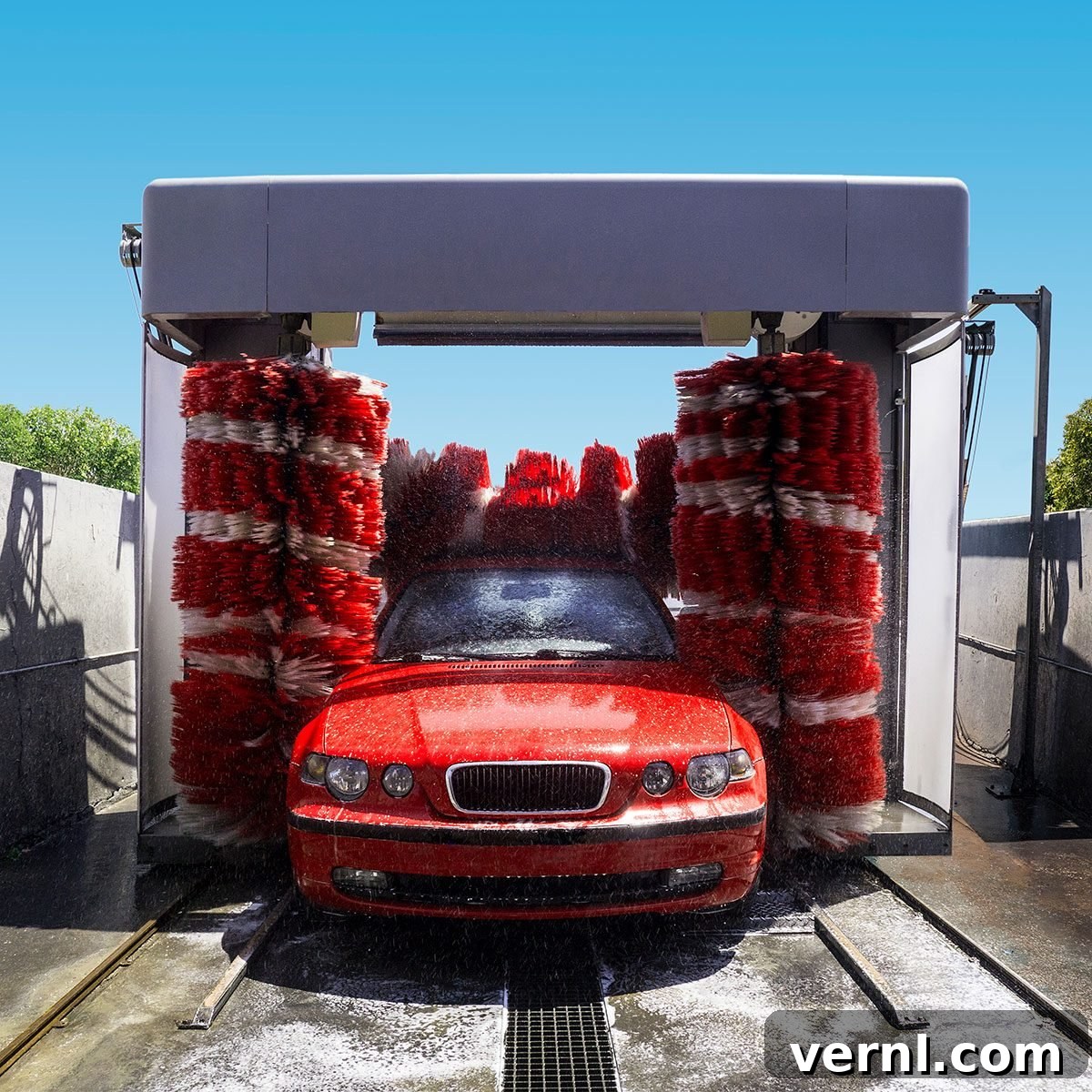
Automated car washes are designed for speed and convenience, making them a popular choice for busy individuals. These services typically fall into two main categories: tunnel washes and in-bay automatics. In a tunnel-style wash, your car is placed on a conveyor belt and slowly pulled through a series of cleaning stations, where various equipment dispenses soap, water, and waxes. In-bay automatics, on the other hand, require your car to remain stationary while the wash equipment moves around the vehicle, performing the cleaning cycles. Both types offer a relatively speedy and economical solution, usually costing between $5 and $10 for a basic wash. Additional services, such as undercarriage cleaning, wheel and tire treatments, or specialized waxes, are often available for an extra charge, typically $1 to $2 per service, enhancing the cleaning experience.
Soft-Touch Automatic Washes: Gentle Cleaning with Brushes
Soft-touch car washes represent a common form of automated cleaning that employs various brushes, cloth strips, or foam applicators to scrub away dirt and grime. These systems are generally very effective at providing a thorough cleaning, reaching every part of the car’s exterior and proving particularly good at removing common contaminants like dust and pollen. The physical contact helps dislodge stubborn dirt that water jets alone might miss. However, the force exerted by the brushes or cloths, while usually designed to be gentle, can pose a minor risk to delicate parts such as side-view mirrors or antennas. Moreover, if the car is not adequately pre-rinsed before the cloth strips make contact, dirt particles trapped in the cloths could potentially cause fine scratches on the paintwork. Modern soft-touch systems often incorporate advanced materials and designs to minimize these risks, but it’s always a point of consideration.
Touchless Automatic Washes: The Friction-Free Choice
The no-touch car wash, also known as a touchless wash, stands out for its complete absence of brushes, cloth strips, or any physical contact with your vehicle’s surface during the cleaning process. This characteristic significantly reduces the risk of scratches, swirl marks, or other paint damage caused by abrasive contact. For owners of high-end or luxury vehicles, where preserving an untainted, gleaming finish is paramount, touchless washes are often the preferred mode. The allure of a “friction-free” wash stems from its ability to clean without physical abrasion, thus protecting the delicate clear coat and paintwork.
Beyond paint protection, touchless car washes often boast another significant advantage: reduced water usage. By relying on high-pressure water jets and specialized chemical solutions, they can be more efficient with water, making them an attractive option for those who strive to be environmentally conscious. However, this method is not without its disadvantages. Without the physical scrubbing action of brushes or cloth strips, a no-touch wash may be less effective at removing heavily caked-on dirt, stubborn grime, or dried insect splatter. To compensate for the lack of physical contact, these washes often rely on higher concentrations of stronger cleaning agents, which, while effective, could potentially be harsher on certain car finishes or waxes over time if used excessively or if the chemicals are not properly balanced.
Machine Drying vs. Hand Drying
At the end of many automated car washes, you’ll encounter a drying phase. Some facilities utilize powerful machine dryers, which use high-speed air to blow water off the vehicle. While efficient, these can sometimes leave water spots, especially if hard water is used. Other car wash centers offer a premium service where staffers dry your car by hand using clean, soft towels. This manual drying ensures a more meticulous finish, reducing water spots and streaks, though it typically adds a few dollars to the overall cost of the wash. The choice between machine and hand drying often depends on your desired level of finish and budget.
3. Professional Hand Car Washes: Unparalleled Detail and Care
For those seeking the ultimate in car cleaning and protection, a professional hand car wash is often the preferred choice. Services that involve washing your car by hand typically employ highly trained professionals who use top-notch supplies, including pH-balanced soaps, premium microfiber towels, and specialized cleaning tools. These experts meticulously go over every inch of your vehicle with an experienced eye, ensuring that all dirt, grime, and water spots are thoroughly removed—often addressing areas that automated car washes might miss. This level of attention to detail not only results in a pristine finish but also offers the opportunity for detailed inspection, allowing for early detection of minor paint imperfections or issues.
However, even professional hand washing comes with its own set of potential risks if not executed correctly. A common mistake, even among some services, is using the same sponge or wash mitt for both the vehicle’s painted surfaces and the dirtier tires and wheel wells. This cross-contamination can introduce abrasive particles to the cleaning process, potentially leading to scratches. Therefore, when choosing a professional hand car wash service, it’s crucial to ensure they adhere to best practices, which include using multiple clean sponges and microfiber towels for different areas of the car, frequent rinsing and cleaning of these tools, and proper drying techniques to prevent water spotting and swirl marks.
4. Rinseless Car Washes: Water-Saving Innovation
A rinseless car wash offers an innovative, water-saving method that eliminates the need for a final hose-off, making it an excellent choice for areas with water restrictions or for those looking to conserve resources. This kit-based method significantly saves time, water, and chemical usage compared to traditional washing. The process is remarkably simple yet highly effective. To use, you typically add a small amount (e.g., one ounce) of the specialized rinseless solution to two gallons of water in a bucket. A plush microfiber towel is then soaked in this solution and used to wash one section of the car at a time until clean. After washing a section, a separate, clean, and dry plush microfiber towel is used to dry the area. That’s it! No rinsing required, as the formula encapsulates dirt particles, allowing them to be safely wiped away without scratching the paint. This method is ideal for vehicles with light to moderate dirt and is a favorite among detailing enthusiasts for its efficiency and gentle cleaning action.
5. Waterless Car Washes: An Eco-Friendly Alternative
Distinguished from rinseless washes, waterless car washes use even less water, often just a single spray bottle, and are designed for vehicles with very light dust or dirt. This method involves spraying a specialized solution directly onto a small section of the car, allowing it to encapsulate the dirt, and then gently wiping it away with a clean microfiber towel. The key advantage of waterless washing is its extreme water efficiency and portability, making it possible to clean your car virtually anywhere, without runoff. It’s an excellent choice for maintaining a pristine vehicle between more thorough washes, especially in areas where water access is limited or environmental concerns are paramount. However, it’s not suitable for heavily soiled vehicles, as attempting to clean excessive dirt with a waterless wash can lead to scratching.
Beyond the Wash: Essential Tips for a Flawless Finish
Achieving a truly spotless and gleaming car requires more than just knowing the different wash types; it involves attention to detail and smart choices. Here are some invaluable tips to ensure your car always looks its best and its finish remains protected:
- Verify Technician Professionalism: If you opt for an in-house car wash or mobile detailing service, always ensure the technician is a thorough professional with verifiable experience and positive reviews. A skilled detailer understands proper techniques to avoid paint damage and ensure a comprehensive clean.
- Inspect Cleansing Material Quality: Regardless of the service or method, always inquire about or visually inspect the quality of the cleaning materials used. High-quality, pH-balanced soaps, soft wash mitts, and clean microfiber towels are essential for preventing scratches and delivering a superior finish.
- Prioritize Eco-Friendly Solutions: For environmentally conscious car owners, discuss eco-friendly car cleaning soap solutions with technicians at car service centers. Many reputable services now offer biodegradable soaps and water-saving technologies that minimize their ecological footprint.
- Choose Water-Saving Systems: Actively seek out car wash systems or services that implement technologies to ensure less water wastage. This not only benefits the environment but often indicates a modern and efficient operation. Mobile detailing services, for instance, are often lauded for their significantly lower water consumption compared to traditional washes.
Frequently Asked Questions About Car Care
How Often Should You Wash Your Car?
The ideal frequency for washing your car typically ranges from every two to four weeks. However, several factors can necessitate more frequent washes. If you drive extensively, especially daily, or live in a harsh environment such as a salty, coastal area where corrosion is a greater risk, washing your car once a week might be beneficial. The frequency also heavily depends on the season. For instance, during winter, increased washing is crucial to remove road salt and de-icing chemicals that can damage your vehicle’s undercarriage and paint. In spring and fall, heightened pollen levels or tree sap might prompt you to increase your car wash frequency to protect your car’s finish. As car care expert Koukia advises, “Just don’t wait till the car looks dirty. By then, the damage may have already started.” Regular washing is preventative, not just reactive.
Are There Environmentally Friendly Car Cleaning Options?
Absolutely, numerous eco-friendly car cleaning options are available today. To significantly save water, Parham Koukia recommends waterless or steam-based car washes, which dramatically reduce water consumption compared to traditional methods. He also suggests seeking services that utilize biodegradable soaps and employ techniques designed to reduce water runoff, preventing harmful chemicals from entering drainage systems. Branden Waltz of Elite Pro further emphasizes the importance of pH-balanced soaps, which are gentle on your car’s finish and safer for the environment. Waltz also highlights the efficiency of mobile detailing services: “Mobile detailing services are often more efficient than traditional washes, using less than 10 gallons per car compared to 40 to 70 gallons at a self-service bay,” showcasing their reduced environmental impact.
What’s the Best Car Wash for a Brand New Vehicle?
For a brand-new car, the paramount consideration should be the absolute prevention of any damage to its pristine and often delicate factory paint finish. Therefore, the cleaning agents used must be exceptionally gentle. A touchless car wash would generally be the safest option, provided you can ensure that no harsh or overly aggressive cleaning materials are employed. The absence of physical brushes or cloths minimizes the risk of swirl marks or micro-scratches that can mar a new car’s clear coat. If opting for a hand wash, it’s imperative to choose a highly reputable detailer who uses incredibly soft wash mitts, multiple buckets with grit guards, and premium pH-neutral soaps to guarantee the utmost care for your vehicle’s immaculate finish.
Can Automatic Car Washes Harm Your Car’s Paint?
While modern automatic car washes have made significant advancements in minimizing damage, there is still a potential risk of harm to your car’s paint, particularly with older or poorly maintained systems. The brushes used in some automatic car washes might not always be as gentle as advertised and, if worn or improperly maintained, can become abrasive. These brushes can trap dirt and grit from previous vehicles, potentially causing minor scratches, swirl marks, or dulling of the car’s clear coat. While this may not be the case in all automated car washes, it’s a valid concern. To mitigate this risk, it’s crucial to choose your car wash center carefully. Look for facilities that appear well-maintained, use newer equipment, and ideally, those that offer soft-touch brushes or foam applicators instead of stiff bristles. Reading reviews and observing the cleanliness of the facility can also provide valuable insights into the quality of their service.
About Our Car Care Experts
- Parham Koukia is the lead detailer and operations manager at Panda Hub in Toronto. With over a decade of experience, he has mastered the art of car detailing, transforming his passion for automobiles into a respected profession.
- Branden Waltz is the owner of Elite Pro, a premier car detailing business based in Charleston, South Carolina, specializing in comprehensive detailing services, ceramic coating applications, and window tinting.
Key Resources for Car Enthusiasts
- Car Wash Advisory: “Types of Car Washes”
- Xenia: “Explore Different Types of Car Washes – A Beginners’ Guide”
- DRB: “Types of Car Wash Businesses”
- Amazon: “Optimum No Rinse Wash and Shine”
- Elite Pro: “The Car Detailing and Vehicle Enhancement Services”
- The Org: “Parham Koukia – Operations Manager at Panda Hub”