Understanding Asbestos: A Silent Threat in Many Older Homes
For many individuals who grew up in post-war North America, asbestos was an omnipresent, albeit often unrecognized, part of their daily environment. The 1950s and 1960s marked the apex of this dangerous material’s widespread use in construction, leaving a significant legacy in countless residential properties. From bustling urban centers to quiet suburban neighborhoods, homes constructed during this era frequently incorporated asbestos into their very fabric, a testament to its once-lauded industrial properties.
My own childhood home, a product of that booming construction period, likely harbored asbestos within its walls and ceilings. While not definitively confirmed, the tell-tale gray coating insulating our old oil furnace and its labyrinthine ductwork perfectly matched the classic description of asbestos insulation. This particular house met its end in 1967, making way for the expansion of a local university. Yet, many homes of the same vintage in that same neighborhood still stand today, and it’s a reasonable assumption that a substantial number of them continue to contain asbestos.
The prevalence of asbestos was by no means confined to a single Midwestern neighborhood. The issue was nationwide, indeed global. I vividly recall an experience in 1995 when my partner and I, while renovating a house in Colorado, meticulously cleared asbestos insulation from the attic. This firsthand encounter underscored the enduring challenge asbestos poses to homeowners and renovators decades after its peak use.
Among the various asbestos-containing products, insulation is often considered one of the most problematic and hazardous due to its friable nature, meaning it can easily crumble and release fibers into the air. Identifying asbestos in insulation or other building materials is far from straightforward for the untrained eye. Michelle Whitmer, a recognized expert on asbestos, strongly advises homeowners of older properties to engage qualified professionals for testing suspicious materials. Relying on DIY testing kits is generally not recommended, as accurate identification and safe handling require specialized knowledge and equipment. Beyond insulation, a vast array of other 20th-century building products may contain asbestos, including wallboard, joint compound, various paints, and both floor and ceiling tiles.
When Was Asbestos Utilized in Residential Construction?
Asbestos, a naturally occurring fibrous mineral, has a surprisingly long history of human use, stretching back thousands of years. Its unique properties, such as its ability to reinforce other materials like clay and its remarkable fire resistance, made it valuable even in ancient civilizations, where it was woven into fire-protective clothing and cooking utensils.
However, the widespread industrial application of asbestos truly began to explode in the 1800s. This period saw the discovery of vast asbestos deposits across the globe, including significant reserves in the United States and Canada. Concurrently, advancements in mechanized mining techniques made the extraction of asbestos more efficient and economically viable than ever before. This combination of abundant supply and easier extraction paved the way for its integration into countless industrial and consumer products.
Pioneering companies quickly recognized the commercial potential of asbestos. For instance, the Johns Company, which later merged with the Manville Covering Company in 1901 to form the iconic Johns-Manville corporation, began manufacturing asbestos roofing material as early as 1858. By the 1920s, other major players like United States Gypsum had started incorporating asbestos into essential building components such as drywall and drywall joint compound. These and many other asbestos-laden products subsequently became standard fixtures in homes constructed during that era.
The post-World War II economic boom further fueled the proliferation of asbestos-containing building materials. The demand for rapid, cost-effective construction led manufacturers to heavily rely on asbestos for its durability, insulation properties, and fire resistance. Consequently, homes built between the 1940s and 1980s are particularly likely to contain asbestos. Efforts to curtail asbestos use began in the mid-1970s and gained momentum throughout the 1980s, effectively defining the period of peak usage between 1940 and 1980. According to expert Michelle Whitmer, some of the common products from this critical period that frequently contained asbestos include:
- Cement board, often used for siding and roofing underlayment;
- Roofing felt, providing fire resistance and waterproofing;
- Various forms of insulation, including loose-fill and wrap insulation;
- Vinyl floor tiles, valued for their durability and affordability;
- Textured paint and popcorn ceilings, popular for their aesthetic and acoustic properties.
Of these, insulation often presents the highest risk to homeowners. Whitmer elaborates, “The types of insulation in homes most likely to contain asbestos include loose-fill vermiculite insulation, which often has a distinct pebble-like appearance, and wrap insulation commonly found around pipes, boilers, and air conditioning units.” While spray-on or block insulation containing asbestos did exist, these materials were more frequently employed in larger commercial and industrial buildings rather than residential properties.
The Compelling Reasons Behind Asbestos’s Widespread Use
Manufacturers integrated asbestos into a vast array of products for several compelling reasons, which at the time seemed highly advantageous:
- Cost-Effectiveness: Asbestos was an exceptionally inexpensive raw material, making it an attractive option for cost-conscious manufacturers and builders.
- Material Reinforcement: Its fibrous structure provided excellent tensile strength, reinforcing other materials and significantly enhancing their durability and structural integrity.
- Superior Resistance: Asbestos exhibited remarkable resistance to moisture, various chemicals, fire, and electricity, making it ideal for applications requiring robust protection against environmental factors.
- Excellent Insulation: It served as an outstanding insulator against both heat and sound, contributing to energy efficiency and quieter indoor environments.
In the majority of its applications, asbestos fibers were embedded within another material, such as cement, vinyl, gypsum, or asphalt. As long as these materials remain intact and undisturbed, the U.S. Consumer Product Safety Commission (CPSC) generally advises that they do not pose an immediate health risk. The danger arises when asbestos-containing materials become “friable,” meaning they crumble, deteriorate, or are disturbed, releasing microscopic asbestos fibers into the air. These airborne fibers, when inhaled, can embed themselves in the lungs and other tissues, leading to severe and often fatal diseases.
This release of fibers commonly occurs during renovation, repair, or demolition activities where asbestos-containing materials are cut, drilled, sanded, or otherwise manipulated. Michelle Whitmer stresses the critical importance for homeowners to strictly avoid disturbing any materials that might contain asbestos. She advises, “If you encounter a material you suspect contains asbestos and it is already crumbling or deteriorating, gently wetting it can help to limit the dispersion of dust and airborne fibers until qualified professionals can inspect and safely manage it.” Activities such as drilling into old drywall, removing textured “popcorn” ceilings, cutting through aged pipe insulation, undertaking attic renovations, or even simply removing vinyl floor tiles can become exceptionally hazardous if asbestos is present and disturbed.
The Unveiling of Asbestos’s Perilous Dangers
While asbestos was celebrated for its industrial benefits, its insidious dangers were slowly and tragically coming to light over many decades. The earliest recorded link between asbestos exposure and health problems dates back to 1897, when an Austrian doctor connected a patient’s severe pulmonary issues to asbestos inhalation. Just a few years later, in 1906, the first death directly attributed to asbestos inhalation was reported, involving a factory worker.
By 1908, the alarming pattern of asbestos workers dying prematurely became increasingly evident. This grim reality prompted insurance companies to take action, reducing benefits and significantly increasing premiums for those employed in asbestos-related industries. Despite these early warnings and mounting evidence of occupational hazards, the asbestos industry largely ignored the implications, continuing its rapid expansion. Production, astonishingly, tripled between 1900 and 1910, prioritizing profit over public health.
By the 1930s, a substantial body of medical evidence unequivocally linked asbestos inhalation to debilitating lung diseases such as asbestosis. Ironically, the Great Depression caused a temporary downturn in asbestos production during this period. However, as global economies recovered in the 1940s, production resumed with renewed vigor. Even with the growing scientific consensus on its hazards, manufacturers continued to display a shocking degree of confidence in asbestos, even including it in cigarette filters. The industry’s prolonged denial and suppression of information allowed asbestos to permeate nearly every aspect of modern construction and manufacturing.
Throughout the 1950s and 1960s, the evidence of asbestos’s catastrophic health impacts – including aggressive cancers like mesothelioma, lung cancer, and asbestosis – continued to build. This relentless accumulation of scientific data and the tragic stories of victims eventually became too overwhelming to ignore. Finally, in the 1970s, public awareness reached a critical mass, compelling the U.S. Congress to begin taking legislative action to address this pervasive public health crisis.
The Legislative Journey: When Was Asbestos Banned?
Despite the overwhelming evidence of its dangers, asbestos has never been subjected to a complete and outright ban in the United States, a situation that often surprises many. Instead, the regulation of asbestos has been a gradual, complex, and often contentious process, characterized by a series of legislative efforts and partial prohibitions.
The first significant federal action was the Clean Air Act of 1970, which established the National Emission Standards for Hazardous Air Pollutants (NESHAP). Under NESHAP, certain high-risk asbestos products, such as asbestos spray materials and pipe insulation, were banned in the 1970s due to their friable nature and high potential for fiber release. Following this, the Consumer Product Safety Act of 1972 created the Consumer Product Safety Commission (CPSC), an agency that quickly moved to ban specific consumer products containing asbestos, including fireplace embers and wall patching compounds.
Subsequent legislation gradually expanded the scope of asbestos prohibitions. Empowered by the Toxic Substances Control Act (TSCA) of 1976, the Environmental Protection Agency (EPA) made its most ambitious attempt at a comprehensive ban in 1989. This proposed blanket ban aimed to prohibit the manufacturing, importation, processing, and distribution of nearly all asbestos-containing products. However, this sweeping regulation faced fierce opposition from industry groups and was largely overturned by a federal court in 1991. The court ruling allowed several uses of asbestos to continue, particularly in specific sectors like the automobile industry, where components such as brake linings and clutch facings still utilized asbestos.
Further attempts to enact a more complete ban on asbestos have repeatedly stalled or died in Congress, largely due to strong lobbying efforts and the complex economic implications for industries still using the material. In a more recent development, the EPA issued a final rule in 2019, specifically discontinuing the sale and use of new building materials containing asbestos. While this was a positive step, it primarily addresses *new* products and does not mandate the removal of existing asbestos in structures, nor does it prohibit all remaining uses of asbestos in the country.
This intricate regulatory history means that homeowners and contractors must remain vigilant. Even today, asbestos can be found in a wide variety of materials in homes built before 1980, and even some newer structures. Understanding the history of asbestos use and its legal status is crucial for making informed decisions about property inspection, renovation, and safety.
Professional Guidance and Mitigation Strategies
Given the persistent presence of asbestos in older homes and the serious health risks associated with its disturbance, professional guidance is paramount. If you own a home built before 1980 or suspect the presence of asbestos, the following steps are crucial:
- Do Not Disturb: The golden rule for asbestos is to leave it alone if it’s in good condition and not damaged. As long as the fibers are encapsulated and not airborne, the risk is minimal.
- Professional Testing: Never attempt to test materials for asbestos yourself. Hire a certified asbestos inspector. They use specialized methods to collect samples safely and send them to accredited laboratories for accurate analysis.
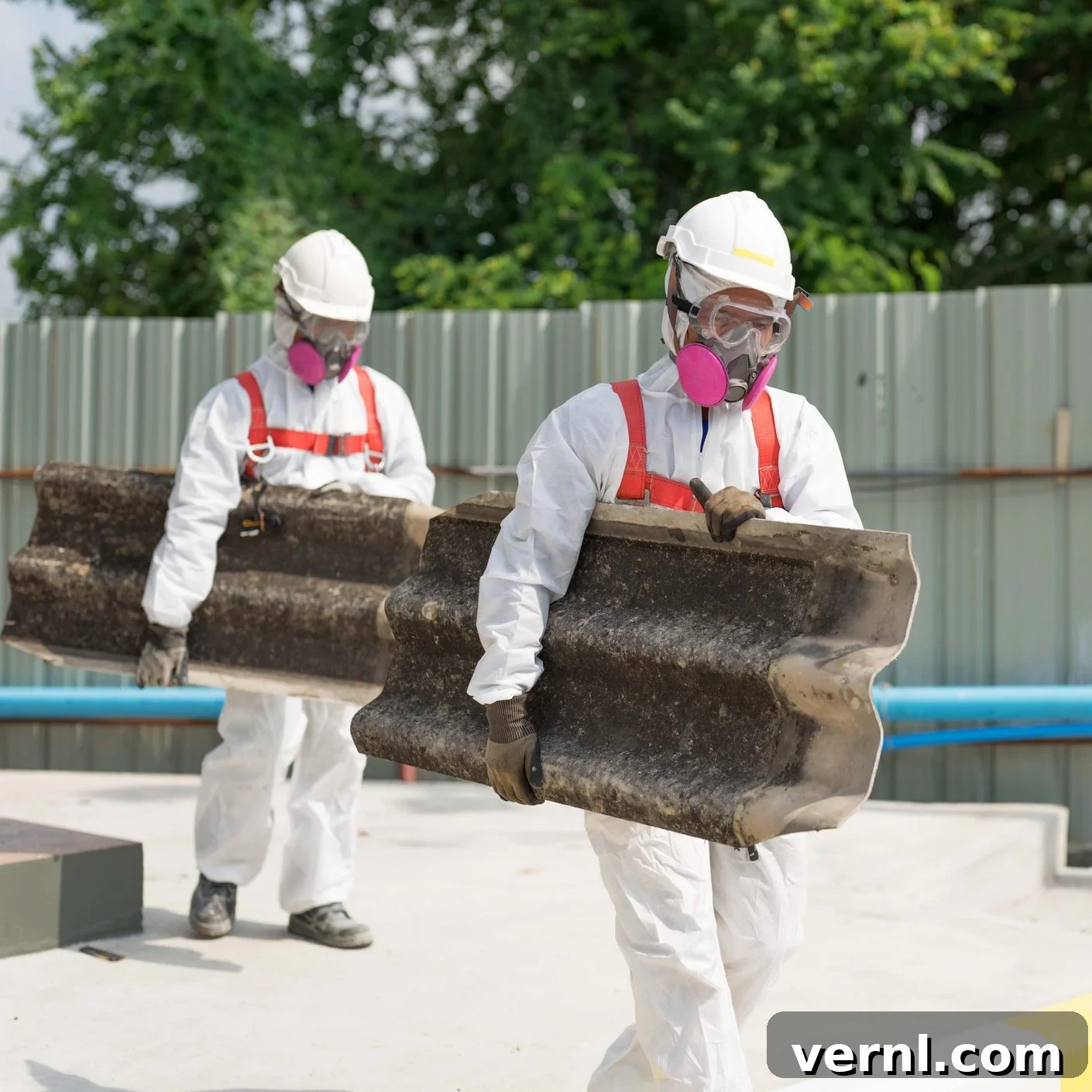
- Professional Abatement: If asbestos is identified and determined to be friable or at risk of disturbance (e.g., during a renovation project), do not attempt to remove it yourself. Asbestos abatement is a highly specialized field that requires trained and certified professionals equipped with personal protective equipment (PPE), containment procedures, and proper disposal techniques to ensure safe removal and prevent contamination.
- Renovation Planning: Before undertaking any renovation projects in an older home, assume asbestos may be present and budget for professional testing and potential abatement. This proactive approach can save lives and prevent costly mistakes.
The legacy of asbestos is a powerful reminder of how seemingly beneficial materials can harbor profound hidden dangers. While its widespread use has diminished, its presence in countless homes serves as a silent, ongoing challenge. Awareness, caution, and reliance on expert professionals are the most effective tools homeowners have to mitigate the risks and ensure the safety and well-being of their families.
About the Expert
- Michelle Whitmer is a highly respected asbestos expert who contributes extensively to the Mesothelioma Center at Asbestos.com. With over 14 years of dedicated experience, she specializes in covering complex medical and environmental issues related to asbestos exposure and its health impacts. Her insights are invaluable for homeowners seeking reliable information on this critical topic.